

This week, Oxford will hold the first-ever German-British Conference from 27th to 29th November. With speakers including the University’s Chancellor William Hague it aims to bring “Britain’s and Germany’s political and industrial leaders together to argue the relationship out in public and build it in private”.
The original idea for the event came from the University’s German society whose President and Secretary sit on the conference’s executive organising committee.
Around 500 guests are expected to attend the conference, which will host 125 speakers over three days. Over 30 panels will be held at the Saïd Business School, with a conference gala at the Natural History Museum on Friday evening, and a speaker’s dinner at Rhodes House the following evening.
Notable speakers include former Foreign Secretary and University Chancellor Lord William Hague and Dame Annelise Dodds, the MP for Oxford East. The conference’s programme also includes Dame Emily Thornberry, the Chair of the Commons Foreign Affairs Committee, and former First Minister of Wales Mark Drakeford. Louis Mosley, the CEO of Palantir for the UK and Europe, is also listed as a speaker.
Speaking to Cherwell, the founding secretary and PPE student Florian Fabricius said that “there is even more momentum now to bring these countries together”, referring to the ten-year anniversary of the Brexit referendum and the subsequent “lack of initiative to foster dialogue without an institutional framework”. He added: “With the current transatlantic geopolitical shifts, I think there is a longing to see stable European relations between Britain and the continent.”
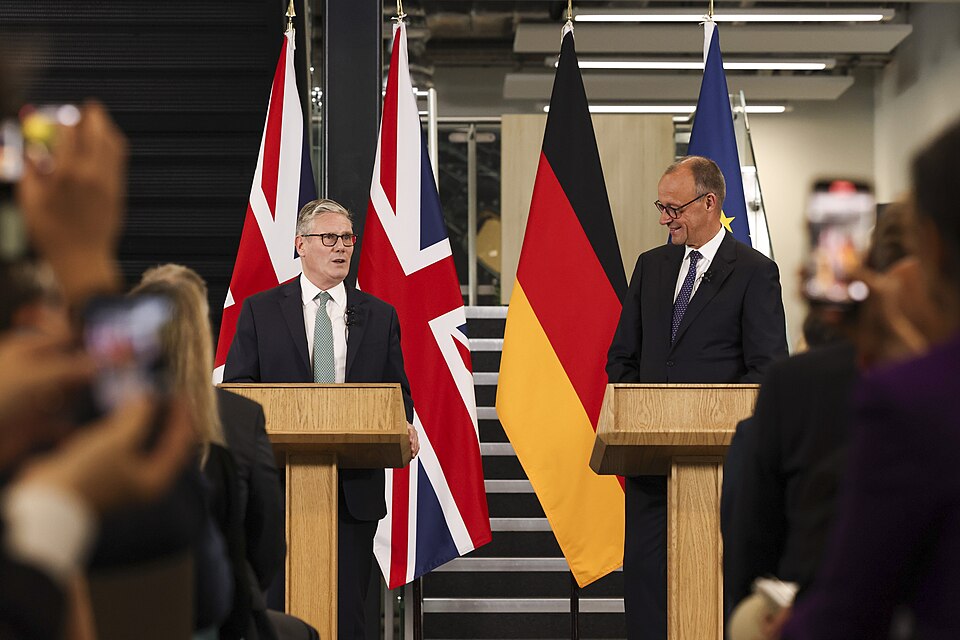
The programme will explore how the UK and Germany collaborate on diplomacy, defence, and technology, one year after the Kensington Treaty. The Treaty, the first bilateral friendship treaty signed between the two countries since the Second World War, includes agreements on defence, a direct UK-Germany rail service, and mutual commitment to climate policy. Panel sessions are set to cover AI regulation, Western support for Israel, and engaging Generation Z with politics, amongst other topics.
Frank-Walter Steinmeier, the President of Germany, has endorsed the conference, stating that: “The Federal President expressly welcomes the fact that the German-British Conference has set itself the task of creating a platform for open dialogue between German and British figures from the worlds of politics, academia, business, defence and civil society. In doing so, the conference is making a valuable contribution to consolidating the close and multifaceted relations between Germany and the United Kingdom.”
The conference’s partners include McKinsey & Company, Lufthansa Group, and the British-German Association, as well as student societies such as the Oxford University German Society and its counterpart in Cambridge, the Oxford Diplomatic Society, and the Oxford Politics Society. Ludwig Illies, the president of the Oxford University German Society and founder and co-chair of the conference, told Cherwell: “There is quite a big support system to help make this happen. We sent thousands of emails to so many institutions, so a lot of hard work went into this.”
Illies added that he is keen to see how the conference will shape future conversations around British-German relations. “I think we only received so much support because people saw the value in establishing such a forum, so I’m really curious to see what will follow – how conversations will be implemented, if there will be more traction, the follow-up meetings and policies – and who will be able to foster these relations beyond this one weekend.”
Student societies are also hosting events around the conference. The Oxford Union will host a shadow event while the Oxford Europeanist society and the Strategic Studies Group will host the German ambassador to the UK on Friday (the conference’s opening day).