


Tuesday 23rd June 2026
Blog Page 926

Revealed: Oxford Union debates speakers for Michaelmas 2017

1

A former Dragons’ Den star, a firebrand left-winger, and the leader of the Liberal Democrats are among the debates and socials speakers at the Oxford Union in Michaelmas 2017, Cherwell can reveal.

Sir Vince Cable, Theo Paphitis and Ken Livingstone will appear in debates at the famous society across the term, discussing issues including the future of the EU, populism, and the ideal of of true love. Shadow Foreign Secretary Emily Thornberry and American lawyer Jeh Johnson are also set to appear.

Throughout this week, Cherwell is exclusively revealing the details of the Union’s term card for the upcoming term, ahead of a full release listing individual speakers on Sunday.

Sir Vince, Thornberry and Labour MP Hilary Benn will lead the proposition in the traditional No Confidence debate in first week. They will face Tory MP Damian Green on the opposition, with two reportedly high-profile names yet to be announced.

Later in the term, Secretary Jeh Johnson, Barack Obama’s former head of homeland security, will join Anthony Romero, director of American Civil Liberties Union, in a debate on liberty and security which will also feature the former French Prime Minister Bernard Cazeneuve.

Former Dragon’s Den star Theo Paphitis will face off outspoken Tory backbencher Anna Soubry and former Liberal Democrat leader Paddy Ashdown in a debate on whether the “decline and fall of the EU is upon us”.

A full list of names of debates and their speakers can be found below, with further releases of individual speaker events being released by Cherwell later this week.

Among the names announced is Ken Livingstone, the controversial former London mayor who came under fire during a visit to the Union last year for his comments regarding anti-Semitism. He will be joined in a debate on populism by Arron Banks, one of the biggest donors to Ukip and the Leave.EU campaign.

Other notable political figures include Natalie Bennett, known as much her infamous “mind blanks” as for her leadership of the Green Party during the 2015 general election, as well as the Shadow Secretary of State for International Trade, Labour MP Barry Gardiner.

From second week, attendance to the debates is members-only – requiring students to splash out £269.86 on a life membership – but the Union allows card-carrying Oxford University and Brookes students to attend events for free during its open period which runs to 19 October.

The details of the Union’s programme of social events throughout the forthcoming term has also been announced. It includes an Olympus black tie ball on 3 November, an ‘Into the Movies’ social on 27 October, and a Wine and Cheese social on 20 November.

Zach Quinto will host an LGBTQIA+ welcome drinks on 4 October.

Among other details to be revealed include a LGBTQIA+ welcome drinks hosted by the Star Trek actor Zach Quinto on 4 October. Further welcome drinks will be held for Brookes students on 1 October, internationals on 3 October, graduates on 6 October and debaters on 7 October.

The Union will also hold a ‘Students Essentials Fair’ on the Friday 6 October and Saturday 7 October.

The Union’s individual speaker events, which feature the most high-profile figures, will be revealed later this week.


No Confidence Debate – 1st Week

Hilary Benn will speak for the proposition. (UK Parliament/Attribution License 3.0 https://creativecommons.org/licenses/by/3.0/)

The House Has No Confidence in Her Majesty’s Government (12 October)

Proposition: Hilary Benn, Sir Vince Cable, and Emily Thornberry

Opposition: Damian Green… The Union was unable to announce the other speakers until Monday of the week of the debate “due to the sensitive nature of scheduling requirements”

True Love Debate – 2nd Week

This House Would Abandon the Ideal of True Love (19 October)

Proposition: Simon Blackburn, Amy Webb

Opposition: Richard Cowles, Charly Lester

Liberty and Security Debate – 3rd Week

This House Believes We Have Sacrificed Our Liberty for a False Promise of Security (24 October)

Proposition: Secretary Jeh Johnson, Anthony Romero

Opposition: Bernard Cazeneuve, Avril Haines

Climate Debate – 4th Week

Barry Gardiner MP. (UK Parliament).

This House Believes Individual Apathy is the Greatest Threat to Our Climate (2 November)

Proposition: Barry Gardiner MP, Minister Barbara Hendricks, Sir David King

Opposition: Secretary Ernest Moniz, President Mohamed Nasheed, Natalie Bennett

Populism Debate – 5th Week

Ken Livingstone.

This House Believes Populist Leaders Deliver No Real Change (9 October)

Proposition: Ferenc Gyurcsány, Tulip Siddiq MP

Opposition: Ken Livingstone, Arron Banks

Media Debate – 6th Week

Damian Collins MP. (UK Parliament/Attribution 3.0 License).

This House Believes Social Media Undermines Good Journalism (16 November)

Proposition: Damian Collins MP, Steven Erlanger

Opposition: Ben Smith, Adam Boulton

European Union Debate – 7th Week

Anna Soubry. Image: UK Parliament.

This House Believes the Decline and Fall of the European Union is Upon Us (23 November)

Proposition: Theo Paphitis, Thierry Baudet

Opposition: Anna Soubry, Paddy Ashdown, Sir Julian King
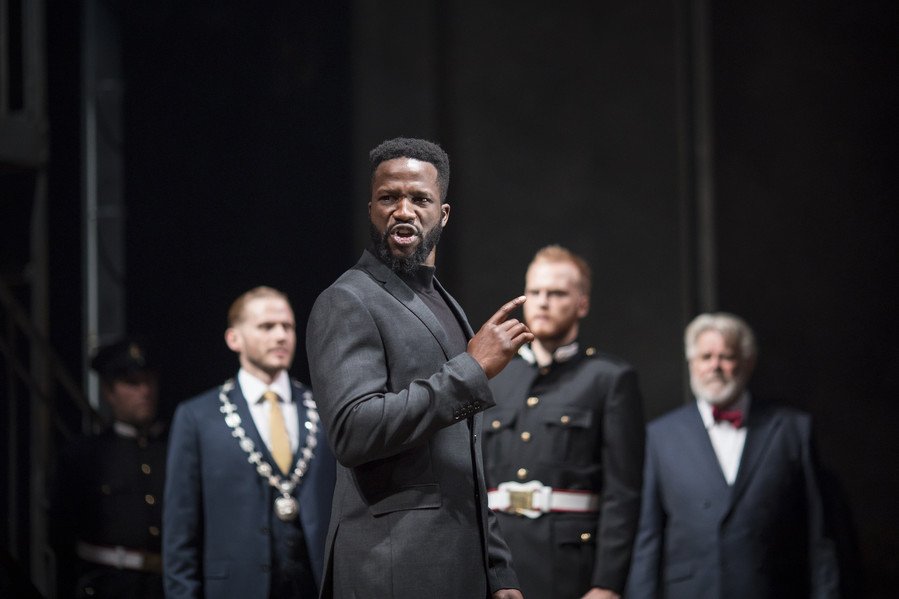
Dido, Queen of Carthage at the RSC review – ‘Daring, poignant and powerful’

0

Despite being the first play of theatrical behemoth Christopher Marlowe, Dido, Queen of Carthage has scarcely been performed since its original debut in 1587. An operatic version was produced in 1794, then promptly lost in the Drury Lane Theatre Fire, and the National Theatre offered a version in 2009, but otherwise there have been very few notable adaptations of the play in theatrical history. Consequently, the RSC’S decision to revive this under-performed tragedy as part of the Rome season was a bold one – but, ultimately, one that paid off in spectacular style.

The narrative, based on books 1, 2, and 4 of Virgil’s Aeneid, recounts the tale of Dido, the newly established queen of Carthage, who finds Aeneas and his troop of Trojans shipwrecked on her coast, fleeing the wreckage of Troy in search of Italy. While the Aeneid focuses on the political and historical significance of Aeneas’ journey, with his experience in Carthage merely a pit-stop, Marlowe realigns the focus to sharpen Dido’s individual story, and in doing so transforms a plot point into a self-contained tragedy.

Of course, extracting a single story-arc from an epic is always going to be a difficult task, and Marlowe’s use of the classical original reads a little bit like intellectual masturbation at times. He includes reference to a wealth of minor characters (e.g. Turnus, Aeolus) who play an important role in Virgil’s poem, but contribute nothing to a play centred on Dido . The amount of exposition required to justify Aeneas’ arrival in Carthage also results in a tonal disjunct between the two halves, with the second half containing the majority of Dido’s story and most of the emotional high points of the play, and the first half mostly trying to justify the dramatic landscape. This exposition also incorporates the introduction of subplots that are never resolved – for example, Juno’s jealousy over Jupiter’s affection for Ganymede, and Venus’ interest in Ascanius –  which adds an unnecessary level of complexity if you have not read the Aeneid, making it harder to place the characters we do see on stage in the context of the wealth of classical myths that are alluded to.

The RSC’s impressive production, however, goes some way to circumvent the difficulties presented by the text through the use of costumes and staging. The individual qualities of the gods are never explained fully in the text, so Cathy Hill’s costume design includes kitsch allusions to their archetypal characteristics; Venus (the goddess of love) wears a red ball gown, Hermes (the messenger god) has a set of wings attached to his crown, while Jupiter wears a suave white suit, not dissimilar to Morgan Freeman’s style as God in Bruce Almighty. The staging is also effective; given that the Swan Theatre has an in-the-round set, Kimberley Sykes’s imaginative use of the space (especially in the final triadic scene between Dido, Anna and Iarbas) should be admired.

Lots of the directorial decisions are also effective at rejuvenating the classical material, especially Sykes’s decision to have the gods walking among the audience before the show begins, injecting a metatheatrical element that really emphasises the hierarchy of the divine and mortal characters. It is perhaps interesting to consider the way the divine/ mortal relationship reflects the relationship between audience and character; in a lot of classical texts, the presentation of the gods spectating the lives of mortals from a position of superior knowledge is not dissimilar to the position of the audience as the play begins, and aligning the divine characters with the audience in contrast to the spectacle of the mortal figures is a clever decision that emphasises the futility of Dido’s hopes and prayers against the rage of the god in the machine.

Even disregarding the artistic directorial choices, the RSC’s interpretation would stand up as a powerfully emotive production off the strength of the actors alone. In typical Marlowian fashion, the aspects of the story with the potential for drama are heightened to maximum emotional impact (e.g. the addition of Priam being maimed before his death), which makes for multiple emotional high points over the course of the play. Consequently, Aeneas’ description of the fall of Troy is narrated by a powerful monologue from Sandy Grierson, who, along with the other Trojan characters, brings a convincing sense of urgency to the cast of shipwrecked refugees. The stand-out performance, however, comes from Chipo Chung as Dido. Her tragic final scene is a hard one to execute convincingly, yet Chung manages it masterfully, reconciling the powerful external status of Dido’s achievements as a leader with her internal breakdown, portraying the dignity of a spurned woman in a way that at no point vitiates her strength.

The supporting cast are also incredibly strong. Amber James is arresting as Anna, Dido’s love-torn sister, and Achates, played by Tom McCall, is notably impressive in his support and admiration for his leader, even through moments of doubt over some of his decisions. The divine characters are also skilled at providing some comic relief in between the emotive events that take place in the mortal world, with Ben Goffe’s portrayal of Cupid standing out in particular. The rivalry between Juno and Venus, played convincingly by Bridgitta Roy and Ellie Beaven, also brings to mind a 16th century version of Made in Chelsea in the way it manifests itself in feigned conciliation and eloquent bitchery, a vibe that is reinforced by their black-tie costumes. Similarly, the opening scene between Ganymede and Jupiter adopts the darkly comic humour that has characterised the RSC’s Rome season, which establishes a dissonantly comic hallmark, meaning that the nonchalant disaffection of the gods only serves to reinforce the tragedy of the mortals in comparison. It is a shame the gods do not feature as heavily in the second half, but that fault lies with the script and not the production.

Aside from the intensified melodrama, the majority of the plot is surprisingly true to Virgil, which makes it a greatly gratifying play to watch if you’re familiar with the Aeneid. The success of the RSC’s production, however, lies in the fact that you don’t have to be versed in the classics to appreciate the human tragedy at the core of the narrative, and Sykes’s ability to make Marlowe’s verbose vaunt accessible is surely impressive. Even if you are unfamiliar with the material, this clever and bold adaptation from Kimberley Sykes is about as cool as Dido, Queen of Carthage can realistically get, and her achievement in bringing the tragic story of a complex and strong classical heroine to a modern audience should not be understated. A daring, poignant and powerful production that does phenomenal justice to Dido’s sorry story.

My town and my gown: chickpeas and televised murder

0

A mere 40 minute drive may separate the two, yet striking cultural differences exist between Oxford and South Buckinghamshire.

Having arrived in Oxford for the first time, I was immediately disorientated. I stared at passers-by on Broad Street, wide-eyed and horrified. The masses of bicycles, sure, I understood. I had used such contraptions to get around at home – two wheels, a slight death wish, goes fast. Makes sense. It was the city’s other favoured method of transportation – walking – that truly confused me. Never before in my life had I seen people walking to places of actual purpose.

In Buckinghamshire, you see, walking usually gets you only to (another part of) the countryside, a pub, or your MP’s second home. Walk ten minutes in one direction, you hit a field, walk 20 minutes in the opposite direction, you hit another. It’ll be greener than the first. With a bus service on life support, South Buckinghamshire is one beautiful, yet uneventful, overpriced Countryfile calendar (note: there’s a train to London). In Oxford, however, I was amazed to find that you could get to places on foot – places where things actually happened. The prospect was rather dizzying. The realisation that I would see a 4×4 car perhaps just once a week, rather than four times a day, itched my brain. Uncomfortably.

If that wasn’t enough change to cope with, my eyesight started to worsen in the city. Something was messing with my vision, and I was seeing parts of the colour spectrum I’d never seen before. It had first appeared in the fringes of my view but now was visible everywhere, especially around my college, Balliol. I soon came to terms with what I was seeing – it was the colour ‘red’. It was an unfamiliar sight, exceedingly rich in tone. Sure, my parents had once told me that colours other than blue existed, but they had remained unclear, mocked, unexplained. The optician told me there were no problems with my retinae. It was just a processing dysfunction, derived from political colour-washing, that was mending itself. I told her that I had previously never seen a red seat in my entire life. She laughed.

She proceeded to ask me whether I was suffering from any side effects – “Headaches? Migraines? Nausea?” I replied saying that I was experiencing a newly questioning conscience. Since arriving in Oxford, questions such as “Was it actually ok for my MP to claim expenses on dog food?” and “Is High Speed Two really more important than my friend’s paddock?” had kept me up all night. The optician laughed at me again, assuring me that my mind was radically reordering for the better. She advised me that it would be for the best if I didn’t try to speak in the JCR until the process was completed. I readily obliged.

I began to fear that Oxford and Buckinghamshire shared no semblance of each other. Middle-class embers of hope, once brightly glowing, were now dull flakes. Refusing to believe this to be the truth, however, I forced myself to find things that made home feel a little closer.

I found most of these things on the shelves of Botley Road’s Waitrose. But what I failed to find in the supermarket was even more poignant. This year a catastrophe of unforgettable proportions arrived at our doorstep. It struck the taste buds and sanity of Oxford’s inhabitants as badly as those belonging to residents of the home counties – I speak solemnly of the Hummus Crisis of April 2017. A wicked metallic taste tore through our produce indiscriminately, leaving our shelves barren and us weeping, together, in the deli aisles. United in sorrow, we mopped up our tears with sauce-less rye bread, dry as the Sahara in spring. As one body, we grieved. Isn’t it strange how, for some communities, it is music that brings people together, or sport that defies the boundaries of age, politics and class – but, for us, it was the noble chickpea?

With hummus back in my life, perspective flooded back in too. In the form of ITV. I suppose one thing that never fails to make Oxford seem that little bit warmer on a cold and crisp evening is the channel’s murder dramas. Midsomer Murders is staple home counties viewing – it features graphic scenes of gardening shears shoved down throats, actions fuelled by the internal disputes of local bird-watching associations. They regularly film in Buckinghamshire. Similarly, Oxford – Turl Street in particular – is frequently used as a shooting backdrop for the detective dramas Lewis and Endeavour. Knowing Oxford and my home share this purpose keeps me feeling toasty in bed at night.

It seems, then, that Oxford and South Buckinghamshire aren’t so different after all. And if I do feel homesick, questionable internet speeds and beers priced at £5 a pint pull me through. Whilst walking still remains a new phenomenon, I admit that such a primitive mode of transportation seems remarkably agreeable when, at home, a £20 taxi is the standard conclusion to any night out.

The Comedy About a Bank Robbery’s Steffan Lloyd-Evans interview – “most of the time I like to make people laugh”

0

It’s fairly early in the morning when I sit down to interview Steffan Lloyd-Evans, the star of Mischief Theatre’s The Comedy About a Bank Robbery. Less than 14 hours ago I have watched Steffan, and the rest of an outstanding comic cast, perform a range of vocally and physically demanding gags with a level of energy that makes me exhausted to even think about, so I’m expecting this conversation to be slightly more demure – surely any normal human would be, you know… tired?

But apparently not. The first thing that strikes me as the interview begins is that, much like his on-stage character Sam, Steffan has an infectious level of energy and charisma that is captivating to listen to.

We begin by chatting about the play. The Comedy About a Bank Robbery is the latest outing from Mischief Theatre, the team behind The Play That Goes Wrong and Peter Pan Goes Wrong, and Steffan explains that this distinctive style is partly what attracted him to the project. “It’s a type of comedy that’s a combination of style, physical comedy and incredibly witty wordplay,” he says. “And that’s a combination that really marks it out as something a little different.”

The distinctive theatrical style is certainly an element that stands out in The Comedy About a Bank Robbery, but given that most readers might recognise Steffan from musical productions like Into The Woods and Joseph and the Amazing Technicolour Dreamcoat, I wonder how Steffan makes the leap from singing to acting with such ease.

“I was always brought up to believe that singing meant nothing unless people believed what you were saying,” he explains. “And that was more important maybe than some of the wonderful technical things – that you could sound like an opera singer if you were lucky enough, but if nobody believed you, you wouldn’t really get anywhere.

“It is very different in style, but as long as an element of truth pervades the piece, I don’t think it makes much difference, as long as you take the audience with you wherever you go.”

The need to keep the audience with you is surely one that is integral to The Comedy About a Bank Robbery, a play that relies on sharp wordplays and occasionally absurd plot twists to maintain momentum, and Steffan’s character Sam is possibly the most important link between play and audience, as the most relatable and down-to-earth character in the almost farcical world of the script.

Explaining his character, Steffan says: “Sam is growing up in Minneapolis in Minnesota, and the town is absolutely full of crooks, so he ends up picking pockets as a way to get by. He’s sort of plodding through life, getting one up on people, until this wonderful girl comes into his life who is far smarter than he is and can run rings around him, and he ends up in this horrible, bizarre situation where he has to rob a bank in order to cover up the fact that he was in her apartment and – well, I don’t want to give anything away, but it’s sort of a series of unfortunate events for him in which he ends up in some pretty uncompromising situations”.

Can he see any obvious similarities between himself and his character? “I would love to say no. But yes, probably! I think he can be quite naïve… but he’s incredibly energetic, he’s always trying to find the good in everything and keep things ticking over, and he’s got masses of energy, which are all things I would like to think about myself. You’d have to ask my friends and see if they’d say the same.” He pauses. “I’m not sure I actually possess those qualities, maybe I just want to!”

Aside from the high level of energy required from its actors, the show also demands a lot of physical exertion, with various gags involving characters hanging off the walls and ceiling and lots of physical comedy. Surely that must be quite demanding?

“The most challenging part was the stamina… to get my body to that point took a while, for the first few months I could basically do nothing other than the show, I was a sort of walking zombie! Your body does learn though, and I’m really lucky because I come from a very physical background, I did judo for a long time and free running, and I absolutely adore physical theatre.”

Steffan’s father is also in show business, so I ask if his dad’s profession as an opera singer affected Steffan’s own desire to go into the theatre. “It’s difficult to say that it didn’t! I was around that a lot as a child, and was very fortunate to see a lot of those shows, a lot of kids don’t have that opportunity.

“I was surrounded by music, so originally the theatre was where I wanted to go, but then I realised sort of what we’ve been talking about – about the story being more important. For seven-year old me watching opera it didn’t matter what language it was in, it was whether I felt I could follow the story or not – that was how I would decide whether I was bored or loving life!”

My final question is perhaps the hardest one yet, but Steffan seems to have had this question before as he groans before answering. “My dream role? Ah, I hate this question, it’s so hard to answer! There’s a couple of plays that I’ve absolutely adored since I was young… it’s not necessarily my casting, but Eddie Carbone in A View from a Bridge, maybe Death of a Salesman – obviously when I’m much older. And John Proctor in The Crucible! I mean, who wouldn’t want to play that? I just want to scream ‘because it is my name’ as loudly as possible. Musical theatre wise, whatever comes my way. I’ve been very lucky to have done a real mix of things, but most of the time I sort of like to make people laugh.”

It’s an aim which, I can confirm, Steffan and the rest of the cast are more than succeeding at.

Catch Steffan Lloyd-Evans in The Comedy About a Bank Robbery at the Criterion Theatre, booking until April 2018.

The Comedy About a Bank Robbery review – ‘half the audience are in quantifiable hysterics’

1

The audience around me are mostly of the stereotypically middle-class theatre-going demographic – suited and booted city workers, come to catch a show after a day in the office. While there are also the usual clusters of tourists, students, and a few families, the generally older make-up of the audience is the first thing that impresses upon me, and as the curtain goes up I’m wondering if the row of businessmen in Jermyn Street suits know that they will be watching a few hours of farcical silliness, rather than the kind of hard-hitting, topical drama that I have always imagined city workers to frequent.

Certainly, I’m expecting Mischief Theatre company to have their work cut out for them engaging with this audience. It is a testament to the production, and a representative analysis of the rest of the show, that within two minutes the gentleman next to me is crying with laughter into his Charles Tyrwhitt tie.

The third West End outing for Mischief Theatre, the production company responsible for The Play That Goes Wrong and Peter Pan Goes Wrong, The Comedy About a Bank Robbery is a cathartic amalgamation of sharp wordplay, unexpected physical comedy, and some outstanding vocal work. The impressive ensemble cast manage to effortlessly hold the audience’s attention throughout a plot that stretches the boundaries of farcicality, as they tell the story of a bank robbery that takes place in a particularly criminal district of Minneapolis.

Our alliance as the audience is with the character of Sam, a young pickpocket who finds himself embroiled in a criminal ring after being discovered in the wrong place at the wrong time (more specifically, he is discovered in the apartment of a girl by her felon of an ex-boyfriend, in a side-splittingly funny scene that adeptly combines physical comedy with an excellent use of props and staging). Sam, played by Steffan Lloyd-Evans, has an endearingly bumbling energy that will win your heart – for Cherwell’s interview with Steffan please consult the Culture subsection – and the rest of the cast are equally impressive, each one displaying a powerful comic range throughout, as well as some outstanding vocal work.

Equally worthy of credit are the backstage team, whose work in bringing the set to life is truly breath-taking. We are transported from a prison, to a city bank, to an upmarket apartment in a matter of seconds, and a lot of the gags rely on the set and the props for effect. At various intervals, we witness characters being swallowed by retractable double beds, hanging off office chairs that are attached to the ceiling, and trapezing through a ventilation system that frames the entire stage, and I would struggle to think of a play in which the set is so integral to the enjoyment of the production. It is a credit to Mischief Theatre that the creative originality that defines the script extends to all aspects of the production, including the staging, direction, and musical accompaniment.

While the storyline may seem slightly absurd at times, the talented cast manage to inject it with a convincing sense of vitality, which manages to keep the narrative afloat. Miles Yekinni is particularly funny as Cooper, and Tania Mathurin’s powerful singing voice is greatly effective at helping to establish the swinging 1950s setting. Occasionally some of the jokes are pushed too far – motifs are sometimes repeated three times when twice would have been enough – but for the most part the humour is far more hit than miss, and the jokes that land really do land. At least half the audience have had quantifiable hysterics by the time the cast are taking their bows, and the standing ovation is pretty much all-encompassing.

“The storyline may seem slightly absurd at times, but the talented cast inject it with a convincing sense of vitality”

All in all, The Comedy About a Bank Robbery represents yet another hit for Mischief Theatre. The script writers – Lewis, Sayer, and Shields – have mastered a unique comic voice that combines sharp wordplay with farcical absurdity, somewhere between One Man, Two Guvnors and a Monty Python sketch, and the cast and creative team carry the story with confidence. I can finally understand why the audience is so agog with serious-looking faces laughing uncontrollably at an unexpected pun – in times like this, sometimes a bit of cathartic silliness is exactly what you need. For a night of guaranteed laughter, you can’t do much better than this carefully crafted comic concoction.

The Comedy About a Bank Robbery runs until April 2018 at London’s Criterion Theatre.

Coriolanus at the RSC review – ‘brutally minimalist but utterly compelling’

0

Comedy has been unexpected but welcome throughout the RSC’s Rome season. Following on from the hilarity of Titus Andronicus, Angus Jackson’s ultra-modern production of Coriolanus is similarly eager to engage the audience through humour. While this artistic decision may perhaps seem incongruous – Coriolanus is one of Shakespeare’s most overtly political plays, with seemingly little opportunity for light relief – the cast’s commitment to balancing light with dark is outstanding. When Coriolanus (Sope Dirisu) visits his enemy Aufidius, for example, the servants’ humorous intonation diffuses what could otherwise be just yet another tense scene.

Similarly, it is interesting to see Aufidius’ eventual acceptance of Coriolanus played for laughs. Rather than Aufidius’ speech being delivered with its usual gravity and emphasis on the severity of their past battles, James Corrigan (Aufidius) instead chooses to deliver the lines about how “I have nightly […] dreamt of encounters between thyself and me; we have been down together in my sleep,” in such a way that the audience is left not only giggling but also with a greater sense of the ‘bromance’ that briefly develops between the two. It’s an unusual interpretation that really works – not only does it make Aufidius’ ultimate betrayal all the more poignant, but moreover highlights beautifully how Shakespeare can be endlessly re-interpreted by each successive generation of actors and audiences.

The star of the show is Haydn Gwynne as Volumnia, Coriolanus’ overbearing mother. Her characterisation is superb, clearly ambitious for her son but also showing the audience glimpses of frustration. As a fiercely intelligent woman in a society where she cannot rule in her own right, this is the natural interpretation of Shakespeare’s character, but one which I have never seen portrayed with such overt exasperation before. Paul Jesson is a wonderfully grandfatherly Menenius, too, with just the right balance of eloquence and manipulation to define the character as an experienced political peacemaker.

Photo by Helen Maybanks (c) RSC

If anything, the characterisation of Coriolanus himself was slightly too sympathetic. While Sope Dirisu is certainly excellent in his portrayal of the warrior driven to and from power by his mother’s ambition, he lacks some of the arrogance necessary to explain the character’s disdain of the general populace.

Nevertheless, Dirisu and fight director Terry King must be commended for some extraordinarily compelling stage-fights; many modern productions offer more stylised interpretations of conflict, but the performances in Coriolanus are scarily believable and it seems possible that there will be bones broken by the end of the run!

A brutally minimalist set complements the war-torn setting of the play impeccably. Three enormous grill-style security shutters frame the back of the stage, with a thin curtain to distinguish between indoor and outdoor scenes. Diverse lighting effects are primarily responsible for setting the scene – lighting designer Richard Howell creates a consistent vision of a battle-scarred world in the near-future via a rich array of harsh back-lighting creating uniform patterns through the shutters, and descending metallic lamps give a sense of past splendour.

“The lighting creates a consistent vision of a battle-scarred world in the near-future”

While this does sometimes make the stage resemble an Argos advert, without it much of the setting would be lost. Soft lighting from above draws attention to a beautiful parquet floor to put the audience in mind of the corridors of municipal government buildings, while a later decision to shroud the stage in darkness with just a few patches of harsh white light upstage forces the audience’s attention to Coriolanus as he strides in and out of shadow.

Overall, this compelling production has great potential and is sure to go from strength to strength as the run continues.

‘Coriolanus’ runs until October 14th in Stratford-upon-Avon, and will transfer to London from November 6th-18th.

He couldn’t make them come. He didn’t make us laugh.

2

“I couldn’t make any of these wonderful women come…”

Distasteful. Derogatory. Dismissed, as if nothing was wrong.

Ask Alex Salmond if he supports equality between the sexes, and he will tell you yes. No doubt, feminist Nicola Sturgeon will say the same. But ask the former First Minister of Scotland to apologise for his joke about having sex with female politicians, and you will be disappointed. Ask his successor to criticise his dismissal of the issue, and you will remain so.

“He is not sexist,” said the First Minister in defense of her former colleague who made the joke during his sell-out show at the Edinburgh Fringe Festival this year. The closest her remarks came to criticism was: “Occasionally Alex is not as funny as he thinks he is”, to which she added that the joke may belong more in “the Benny Hill era” than our own.

Twitter took a less ambivalent view of the situation. 140 character retorts came flying as some expressed disgust, others anger, more dismay. The words “gross” and “sexist” became the favourite descriptors of the former political star. Labour MSP Monica Lennon joined the defiance, demanding that Salmond apologise: “It would set a horrendous example to young men if he tries to hide behind these sexist comments as risqué humour.”

The joke itself was bad; outdated, unacceptable, and unamusing. It is almost unthinkable that a modern day politician would condone a boss joking about having sex with their former colleagues. It may not have been intended to degrade the women who have broken into chauvinistic circles and defied the odds to assume their positions in the modern world, but it did. Girls saw their role models spoken of in crude terms, and everyone saw a reputable public figure setting the precedent for making degrading statements.

Salmond should have dealt with the upset instantly. An apology would easily have quelled the unrest. A clear statement could have calmed those worried about him setting bad examples. But where Salmond failed to live up to his responsibility as a public figure, there should have been an effective response. And there was not.

Sturgeon was wrong to defend Salmond. Upon his refusal to apologise, it became her duty to step in. Not to call him sexist, or even “too blokey” as she has in the past. Simply to demand an apology, and to refuse to be spoken of in such a degrading context. It was her job set another example: to tell women they deserve to be respected, by everyone – even those who fancy themselves as standup comedians.

Surely, then, Lennon gave a successful response. Unlike Sturgeon, she called Salmond out. Unlike Sturgeon, she stood up for feminism. But making such strong accusations of sexism let the focus shift from the questionable nature of what Salmond had said to the defence of his character. When someone is accused of any form of discrimination, they and those around them become defensive. Friends will jump to their aid. Whether to defend her party or her former colleague, Nicola Sturgeon did just that. And she was able to. “Scottish Labour are just miffed they didn’t get a mention,” was the “witty” response from Alex Salmond’s spokesperson. “It’s the Edinburgh Fringe we are at, not fringe politics with Labour.”

A self-deprecating joke about Salmond’s sex life quickly escalated into a debate about sexism. Yet nobody managed to state the simple facts: Salmond made an inappropriate comment and is not at liberty to ignore his responsibility to apologise. Instead, Lennon’s argument faded into the backdrop as she allowed herself to be painted as exaggerating for political gain; and Nicola Sturgeon rose to Salmond’s defence where she should have appreciated his wrongdoing. In the end, there was no consensus, and where the matter is sexism, there always should be.

This scenario, borne of a joke at the Fringe, serves as an important reminder. We cannot let sexism go unchallenged. A comment made by the most fervent of feminists is not automatically acceptable. And where we challenge them we must do so in a direct and effective manner. It is a sad fact that party politics is often the driving force behind accusations of discriminatory behaviour and determines how it is treated. Let us show our politicians that we expect better. Make them lead by example. Make them approach issues of discrimination head on. Make them join us in the fight for equality.

Baby Blues review – ‘gripping, entertaining and tragic’

0

Not often do I find myself stood in a rowdy pub on a Sunday night, surrounded by football fans and trying not to burst into tears. Nestled above the noisy crowd, Camdens Etcetera Theatre provides the space for Fleet Productionsimpressive performance of Baby Blues.

Lily Kuenzlers newly-written play deals with post-natal depression in a unique and touching way, exploring a couples struggle to cope in the ensuing months after a traumatic birth. Baby Bluescleverly describes both Katies (Shannon Hayes) experience of depression, as well as the crudely-painted blue plastic baby she very unexpectedly gives birth to in the first scene, used as a metaphor for her despair.

This marriage of laughable absurdity and stirring emotion holds true for the play in its entirety. Seeing characters cradle and coo at a blue plastic doll is a bizarre sight, impossible to get accustomed to for the hour-length performance. It makes us laugh in parts, whilst also reinforcing the persistence of Katies depression at every point. One of the most poignant scenes begins cheerfully, as the audience laughs at the ridiculousness of seeing a woman pretend to love a doll. In this lies the brilliance of the production: we see what Katie sees. Baby Bluescapitalises on the natural hesitance of audiences to suspend their disbelief when props strain credulity, and uses this to provide a window into the experience of postnatal depression.

Also effective was the juxtaposition created between Katies withdrawal and the liveliness of the other characters. Keir Aitken and Farran Mitchell provided energy and humour as Katies husband and mother-in-law. At times the charactersdialogue felt cliched, but this was made up for by scenes of genuine warmth, such as seeing the couple laugh whilst trying to dance together on stage. Well-crafted, these light-hearted moments of intimacy contrasted to darker scenes, in which we see a mother’s inability to bond with her child and the detrimental impact on her family. Katies struggles are portrayed incredibly by Hayes, whose performance is completely captivating. Moving seamlessly between outbursts of laughter and moments of stillness and despair, she never breaks the relationship forged with the audience, carrying the play through to its tragic conclusion.

Part of the significance of Baby Bluesis that we are given a character seemingly distant, or (at worst) dangerous, misunderstood by those on stage; nevertheless the audience are made to empathise with Katie, rooting for her and sympathising with her trauma, even up to the final scene. Kuenzlers writing forces us to challenge our judgements of a mother whose actions at first seem unloving and cold, leaving us heartbroken at the fate of the characters and frustrated that a suffering mother does not receive the support that she desperately needs. Whilst the scenes at the start felt a little more flat, the show quickly picks up in pace and emotion and builds to a tense and heart-breaking finale, leaving the audience in tears as the house lights came back up.

Overall, Baby Bluesis at once gripping, entertaining and tragic. Whilst powerful and shocking, the dramatic climax perhaps takes away from an otherwise more nuanced portrayal of the realities of postnatal depression. Regardless, the play offers a poignant and thought-provoking testimony of the gravity of postnatal depression, and the need to take baby bluesseriously.

Cherwell’s guide to sport at Oxford

0

As with so many aspects of the University, sport at Oxford is what you make of it.
Thousands of students pass through with minimal exposure to it, and for others it plays a huge role in shaping their whole experience here.

Oxford boasts some 78 sports clubs, with several top-level facilities, and competes
at the highest level in many of these from Aikido to Aussie Rules and Water Polo to Windsurfing.

Matches

The key fixtures in the sporting calendar are the Varsity Matches against Cambridge, which are the pinnacle of most teams’ seasons. Dating back to 1827 when Charles Wordsworth organised a two-day cricket match between the two universities at Lord’s, Varsity matches also see the award of Blues to those who represent Oxford in a major sport, and half-Blues in minor sports.

However, sport at Oxford is by no means limited to university level. 39 sports are played at inter-college level, with many running a league and a cup competition. The knock-out competitions, known as ‘Cuppers’, often attract large crowds to their finals.

Rowing

Perhaps the most iconic Oxford sport is Rowing, which many undergraduates try in their first year. It is often said that you can instantly recognise an Oxford rower, mainly because they have already told you about it.

Furthermore, they will undoubtedly be wearing an inordinate amount of stash: rowers love to spend half of their student loan on lycra, hoodies, fleeces, visors and ‘splash jackets’ with their college name and crest emblazoned across the front.

Many colleges have a strong rowing culture, and expect rowers to wake up annoyingly early to train. For humanities students, this should be particularly off-putting: not only does rowing force you to get out of bed before midday, but the fact it is packed full of scientists means that your 6am conversations on the run down to the Isis will be spectacularly dull.

At a college level, rowing has two main events, the Torpids and Eights regattas in Hilary and Trinity Terms respectively. These both take place in the traditional ‘bumps’ format, in which boats chase each other in single file as each crew tries to catch the one in front.

Finally, the world-renowned Boat Race takes place every April on the Thames, and thousands of Oxonians spectate from the pubs along the river.

Football

Another major sport in which Oxford have enjoyed recent success is Football. The Varsity Match is the oldest regular fixture in world football, having been played every year– barring the World Wars – since 1873. The venue has changed several times in recent years, with Selhurst Park, Craven Cottage and The Hive all playing host to the fixture, but Oxford’s success has remained a constant: the Dark Blues have won the past three Men’s and Women’s games.

College football is also a massive part of many Oxonians’ lives. There are four highly competitive JCR leagues and four ‘Reserve’ divisions, meaning that players of any ability get the chance to represent their college.

Rugby

The Rugby Union Varsity Matches takes place at Twickenham every year, and typically
attract crowds in excess of 15,000. Current and former professionals often turn out in the fixtures (former All Black captain Anton Oliver played for Oxford in 2008, while two-time Lions tourist Jamie Roberts pulled on a Cambridge jersey in 2015).

As with football, rugby clubs have a strong social presence in most colleges, with most putting on socials or drinks on a weekly basis. Despite their possible stigma, these tend to be very lighthearted aff airs with minimal forced drinking – the odd dirty pint excepted –and a good opportunity to meet people in other year groups within your college.

Hockey

Hockey is another sport with a strong social side at university level, with ‘hockey
corner’ at Park End on a Wednesday typically backed with Blues kit after a weekly crewdate.

Indeed, the Men’s and Women’s Blues squads recently demonstrated their commitment to the social aspect of the club by arranging a tour to Prague which featured no hockey fixtures and no training sessions.

That said, both teams are reasonably strong, and completed a Varsity double in 2017. There are four Men’s teams and three Women’s teams, and also mixed league and knockout competitions at college level.

Croquet

Jane Nearing/Flickr.

In Trinity Term, Croquet is extremely popular, and most Oxonians will play socially on one of their college lawns at some point in their time at the university. For more serious players, there is a knockout Cuppers competition which runs all term, and some nine per cent of students entered this year.

The sport also provides students with fantastic opportunities for Instagram content – make sure to get an alcoholic drink in shot and to write a pretentious caption relating to the fact you go to Oxford for additional likes.

This piece is from Cherwell‘s guide to Oxford Freshers’ Week 2017, Keep Off the Grass. Pick up your copy from your freshers rep or pidge room at the start of term.

Five of the best pubs and bars in Oxford

1

From Cherwell‘s guide to Oxford freshers’ week 2017, Keep Off the Grass.

The Kings Arms

The King Arms claims the title of Oxford’s most famous pub. Like many a metropolitan watering hole, ‘the K.A.’ (as it is affectionately known by some) succumbed long ago to the clutches of the gastropub chain Youngs. Yet it still does a pretty good job of masquerading as an independent ale house, with dark wood panelling, rich leather sofas, and pictures of the Queen Mother pouring a pint. The pork pies are good, and the scotch eggs better. But don’t expect a great deal more in the way of food if you’re arriving late at night.

Drinks will seem relatively more expensive depending how far north of London you come from, but moaning about the price of a pint can sometimes be an effective conversation starter in first term. And don’t worry too much about your overdraft; the high cost of a night at the KA is only remunerated with their Sunday night entertainment. To be more specific, the Conservative Association’s Port and Policy after-party. Sit back and relax as the suited and booted MPs of the future get pissed on half a cider, and fall into a coughing fit after bumming their first cigarette from a proletarian.

The Turf Tavern

The Turf Tavern. Flickr.

While the King’s Arms sits proudly on the corner of Holywell Street, Oxford’s second biggest central pub, Turf Tavern, is a tad harder to find. Hidden away behind Hertford College, with a secret entrance under the Bridge of Sighs, the Turf claims to be the city’s oldest pub. Though the Kings Arms’ famous visitors are displayed on its walls in 35mm glory, the Turf uses the slightly dubious method of writing about celebrities and their exploits on chalkboards around the pub. With quite a bit of “allegedly” and “apparently” thrown in, it claims to be the place where Bill Clinton “did not inhale” cannabis.

The tavern’s rather pokey interior is made up for with its charming outdoor veranda, which importantly includes overhead heating in the winter. Don’t expect to stay long though—Turf closes at a measly 11pm.

The Half Moon

If you’re a pubber not a clubber, life can be difficult. While your happy go-lucky (and often lightweight) friends brave the cold of the Bridge queue and dance into the early morning, you might find yourself being kicked out of the pub before you’re ready to call it a night.

But despair not. Make your way over Magdalen Bridge to the magical Half Moon (its main mystical quality being that it stays open until 2am). It will take you back in time, in a good way. There’s a jukebox for punters, and don’t bother flashing your AmEx at the bar staff. They only take cold hard cash for their bizarrely named craft ales. Though you might not be able to smoke inside, the doorway in which you’ll puff away is so narrow you won’t be able to tell the difference.

Chequers, High Street Oxford. Photo: Ben Sutherland/Flickr.

The Chequers

Oh, High Street. The place where everything seems to be both a little bit more expensive and a little bit shitter. Chequers is another early closing pub, which is only accentuated by the fact it will take you an age to locate the alley it’s hidden in. This is a pub with few student regulars, but at least while in there you and your friends can play a game of ‘spot the college crest’. Beware though: the renditions vary in quality.


Four Candles

Otherwise known as Wetherspoons, or ‘Spoons’ for short. £2.40 lager? Yes please. Nobody knows how they do it, but this nationwide gastropub franchise manages to provide cheap ale for all, and Oxford is no exception. In The Four Candles, a delicately preserved townhouse, you can touch base with townies, eat a lukewarm £5 burger, and drink G&Ts on the cheap. But good luck finding a seat in here at the weekend.

Photo: Matt Brown/Flickr.

This piece is from Cherwell‘s guide to Oxford Freshers’ Week 2017, Keep Off the Grass. Pick up your copy from your freshers rep or pidge room at the start of term.