

Monday 22nd June 2026
Blog Page 925

Society from a Martian perspective

0

I’ll admit it: I love sci-fi. Worse, I’m not ashamed of it – even proud of it. Admitting this fact can occasionally be akin to stating your love for Hannah Montana, eliciting responses varying from condescension to sneering contempt. Isn’t sci-fi for children and sad old men, just cheap trash to whittle away the hours? Especially as a literature student, I’m expected to spend my hours reading Virginia Woolf or Thomas Hardy, rather than Isaac Asimov and Frank Herbert.

This attitude is highly irritating, especially as it often stems from ignorance. I’m not expecting everybody to suddenly love science fiction – far from it – but I would like to end this common-place view that any tale set in the future, or based around technology, should be seen as lesser fiction than ‘real’ literature.

Anybody with the faintest under- standing of the English language should be able to grasp the point that dismissing sci-fi as ‘not real’ compared to other fiction is ridiculous. Are ‘fiction’ and ‘reality’ not antonyms? The stories of Charles Dickens and James Joyce are not ‘real’: they are made up.

After making this argument, the usual modification of detractors is that sci-fi is not ‘realistic’. Though the ‘realistic’ quality of much of ‘realist’ fiction is questionable: how many mundane conversations, telephone calls and toilet breaks that you have in real life appear in the pages of fiction.

Regardless, sci-fi should be regarded as not just on par with other genres, but in some ways as surpassing it, thanks to several unusual characteristics. Firstly, science fiction often indirectly concerns itself with the hopes and fears of its author’s era. And second to that, science fiction engages with the problems of the future.

This first element is not unique to sci-fi, but is worth bearing in mind. Science fiction often describes the future as the author hopes – or fears – that their society is progressing towards: Brave New World could be seen as the terrifying future of a society gripped by the banality of mass-produced consumerism; The Time Machine as the extreme end of a Victorian society ever-more divided along class lines; Ender’s Game is without a doubt a child of the late Cold War. Sci-fi is an excellent way of looking at our own society through an unfamiliar lens, revealing its vices and virtues in a different light, from a ‘Martian perspective’.

The second element is crucial to the enduring importance of sci-fi – its unique ability to explore the possibilities and pitfalls of technology, so important in our hyper-fast digital world. For this, the Culture novels of the late, much missed Iain M. Banks are exemplary.

In essence, the Culture novels take place in a society that is post-scarcity, post-singularity, post-commercial: almost post-human. Nobody wants for anything or needs to work, society is benevolently run by unimaginably powerful super-computers, and regular AI – tellingly, called ‘drones’ – are sentient beings with full rights as citizens.

Humans can alter themselves considerably, change sex at will, and practically do whatever they want – semi-anarchistic hedonism rules the day. A key theme of the novels is the contact between the Culture and less-advanced societies, and how a powerful civilisation deals with its ‘inferiors’.

This might sound like nonsense, but think about how it relates to modern Western society. Every week we hear stories about how the robots are going to take people’s jobs, the dangers of the singularity, the potential of ‘designer babies’, the ubiquity of drones – often from highly respected individuals. Think about how interventionist our societies have been in recent history – parallels with the Culture abound.

Reading sci-fi is perhaps the best way of thinking through the possibilities and problems of tomorrow, so we can maximise the former and minimize the latter – it’s not just all aliens and laser guns. But those are really cool too.

Christ Church’s hall changes set a dangerous precedent

0

In the runup to 0th Week of Michaelmas term, Oxford is surprisingly quiet while most students try to suck up the last days of a quickly fading summer, either savouring the last few enjoyable moments of the longest vacation in the Oxford calendar or frantically revising in a concerted effort to score highly in preterm collections.

But between these two groups there is always a mutual feeling of anticipation of return to the college way of life that Oxbridge is famous for. Each college has its own particular way of doing things, but for Christ Church, this Michaelmas brings an unwelcome and unexpected change to the way its students eat their meals.

The catered meals at Christ Church are one of the college’s most defining features. Yet, as leaked in an Oxfeud post late on the 26th, the college kitchen administration plans to move the morning’s canteen breakfast from the 16th-century hall to the much less famous and much more beige Freind Room, as well as the axe the aforementioned catered dinner service, changing a system that has been characterised as ‘bourgeois’ and ‘archaic’ towards a more modern, self-catered hall service.

Unsurprisingly, the Christ Church Junior student body are not happy. There is no doubt that such a change would always be viewed with a certain amount of animosity. It is impossible to please everybody, especially with a change that greatly affects the lives of the four-hundred-something undergraduates who study there.

But how could the college have expected a positive response when the change was completely out of the hands of those four hundred students? This is not something as trivial as changing a tourist route or what paper towels are used in college bathrooms.

This directly affects nearly half a thousand students, and the college didn’t even have the gall to tell the students themselves, before the information came out on an anonymous Facebook submission page.

Initially, one might think that there is little wrong with this change. Surely using a catered system is just a relic of a more upper-middle class lifestyle, alienating anyone who couldn’t afford to study at Eton, and a shift to a self-catered system would finally teach these Christ Church prats some discipline and to look after themselves instead of relying on a silver spoon.

But this argument fails to hold up once you realise that the college isn’t dropping its other ‘Formal’ meal sitting, which simply requires the attendees to wear their gowns to hall. As already discussed, people hate change. So a large majority of students are simply going to hold off their hunger pangs for an extra hour and commit to the oh-so-difficult task of slipping a gown on over whatever they’re wearing, resulting in an even greater Formal hall turnout which will leave the kitchen underprepared, understaffed and under the gun to feed several hundred hungry mouths.

And as big as Christ Church’s Harry Potter hall might be, the college frequently suffers from oversubscription to its guest dinner services already, and no amount of magic is going to make that space bigger.

As for the informal hall: a self-catered service will no doubt reduce the quality of food, with more of it being prepared hours beforehand and kept under heat lamps. This in turn will put further strain on the formal hall staff, who will have to prepare more fresh food under a set menu.

Certainly, the one good thing that comes out of a self-catered service is the increase in choice, as is bound to happen — else why change the service at all? – which might improve turnout at times when students might normally be put off by a set menu that demands a love of controversial food items. It remains to be seen how this will affect those with dietary requirements, such as those with vegetarian or gluten free diets, but it seems unlikely that the college will defer from its policy of throwing a dart at a board and serving just one alternative a night. At the very least, meat loving students might see an end to the controversial Meat Free Mondays introduced last year.

A point must also be made about the uniqueness of Christ Church’s catered service. It is something which draws students to Christ Church and is completely disingenuous towards the newly arriving freshers who may have to change their meal plans. Meals in hall were previously subsidised, which, in the context of living in one of the more expensive university cities, was a godsend for students who are unable to spend £7 every lunchtime on meals at whichever Pret à Manger took their fancy on Cornmarket.

But regardless of whether or not this change ends up being for the better or worse in terms of Christ Church’s culinary exploits, this change has much greater ramifications in terms of the students’ relationship with the college itself, through the body of the JCR committee.

While college politics differs from college to college, and JCR committees can seem as fickle as each student body, generally the JCR system works. Christ Church has, over the past year, seen positive changes in the college as a result of the JCR’s work, in lengthening library opening hours, improving LGBTQ+ welfare, and refurbishing the JCR’s student spaces, and Trinity ’17 ended with talks of developing a first-of-its-kind student café. Yet to have such a controversial change to student life be sprung on Christ Church students is absolutely unprecedented, taking one step forward and three steps back.

Regardless of negative attitudes towards having a catered service which provided a not-insubstantial number of part time jobs, the idea of removing a ‘bourgeois tradition’ is completely moot when it seems doubtful this was the college’s intention in the first place. The only notable thing this change has done is destabilise the relationship between student and college at Christ Church, setting a particularly terrifying precedent which allows the college to change student life at Christ Church without consulting the very people these changes affect.

In full: The Oxford Union’s term card for Michaelmas 2017

0

Jimmy Page, Tom Daley and Amanda Holden are among the speakers of an Oxford Union Michaelmas term card which features a host of heads of states, sportspeople and celebrities.

Today, Cherwell is exclusively releasing in full the details of the Union’s speaker events for the upcoming term. It follows a release of debates speakers – including Sir Vince Cable and Ken Livingstone – published earlier this week.

Perhaps the most significant announcement will be the Led Zeppelin guitarist Jimmy Page who will speak on Monday 23 October at 8pm. It will be the first time the rock star has appeared at the famous debating society.

Formula One world champion Nico Rosberg and 30-time Tour de France stage winner Mark Cavendish will join fashion designer Marc Jacobs and Trump’s former director of communications Anthony Scaramucci in the list of confirmed speakers.

Sir Ian McKellen, Emeli Sandé and Liv Tyler were confirmed as speakers earlier this week.

McFly drummer Harry Judd, who will speak in 5th week.

Actor Toby Jones, rock band Foals and McFly drummer Harry Judd are also set to speak at the debating society.

Other highlights include:

  • Five-time Olympic gold medalist Sir Ben Ainslie
  • American economist Jeffrey Sachs
  • Comedian and Have I Got News For You panelist Paul Merton
  • Philosopher Sir Roger Scruton
  • ITV journalist Robert Peston

Attendance to events is members-only, but students can attend events for free during the Union’s open period which runs up to 19 October.

A full list of speakers and dates can be found below.

0th Week
Zach Quinto, Star Trek actor, Thursday 5 October, 7pm
Jeffrey Sachs, American economist, Friday 6 October, 2pm
Marc Jacobs and Edward Enninful, fashion designer and editor of Vogue, Friday 6 October, 8pm

Nico Rosberg.

1st Week
John Simpson, BBC World Affairs Editor, Monday 9 October, 5pm
Paul Manafort, Trump adviser and lobbyist, Tuesday 10 October, 5pm
Senator Mike Lee, libertarian US politician, Tuesday 10 October, 8pm
Nico Rosberg, Formula One World Champion, Wednesday 11 October, 5pm
Kevin Rudd, former Prime Minister of Australia, Wednesday 11 October, 8pm
Howard Shore, Lord of the Rings film score composer, Thursday 12 October, 5pm
Fatou Bensouda, international criminal law prosecutor, Friday 13 October, 5pm
President Tarja Halonen, former President of Finland, Friday 13 October, 8pm

Anthony Scaramucci.

2nd Week
Anthony Scaramucci, former White House director of communications, Monday 16 October, 8pm
Murray Gold, Doctor Who composer, Tuesday 17 October, 8pm
JJ Abrams, Star Trek director, Wednesday 18 October, 8pm
John Nixon, ex-CIA agent, Thursday 19 October, 5pm
Foals, indie rock band, Friday 20 October, 8pm

3rd Week
Alex Pettyfer, actor and model, Monday 23 October, 5pm
Jimmy Page, Led Zeppelin guitarist, Monday 24 October, 8pm
President Heinz Fischer, former Austrian state president, Thursday 26 October, 1pm
Cath Kidston, fashion designer and entrepreneur, Thursday 26 October, 5pm
Michael Mansfield and Yvette Greenway, barrister and activist, Thursday 26 October, 8pm


Mark Cavendish.

4th Week
President of the Republic of Macedonia, H.E. Dr Gjorge Ivanov, Monday 30 October, 5pm
Mark Cavendish, 20-time Tour de France stage winner, Monday 30 October, 8pm
Marc Kasowitz, American trial lawyer, Tuesday 31 October, 5pm
Chris Patten, Chancellor of Oxford University and former Conservative Party Chairman, Wednesday 1 November, 5pm

5th Week
Jon Ossoff, documentary maker and ex-Democratic nominee, Monday 6 November, 5pm
Harry Judd, McFly drummer and Strictly Come Dancing winner, Monday 6 November, 8pm
Paul Merton, comedian and Have I Got News For You panelist, Tuesday 7 November, 5pm
Kathryn Ruemmler, White House Counsel to Barack Obama, Tuesday 7 November, 8pm
Jeff Zucker, current President of CNN, Wednesday 8 November, 5pm
Sir Ian McKellen, British actor and campaigner, Wednesday 8 November, 8pm
Governor Terry McAuliffe, American politician,Thursday 9 November, 5pm

Calvin Klein

6th Week
Emeli Sandé, Scottish singer, Monday 13 November, 8pm
Baz Luhrmann, Romeo and Juliet director, Tuesday 14 November, 5pm
Anna Faris, Scary Movie actor, Tuesday 14 November, 8pm
David Einhorn, hedge fund manager, Wednesday 15 November, 5pm
Calvin Klein, fashion designer, Wednesday 15 November, 8pm
Monica Lewinsky, American TV personality and former White House intern, Thursday 16 November, 3pm
Robert Peston, ITV journalist, Thursday 16 November, 5pm
Senator Orrin Hatch, US Republican politician, Friday 17 November, 5pm
David Rubenstein, American financier, Friday 17 November, 8pm

Sir Roger Scruton.

7th Week
Ben Ainslie, Olympic gold-medalist sailor, Monday 20 November, 5pm
Louise Arbour, Canadian lawyer, Tuesday 21 November, 5pm
Tom Daley, Olympic bronze-medalist diver, Tuesday 21 November, 8pm
Sir Roger Scruton, British philosopher and author, Wednesday 22 November, 5pm
President of Iceland, Wednesday 22 November, 8pm
Terrence Howard, Thursday 23 November, 5pm
Toby Jones, Dad’s Army actor, Friday 24 November, 5pm

Amanda Holden.

8th Week
Eric Holder, former US attorney general under Barack Obama, Monday 27 November, 8pm
Tedros Adhanom, Director-General of World Health Organisation, Tuesday 28 November, 8pm
Liv Tyler, Lord of the Rings actor, Wednesday 29 November, 5pm
Princess Mabel, Dutch human rights activist, Wednesday 29 November, 8pm
Eliud Kipchoge, Kenyan long distance runner, Thursday 30 November, 5pm
Thorbjørn Jagland, secretary general of Council of Europe, Friday 1 December, 5pm
Amanda Holden, TV personality and Britain’s Got Talent judge, Friday 1 December, 8pm

Sad and Loud, Ryan Adams Live

0

‘Sad and loud’ blared the merchandise. A very well-chosen slogan. In a single sentence it sums up all that Ryan Adams is about. The topic, invariably, is his inner sadness and pain. As he reminded us before launching into another song “this one is about me being a miserable bastard, just like all the rest.” He isn’t one for holding back either. The show was certainly ‘loud’, in all senses of the word. ‘I’m feeling a bit low energy tonight’ he claims. Blimey Ryan, I wouldn’t want to see you in full flow.

There was a sense that some of the audience were taken a bit off guard by this aspect of the performance. To be fair, the Sage isn’t exactly the typical venue for this kind of show. Think more violin recitals and French horns. And again, to be fair, you wouldn’t necessarily expect Adams to put on a Kiss style show from listening to his records. Mellow guitar and vocals are the backbone of most of his albums. So it’s easy to see how some less than committed fans may have been lulled in.

But for those who wanted to be there it was a stellar show. In total the performance lasted just shy of two hours, almost without letting up. There was even no pause for an encore. And as someone who finds the ritual of the band walk on and off before the last few songs pointless and annoying, this is something I greatly respect. The ending was something else as well. An overzealous use of the smoke machine left me staring down into a sea of fog for the last song. It also then proceeded to set the fire alarm off. As we hurried towards the exit under the eyes of bemused staff, I was unable to see Adams leave the stage. For all I know he might still be there.

He would have reason to be too. Despite the length of his performance Adams barely scratched the surface of his considerable back catalogue. This is mostly down to his tireless work ethic. Since he released his first album Heartbreaker, in 2000, he has released and average of an album per year. Given this it is impressive he managed to fit in as much as he did. As expected there was highlights from his excellent latest release Prisoner. But he also found time to play classics from Gold certified album Gold and reworked tracks from his time with The Cardinals.

It would be wrong to say it was a flawless performance. Adams did make the classic mistake of referring to being in Newcastle, the pitfall of many performers at the Sage (What happened to the famed stage door reminder that they are in Gateshead?) However, on the strength of this performance Adams clearly has the potential to continue his career for the foreseeable future. Expect many more displays of being sad and loud.

Paul Foot – eccentric comedy from a Merton mathematician

0

Eccentric is barely strong enough an adjective for Paul Foot, with deliberately misleading show titles, surreal and innovative wordplay and a resolutely nostalgic dress sense characterising his unique style of comedy. Since reading Maths at Merton College in the 1990s, he has been a stand-up comedian for over twenty years, working with Noel Fielding and Russell Brand during his ascension to international acclaim. In addition to touring extensively across the UK and Australia, his appearances on the likes of Russell Howard’s Good News, Never Mind The Buzzcocks, and 8 Out Of 10 Cats has brought him further recognition and praise.

Rather than fans, Foot has a Guild of Connoisseurs. The reason for this, he explains, is simple: “they are Connoisseurs of my comedy, not fans of me. They enjoy the comedy I do, and always come back each year to see the new humour I have created, but if I were to get hit by a bus tomorrow they wouldn’t really mind too much. Well, they would, but only insofar as that would mean there would be no more comedy for them to appreciate.” Such surreal but compelling logic is typical of Foot’s work, and perhaps offers further explanation for his continued success – in a field often dominated by straightforward stand-up anecdotes about families and relationships, Foot’s insights offer a refreshingly off-piste take on the world, and how we interact with each other within it.

Beyond this, of course, his primary aim is to entertain. “I am a comedian, after all; and those who are familiar with my comedy will know that a lot of the information I give to the audience is absolute lies. I often have to point this out for legal reasons, to avoid particularly litigious piglets and other chancers. Having said that, this show is different: this show is carefully laced with a greater meaning about society and the world we create ourselves to live within. The humour is very surreal, but hidden just beneath the surface ye may just find a bit more.”

Foot rarely talks about his time at Oxford, but was happy to discuss his methods of choosing a college. While I picked Merton (perhaps not the most obvious college) on the admittedly bizarre basis that ‘it shares its name with a Womble’, Paul Foot’s application was inspired by more material concerns. “They said it had the best food. And it did. A 3-course meal for dinner was £1.70 and it was ever so posh. I remember we’d see the menu and be saying things like, “Oh no, not partridge again!” while most of the other colleges were stuck eating pasta bake every day. Also, lunch was £1.30 and breakfast was 90 pence. What a bargain! Nowadays you couldn’t get partridge for under £16.30.” Foot can be reassured that Merton continues to have excellent food – including game – at insanely affordable prices (Formal Hall for just over £4!), and it’s cheering to find out that the main attraction for him remains one of Merton’s biggest attractions to prospective students today.

In addition to this, anyone who has met Merton’s legendary barman David Hedges over the last few years will no doubt be delighted to discover that Paul Foot remembers him fondly – “he was a lovely man. He was my Scout too.”  Shockingly, however, Foot cannot remember ever having a PowerPint in the bar. Perhaps this is something that needs to be corrected in the future.

Foot’s new venture, as with his past tours, has an offbeat title – “Tis Pity She’s A Piglet” – and his latest tagline declares that “The show that offended 1,000 piglets is back.” Back from where, Foot does not say. “I happened to stumble across a play by John Ford, entitled “’Tis A Pity She’s a Whore”, and I thought that seemed a bit rude. Being a whore doesn’t seem like much of pity. However, if one were a piglet, that would be terrible. Imagine the stress. And that is why it offended a thousand piglets. They didn’t think it was a pity they were piglets at all. Poor, silly little beasts, they had no idea what was coming to them.”

While Foot seems to be keeping the contents of the show quiet, he is excited at the prospect of bringing it to the masses. “When I’m on tour [in the UK] the atmosphere is extra special because I go to a place especially and all the people there are so happy that I’ve come to visit their home. I always feel like a guest. Sometimes they even bring me cake (Battenberg), and once even someone brought me a quail egg. It’s like that in Australia too, because I’ve gone all the way to the other side of the world to visit my Connoisseurs there.

“Edinburgh is special in a slightly different way, because there it’s like my Connoisseurs have come to see me. They are my guests and I am their host. But I’m often too busy performing the show to give them cake or egg. And there’s a show every single night, so I’d have to spend the whole month baking friggin’ battenberg. What a palaver that would be!”

While he might not have time to bake cake for his Fringe audiences, Foot’s devotion to his Connoisseurs is nevertheless impressive, and impeccably in keeping with his surrealist style. When Cambridge student Annabel Pigdon dressed up as Foot, for example (see inset photo), Foot’s comments were effusive and laudatory. “Oh my Gadddd! That is top quality! I’d give her 10 out of 10 for result, but only 3 out of 10 for effort because it wouldn’t be that hard really. She’s already got the right hair, and all those clothes are normal clothes apart from the tin foil. So really all she had to do was wrap some tin foil around herself like a turkey. That’s actually what I call my fashion-style: Turkey-casual.”

To see Paul Foot’s ‘Turkey-casual’ style for yourself, and perhaps even grab some Battenberg (you never know), catch his show “Tis Pity She’s A Piglet” at Oxford’s Old Fire Station on 30th September. Tickets available here for what is sure to be a memorable pre-term treat: https://oldfirestation.org.uk/whats-on/

The queen of artistic appropriation is crowned at the Tate Modern

0

Fahrelnissa Zeid was a Turkish-born painter, living the life of a democrat. The wife of the Iraqi Prince and ambassador, she dined at dinner tables in countless European countries, toasting and drinking in their diverse visual cultures. She synthesized Western and Byzantine influences into abstract, painting kaleidoscopes of colour onto monumental canvases—devoured by the critics of 1950s London and Paris. And then, on returning to the East, she made sure to paint the carcass of a Christmas turkey and convince the French that it was Mexican art. She was quite the rage.

All her success and scandal however have since been mostly forgotten. Her gender can be thanked for that. As can her Eastern origins—not overly helpful when seeking recognition within a largely European-American canon of art history.

In an attempt to lessen the ‘white man effect’, the Tate has launched the UK’s first retrospective of Fahrelnissa Zeid. And it’s definitely worth a visit. Not only does it show that paintbrushes do exist outside of Western Europe, but it delicately underlines the chaotic narrative of Zeid’s life—punctuated by murder and assassination attempts—without rendering her art itself the supplementary typescript.

Born into the Ottoman elite in 1901, Fahrelnissa Zeid was the first woman to attend Istanbul’s Academy of Fine Arts. Aged only nineteen, she married a prominent author and was whisked about Europe, feasting on its aesthetic. Her life, however, was no glittering Grand Tour—her brother was convicted of killing her father when she was only twelve-years-old, and she lost her eldest son to scarlet fever. Depression consumed much of her life.

It’s hardly surprising then, that Zeid’s early compositions seem a little disjointed and premature. The first rooms contain varied works (portraits, nudes, landscapes…) that are brimmed—to the point of being overstuffed—with differing visual influences. It’s a myriad of tiling and repetition, set in over-crowded interiors and landscapes that are populated with flattened figures. Not unlike my grandmother who religiously collects Russian (matryoshka) dolls, she doesn’t seem to know when to stop bringing in another piece.

The forties, however, brought significant change. Zeid had divorced her first husband, married the Iraqi ambassador (who was, naturally, also the Prince), and moved to London. Here she became engrossed in abstract, as shown by ‘Loch Lomond’ (1948). This painting transforms a local Scottish festival into an Eastern-influenced geometrical landscape, defined by rich black lines. People are small diamonds—they board lozenge-like boats into fractured water which burns red on one side, and muted blue on the other. The nearby work ‘Fight against abstraction’ confirms Zeid’s dedication to the style that would define her career, and win her international acclaim.

The central room of the exhibition contains seven large paintings—they’re products of the late 40s and 50s, and Zeid’s most famous works. It is an explosion of kaleidoscope colour—a splintered refracted ray is dizzily pasted, naked, onto the various canvasses, each claiming a different stake of the colour spectrum and possessing its own pattern. What makes Zeid’s version of ‘abstract’ so engaging is that, despite the presence of intense colour and severe edges, her works feel neither cold-blooded nor hyper-clean. This contrasts to the impression often exuded from similar cubist and modernist art—Zeid’s work is like looking through stained glass, which oozes the energy of a mosaic. As Bülent Ecevit put it: it was “abstract art that did not exclude human and natural elements.”

Zeid’s geometric jigsaws also seem to actually make sense next to their titles. Lapping up considerable audience attention is a five-metre long painting—red and yellow shapes, infected with pointed and greyscale shards, interlock and circulate around a central black chasm. Its form takes inspiration from Islamic art, and also looks like a deranged chessboard. It is, naturally, called ‘My Hell’ (1951)— I’m glad we share the same sentiments about chess.

In 1958, the coup in Iraq put an end to the abstract, as well as the monarchy. The entire Iraqi royal family were assassinated, but Zeid and her family were given twenty-four hours to vacate the London embassy. They had survived, but their way of life was changed forever—Fahrelnissa Zeid cooked herself a meal for the first time ever in her life. She also relapsed into simpler and enigmatic line drawings.

The exhibition concludes with the paintings crafted by Zeid in Amman, the city that she moved to following her husband’s death. Whilst establishing an art school for young female artists, Zeid played with chicken bones and, surprisingly, retreated back to portraiture. Stylized eyes, overly-arched eyebrows, lips pursed and smudged—her Byzantine-inspired portraits are a far cry from her previous crystallized creations. She died in 1991, aged 89.

Having had such a successful career, it is surprising that Fahrelnissa Zeid was forgotten so quickly. Her gender and origins surely played a part in her disappearance, but her lack of a coherent artistic style probably didn’t help either—not that we should purge creatives for being inconsistent. The Tate successfully showcases Zeid’s kaleidoscopes in all their glory, as well her experimentation of differing techniques, seemingly prompted by a life of political uncertainty. Zeid was an artist who used her privilege to fuse the East and West, creating utterly unique abstract creations that prove agreeable to a slight sceptic.

‘Kingsman’: The sequel’s disservice

1

When Kingsman: The Secret Service was released back in 2015, it was hailed as a refreshing departure from its action film counterparts. It had a killer sense of style, likeable and, at times, well-developed characters, and dealt with themes of class prejudice, social mobility, loyalty, and political extremism, although often ham-fistedly. A lot of these things are present in The Golden Circle but their impact has diminished, falling victim to that curse as sequels often do.

To put it simply, Kingsman: The Golden Circle is a confused mess of a film. There are so many ideas being juggled that not one of them is fully developed. The sharp parody of the genre is still there, but The Golden Circle spends so much time clinging to the success of its predecessor – many of the original gags are recycled – that it verges on excessive self-parody. Indicative of this is resurrecting Colin Firth’s ‘Galahad’ after he was shot at point-blank range in the first film, which of course saps any impact that death scene had. Some of this self-parody is admittedly clever, at its best when it subverts the audience’s expectations. As a whole, however, the film lacks the audacity to play to the strengths of its new ideas. By far the most interesting concept in The Golden Circle is the interaction between the British ‘Kingsman’ and the American ‘Statesman’. But Statesman’s involvement is so inconsequential that it comes across as an afterthought. Here was the potential for some ingenious humour, potential which is criminally squandered.

In fact, I have no idea what the focus of The Golden Circle is. This is not helped by the fact that barely any of the events of the film carry the emotional weight they would have possessed in the original. Brutally killing off vital members of Kingsman at the very beginning of the film should be a tragic event but the characters forget them so quickly that, by the end of the 140 minute romp, I had forgotten them too. That said, one scene towards the end of the film is a huge exception, proving that, given enough time and good enough writing, Kingsman can still deliver tragic moments.

A good microcosm for The Golden Circle’s problems is its villain, played by Julianne Moore. She is eccentric for the sake of being eccentric, comes out of nowhere, and her plan is absurd. Samuel L. Jackson’s villain in the original was a complete cartoon character, for sure, but his motives were fleshed out and he served as a good comparison to Eggsy with his nouveau riche style acting as a contrast to the old money air of the Kingsman organisation. The similarity between this new egomaniac stuck in a reconstructed 1950’s America and the President of the USA is a witty statement about the image-fuelled, back-stabbing nature of American politics. Aside from that however, this villain is just placed into the story without any satisfying explication of her grudge against Kingsman. Is it because they are a threat? Then why does she not eliminate Statesman too, the organisation operating in her own country? It is a mess.

Yet, for all my rambling, The Golden Circle still has the spirit of Kingsman at its core: an indomitable sense of style, punctuated with bonkers fight scenes, a sublime soundtrack, and masterful use of slow-motion which knows exactly when to bring down the pace for dramatic impact. One fight at the end of film is a technical and choreographic marvel, filmed in a single shot, a technique which never fails to make me grin the whole way through. It is just unfortunate that the fight scenes were never the best parts of the original Kingsman, while here they clearly are.

That is the best summary of Kingsman: The Golden Circle I can give. While the original was a clever parody satirising the tropes of conventional action films, The Golden Circle is just an action film. It is a very enjoyable action film but the baffling plot and mishmash of neglected concepts left me asking, like Eggsy, “not who, but why?”

Revoking Aung San Suu Kyi’s honorary degree would be meaningless

0

Aung San Suu Kyi was, until recently, something approaching a saint in the eyes of the world. As both an activist and symbol, she has had considerable success in the quest to bring democracy to Myanmar.  Her reputation has fallen quickly from these lofty heights as the plight of the Rohingya has become obvious. The Annan report noted that the Muslim Rohingya minority has been oppressed within Buddhist-dominated Myanmar for years. They lack citizenship and other basic rights.

Anger over this marginalisation appears to have come to a head with attacks on border posts in 2016 which the government in Myanmar blames on Rohingya extremists. The military response has been overwhelmingly violent with thousands of refugees fleeing in what has been described by the UN as ‘textbook ethnic cleansing’. These refugees are fleeing military attacks which have destroyed villages and killed many. The Burmese military is a powerful political force but it no longer dominates as it did in the years of the Junta. Aung San Suu Kyi stood up to the Burmese military for many years when she did not hold high office. In this context, the bland call for an investigation in her speech (19th September) is so disappointing.

The debate has raged since then on whether the assorted awards she has won in recognition of her activism, including both a Nobel prize and an honorary degree from Oxford, should be taken away. It seems obvious to point out that a failure to act to prevent suffering makes us complicit in that suffering. This applies to all of us but some, in this case Aung San Suu Kyi, have the power to do more. Her refusal to condemn the actions of the military and police in Rakhine state will help prolong the crisis and cause more suffering. In short then, she seems no longer to possess the courage and kindness that first brought her acclaim and accolades. Others may be guiltier but they are not renowned for her qualities. We cannot expect those we regard as heroes to be perfect but the longer her inaction continues the more it begins to resemble complicity.

Taking her various awards, however, can be seen as a mere distraction from the problems of Myanmar. We have no guarantee and very little reason to assume that taking away any awards will put pressure on her. The focus on the issue of Aung San Suu Kyi’s degree then reveals either arrogance or naivety. Do we believe that the power of our approval alone is sufficient to change things in Myanmar? I would hope not. There seems then to be an overwhelming interest in preserving the ‘sanctity’ of the award. Oxford, a world-famous and globally-leading institution cannot have its honours and awards borne by a person who has failed so cataclysmically as Aung San Suu Kyi, we are told.

This arguably valid interest cannot help by appear self-indulgent now that hundreds of thousands of refugees have entered Bangladesh. There almost seems to be a fear that not taking the degree away would amount to a form of approval, but this too is illogical. Rhodes, for example, a man whose actions and ideology most would today condemn, has a statue in Oxford. And yet we worry about the message that a piece of paper sends?

This debate over the issue of her awards seems to be evidence of western self-obsession rather than of concern for the condition of the Rohingya. We seem to be scared that the tarnishing of our symbols of approval will do damage to us. But our consciences will be far more troubled if we fail to move beyond this self-indulgent concern for symbolism and act practically to help the Rohingya. This crisis is nearly a year old and as its anniversary approaches, we seem no closer to finding a solution or to helping Bangladesh deal with the refugees. In short, inaction and symbolic arguments are not going to help anyone. It is time that the Rohingya came first in the eyes of the world. Otherwise, this crisis might see many more anniversaries.

Marc Jacobs, Sir Ian McKellen and Anthony Scaramucci among this term’s Union speakers

2

Marc Jacobs, Sir Ian McKellen and Anthony Scaramucci are among the speakers that will appear at the Oxford Union this Michaelmas term, Cherwell can exclusively reveal.

Singer Emeli Sandé and American film director J. J. Abrams are also set to appear.

They are some of the first names to be revealed from the Union’s term card of individual speaker events, which includes figures from the world of fashion, sport, and politics. The list will be released in full on Sunday.

Figures of note include a joint address by Marc Jacobs and Edward Enninful, heavyweights of the fashion industry: Enninful is the incoming editor of British Vogue and Jacobs is known for his fashion label and range of fragrances.

Prominent American politicians are also due to speak this term, with Donald Trump’s loudmouth former director of communications Anthony Scaramucci appearing in second week and veteran US Senator Orrin Hatch speaking in November.

The actor Sir Ian McKellen, known for his appearances in the Lord of the Rings trilogy, will return to the Union following a famous appearance in 2014 which saw him recite the legendary Gandalf line: “You shall not pass”.

J. J. Abrams, the director of the Star Trek reboot and latest Star Wars films, is among the rest of the highlights from the world of film. The American actress Liv Tyler will also be appearing.

The Union has announced an open period up to 19 October, when all Oxford University and Brookes students can attend debates and speaker events for free. Access to events after this date is limited to members.

The full release is expected on Sunday.


Who’s speaking

Marc Jacobs and Edward Enninful


Fashion lovers will be delighted to see veteran designer Marc Jacobs speak alongside British Vogue editor Edward Enninful on Friday 6 October at 20:00.

Creative director of Louis Vuitton until 2014, Jacobs is best known for his fashion label and line of retail stores. Enninful took over British Vogue after Alexandra Shulman’s retirement earlier this year.

Kevin Rudd

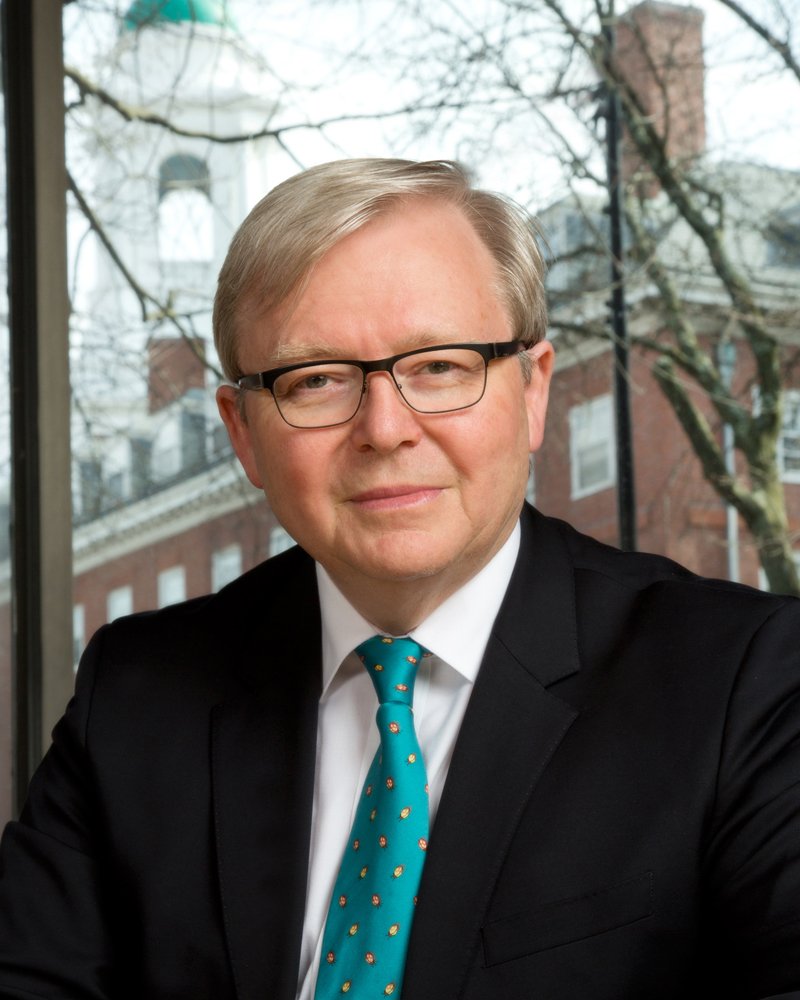
Twice Labour prime minister of Australia, Kevin Rudd is a heavyweight figure in Australian politics who oversaw his government’s apology to indigenous Australians after winning a landslide in the 2007 election. Forced to resign following internal tensions, Rudd was a candidate for Secretary-General of the United Nations and is now a Senior Fellow at the Harvard Kennedy School of Government.

Rudd will speak at the Union on Wednesday 11 October at 20:00.

Anthony Scaramucci

Popularly known as “The Mooch”, Scaramucci was appointed Communications Director in the Trump White House on July 21, before a controversial interview led to his firing just ten days later.

The Mooch was also previously accused of connections to a Russian investment firm by CNN, although these allegations were ultimately retracted.

Scaramucci will speak at the Union on Monday 16 October at 20:00.

J. J. Abrams

The director behind the Star Trek reboot and the latest Star Wars films, J. J. Abrams has a storied career in science fiction both on the big and small screen.

Abrams won two Emmy Awards for the hit TV show Lost, and through Star Wars: The Force Awakens is the director of the third highest-grossing film of all time.

He will speak at the Union on Wednesday 18 October at 20:00.

Sir Ian McKellen

Photo: Jack McGuire

Cambridge alumnus Ian McKellen, best known for his roles as Gandalf in The Lord of the Rings and Hobbit trilogies and as Magneto in the X-Men films, is an English actor who has in recent years become a champion of LGBT rights.

McKellen, from Burnley in Lancashire, began his career in theatre in the 1960s, but became widely recognised for his film roles in the 1990s.

Patron of Oxford Pride and a co-founder of Stonewall, Sir Ian McKellen will be speaking at the Oxford Union on Wednesday 8 November at 20:00.


Emeli Sandé

Emeli Sandé.

Scottish singer Emeli Sandé was studying for a Medicine degree at Edinburgh University before shooting to fame in 2011 with a host of chart-topping songs including ‘Read All About It’ with Professor Green and ‘Beneath Your Beautiful’ with Labrinth. Her debut album, Our Version of Events, was the biggest-selling album of 2012, shifting over one million copies.

She released her second album Long Live the Angels last year, and was awarded Best British Solo Artist at the 2017 Brit Awards. Earlier this year, she was also decorated with an MBE for services to the music industry. Her songwriting career has seen her pen songs for Rihanna, Leona Lewis and Tinchy Stryder, among others.

She will be speaking at the Union on Monday 13 November at 20:00.

Orrin Hatch

Photo: United States Congress

Utah senator Orrin Hatch is president pro tempore of the United States Senate and most senior Republican senator, in office since 1977.

A long-term advocate of balanced budgets, Hatch is notable for sponsoring several constitutional amendment attempts to ban budget deficits.

As president pro tempore of the Senate, Hatch is the second highest ranking official in the Senate and is empowered to preside over the Senate in the vice president’s absence.

Hatch will be speaking at the Union on Friday 17 November at 17:00.

Monica Lewinsky

Photo: Damon Winter/The New York Times, provided by the Oxford Union)

American activist and fashion designer, Monica Lewinsky rose to fame after President Bill Clinton admitted to having an “inappropriate relationship” with her whilst she was working as a White House intern in the 1990s.

Press coverage of the ensuing scandal saw Lewinsky engage in a number of public ventures including a line of handbags and an advertising role for a diet plan.

After completing a master’s degree in psychology at the LSE, Lewinsky has since become a social activist speaking out against cyberbullying.

Lewinsky will speak at the Union on Thursday 16 November at 15:00.

Liv Tyler

Model and actress Liv Tyler first achieved critical recognition for her role in Stealing Beauty, but achieved widespread fame with her portrayal of Arwen in the Lord of the Rings trilogy.

Making her television debut on the HBO series The Leftovers, Tyler has served as a Unicef Goodwill Ambassador for the United States. She will appear in the BBC miniseries Gunpowder alongside Kit Harrington next year.

Tyler will appear at the Union on Wednesday 29 November at 17:00.

Christ Church student who stabbed boyfriend avoids jail

2

Lavinia Woodward, the “extraordinary” Christ Church medical student who stabbed her boyfriend, is to have her future at Oxford decided by the University after receiving a suspended jail sentence.

Woodward stabbed her then-boyfriend, a student at Cambridge University, in the leg with a bread knife after punching him in the face. She also threw a laptop, glass, and jam jar at him in the attack on 30 September last year.

The 24 year old gained national notoriety after crown court judge Ian Pringle QC in May appeared to suggest that she would not receive prison time, prompting tabloid headlines such as “too clever for prison”.

He said: “It seems to me that if this was a one-off, a complete one-off, to prevent this extraordinary able young lady from not following her long-held desire to enter the profession she wishes to would be a sentence which would be too severe.”

Pringle sentenced Woodward today to a 10-month sentence, suspended for 18 months, meaning she will not go to prison unless she commits another offence.

Woodward will not return to university this year, and is reported to be considering continuing her studies abroad, because she is now “too recognisable.”

In a statement to Cherwell today, Christ Church Dean Martyn Percy said: “We note that Lavinia Woodward has been given a suspended sentence as a result of her conviction for unlawful wounding earlier this year. As a College we are concerned for the welfare of all our students, and it is clearly a matter of regret and sadness when any young person blights a promising career by committing a crime.

“Ms Woodward is not currently studying at Oxford, having voluntarily suspended her medical studies. The question of her future will now be decided by the University, which has procedures in place where a student is the subject of a criminal conviction.”

Sentencing Woodward at Oxford Crown Court today, Judge Ian Pringle told Woodward: “There are many mitigating features in your case.

“Principally, at the age of 24 you have no previous convictions of any nature whatsoever.

“Secondly, I find that you were genuinely remorseful following this event and, indeed, it was against your bail conditions, you contacted your partner to fully confess your guilt and your deep sorrow for what happened.

“Thirdly, whilst you are a clearly highly-intelligent individual, you had an immaturity about you which was not commensurate for someone of your age.”