
Wednesday 10th June 2026
Blog Page 3

‘The future of British politics is cooperation’: Jonathan Bartley on the Green Party, activism, and the importance of finding common ground

0

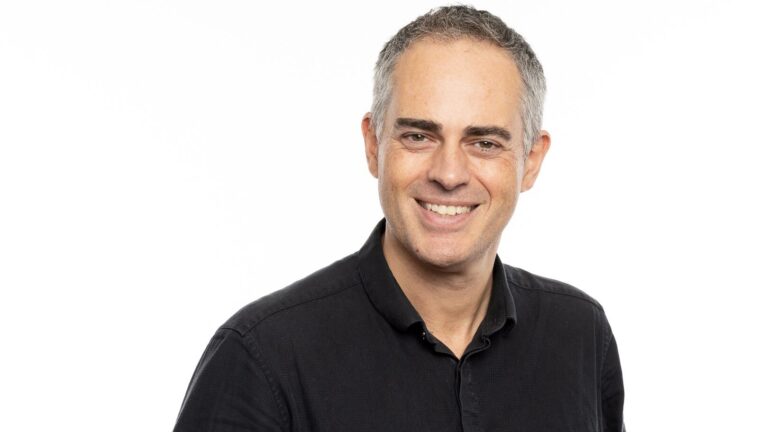
Jonathan Bartley lacks the standard political veneer that is typical in party leaders. I spoke to the ex-leader of the Green Party ahead of May’s local elections, and he is candid about his last-minute campaign. But what he may lack in professional polish, he compensates for in relatability. For this reason, I find it difficult not to nod along to the arguments he puts to me throughout our early morning chat. 

Bartley was co-leader of the Green Party of England and Wales, from 2016 to 2021, alongside Caroline Lucas and later Siân Berry. However, ‘politician’ wasn’t always his intended career path. “I fell into it”, he tells me. 

He landed a place studying Social Policy at the London School of Economics (LSE) which he confesses he did “more to keep [his] dad happy”, than anything else. Looking down the list of universities, Bartley recalls that, when seeing LSE, he thought, “I’ve heard of that!” and decided to apply. He admits that, despite hating school and initially wanting to pursue a career as a drummer, he “came to love” his degree, following it through to a political internship, working on a cross-party basis. “I didn’t really have a political ideology”, he says. 

Recalling how he ended up at the Green Party, Bartley chuckles: “My route was not the environment.” Instead, “the big turning point for me was having a child who was disabled”. He describes his son, Samuel, now 23, as having “opened up a whole world to me that I hadn’t seen before”. Trying to enrol him at the family’s local school was a “battle”, he tells me: “I got no help from my local councillors.” He joined the Green Party as a result, feeling they were the only party that genuinely “got inclusion”. 

“Up until a few years ago I would’ve thought we’re all making progress in all these different areas of human rights: trans rights, women’s rights, rights for people in the global South, migrant rights, disabled rights.” However, “in the last few years, with the rise of populism on the Right, there’s been a real pushback against that”. “It actually frightens me, it really does, and the Green Party is the only party that, for me, is offering hope against that backlash.” 

While not considering himself a religious man, Bartley cites the teachings of Jesus as influencing his politics on inclusion. He takes Jesus’ emphasis on equality, helping the most disadvantaged, and challenging power as being “groundbreaking for his time”. However, Christianity since the era of Constantine’s annexation of the religion, he argues, has instead become an “oppressive alliance” of “Christianity and empire, Christianity in government, Christianity in state, which has trampled over people’s rights and taken from those who have nothing and given it to the rich”. Having written two books on the topic of religion’s role in public life and politics, he feels the breaking down of Christian norms, and the promotion of the secular state has partially reversed this. But the historical role of the Church does provide an explanation, Bartley says, for “why we’re seeing a move back by the oppressive populist right to this idea of the Christian country, because it is oppressive”.

This is part of the politics of fragmentation he describes as so dangerous. “We are in an absolutely conflict-ridden society, where politics has been ripping friendships, families, communities apart”. To him, Brexit provided the perfect storm for fragmented politics to thrive, with Leave and Remain factions resulting in ruptures in local communities, demonstrating the need “to find a way to disagree well but also not demonise one another”. It is clear that conflict resolution and common ground is central to Bartley’s political ideology, and for this reason he has reservations about whether left-wing populism is a perfect antidote to right-wing populism.

He doesn’t view the Greens as having become more left-wing under Polanski, though, compared to under his own leadership. “So many journalists get this wrong”, he says, exasperated. Green Party policy is voted on by the membership rather than party leader, the idea that the party leader shifts the party to a different – or more left-wing – set of policies “is just nonsense, it’s just wrong”.

Bartley seems to regret the Greens’ unsuccessful attempt to work with Labour in either 2017 or 2019 under Jeremy Corbyn, who he says he has “huge respect” for. In reference to a wealth tax, Bartley stresses that Corbyn was “talking about all the stuff Zack [Polanski] is now talking about”. This is part of the reason why the party was unable to find a loyal demographic during his own time as leader he tells me: “We were talking about it but no one was listening, because of course you’re going to listen to Jeremy.

“When we did speak, we were only heard when we talked on the anti-fracking stuff, renewable energy, the Green New Deal”, Bartley explains. To him, therefore, what’s changed is not party policy but “the space to be able to say it, and I think Zack is saying it very well indeed”.

On his own time as leader, Bartley tells me that he spent a long time building up the systems, strategies, and infrastructure of the party. The need for this came after a surge in popularity it saw – albeit on a smaller scale than today – under the leadership of Natalie Bennet from 2012 to 2016, during a time when Labour was what Bartley describes as more right-wing. 

It wasn’t all smooth sailing, though. “One big regret was that I didn’t push what I believed was right more, internally in the party. So often I had a gut feeling about something but I listened to other people and let other people run with their views rather than my own, and that’s important in a democratic party, but the decisions were later proved to be wrong and I wish I’d have gone with my gut.” He cites setting up a party podcast, and having more populist messaging, to widen the Greens’ appeal, as examples of what he should have done.

There were successes however. The adaptation of their “target to win strategy” saw the Greens make gains at the local level, something that has continued during May’s elections. Oxford has proved to be a microcosm of conciliary success for the Greens, with Oxford University graduate Alfie Davis becoming the Green councillor for Hollywell, and boasting the third highest Green vote share in the country with 68% of the ward’s votes. 

Bartley is now a councillor himself, after a hiatus from politics since stepping down from party leadership in 2021, after coming third in the election for the Clapham Town ward, in the London constituency of Lambeth. 

On the subject of the next general election, Bartley appears cautiously optimistic about the Greens’ prospects. “You have to have that council base in order to win Parliamentary seats”, he explains. “Everyone kind of just expects the great MP candidate to arise and everyone will vote for them, and that’s not how it works.” But, “if you get that infrastructure in place…we then have a huge activist base on which to build and to win parliamentary seats”. He is, though, positive there will always be a need for the Green Party in British politics, in a “fragmented system” where the political right is gaining significant traction.

However, Bartley doesn’t have grand designs for the national party himself, saying he very much believes in letting Polanski “get on with it”. More frankly, he laughs: “I don’t think he needs my support.”

One of Bartley’s issues with the current Labour leadership is the sheer lack of authority. While he is reluctant to cite politicians he doesn’t particularly like – namely Tony Blair and Margaret Thatcher – as prime examples of commanding leadership, he admits that “they had authority just in who they were”. And Starmer? Not so much. Bartley puts this down to a lack of going out to “win the argument”, alongside “gaining this huge great parliamentary majority off a very small vote compared to what Corbyn was getting”. This frustration, Bartley says, is shared by many others: “So many people in the Labour Party that I’ve spoken to feel that he had this massive great majority and he’s doing nothing with it!”

Bartley visited Oxford in 2023 to speak at the Oxford Union, where he made a case for the proposition: ‘This House Has No Confidence in His Majesty’s Government’. He compared the then current Conservative government to ‘dead parrots’, in reference to the famous Monty Python sketch in which John Cleese attempts to sell a parrot that is clearly deceased. While Bartley remains convinced that the Tories are “a relic of a bygone time”, he puts to me that Labour are not quite dead for good: “I don’t think Labour are going to go away.” 

“The future in British politics, whether we like it or not, is cooperation…We need to find the people in the other parties that we can do business with.” This is a mindset Bartley has developed over his years in politics: “The older I get, the less and less tribal I am about my politics. I think tribalism is so destructive…it destroys truth, it doesn’t let us hear one another. When you are talking to other people, you want to convert them to your cause. If you just demonise them and say ‘well you’re Labour, I’ll forget about you’, you never convert anyone, you never convince, you never gain political ground. So it’s a very short-sighted political approach to take.”

It is clear that Bartley is steadfast in his opinions, and, from this, easy to deduce why he is in support of the Greens and Your Party’s closer working relationship.  “I’ve always felt that where there is common cause, we should work together.” Oxford politics societies are, too, open to cross-party cooperation, take joint events between Oxford Labour Club, Oxford Students Liberal Association, and Oxford University Liberal Association for instance. While student politics may not be influencing serious policy change, Bartley’s call for cross-party collaboration doesn’t seem to be falling on deaf ears. 

This seems to go hand in hand with the ex-leader’s position on electoral reform, with Bartley in favour of any proportional system, but specifically the single transferable vote where voters express a ranked preference of political candidates to choose representatives. Something that “lets people vote for what they want, rather than against what they don’t want has got to be the way forward.” 

The potential for proportional representation to aid Reform doesn’t deter Bartley. “Democracy is democracy, I think what we’ve seen particularly in local councils when reform got all those local councillors…people see what they really are like.” He stresses that “the alternative is if you don’t give people what they vote for: anger, frustration, violence, hatred. Democracy is about avoiding violence”.

Reflecting on his work as co-leader, he cites the Greens’ 2019 deal with the Lib Dems and Plaid Cymru as one of his proudest moments. At the 2019 general election, the parties agreed to each stand down in more than 60 total seats to avoid splitting the pro-EU vote. “It was very simple, we found four areas of common ground that we would agree to, and then we decided to stand down for one another in a certain amount of seats for a common cause.” 

Here, Bartley strikes me with an attitude of political optimism: “That shows it can be done, and the Lib Dems are a different party, we don’t agree with a lot of what they stand for, they don’t agree with a lot of what we stand for, but we could find common ground to work together where it existed.”

 Another one of his proudest moments was getting arrested while taking part in an Extinction Rebellion protest, and getting dragged away by police. “With activism, I think you’ve got to walk the talk.” In a similar vein: “I still am proud every time I get attacked for standing up to migrant rights…that’s the stuff that just bounces off. I think if I’m getting abuse about asylum seekers, that I want to let them all in, I wear that as a badge of honour.” 

“I can’t stand people that say they don’t have regrets!” Bartley exclaims. On his own, Bartley is more introspective, confessing to feeling most hurt when he feels he’s let his own party members or colleagues down. While he also reasons that he may have also missed out on certain experiences to do Question Time and analogous news shows: “I’m proud that I always pushed for Caroline and Siân to do more [press], because we needed more women’s voices out there and they didn’t want another middle-class, male, white guy.” Recalling a particularly vivid memory about the details of these press rehearsals: “One time I played Boris Johnson when Caroline was rehearsing!”

Looking forward, Bartley’s personal hopes lie in helping new local councillors thrive in roles they may not have had previous experience in. “They’re quite young and they haven’t done the job before, and they will need support and they will need allies…because it is so tough being a councillor”, Bartley says. While he may be taking more of a backseat in terms of the Greens’ national campaign, this is still clearly a party he is devoutly dedicated to. 

This attitude defines Bartley’s approach to politics. He talks candidly about British society, and it may be the time he has spent away from the limelight that allows him to discuss his ideal political system in this way. From this, it’s clear he’s much less interested in the histrionics of Westminster, and more with the important minutiae of local politics. To him, this is the way to make real change to life for the average Briton. 
Oxford hit by second major data breach of the term as CareerConnect hacked

0

The University of Oxford has informed students of a data security incident involving GTI, the company which provides the University Careers Service platform CareerConnect.

In an email sent to students on late Friday afternoon, the University said the breach involved “student names and email addresses”, but that “user passwords and any other personal data were not obtained”. A University spokesperson told Cherwell that Oxford was first informed that it was “impacted on Thursday afternoon of last week”.

The University’s email did not specify how many students were affected by the breach, nor was there any mention that the recipient was a victim of the breach. The University told Cherwell that it is “expecting more information from the external provider GTI on precise numbers” of students affected.

In the email, the University confirmed that it “takes incidents involving personal data seriously” and is “continuing to monitor and assess the situation”, adding that further updates would be provided “if necessary”.

The University stated that the CareerConnect platform “has now been secured” and that there is “no immediate action needed” from users. However, students were advised to “remain vigilant for unexpected emails” and avoid clicking suspicious links or providing personal information unless confident that communications are genuine. The University told Cherwell that there is currently no evidence to suggest that the compromised data has been misused or shared.

The email also clarified that the incident is “unrelated to the previous data security incident involving Canvas”. The breach follows widespread disruption earlier this month after the University temporarily suspended access to Canvas, its virtual learning platform, following a hack of Instructure, the service provider. In an email sent to all students by the University, it was confirmed that “some Oxford user data is affected” and that this “may include names, email addresses… and messages exchanged between users within Canvas”. 

The sound of belonging: Exclusion through language

0

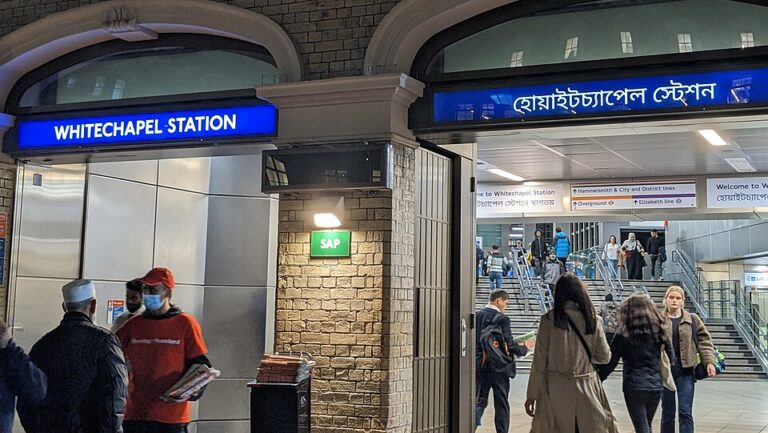
Calls for migrants to learn English, supposedly for the purpose of ‘integration’, have formed a large part of immigration discourse in recent years. In 2022, Transport for London unveiled a new sign at Whitechapel tube station, written in Bengali. The initiative was intended to commemorate the contribution made to the London Borough of Tower Hamlets by the Bengali community, which comprises 35% of the borough’s population. However, just last year, MP for Great Yarmouth and leader of Restore Britain, Rupert Lowe, condemned the sign, writing that it “should be in English, and English only”, which in turn received a succinct “yes” in reply from Elon Musk.

The sentiment of Lowe and others demonstrates the fact that the English language is itself political. As a consequence of Britain’s imperial, mercantile, and often violent contact with communities across the globe, English has forcibly become the lingua franca of the modern world. The results of this, I believe, are twofold: large parts of the world do speak English, having either been colonised by the British or extensively traded with. But, some level of spoken or written English is now seen as a certain bet in all corners of the world, where it perhaps should not be. The expectation of migrants to learn English, while having no time or space made for their native languages, is a form of insidious hypocrisy. In turn, the expectation that English should be accommodated abroad is reflective of the entitlement that comes with being the historic beneficiaries of empire.

The reactionary outrage at Whitechapel station was perhaps outdone earlier this year by the controversy surrounding the Green Party’s decision to publish campaign materials in six different languages. The Oxford branch of the party posted their own promise of accessible communication to their Instagram in April, with the message translated into Arabic, Portuguese, Mandarin, and Polish. Yet, similar efforts in Leeds and Manchester were met with staunch criticism from the right. In the context of the high-profile by-election in Gorton and Denton earlier this year, GB News’ reporting describes the move as prompting “accusations of sectarianism”, and Ed West of The Spectator writes of the Green Party as “Britain’s sectional Islamist party” – essentially accusing the Green Party of privileging Muslims at the expense of an undisclosed and indeterminate group. Outrage in the media bleeds into legislation: Conservative MP for Hamble Valley Paul Holmes’ proposed amendment to the Representation of the People Bill, which would have banned the publication of campaign materials in foreign languages, was proposed and rejected in parliament on 16th April 2026.

Is this practice really ‘sectarian’? Or, is it a show of inclusivity to non-native English speakers, in an increasingly hostile political environment? Those who may not have British or Commonwealth citizenship, and therefore cannot vote, also still deserve to know what is going on in their area. Political language can often be full of jargon and unintelligible for even a decent speaker of English, and keeping all residents informed equally may only improve social cohesion. Fundamentally, the Green Party is much more welcoming of migration than any other major British party, and its campaign certainly reflects this.

As a city, Oxford is relatively progressive when it comes to accommodating migrants with little English – it has been a City of Sanctuary since 2025, meaning that it prides itself on the dignity and welfare it affords those seeking sanctuary, working with schools, local charities like Asylum Welcome, and further education colleges to provide low-cost or free ESOL lessons. Oxford is also twinned with seven cities, spanning from Italy to Palestine, and international students make up 43% of the University’s student body, contributing to a general atmosphere of open-mindedness amongst the numerous cultural societies offered. But while Oxford may be leading the pack in this sense, and may also benefit from the impassioned swathes of student activists, progress is not always linear – there have already been two protests this term by Oxfordshire Patriots, whose organiser reported to Cherwell that he doesn’t “believe Nazis seem very good, however, some of our views are the same…I don’t agree with everything they say”. In this month’s local elections, the head of the University’s Staff Immigration Team, responsible for providing “free and impartial advice on immigration matters to current and prospective University employees, visitors and their accompanying dependants”, ran unsuccessfully in Oxford’s Littlemore ward as a Reform UK candidate, representing a party that wishes to abolish Indefinite Leave to Remain and withdraw from the European Convention on Human Rights (ECHR).

The simple fact is that life is far more difficult when you do not speak the dominant language. Anecdotally, it can be anxiety-inducing to go to a foreign country and not know how to buy a bus ticket, ask for medicine, or order food. What’s more, learning a language is also a hugely difficult task, the obligation of which does not seem to apply to British people in this discourse: Britain is the least likely European country to speak a second language. And the very lack of obligation to do so harms sole-English speakers too – this also being a significant factor in the poor language teaching standards at British schools. Only 2.97% of 2024 A-Level entries were for a classical or modern foreign language. As a result, Britain ranks far behind other European countries in bilingualism (50% overall vs 30% UK).

It would be a lie to claim that speaking English presents an equal playing field, as Britain’s own problems with accent discrimination have been well-documented. Crucially, most migrants do speak at least a decent level of English: the University of Oxford’s Migration Observatory found that 90% of migrants residing in the UK self-reported as speaking a good level of English in the 2021 census, and that use of English only increases with time. Several studies have shown that migration patterns tend to align with historic ties to colonial powers – for example, a French speaker from Senegal may be more likely to emigrate to France – due to linguistic and cultural ties to the imperial centre (however, this may not always outweigh the economic factors which contribute to migration). While sensationalised reports may speak of one million migrants being unable to speak English, they neglect the nine million migrants who can speak English.

Ultimately, I think that history matters, and that the British government has a particular responsibility to accommodate all migrants actively welcomed into the country. From Windrush onwards, migrants were regularly employed in Oxford’s car manufacturing industry, an economic powerhouse with a rich history. Is it right to exclude from society those who do not have a perfect grasp of English, using the language as a barometer of how much one might ‘deserve’ a normal life in Britain, when the simple fact of the matter is that Britain’s colonial past has diversified the country? Should we force those with poorer levels of English to suffer the barriers to a good quality of life that English-only signage can pose? Why do we shudder at the thought of this, while expecting English to take us so far while abroad?

Protest held outside Linacre College over allegations of racism and mistreatment of ex-employee

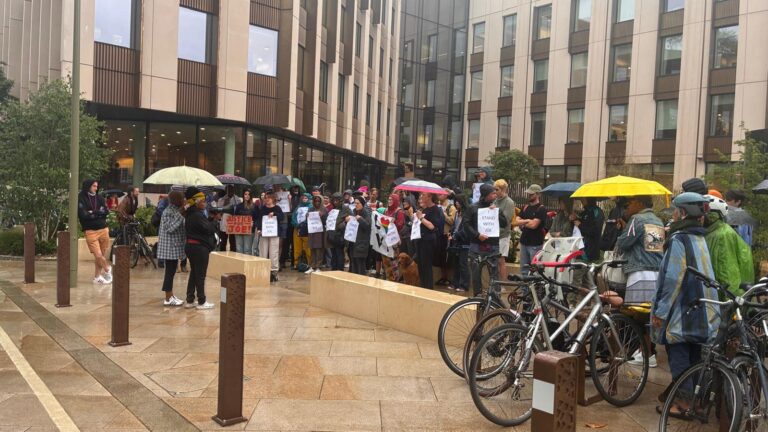
A protest took place outside Linacre College on Monday evening in support of a former kitchen worker who has brought an employment tribunal claim against the college over allegations of racism, bullying, and unsafe working conditions.

Around 60 people gathered outside the college from 5.30pm, holding signs reading “Justice for Joe” and “I stand with Joe”. Protestors also chanted “shame” towards the college. 

The protest followed allegations concerning a former employee, known as “Joe” for the tribunal, who worked at the college for 26 years. Joe has alleged that a manager referred to him using racist language, mocked his Caribbean accent, and attempted to force him out of his job. He also claims that he was required to wear unsuitable footwear, and alleges that this contributed to him developing gangrene, which ultimately resulted in the amputation of his leg. Joe also claims that a senior member of staff visited him whilst in hospital, pulled the sheet back from his leg and said, “I want to see if it is true that your leg has been amputated”. An employment tribunal is due to consider the case later this month.

Linacre College has strongly denied the allegations. In an email sent to college members ahead of the protest, and shared with Cherwell, Principal Dr Nick Leimu-Brown described the allegations as “extremely serious” but said that the College “rejects those allegations and disputes the claims that have been made”. Leimu-Brown also wrote: “The demonstration has been organised under the slogan ‘Justice for Joe’. Whatever views individuals may hold about the case, I hope we can all agree that genuine justice depends upon a fair and independent hearing of the evidence. I would encourage everyone involved to respect the legal process that is already underway. Justice is never served by heated argument on social media.” He added that the matter was subject to ongoing legal proceedings and that “the truth of the claims are for an Employment Tribunal to determine”. 

Linacre has also previously emphasised the College’s commitment to diversity and maintaining an inclusive working environment for all staff, which doesn’t tolerate racism or discrimination.

Several speakers addressed the crowd during the protest. One of the speakers was Professor Gus John, a race equality campaigner who studied at Oxford. Addressing the crowd, John described Joe’s alleged treatment as “a form of lynching” and argued that “racism kills and it kills instantly and it kills slowly”. He told protesters that Joe’s experience represented “a slow and deliberate lynching”. 

John also told Cherwell that it was “absolutely appalling that a university college could be treating an employee in this way” and argued that it was “absolutely essential that we understand how long we’ve been on this road in our struggle against racism”. He also called for campaigners to remain “committed for the long haul”.

The organiser, Dan, told Cherwell that the protest served two purposes: to show that “the community is behind you”, and to send a message that “the community is watching” the college. He added that Linacre should “acknowledge, apologise, and atone for the harm they have done to Joe” and provide compensation if the allegations are upheld.

Geoff Taylor, a retired teacher at St Clare’s in Summertown and UCU member, said he had attended because of the “abominable treatment of Joe”, and repeated the trade union principle that “an injury to one is an injury to all”. Carole Scott from Oxford Stand Up to Racism told Cherwell that campaigners “have to stand in solidarity with those who have suffered racist abuse”.

Multiple speakers also criticised the lack of action from Joe’s union, UNISON, in providing legal support in the tribunal. In his speech, Professor John described a lack of support for Black workers from parts of the trade union movement, labelling UNISON as “a disgrace” and arguing that it was “ignoring the humanity of it all”. Cherwell has been unable to verify these claims of incorrect handling of the case within UNISON and discriminatory treatment by the union. UNISON refused to comment to Cherwell, “as this is still an active case with ongoing proceedings”.  

Several attendees also said they planned to raise Joe’s case within their local branches. Peter Cann, a retired member of the National Union of Journalists and UNISON, told Cherwell that he would be calling on both his NUJ branch and local UNISON branches to condemn what he described as an “appalling act”, and said he would ask his UNISON branch to examine the role of union officials in Joe’s case.

The demonstration was also attended by multiple local councillors. Oxford City Councillor for Holywell (the ward that Linacre sits in), Dr Dianne Regisford, told Cherwell she was there to show “support and solidarity” and was calling for “a full investigation into the allegations”. Oxfordshire County Councillor for Linacre Emma Garnett also described the allegations as “absolutely horrific”.

Very few students were in attendance at the protest, but one told Cherwell that she was “standing in solidarity with Joe” and wanted to ensure that more students were aware of the issue and “how relevant it is to us as participants in the institution”. Otilia, a Linacre student attending the protest, told Cherwell that she hoped students within the college would consider what action they could take, adding that this case conflicted with Linacre’s public commitment to diversity. 

Goodbye football: Welcoming political tension to the centre stage of the World Cup

0

It’s been four years since England men lost to France at the quarter finals in Qatar. Since then, the women have won the Euros twice – in 2021 and 2025 – bringing football home for our success-starved nation: it would be amazing if England could repeat this success in this tournament too. 

However, when approaching the 2026 World Cup in North America, my thoughts don’t drift towards football. I’ve barely considered the players in our squad or our chances at success. In fact, the game itself has taken a backseat. Instead, the politics, headlines, and contentious issues that we’ve already seen in the build-up have dominated the discussion. With all these different factors at play, concern trumps any excited anticipation in the build-up to the tournament.

There are plenty of places to start when considering the disarray of this World Cup, but I think a relatively simple place to start would be with the fans. Supporters are the very essence of football. Whilst there can certainly be issues, the majority of fans merely want their team to win. For this reason, the ticket prices for this tournament are completely unfair to these loyal fan bases. Back in December, FIFA (Fédération Internationale de Football Association) announced that the cheapest tickets for the final would still cost over £3000. Naturally, this is completely unrealistic for many football fans, now left with no chance  to watch their team play. This doesn’t even consider their devotion in terms of flight, accommodation, and transportation costs. In fact, even the president himself said that he wouldn’t pay to watch the US play Paraguay in the group stage.

The frustration in terms of profit still runs even further. One of the new features in this year’s tournament is ‘Hydration Breaks’. In other tournaments, so that high temperatures don’t have a negative effect on players, time is allocated for athletes to rehydrate. However, these breaks have been introduced as a compulsory requirement for every match in this tournament, regardless of whether they are playing indoors or outdoors, in a conditioned or unconditioned stadium. This means that matches will only be played for 22 minutes before a break, which some have noticed aligns these games more closely with American football. 

On the face of it, these breaks may seem beneficial to the players. However, the Guardian has found that this offers FIFA more than 200 guaranteed slots for advertising. Naturally, more advertising allows for only more revenue. This brings into question, then, whether FIFA is truly concerned about the safety of the players, or simply just its own profit boost. Whilst the decision could, of course, be informed by both, it does suggest that FIFA’s goal in this tournament is to severely boost the revenue they receive, despite the rules of the sport and the loyalty of the fans. This is further endorsed when considering the high ticket prices.

Additionally, many stadiums have had to change their names temporarily for the tournament. Some originally had brands as their stadium names, such as the Mercedes-Benz Stadium. However, in order not to hand out free advertising to companies which aren’t sponsoring the tournament, the names have been changed to generic city names. Mercedes-Benz Stadium, for example, is to be known as the Atlanta Stadium for the duration of the World Cup this year. Though this may not have a direct impact on the game itself, it once again highlights that capital is premium in this tournament is decentralising and almost displacing the very essence of the game for wealth-snatching tactics.

Furthermore, the World Cup, for the first time, is taking place across an entire continent. Whilst that may be an exciting part of football history,  the sheer size of the continent also provides something of a logistical nightmare. The tournament will take place across four time zones, with some stadiums up to almost 3000 miles apart. Frustrating for fans, who want to see their teams once they’ve passed the group stage, the sheer cost of travel is something that won’t be easily managed – especially alongside the already extortionate ticket prices. Secondly, it’s a long way to go for the players, who will have to travel wide expanses to play their next match. Even if this may affect all players, it does add a degree of difficulty, considering that 104 games will be taking place across 39 days. The excitement of such international hosting is somewhat lessened when visualising the tricky logistics for both fans and teams.

Moreover, there remains an ongoing concern over ICE (Immigration and Customs Enforcement) raids in the USA. Even back in January, the FSE (Football Supporters Europe) fan group expressed concern over such events. There have also been concerns, in light of these raids, over fans’ personal safety when travelling to the US. Supporters have no reason for their fears to be alleviated, as Todd Lyons (director of ICE) expressed that the enforcement group’s presence was a necessary part of the World Cup. With regular stories on the news and social media, it’s no wonder that fans – forced to constantly consider their own safety – are sceptical about the role that ICE will play in the tournament.

Concerns have also been raised over new security checks for fans entering the country. Back in December, President Donald Trump announced security checks that would involve checking tourists’ social media accounts. This affects 42 countries, one of which is the UK, in the interest of the safety of Americans. However, according to the Guardian, the FSE described the new measure as “profoundly unacceptable”. This is just another step in an already difficult journey to the US, possibly compelling fans to hand over access to their social media histories dating back up to five years. This could be seen not only as an invasion of privacy, but also as a policing of private lives – another deterrent to devoted fans.

According to BBC Sport, the American Hotel & Lodging Association (AHLA) has had up to 70% of FIFA-reserved rooms cancelled in major cities like Los Angeles, Boston, Dallas, and more. When considering all these factors, it can’t be a shock that reservations are being cancelled. This tournament no longer focuses on the game itself, removing the very passion of the sport and replacing it with a fear of the political and economic climate. Football is not the focus of this World Cup.

Yet, I hold some hope. Whilst writing this article, the England squads have been announced. This may not be relevant to everyone, but as a Three Lions fan, I was surprised to see some of the changes that have been made to the team. Greats from previous tournaments such as Foden, Maguire, and Alexander-Arnold are all missing out on the chance to bring football home in this World Cup. And whilst that may be a questionable move, it finally brings the discussion back towards football. On top of that, Shakira has released a promising official World Cup song once again, saving the day with ‘Dai Dai’. With her reappearance comes the return of the nostalgia of previous tournaments.

The fate of the World Cup is undecided. The atmosphere around the tournament is certainly focused on everything other than football, with political, economic, and social matters drawing away the attention of fans. However, we’re being gradually tugged towards the game itself, hopefully shifting the atmosphere towards a more positive, football-focused one. Whilst we don’t know what’s to come, I do know that fans will be brought together in the spirit of the game, and that’s what it’s truly about.

Hasan Piker and Cenk Uygur denied entry to UK days before Oxford Union and Oxford Speaks events

0

Cenk Uygur and Hasan Piker, both due to speak at the Oxford Union later this week, have been barred from entering the UK after the Home Office revoked their Electronic Travel Authorisations (ETAs).

Uygur and Piker had been scheduled to appear for an event advertised as “Joint Event & Student Head-to-Head” at the Union on 6th June. Both were also due to take part in events at South by Southwest London (SXSW), a music, film, and technology festival. Uygur was additionally expected to speak this term at an event hosted by Oxford Speaks.

Uygur is the founder and host of The Young Turks, an online news and politics talk show. Piker, Uygur’s nephew, is one of the most followed political livestreamers worldwide, with millions of followers across Twitch, YouTube, and X. Both are prominent figures in online left-wing commentary, particularly through their criticism of Israel’s actions in Gaza.

Ugyur announced the decision on social media on X last night, writing: “I’ve been banned from the UK. I tried to get on a flight to London to attend SXSW London and give a speech at Oxford. I’ve been banned for criticising Israel. Are we free anymore? This is oppression of Western citizens by our own governments on behalf of a different country!”

In a video published on The Young Turks channel this morning, Uygur added that he currently holds a two-year visa, which he understands to have been revoked, and described the decision as “a bit of a gut punch”.

Responding to Uygur’s tweet, Piker said that his authorisation had also been revoked, writing: “The UK has revoked my visa as well. all at the behest of Israel.” He also claimed that the decision reflected a broader abandonment of “liberal values” by Western governments.

A Home Office spokesperson told The Guardian that the pair’s ETAs had been cancelled because their presence in the UK “may not be conducive to the public good”. The spokesperson added that such decisions are based on assessments of the risk an individual may pose to society. 

According to The Times, concerns were raised by the Home Office about Uygur’s previous comments on Israel. The newspaper reported that the Home Office decision is understood to have been based on concerns that his presence could exacerbate antisemitism. The Times coverage also cited concerns regarding comments Uygur had made about grooming gang scandals in the UK.

Oxford Union President Arwa Elrayess told Cherwell that the Union was “deeply concerned” by the revocation of the speakers’ ETAs. She described the timing of the decision as “troubling” given that the event had been “publicly announced for months”. Elrayess added that the Union was founded on the principle that “ideas should be challenged through debate, not ignored or silenced”, and argued that invited speakers should be able to express their views and be challenged by members “irrespective of political viewpoint”.

Elrayess also told Cherwell that the Union would “not allow this event to be shut down”, and is exploring alternative options for the event, including hosting it online, and said the society remains “steadfast in its commitment to open debate”.

The decision follows criticism of both speakers from politicians and campaign groups. Last week, Labour MP David Taylor called for Piker to be prevented from speaking in the UK, and added in a tweet shared this morning: “Thank you Home Secretary for revoking Hasan Piker’s visa. There’s no reason to open our doors to those who seek to spread hate and division, especially to those who’ve supported a proscribed terror group.”

The Community Security Trust (CST), a charity which provides physical security, training, and advice to protect British Jews, also urged organisers of SXSW London not to provide Piker with a platform. CST accused him of “promoting rhetoric that includes antisemitic themes, denial of well-documented atrocities and apparent support for extremist groups”.

Piker has also faced criticism for a number of previous remarks. In 2019, he apologised after saying that “America deserved 9/11”, later describing the comments as inappropriate. He has also been criticised for comments about Hamas and Israel, including saying that he “would vote for Hamas over Israel every single time” on an episode of Pod Save America. Piker has repeatedly denied accusations of antisemitism, describing himself as anti-Israel rather than antisemitic.

The decision also comes amid ongoing controversy over speakers invited to the Oxford Union. Earlier this term, Carl Benjamin was disinvited from a Union debate following objections from student groups. Far-right figures such as Tommy Robinson and Laurence Fox are also due to speak at an event later in the term, which has incurred significant backlash from across the University and the Oxford community.

OUFF’s ‘The Oxford Tales’: Celebrating student filmmaking at Oxford

0

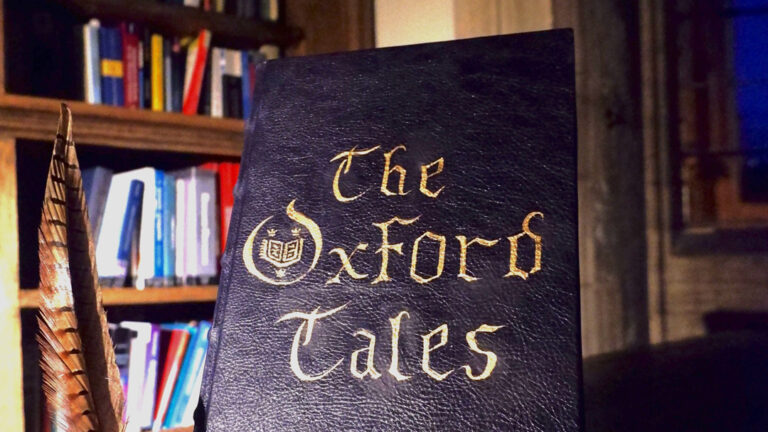
It’s no secret that Oxford has long been an idealised location for film sets; official-looking SUVs with blacked-out windows and attendants in high vis parading up and down Catte Street and around the Rad Cam are a not-unfamiliar sight. What’s missing from a lot of representations of Oxford in film, however, is a more nuanced take on the student perspective. It makes sense, then, that a key aim of the Oxford University Filmmaking Foundations’ anthology project, ‘The Oxford Tales’, was to platform the plethora of student talent at the university. 

The screening of the five films in the anthology responding to the theme ‘Oxford Tales’ was the culmination of a process which had been underway since September 2024, and took place at the Schwarzman Centre on Friday, 22nd May. I was fortunate to be invited by Charlie James, creator of the project and president of OUFF from 2024-25. James informed me that ‘The Oxford Tales’ has been the ‘largest student film project in Oxford’s history’, involving around 136 students in the actual filmmaking process, in addition to the 100 who submitted scripts for the competition. The project is also notable because of the names it has behind it – acting as mentors for the project were Mike Newell, director of Four Weddings and a Funeral and Harry Potter and the Goblet of Fire, and Cleone Clarke, who produced The Father and Loving Vincent. Following the scriptwriting competition, which saw five scripts selected by the directors, Kenneth Lonergan (Manchester By the Sea, Gangs of New York) led a script development session. 

With a celebrity heritage consisting of actors like Hugh Grant and Imogen Stubbs, the OUFF isn’t exactly a stranger to attracting such attention, but what is clear is the joint enthusiasm Newell and Clarke had for this project. Originally invited by OUFF to give a talk, Newell commented that he found that the “appetite” for filmmaking in the Oxford student sphere was such that he was inspired to offer a filmmaking masterclass, and from there, the idea of ‘The Oxford Tales’ anthology began to develop. Prior to the screening, Newell expressed enthusiasm about the idea of this project kickstarting a “movement” which could potentially spread to other universities: “It would be a real waste” if this was the only time such a project took place, he commented, and was matched in his enthusiasm by Clarke, who remarked that it was an “honour” to be involved in the project. 

The atmosphere before the screening was tense, to say the least. Collected in front of the entrance to the cinema in the main atrium of the Schwarzman, some students buzzed excitedly about the process and Newell and Clarke’s attendance, eager to talk to the film giants, whilst others baulked at the prospect of seeing their film on the big screen for the first time. As Newell commented, seeing your own film is “horrible”, but at the same time, it can be “tremendously invigorating” to see the result. 

The films themselves covered a range of topics and genres, such as the horror-comedy Food For Thought, which told the story of an English student, Myra (Irisa Kwok) who, after nurturing suspicions that her tutorial partner Victor (Gilon Fox) isn’t quite what he seems, discovers that his desire to “consume” knowledge has led him to, literally, eat books. This obsession quickly turns dark, leading him to murder (and presumably, cannibalise) their tutor. Following the same comedic inclinations was the mockumentary-style film Hinkssie, in which the Oxford University Loch Ness Monster Sighting Society (OULNMSS), headed by the overzealous Jacob Beaumont (Zee Lloyd-Elliot), will do anything they can to get funding for their trip to Loch Ness – after numerous hiccups, their fortunes finally reverse after they fish a severed hand out of Hinksey Lake, using the diamond ring on one of the fingers to fund their trip. Cherwell even gets a mention, apparently describing the society as “monster freaks”. 

Comedy indeed seemed the favoured genre across the anthology, with the slapstick Free Drinks (in, exchange for as we are told by a note on the door to a college bar, “items stolen from other colleges”) taking the crown for most absurdity – starting off tame, the spoils become progressively more daring, including “Brasenose fourth year classicist’s hair”, and an actual dog (played expertly by Keble’s Rievaulx). The quest for free booze, mingled with the specific flavour of rivalry particular to the Oxford collegiate system (or, perhaps, that of 20-somethings desperate for a free pint) inevitably ends in a chaotic bar brawl-stroke-bloodbath. Following a simple but effective concept, the directors also emphasised the collaborative nature of the process, commenting that she encouraged the crew to contribute their own ideas during filming. 

It wasn’t always a smooth process, though. Boyi Li, one of the directors of Hinkssie, recalled the challenges of navigating numerous issues such as dead batteries and volatile weather; budget was another issue, with the producers having to be creative about which sets they used – one of the library scenes in Food For Thought, for example, was clearly filmed in two different locations, whilst the directors of Thursday (Julia M. Schaub and Sophie Duffin-Jones) had to combat scheduling conflicts and the Herculean task of creating a believable hospital set on a miniscule budget. But, as one of the directors of Free Drinks, Marnie Rodriguez-Skellon, remarked, “with constraints come creativity”, and this was particularly true for Freshers, which utilised various spots around St John’s College, a montage of blurry club photographs from a film camera and the streets of Oxford for its set. The final scene, filmed in what appeared to be a back street somewhere between Merton and Corpus Christi, was particularly moving; as a group of carolers sing softly in the background, huddled under the light of a street lamp, the protagonist William (Ezana Betru) contemplates a poster for the Acapella Society, thus taking up an interest which the chaos of fresher’s week had threatened to quash. 

Whilst all five scripts were undoubtedly strong, some of the dialogue risked slipping into Oxford stereotypes in sounding overdone or hackneyed. When in Food For Thought, Myra accuses Victor of being a “pillaging coloniser”, for instance, I couldn’t help but wince; similarly, describing Fresher’s week as “my week of anarchy, my week of wonder” in Freshers didn’t quite hit the satirical mark it had hoped to. Yet there were plenty of golden moments – the tutorial discussions were fast-paced and intense, whilst gleefully capturing the caricature of the overblown literature student (Victor’s argument for the “pseudo-liminal performance of femininity” in Chaucer was almost painfully apt). Similarly, Adrian C. Smith as the tutor, Dr Pemberton, perfectly rendered a character closer to a camp Boris Johnson, whose indignant protest, “you’d expect this at Cambridge!” as he is strangled drew easy laughter from the audience. 

The standout for me, though, was Thursday, which brought the genre of the medical drama to the otherwise comedy-dominated lineup. The film followed medical student Anna (Caeli Colgan) on her night shift, dealing with a busy triage and run-of-the-mill cases such as an older patient suffering from indigestion. Tragedy strikes, however, when a young woman is brought in to A&E after being hit by a car, cycling home from her own placement at a local hospital. Anna is forced to confront the horrific truth that, had she been in the wrong place at the wrong time, this could have been her; after the patient is lost, Anna returns to triage, with the sounds of the hospital rising with her emotional distress, carefully straddling the line between intra and extra diegetic.

Though Thursday throws the pressures faced by NHS workers into sharp relief, the film does not stray too far from the theme of ‘The Oxford Tales’, as it also explores the difficulty of establishing strong relationships in both a university and working environment. We watch as Anna struggles to engage a fellow placement student in conversation after her shift; similarly, returning to her usual study spot with coursemate Mike (Alex Brogan) at her college library, we wonder if she will finally be able to open up to him about her experience, but such a hope is dashed as the mounting hospital noises in her head abruptly stop as she begins typing. What the film also achieves, then, is contributing to a discourse about the isolating experience of medical students and the importance of close friendships to navigate the challenging early stages of their careers. Thursday looks beyond the classic Oxford themes seen in film, imagining a life after it which is jarringly separate from its honey-coloured college walls and student rivalries. 

After leaving the screening, I couldn’t help but agree with Newell – it would indeed be a shame if the project were to happen only once. OUFF’s ‘The Oxford Tales’ has brought the diverse and captivating talents of this university’s students to life, and I sincerely hope, in the future, that they will be brought to an even bigger screen. 

Colour and codification: Eleanor Medhurst on queer fashion

Eleanor Medhurst is a historian of queer visual and material culture, with her website Dressing Dykes creating a space for lesbian fashion, be it past or present. As the June sunshine heralds the start of Pride month, I interviewed Eleanor on the shifting borders of queer fashion – whether it’s intentionally stylish or not.

Obviously, the rainbow flag is the fabulous symbol of pride, but how does colour relate to queer fashion more generally?

Colour is everywhere in queer visual culture, including fashion – these are themes that I explore in my next book (more on that soon!), but which also appear in Unsuitable: A History of Lesbian Fashion. There’s a lot of symbolism within queer fashion: ways to speak with our appearance when it hasn’t always been safe or possible to share our identities out loud. Colour is one of these, often in the form of coloured flowers (like the green carnation or lavender) or shapes (like the pink triangle). These are usually references to queer history, and their incorporation in fashion is a sort of ‘if you know you know’ situation.

How do you think Pride as a celebration has influenced queer fashion?

I think that Pride as a protest has influenced queer fashion in how it’s often a loud, unavoidable event where queer people put themselves on display in order to make queer lives (and queer issues) visible to the general public. A key link between Pride and fashion is the use of bold, slogan t-shirts, which are often handmade and boast activist messages. As Pride has, in some contexts, become more of a festival, references to the rainbow flag are unavoidable; this works as a kind of visual shorthand to assert a queer presence in the world that is recognised by almost everyone.

How do you think queer fashion still grapples with constructs of gender?

Clothing in general is still so regulated by gender. It’s often still taboo for men to wear skirts, for instance, and colours like pink hold especially gendered connotations in our clothes. Queer fashion often unpicks these meanings – usually in a playful, creative way. Queer people are really at the frontline of gender deconstruction within fashion and self-presentation.

How have assertions of the sensible shaped perceptions of lesbian and trans fashion specifically?

Lesbian fashion is stereotypically unfashionable – full of sensible shoes and dungarees, very much shaped by feminist ‘uniforms’ of the 1970s and ‘80s. These are revolutionary in themselves: they carved out space for women to dress in clothes that weren’t always feminine. They made room for comfort and practicality in women’s fashion, letting the borders between gendered styles become less defined. But it’s important to note that this is also not all that lesbian fashion can be – sometimes lesbians dress in clothes that are campy and glamorous, and not at all practical!

In your essay Lesbian Activism and Crafted Fashion you delve into the histories of lesbian knitting practices. What do you think the link is between queer fashion and craft more generally, especially in a world where handmaking is experiencing a resurgence?

This is a pretty big topic to cover, and I’m not sure that I can do so in a single answer: I’m currently working on an entire PhD about lesbian craft! Generally, though, queer people are often drawn to craft because it provides a way for us to shape our own place in the world; in a world that isn’t made for us, this is a powerful thing.

Writing from Oxford (and the backdrop of its academic history) do you think location plays a significant role in different attitudes to queer dress?

I think that location definitely plays a role in attitudes to queer dress, as some places have much more accepting environments than others. This is often based on how queer the population of a particular place is, and how normal it is to see people dressing in non-normative ways!

With the controversy surrounding the Met Gala – and the encroaching power of oppressive voices within fashion – how do you think queer fashion sits within the industry today?

Queer fashions have often been outside of the fashion industry altogether. Sometimes this comes from not being accepted within the mainstream, and others from a place of radical politics. While queer people have always worked within fashion, the fashion industry has also exploited queer style, borrowing elements of queer culture and diluting their meanings for mass appeal. It’s a complicated landscape, and one that is difficult to disengage with: we all get dressed every day, after all. 

You recently wrote a book on Billie Eilish’s style. She has an incredibly distinct image while maintaining the priorities of sustainability. How do you think this can be worked into wardrobes more broadly, as a queer symbol or otherwise?

Sustainable fashion is an important topic for a lot of queer people. It goes hand-in-hand with a DIY ethos, as well as the link between craft and queerness that I touched on above. Sustainability can mean many things, but to many queer people it’s about reinvention: giving things a new life, remaking them, making them our own. 

And last but by no means least, who is your queer fashion icon?

There are so many! Historically, some of my fashion icons include Natalie Clifford Barney, Gladys Bentley, and Madge Garland. In the present day, I’m going to go for the obvious (but correct) choice, which is Chappell Roan.

Behind the red curtain: ‘Stories From an Abandoned Warehouse’ reviewed

0

Crazy Child Productions’ Stories From an Abandoned Warehouse was a surreal, emotionally-charged spectacle that blurred the line between expressionist nightmare and dark comedy. Through its distorted and emotionally charged aesthetics, the production transformed the Michael Pilch Studio Theatre into something dreamlike and unsettling, where memory, grief, absurdity, and humour collided with a startling intimacy. The result was a theatrical experience that felt less like watching a conventional narrative unfold, and more like wandering through the fragmented subconscious of its characters.

As a Spanish speaker, I was particularly struck by director Patryk Winiewski’s in-house translation of the play, which paid careful tribute to Ramón Griffero’s original Historias de un galpón abandonado. Although occasional Latinisms slightly disrupted the rhythm of the dialogue, these moments ultimately reinforced the play’s Chilean origins and lent the production an added sense of cultural specificity. This felt particularly special given that Winiewski’s production is the first time that this work of Chilean fringe resistance theatre has been adapted for the English stage. Rather than distancing the audience, the translation captured the rawness and volatility of Griffero’s writing, preserving both its poetic fragmentation and emotional immediacy. The student cast approached the material with confidence, fully committing to the play’s surreal tonal shifts and expressionist style. 

The Pilch’s stripped back, warehouse-like setting also enhanced the material, honouring Griffero’s original production staged in the titular abandoned warehouse ‘El Trolley’. Griffero’s play was a means of resistance against the horrors of General Augusto Pinochet’s military dictatorship in Chile (1973-90), with the plot reflecting a society fractured by repression and violence. But rather than depicting these realities directly, both Griffero and Winiewski filter them through surrealism and fragmentation, allowing trauma to surface obliquely through distorted characters, disjointed dialogue, and moments of absurd humour. The warehouse emerges as a microcosm for Chilean society under Pinochet, as the omnipresence of the ruling class (‘The Council’) behind a cabaret-style red curtain served as a constant reminder to the audience amidst the rest of the stage’s muted sepia.

Winiewski’s adaptation heightened this tension between political despair and theatrical excess with remarkable precision, embracing a deliberately exaggerated performance style that he described in the programme notes as “the heart of my vision”. In doing so, the production transformed overacting into something active and purposeful. Characters moved with stylised physicality, enhancing the political caricature that Griffero is drawing upon in the original play. These exaggerated elements helped to democratise the production, and as a result, there was no need for background knowledge of Chilean history. Instead, the oscillation between genuine comedy and despair did all the work, pioneered by stellar acting from the whole cast. Each character fits into the production like a puzzle piece, with each line of dialogue contributing to the production’s constantly shifting theatrical rhythms. 

Camilo (Sam Drury) and Carmen (Savannah Lollo), both teachers, are the first to arrive at the abandoned warehouse. Searching for absent students while passionately extolling the value of literature and formal education, the pair embody a fragile belief in culture, learning, and continuity within an increasingly fractured society. Their inability to find anyone to teach reinforces the play’s presentation of characters as isolated archetypes, trapped within identities shaped by occupation and survival. Drury and Lollo’s grounded performances anchored the production emotionally, providing moments of sincerity as the constant arrival of new characters throughout the first half continued to add new layers to the atmosphere of the warehouse. 

The performances by Genevieve Kidd (Lady Carla), Seb Foster (Mr Fermin), and Diandra Kočan (Madame) were particularly compelling. Together, Kidd and Foster brought a decadent theatricality to the stage, with Lady Carla embodying the hedonistic excess of the ruling class through a performance charged with both seduction and menace. Her seemingly insatiable sexual appetite remained deliberately unresolved by the end of the play, adding a strangely human vulnerability beneath the character’s otherwise grotesque extravagance. Kidd handled these competing layers in Lady Carla’s character exceptionally. Paired with Mr Fermin’s fake nails, stiletto boots, and exaggerated flamboyance, the duo introduced an important alternative dimension to the portrayal of The Council. Their performances suggested that authoritarian power in the play operates not only through fear and violence, but also through spectacle, performance, and excess.

Kočan’s Madame is also clearly drawn toward these qualities, ultimately aligning herself with The Council by the play’s conclusion. As an archetype, she exists in deliberate contrast to both Lady Carla and The Woman (chillingly portrayed by Nicole Choi), positioning her between competing models of femininity under the dictatorship: motherhood, submission, desire, and power. Kočan navigated this ambiguity with remarkable subtlety, allowing Madame’s gradual attraction to authoritarian excess to emerge less as a sudden transformation than as an unsettling inevitability. In doing so, the character became one of the production’s most compelling reflections on complicity, suggesting how easily systems of repression sustain themselves through seduction as much as fear. 

Grace Weinburg’s The Child was, arguably, the most memorable performance from the production. Present on-stage in a baby’s cot before the play even begins, Weinberg’s character has a distinct connection with the audience from the outset. Through eerie monologues and consistent interactions with the fourth wall (including rummaging underneath audience members’ seats to find props for the Council’s ‘party’), The Child became a deeply unsettling presence that hovered between innocence and omniscience. Weinburg’s performance captured the play’s surrealism at its most disturbing, transforming childish vulnerability into something uncanny and quietly threatening. This was undercut by the play’s conclusion, as she is cruelly excluded when the Council takes leave, replaced by Madame, despite her undying loyalty to the Pinochet-adjacent dictator, Don Carlos (Henry Cane). 

Crazy Child Productions has staged something genuinely daring. It was not simply a revival of an important piece of Chilean resistance theatre, but a demonstration of the enduring power of experimental performance to articulate political and emotional truths that realism alone cannot capture. Stories From an Abandoned Warehouse embraces excess, fragmentation, and absurdity without ever losing sight of the human suffering beneath them. Camilo’s death is perhaps the production’s most devastating example of this, as his body lies motionless onstage while the surrounding action continues in grotesque indifference. 

Strange, unsettling, and often deeply moving, Winiewski’s adaptation lingers long after the final scene fades – not because it offers easy answers, but because it forces its audience to sit within the instability and contradictions that define both the play’s political world, and our own.

Facial recognition cameras deployed in Oxford

0

Thames Valley Police (TVP) deployed live facial recognition cameras on Cornmarket Street on Tuesday 19th May. 

The cameras scan the faces of passers-by in the area and compare them to pre-existing biometric data in a watchlist made specifically for that deployment. Watchlists typically consist of wanted criminals, suspects of crimes, missing people, those vulnerable to harm, people on court orders or bail restrictions, and known violent offenders.

The facial data on these watchlists can come from mugshots, CCTV footage, and arrest photographs. The database can also include people who have not been convicted of a crime, for example, those who have been arrested but not convicted, people of interest recorded on CCTV in relation to crimes, or people associated with crimes or criminal organisations. Watchlists are not publicised by the police. 

If the facial data of passers-by matches that of those on the watchlist, TVP told Cherwell that “an officer on the ground will verify this, engage with the individual involved, and determine the most appropriate and proportionate course of action to take, which may be an arrest”.

Thames Valley Police confirmed to Cherwell that facial recognition technology had been used in Cornmarket Street on four separate occasions since its introduction: 19th May 2026, 20th March 2026, 14th January 2026, and 22nd December 2025. TVP has used the technology multiple times throughout the past couple of years at multiple locations across Oxfordshire.

Signs were used to warn passers-by of the live facial recognition cameras in Cornmarket Street, as required by law, and police officers remained present throughout the usage of the technology to answer questions from the public. Data of people passing by who don’t match the watchlist data is deleted immediately. 

Thames Valley Police told Cherwell: “The Live Facial Recognition technology is deployed, used and managed by specially trained officers who have been through the police vetting system and are subject to Thames Valley Police’s standards of professional behaviour, as is the case with any officer or member of police staff.” 

More than 1,000 arrests were made nationally between 2024 and mid 2025 as a result of live facial recognition technology. The cameras were also recently deployed at a protest for the first time, at the Unite the Kingdom and pro-Palestine marches in London on the 16th May. 

The technology has attracted criticism from civil liberties organisations, including Amnesty International UK, Big Brother Watch, and the Equality and Human Rights Commission (EHRC), particularly over usage at political events and protests. In 2025, the EHRC warned that facial recognition technology could have a “chilling effect” when used at protests and public events, citing concerns over a restriction on freedom to protest. 

Live facial recognition has also been known to produce false positives, occurring when the technology wrongfully matches a face with data from someone in the database. Police reports emphasise that facial recognition technology has very low rates of false positives, with the 2025 report claiming a false positive rate of 0.0003% after the technology scanned over three million people. Thames Valley Police told Cherwell that no false positives occurred in the recent deployment of the technology on Cornmarket Street. 

Of those who did experience being falsely matched with the database, ethnic minorities were disproportionately affected. Eight out of ten of the people falsely identified in 2025 were black. Research also showed that women were twice as likely to be affected by false positives as men. Lobby groups have called for an end to the usage of the technology, as Liberty argued the technology posed a “direct threat to minority communities” and Big Brother Watch stated that the technology “perpetuated existing biases on a mass scale”.