

Wednesday 10th June 2026
Blog Page 2

A class of their own

0

There’s no denying that life at Oxford is filled with moments which would not exactly be considered normal to those outside of the Oxford bubble. Matriculation, sub fusc, bops – life here is permeated with language which, to those who are not familiar with the intricacies of this world, is slightly alien at best, and completely undecipherable at worst. I can completely understand how this exclusionary rhetoric feeds into the ideas of ‘poshness’ held by onlookers, but is this conception merely a myth, or does it still hold some weight?

I distinctly remember arriving at St Catherine’s College for the first time, anxious with anticipation about whether the people I would spend the next four years with would fulfil what I considered to be the Oxford stereotype: posh, introverted, and far more familiar with the library than the college bar. I also cannot help but remember the words “what school did you go to?” making their way into the very first conversation I had. Coming from a school where getting into Oxford was about as normal or attainable as going to Hogwarts, I was all too aware that my input to this conversation would hold absolutely no relevance to those coming from the network of private education. 

Fortunately, I’m now three years down the line, and my time at Oxford has proven to me that my initial conceptions and experiences could not be further from my reality. I consider myself very lucky to be surrounded by people who are all from completely different backgrounds, and I feel as though each one of the people I hold closest to me has added something uniquely valuable to my university experience. Of course, there are the occasional moments of eye-rolling amongst us when an out-of-touch comment is made, and there are invariably topics of discussion that we cannot all relate to, but it is important to remember that this is not a phenomenon which is exclusive to Oxford. 

I am also acutely aware, and eternally grateful, that Catz, renowned for its more laid-back and friendly atmosphere, is perhaps one of the least susceptible colleges to distinctions of ‘poshness’ which have the potential to create divides between groups of students. Having said this, part of me cannot help but wonder if this has less to do with the atmosphere of inclusivity that the college is proud of having fostered, or whether it rather plays into the desire of Oxford students to sometimes pretend as though there is not a class divide within the University. When such divides are not acknowledged, I feel as though this feigned ignorance has the power to become something more threatening to relationships. The desire (or even pressure) to blend in with peers is not something inherently strange, yet the quiet deceptions which underscore this desire to fit into a set mould have the potential to create much bigger problems than those which could arise from acknowledging our respective privileges and differences. A more diverse student body is something that many of us still chase, so why do we persist in trying to fulfil conventions of a set Oxford type? 

Although the people at Oxford may not inherently be any further from ‘normal’ than those at any other university (after all, normality is subjective), some of the institutional practices here are markedly more bizarre. After all, what other university precedes dinner with Latin chants? Or not only allows, but celebrates, three-way college relationships which result in having kids just a year later? Trying to explain Oxford’s traditions to people who exist outside our bubble does draw attention to the bizarreness of life here, and I, for one, can certainly see how all the University’s little quirks can be interpreted as ‘posh’ to onlookers. Even our sports socials – a decidedly common university affair – comprise games that get some looks when shared with friends from other universities. We can, of course, dismiss these as silly little differences of language or culture, but to those who aren’t privy to life at Oxford, these traditions can make the University seem worlds away from real life.  

However, it is perhaps in the subtleties of Oxford life where class differences become most apparent. The distinction of ‘poshness’ is one which, to me, exists not just between Oxford and the rest of the world, but also within the University itself. Existing at Oxford can be expensive, and class divides can manifest themselves in ways which may not be apparently obvious. Onlookers understandably perceive Oxford’s balls and events as a ‘posh’ affair, but it’s important to remember that this is a feeling which doesn’t cease to ring true on a university level. Differences in class manifest themselves in the very fact that some students are able to attend several balls a year, whilst others never experience one due to financial constraints. An Oxford Union membership was framed to me in freshers’ week as integral to the true Oxford experience, and now I know that this could not be further from the truth. 

It’s no surprise that a world in which the significance of certain costs is overlooked, one with prevalent sentiments of “you’ll only be here once” or “it’s the experience of a lifetime”, can give rise to the impression that its students are by default ‘posh’ and part of a privileged elite. However, the longer I spend in Oxford, the more I both notice the tendency of this sentiment being used to justify many of Oxford’s traditions, and yet understand that it cannot be generalised to the entire University population. It’s easy to forget that Oxford is full of people who live a very average life outside of the University when most of what is published online draws attention to the intricacies that differentiate it from the outside world.

In truth, after spending a year away from Oxford on my year abroad, I have grown to miss its quirks – quirks which may translate as ‘poshness’ to onlookers, but do undoubtedly form part of what makes life at Oxford so special. After all, where else can you wake up at 5am to hear choral singing from Magdalen tower, get your work brutally scrutinised by some of the world’s leading academics, punt down a river, and dance the night away in a black-tie ball, all within the same 24 hours?
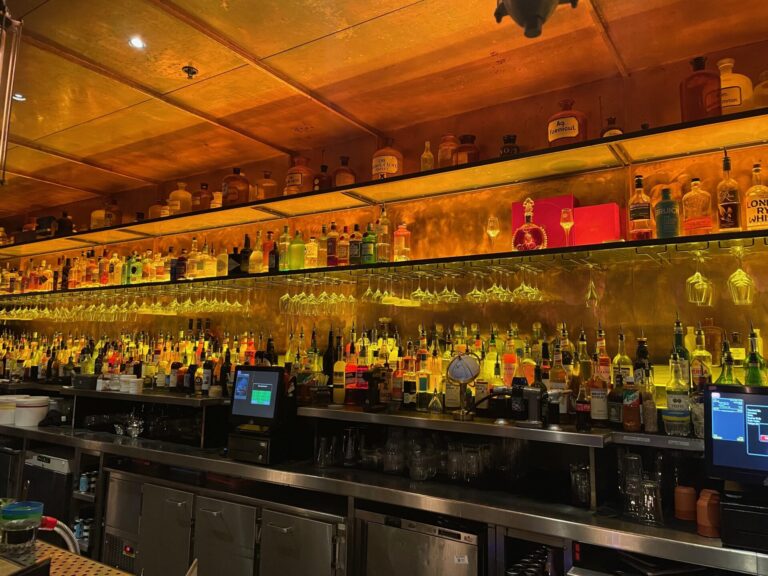

The cocktail that will take you into your overdraft: The Alchemist reviewed

0


Venturing to the third floor of Westgate does slightly feel like you’ve left the real world behind. But making eye contact with the card machine as you pay for your cocktail at The Alchemist will bring you right back down to earth. Is it a fun night out with friends? Or has the price of cocktails made this kind of evening completely untenable, for students at least? 

Part of the fun of The Alchemist is the presentation of the drinks: there is an eye symbol on the menu informing you which drinks are presented with dry ice. Whether you feel like the drinks are worth the money, then, depends entirely on where you fall on the spectrum between whimsy and cynicism. Maybe I was caught on a bad night, but I found myself firmly in the latter camp. The irony is, if I were more drunk, then I would have been much more amenable to the spectacle of the drink presentation, but at £13.50 a pop, I was too sober to forget how much each bedazzled sip was costing me. 

Some of the highlights of the menu include drinks served in hip flasks, test tubes, tea cups, lightbulbs, and tobacco pipes. There’s also a section for shareable drinks, including something called the ‘Infinity Vortex’, which resembles a Rob Roy or Manhattan, and which will set you back £22. There’s also ‘The Globe’, which dares you to “share a pour that orbits the moon. Romance in perfect balance”, and offers a twist on a Cosmopolitan. Is the twist simply that it comes in a globe? Mostly, yes.  

I tried two cocktails and a ‘spice bag’. The first was a French Kiss, which was presented in a traditional cocktail glass, and contained vodka, berry liqueur, raspberry, pineapple, cranberry, and citrus juices, as well as popping candy, and a meringue topping. The flavours were simultaneously fruity and fresh, yet violently sweet. But its pink colour and meringue dome did provide it with a touch of whimsy, and it made the perfect accompaniment to a girly night out. 

Next, I tried the J2Woah. The picture next to it on the menu appeared to depict a beer bottle with a shooting star inside, but I didn’t quite get the theatricality that the menu promised. The bartender called out for a J2Woah, and I was fairly disappointed that the alchemy in question involved pulling out a bottle of pre-made cocktail from the fridge and plonking some cubes of dry ice into the top. It tasted good, but if the menu promises Ketel One citroen vodka, Cointreau, passionfruit, orange, wine, citrus, and golden shimmer, then I’d guess that you could approximate the experience by necking one third of a J2O and filling the bottle up with vodka. 

Now it’s time to be cynical about their chips. There’s just something about the words ‘spice bag’ and the number 10.50 following a pound sign that doesn’t sit right with me. The spice bag originated in Dublin twenty years ago as a late-night favourite at a Chinese takeaway. At an upscale bar, paying approximately 50p per chip (spice sachet would be more accurate), it just feels a little bit like you’re cosplaying a night out, but for twice the price – Hunger Games Capitol style. Admittedly, we were complicit in this gentrification since we ordered the truffle fries with halloumi, and I’ll confess they were very good. But I think I’d prefer to pay fine-dining prices for finer things. 

Overall, I’ve definitely had worse and less financially sensible nights out. £30 is about as much as I would pay in a restaurant, so if you’re looking for something slightly different to do with your friends or partner, then I wouldn’t necessarily rule it out. It’s definitely a good place to suggest if you’re confident that you’re not going to be footing the bill. 

If you can forget for a minute how easy it would be to replicate the experience at home by consuming a VK out of some kind of random object and then going to get a box of chips, then the experience is admittedly quite fun. The Alchemist’s menu reads like the colourful horoscope section of a tween magazine, and definitely makes for a more enjoyable deliberation experience than usual. The atmosphere was undeniable, though loud, and the view over Oxford in the summer sunset is quietly breathtaking. I wouldn’t even rule out going back myself, since my friend regrets not trying the drink that comes in a bong, and I concede that I would quite like to take a shot out of a conch shell. 

The death of the male novelist or the birth of the feminist?

A trend has emerged in recent years which centres on a worry that male authors are being decreasingly published and read, whilst women have begun to dominate the industry. This trend links closely with the controversial intention of Jude Cook to launch Conduit Books, which would aim, at least initially, to publish solely books written by men. This trend, in calling itself “the death of the male novelist”, perhaps exaggerates the situation at hand by implying the total loss of male authors. How much truth is there to this trend?

In reality, the situation is not so dire as that. When looking closer, it turns out that almost every article written on this topic refers to a single study completed by Joel Waldfogel, an economist, in 2025. Whilst a comprehensive, 42-page study, it does not take a genius to know that, for a reliable conclusion to be drawn, ideally, more than one source of proof should be drawn on. In addition, the World Economic Forum reports that “Waldfogel determined female and male authorship by first name, which risked misclassifying some authors”. It is notable, too, that while many articles cite Waldfogel’s study as proof that women so harshly outnumber men in the publishing industry, they never appear to give actual statistics, and this is telling when looking at the results yielded from his study.

He breaks book sales down by sector, and compares the percentage of books authored by women in that sector to the number of sales of the same books. In only two sectors do women outperform men in terms of authorship: romance, where women produce 78.3% of the work, and “Cookbooks, Food & Wine”, where women produce 51.4%. The latter is close enough to half that the split is essentially even, meaning that there is only one sector in which women author a significantly increased number of books compared to men. 

The belief that women take up more space in society than they actually do is an idea that has risen in recent decades, perhaps due to the increasingly visible presence of the feminist movement. Some may see this as a threat to the current state of society and lash out against women’s representation in every sector. Despite this, women’s texts produce over half of the sales in ten of the 41 total categories. Perhaps, then, the answer lies not in the authors themselves but in the publishers and purchasers of books.

Although there is a more equal weighting between male and female authors than is often assumed, many statistics make it clear that women comprise the majority of both publishing staff and readers. In 2019, women made up 78% of publishing staff (although this number drops in more senior roles) and, in 2024, 65% of women read fiction compared to 35% of men. Perhaps it makes sense that more published texts are by women, given that it is a female-dominated industry in the sense of both the workers and the consumers. 

However, it is easy to pick holes in this argument. For one, it has been shown that, whilst women read books equally by men and women, men tend to read books written by men. If the majority of readers are women, and women tend to read books by men and women equally, then the fact that there is an approximately equal number is a good reflection of the population’s reading habits. 

There is also something to be said for the importance of men’s representation within texts. Perhaps the sales of texts by women are elevated despite not making up a ridiculous proportion of the total because men are lacking in healthy representation within texts. Although diversity is important within reading, it is also important for everyone to read texts which represent their own situation, to feel seen. Men are able to find far more representation in past texts than women are, but this cannot be used as a blanket statement. Identity is intersectional, and men who are part of marginalised groups would be hard-pressed to find literature that represents them. Even people who would find their demographic in the old-fashioned canon would likely not feel represented by it: a man living in the 21st century would likely not relate to the experiences of men in a Dickens novel, for example.

Men’s representation in modern novels is important, but there is some doubt as to whether this representation is waning. Although it is taken as such, Waldfogel’s study does not seem to imply the death of the male novelist, and neither does some research into winners of major literary prizes over the last half-century. The Booker Prize and the Pulitzer Prize for Fiction, for example, both list their historical winners going back decades. These lists reveal that perhaps it is not so new a concept that women and men be on equal grounds regarding publishing and literary prizes. 

In 1970, three men and three women were on the shortlist for the Booker Prize, and Bernice Rubens, a woman, won the prize. There are plenty of other examples of women being nominated with more equal weighting to men than is often assumed throughout the histories of these prizes, in similar ratios to those seen today. Whilst men have often dominated nominations, perhaps the extent to which they have done so is less than is often assumed. 

Perhaps changes to the publishing industry are not borne of genuinely overwhelming shifts in gender splits, but instead in the eye of the beholder. In recent years, feminism as a movement has become increasingly vocal and proud in the Western world. Women have been present in the publishing industry and in literary prize lists for decades, yet it is only now that feminism – in particular, the visibility of women in the arts sector – is making its voice increasingly heard that society has begun to worry that the male novelist is a dying species. 

This is not an isolated situation, and is mirrored in other areas of society. People are afraid of the increasing gender quotas which aim to make gender divides within companies narrower. The FTSE Women Leaders Review shows that women are still underrepresented within companies at 43%, yet fears abound about whether gender quotas are damaging the quality of the workplace. The anxiety that women are gaining power within the world is not specific to books, and has risen along with the visibility of feminism in the last few decades.

Perhaps people have an issue not with women’s fiction being published in large quantities, but more with the way it cyclically supports and is supported by the vocality and power of the feminist movement. This backlash against progressive movements has always existed, and often involves strong responses to a fear of forward movement within society. The idea that male novelists are a dying breed is not founded in truth, but in anxiety over women gaining equal voices to men. The death of the male novelist as a concept exaggerated by the dramaticisms of its name, which fails to stand up under investigation.

I will not be misquoted into silence 

0

This is not the first time I have been through this. Nor, I suspect, will it be the last.

It is something that so many others have been through, and so many more will go through. 

Over the past two years, I have watched a familiar cycle unfold around almost anyone who is outspoken on Palestine. First comes political disagreement. Then comes insinuation. Then comes the attempt to transform lawful political expression into evidence of extremism. I have experienced each stage personally. The details change; the pattern does not. 

What has always struck me is how little scrutiny these claims themselves receive. Basic journalistic standards that would ordinarily apply to almost any other subject seem strangely absent when the subject is Palestine. At one stage, I was asked to respond to allegations concerning a Hamas militant I had never met and to whom I am not related, apparently because we share a common surname.

The most recent chapter follows the same script. It concerns private messages I sent in a student politics group chat more than nine months ago, before I even ran for the Presidency.

The headline that attracted the most attention claims that I said Hamas would be “lauded as heroes.” I did not. The statement referenced was part of a broader discussion about how armed movements have been treated throughout history. My observation was that organisations designated as terrorist groups are sometimes later accepted as political actors following negotiations, peace agreements, or independence movements. Nelson Mandela appeared on the United States terror watch lists until 2008. Yasser Arafat was designated a terrorist and subsequently received the Nobel Peace Prize. One may agree or disagree with that observation, and yet the historical context was conveniently ignored for the sake of stoking controversy.

The same applies to comments I made regarding October 7th. It has been reported that I described the attacks as “proportional.” What is far less frequently reported is that I explicitly stated that “proportional” does not mean “right”. I was not making a legal argument. I was not endorsing violence. I was making a sociological observation: that the severity of resistance is often linked to the severity of the conditions that produce it. To argue that decades of occupation, blockade, dispossession, and military violence form part of the explanation for an event is not the same as arguing that the event was justified. 

The blatant misrepresentation of my words by those in the national press who are responsible for reporting truthfully shows a clear lack of journalistic integrity. 

Explanation and endorsement are not synonyms. Yet when Palestinians speak publicly, they are often treated as though they are. 

The result is a standard under which Palestinians are permitted to speak only if they preemptively defend themselves against interpretations they never intended. I have no interest in doing that.

If there are criticisms to be made of my record as President, make them. If there are disagreements about decisions I have taken, events I have hosted, or positions I have advanced, let us debate them openly. But let us debate what was actually said, not a version reconstructed for outrage and for anger.

What I have learned throughout this process is that these campaigns rarely come from a position of confidence. If there were compelling arguments against what I actually believe, there would be little need for distortion, selective quotation, or guilt by association.

The irony is that the very existence of these attacks reflects something positive. Palestinian voices are increasingly present in spaces from which they were historically absent. Conversations that were once considered impossible are now taking place openly. That does not mean everyone agrees. Nor should they. But it does mean that representation matters.

This was never really about one article, one headline, or one election. It is about whether Palestinians can participate in public life as political actors in our own right, rather than as subjects of endless suspicion.

We can. 

And I have no intention of being misquoted into silence.

Oxford City Council announces new cabinet for 2026/27

0

Oxford City Council leader Susan Brown has announced her new cabinet for the 2026/2027 year. Brown, who also leads the Labour group on the Council, has appointed seven Labour councillors to the cabinet following local elections on 7th May in which Labour lost its overall majority but remained the largest party on the Council. The 7th May elections saw Labour win 20 seats, whilst the Green Party made significant gains to secure 13 seats.

The councillor roles cover a range of issues, ranging from housing and environmental health, to anti-social behaviour and leisure. The cabinet has announced that it will focus on local neighbourhood measures as well as building new affordable housing in the city. 

Councillor Linda Smith, Cabinet Member for Housing, told Cherwell that the Council will “support the development of purpose-built student accommodation” and that “growth in student numbers should be matched by growth in university-provided accommodation”. The Councillor referred to the Council’s recent approval of Mansfield College’s proposal for a new 174-student accommodation building as an example of such action. Councillor 

Smith also told Cherwell that the Council will be “protecting student renters and driving up standards in the private rented sector … Through inspections, enforcement action, civil penalties, and prosecutions”.

The cabinet has also pledged to explore extending Oxford’s Living Wage, currently set at £14.06 an hour. The wage represents 95% of London’s, yet the rising cost of living has forced a reevaluation by the Council to ensure residents of Oxford can continue to afford living in central parts of the city. The policy may affect students who stay in the city for work during vacations. 

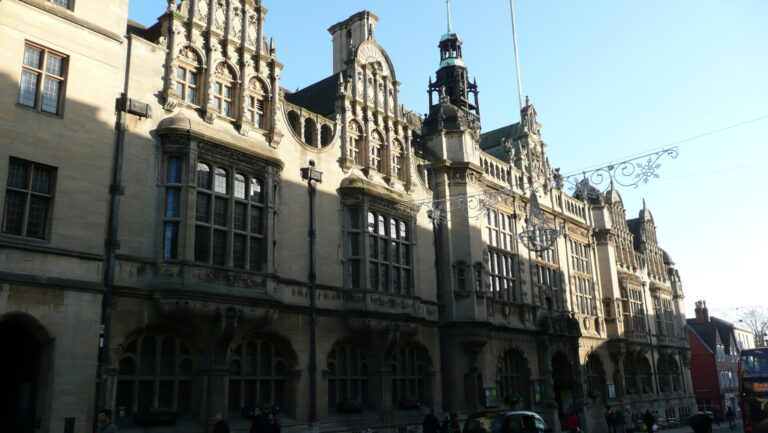
The new cabinet takes office amid growing debate over the relationship between the council and the University of Oxford’s expansion plans. In April, the Council rejected an application by Regent’s Park College to convert the Oxfam Bookshop on St Giles’ Street into its Middle Common Room. However, plans for a new Oxford graduate college in Headington have also recently been approved.

Councillor Susan Brown told Cherwell: “Our Local Plan aims to balance [Oxford’s history and sustainable development] and makes it clear that all new developments must respect Oxford’s heritage … and contribute positively to the city’s character and identity.”

The 2026/27 cabinet also has the challenge of managing the changing organisation of the Oxford City Council. Oxfordshire’s existing Council will be replaced with a unitary structure in 2028, with the six existing councils expected to be abolished on 1st April 2028. In 2027, Oxford will begin preparing for this transition by establishing a shadow unitary council. In spite of these changes, the Council insisted to Cherwell upon the importance of continuing to fulfil its goals as the last Council to exist in the current form. 

Prime Minister of Sri Lanka delivers annual lecture at Oxford School of Global and Area Studies

0

Prime Minister of Sri Lanka, Dr Harini Amarasuriya, delivered the Oxford School of Global and Area Studies (OGSA) Annual Lecture at St. Antony’s College on 19th May.

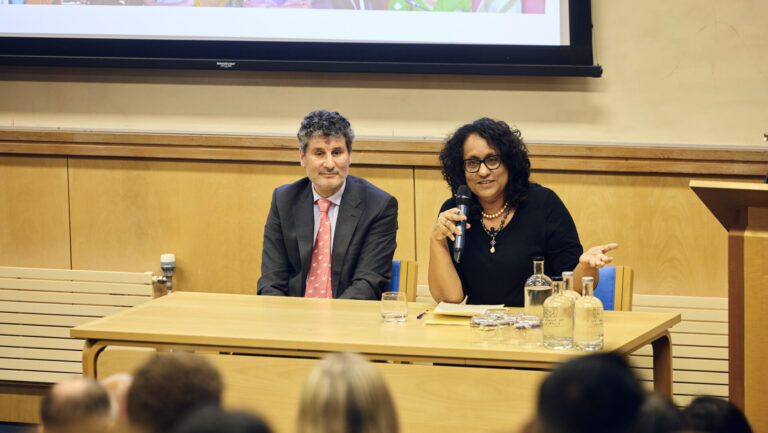
The lecture, titled “The politics of development: Sri Lanka and beyond”, covered topics ranging from gender equality and women’s participation in politics, the Sri Lankan garment industry, and political reform. Amarasuriya, who was appointed Prime Minister on 24th September 2024, is the third woman in Sri Lanka to hold the title. She received her PhD in Social Anthropology from the University of Edinburgh and previously worked as a social anthropologist studying political dissent movements in Sri Lanka in the 20th century.

An OGSA spokesperson told Cherwell: “[Dr Amarasuriya] is an academic who entered into politics and could offer an interesting reflection on that transition … her government constituted a break with the past in Sri Lanka and had to contend with the difficulties of promoting social and political change.” 

Professor Diego Sanchez-Ancochea, Head of Department at OGSA, said in the press release that Dr Amasuriya’s lecture “offered an important and timely reflection on the relationship between politics and development, drawing on both scholarly insight and direct political experience”.

Last February, the Oxford Union cancelled a talk by Sri Lankan MP Namal Rajapaksa, the eldest son of the former President and former Prime Minister Mahinda Rajapaksa. The move followed dissent from Tamil student activists, referencing the Sri Lankan civil war, which ended in 2009. Mahinda Rajapaksa faced accusations of war crimes and crimes against humanity from human rights organisations and the United Nations.

Popular demonstrations (the ‘Aragalaya’)  in 2022 “denounced the corruption and the incompetence … of the Rajapaksa clan which had dominated since 2006.” Amasuriya, a member of Sri Lanka’s popular socialist National People’s Power (NPP) party, is considered a more progressive successor to Rajapaksa.

However, Amarasuriya’s government has continued a longstanding Sri Lankan policy of rejecting international investigations into war crimes committed against Tamils. An October 2025 article from the Tamil Guardian noted that her administration would instead pursue, what she described as, a “homegrown process” to address human rights concerns.

Amasuriya’s lecture was part of a wider visit to the United Kingdom, during which she held policy discussions with UK Foreign Secretary Yvette Cooper on the Sri Lankan government’s “commitment to human rights, reconciliation, and the country’s positive growth trajectory”. She also met with the Secretary of State for Education, Bridget Phillipson, and the Secretary General of the Commonwealth of Nations, Shirley Ayorkor Botchwey.

Oxford researchers collaborate to release open data to accelerate AI drug discovery

0

University of Oxford researchers have released a new open data set and AI model to accelerate drug discovery.

The project is led by the OpenBind consortium, a collaboration between the Universities of Washington, Columbia, and Oxford, as well as European Bioinformatics and several other research groups and industry partners across the world. OpenBind aims to make large, standardised open-access datasets that are publicly available. 

Fergus Imrie, Associate Professor at the Department of Statistics and OpenBind computational researcher, told Cherwell: “One of the major bottlenecks in AI-enabled drug discovery is the shortage of large, reliable experimental datasets showing how small molecules bind to proteins.”

On 5th May, OpenBind released the first open dataset, which consisted of X-rays of compounds binding to the EA-A71 virus protein, as well as the binding strength measurements for many of the images. Speaking to Cherwell, Imrie described how this data had been generated at the Diamond Light Source in Oxfordshire using “high-throughput X-ray crystallography”.

Charlotte Dean, a senior OpenBind investigator, as well as the chair of the Engineering and Physical Sciences Research Council, described this first release of data as “an important step because it shows we can now generate high-quality, standardised data at scale, specifically designed for AI in drug discovery”.

The Department for Science, Innovation and Technology has invested £8 million in the project, with OpenBird researchers hoping to use increased investment to scale their operationsProfessor of Structural Chemical Biology at Oxford and Principal Scientist at Diamond Light Source Frank von Delft described how OpenBind intends to “implement the lessons from this foundation phase to ramp up a long-term operation that links high-volume production of AI data with active discovery projects”.

Open data at scale is key to the expansion of AI-powered drug discovery. Imrie told Cherwell: “AI models are only as good as the data they learn from. The data being generated by OpenBind is surprisingly scarce in the public domain. OpenBind aims to address this by generating and openly releasing high-quality protein–ligand structures and affinity data. This will enable the community to build better AI tools for discovering new medicines and advancing science.”

Imrie also referred to AlphaFold, an open public dataset detailing protein folding, which won the 2024 Nobel Prize in Chemistry, as a perfect example of the advances and benefits that can emerge from open-source data. Imrie told Cherwell: “AI tools offer real promise to improve both the speed and quality of molecules being developed, for example, by helping us model complex biological systems.”

The OpenBind project hopes to create new opportunities for postdoctoral positions in the area of AI drug discovery.

Rare Oxford University photo of Oscar Wilde sells at auction

0

A newly-discovered photograph of Oscar Wilde at the University of Oxford was recently sold for more than £5,300 at an auction.  

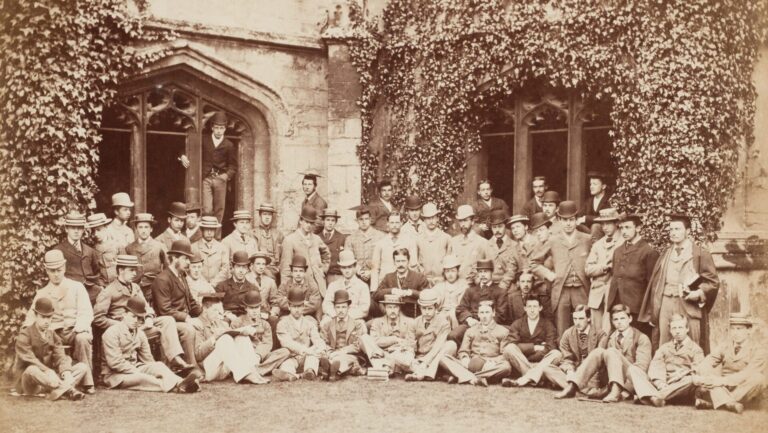
The photograph was discovered in a Victorian photo album, containing 90 miscellaneous photographs. Dating from 1876, the photograph was taken during Wilde’s time at Oxford, depicting the author amongst his peers in the cloisters of Magdalen College. The photograph was found accidentally: the seller had purchased the photo album due to interest in a group of small photographs of rural Scandinavia, before realising Oscar Wilde’s appearance.

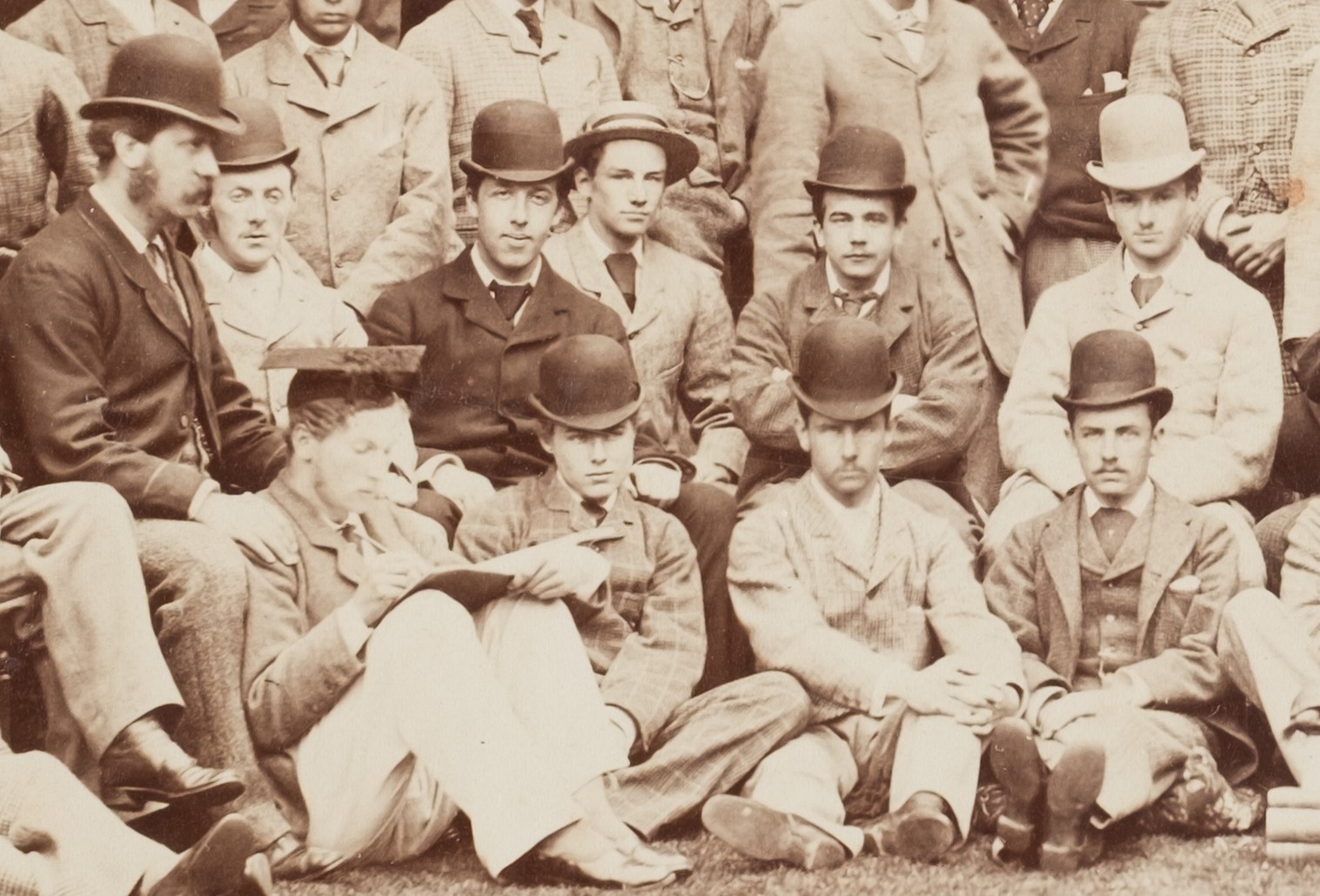
The photograph shows 50 men arranged in three rows, with Wilde appearing fifth from the left in the middle row, in the centre of a group of eight friends. Chris Albury, director at Dominic Winter Auctioneers, told Cherwell: “I may be imagining it, but I feel the group dynamic of Oscar Wilde and his friends sets them apart from everyone else.” A few of Wilde’s inner circle have also been identified in the image, including his then best friend and fellow Classicist, William ‘Bouncer’ Ward, in the dark bowler hat directly to Wilde’s left.

Image credit: Dominic Winter Auctioneers, with permission.

The image was sold for £5,308.80 at Dominic Winter Auctioneers on 20th May, surpassing an estimate of between £3,000 and £5,000. The only other copy of the photograph is held in the Library of Congress in Washington DC – the auction marked the first time the image was offered for sale. 

Most interest around the image came from private Oscar Wilde collectors. Albury told Cherwell: “The winning bidder turned out to be one of our regular Oscar Wilde collectors, who we have known for a very long time”. This auction comes after a photograph of Wilde on his deathbed was sold for £279,800, at Bonham’s auction in February earlier this year. Taken on the day Wilde died, November 30th, the photograph had sold for 100 times its original estimate. 

Wilde matriculated from Magdalen College in 1874, before graduating in 1878 with first-class honours in both his final examinations, and moderations. During his time at Oxford, he won the University’s Newdigate Prize for English Verse for his poem ‘Ravenna’. Besides academic achievements, the author developed a reputation for stylish dress and joined the University Masonic Lodge, as well as appearing before the University’s Chancellor’s Court in 1877 for non-payment of debts. 

It takes a village, but no one wants to be a villager

0

“It takes a village, but no one wants to be a villager”. I heard these words recently, and they remained utterly fixed in my mind. I must have turned them over a thousand times, walking down St Giles’ last week. Something clicked then. It gave voice to something I didn’t realise I had been feeling. I kept thinking about that art show or swim competition I’d asked my friends to attend, even for 15 minutes; about my quiet hope, which waned with every minute that passed without their presence. Or the many failed birthday parties I arranged in the past – too close to finals for most to make it. It extended beyond big things, too: the lunch I’d rescheduled three times, or the last-minute cancellations that seem to beleaguer any plans I make: “Sorry! I have an essay”, or “I’ve got less done this week than I thought, can we meet next week?” 

I consider my time precious. I am anxious about being late, and when I make a plan, barring illness or serious crises, of course, that time is sacred. I understand that this is not everyone’s mindset. Indeed, I’ve had to change my habits (often leaving ten minutes late intentionally, only to still turn up five minutes early) and adjust my expectations in university accordingly. But I will never subscribe to being a ‘flake’. I don’t make promises I know I cannot keep, and I always show up. I used to think ‘flakiness’ was unique to my home university, some sort of Ivy league self-absorption which made everyone unable to make space in their lives for other people. Coming to Oxford, I’ve realised it may be a broader issue. 

Oxford is full of busy people. It can seem at times like you are fighting for space in between someone’s various committee obligations, tutorials, and frantic essay crises. After all, no one can conceivably be in three places at once. However, it seems like time, and again I lose that battle for priority in the absolutely endless list of tasks everyone must complete. Promises, if they’re not immediately codified in Google Calendar, may as well ring hollow. It’s not even that people here (or at my home university, for that matter) are selfish. Plenty of people show up when it counts. However, enough people don’t, so that I’ve begun to notice a pattern. I believe this is the consequence of a changing mindset: a sort of deep-rooted individualism. 

I’m not sure if there is a single culprit for this phenomenon, however, looking at internet “self-care” trends may provide some insight. In recent years, short- and long-form videos alike have reiterated this specific refrain: “protect your peace”. On the surface, this is an innocuous, even positive mantra. It distils the ever-important need to establish boundaries, and prevent yourself from becoming a human doormat, into a catchy slogan. I agree with this message in many regards. As a bona fide people-pleaser myself, healthy boundaries are incredibly important, especially as instant communication seems to have eroded most physical ones. On the other hand, I think that this phrase can have insidious connotations. In an effort to inform us that we “don’t owe anyone anything”, these creators also tell us that we cannot put anyone before ourselves. Indeed, if showing up for someone else is too much of a burden, they say we should eschew it altogether. 

As always, it is a balance. Prioritising yourself is a nice message, especially if you are someone who regularly subordinates yourself in an effort to place others’ needs first. However, I think that, in almost every case, we actually do owe others basic courtesy, among other things. I will be the first to admit I do too much for others, folding and contorting myself to accommodate their needs. This is not good for either party: not for me, who exhausts myself in an effort to accommodate someone else, and not for them, who does not realise they were forcing me to assume such an unusual shape. At some point, I had to realise that it wasn’t worth it. But the fact that I tried remains important. We do owe it to others to try.

Then again, maybe they have their reasons for needing extra accommodation. Often, the sad part is that it’s not malicious at all. Occasionally, people don’t show up for a variety of completely understandable reasons. Forgiveness is important, as it’s impossible to know what these reasons are. However, it does not negate how demoralising it feels to repeatedly reach out. I think that in the process of trying not to owe anyone anything, we have also forgotten that people are owed a genuine apology, if not an explanation. If there is a reason we cannot show up, we must try to express it. 

In other cases, I have seen people “protect their peace” to the point where they fail to take the initial step. Of course, there comes a time when reaching out, or trying to arrange plans with someone becomes futile, but that should never be the case at the outset. These same self-interested narratives, which tell us to put ourselves above everyone else, would tell us to cut out people who do not show up for us immediately. They would say that the burden of reaching out causes too much discomfort. Perhaps this person hasn’t shown up, apologised, or explained their behaviour. Of course, you cannot keep reaching out to someone who refuses to engage with you at all. But, oftentimes, you cannot know this until you’ve earnestly tried. 

When I was younger, I used to wait for people to text me first, wondering why so few people ever seemed to make plans with me. I took it far too personally.  Eventually, one of my friends said to me, “Everyone is waiting for someone to message them first, at some point, you have to do it yourself”. This advice was precious. Waiting around to be wanted was silly, as I had done nothing to encourage it – I hadn’t shown up or reached out myself. Everyone wants a village full of people who care about and support them. But to have a village, you need to be a villager. Sometimes that means showing up, reaching out first, or supporting someone with no initial expectation of reciprocity. People will show you who they are. If they cannot be there for you, you don’t need to keep trying. However, that doesn’t mean that you don’t have to try from the outset. You need to give others a reason to be a part of your village. 

In an age of such rampant individualism, we must support one another. I urge you: go to your friends’ piano recitals or garden plays and grab lunch after a tutorial or between revision classes. The only way to combat these self-interested narratives is to show the people in your life the quiet, steady presence of your love.

From Global Trade to Oxford High Street: The Impact of Freight Transport

For many people in Oxford, freight transport is something that exists firmly in the background of daily life. Students rushing between lectures, tourists exploring the city’s historic streets, and residents browsing shops in the Covered Market rarely stop to consider how products arrived there. Yet behind almost every item on a shelf, from textbooks and laptops to coffee beans and clothing, lies a complex global network of ships, aircraft, warehouses, ports, and delivery vehicles.

The importance of freight transport has become increasingly apparent in recent years. Global supply chain disruptions caused by the COVID-19 pandemic, labour shortages, geopolitical tensions, and security concerns affecting major shipping routes have demonstrated how interconnected local economies have become with international trade. While Oxford may be known primarily for its world-famous university, the city is also home to thousands of businesses that depend on the efficient movement of goods from around the world.

According to the UK Department for Business and Trade, the United Kingdom imported goods worth hundreds of billions of pounds in 2025 alone, with products arriving from countries across Europe, Asia, and North America. Much of this trade enters through major ports such as Felixstowe, Southampton, and London Gateway before being distributed to towns and cities throughout the country. Oxford, despite its inland location, remains closely connected to these international supply chains.

Why Oxford Businesses Depend on Global Trade

The city’s economy extends far beyond tourism and higher education. Oxford is home to a thriving network of technology companies, biomedical firms, research institutions, manufacturers, retailers, and independent businesses. The Oxford Science Park and Oxford Business Park have attracted organisations operating at the forefront of innovation, many of which rely on international suppliers for specialist components, laboratory equipment, and advanced technologies.

For these businesses, efficient logistics are not simply a matter of convenience. Many rely on regular deliveries from across the UK and overseas to maintain operations, whether receiving specialist laboratory equipment, importing components for manufacturing, or arranging pallet freight shipments through regional distribution networks. A delayed delivery can postpone research projects, increase costs, and disrupt carefully planned schedules, making reliable freight transport an essential part of commercial success.

Oxford’s growing life sciences sector provides a particularly strong example. The city has established itself as one of the UK’s leading centres for scientific research and innovation, with companies regularly collaborating with international suppliers and partners. In many cases, the ability to move specialist equipment and materials quickly is essential to maintaining research schedules and commercial operations.

The Impact on Oxford’s Retail Sector

The effects of freight transport can be seen throughout Oxford’s retail landscape. Independent shops, supermarkets, bookshops, and national chains all rely on supply chains that stretch far beyond the city itself. A customer purchasing a new laptop at Westgate Oxford may be buying a product assembled in East Asia, transported by sea to the UK, stored within a national distribution network, and finally delivered to a local store.

The growth of online shopping has increased the importance of these logistics networks. Consumers now expect rapid delivery times, often within one or two days. Research from Ofcom suggests that online retail continues to play a major role in consumer spending habits, particularly among younger generations.

For businesses, meeting these expectations requires efficient freight networks and reliable transportation partners. Delays at any stage of the supply chain can have consequences for customer satisfaction, stock availability, and revenue.

When Global Disruptions Reach Local Businesses

The relationship between global trade and local economies is not always straightforward. Recent disruptions affecting international shipping routes have highlighted the vulnerability of supply chains. Attacks on commercial vessels in the Red Sea, congestion at major ports, and fluctuations in fuel costs have all contributed to increased transportation expenses and longer delivery times.

For Oxford businesses, these developments can have very real consequences. Independent retailers often have fewer resources than larger corporations to absorb rising costs or secure alternative suppliers. Delayed deliveries can disrupt inventory planning, affect seasonal sales, and create additional operational challenges.

Whether receiving stock from overseas manufacturers or coordinating pallet freight through regional distribution centres, many local businesses depend on predictable logistics networks to remain competitive in an increasingly connected economy.

Sustainability and the Future of Freight

Environmental concerns have also become increasingly relevant. Oxford has developed a strong reputation for sustainability initiatives, and conversations about climate change are common across both the university and the wider community. Freight transport plays an important role in these discussions.

According to the International Maritime Organization, shipping accounts for approximately 2.89% of global greenhouse gas emissions, while air freight generally produces significantly higher emissions per tonne of cargo transported. This creates an ongoing challenge for businesses and consumers who want both rapid delivery and environmentally responsible transportation.

As organisations seek to reduce their carbon footprints, transportation decisions are becoming an increasingly important part of broader sustainability strategies. Businesses must balance speed, cost, reliability, and environmental impact while maintaining efficient operations.

A Global System with Local Consequences

Although freight transport rarely dominates local headlines, its influence can be found throughout Oxford’s economy. It supports research and innovation, enables retailers to stock their shelves, and connects local businesses to global markets. From the laboratories developing new technologies to the independent shops serving residents and students, many aspects of life in Oxford depend upon networks that extend far beyond the city’s historic streets.

The next time a parcel arrives at student accommodation or a new product appears in a shop window, it is worth remembering the journey it has taken. Behind seemingly ordinary purchases lies a vast global system of trade and transportation that helps keep Oxford’s economy moving, connecting one of Britain’s most historic cities with the wider world.