Blog Page 190

Oxford pays full-time lecturers higher than nearly all Russell Group Universities

0

New data reveals Oxford University is one of the best paying Russell Group universities. The University ranks sixth for percentage of full-time academics paid in the highest category — over £65,578 per year — out of 24 Russell Group institutions. Over 30% of full-time academics at Oxford fall into this group. 

According to an annual survey conducted by the Higher Education Statistics Agency (HESA), there are six relevant wage groups for academics in the UK. This data only concerns academics who are employed full-time on a contract by a UK university.

Oxford does not pay any of its full-time academics below £27,131 a year, which includes the two lowest groups. The majority of full-time academics at Oxford are paid in the fourth group, between £36,386 and £48,841 a year.

Moreover, analysis conducted by The Tab reveals that some members of the Russell Group pay their staff between £21,197 and £27,131 a year, the second wage group. Oxford is not among this group, which includes Cambridge University , Durham University, Queen’s University Belfast and Birmingham University. 

However, according to HESA’s data, Oxford does pay 720 full-time academics between £27,131 and £36,386 a year, the third wage group, which is still less than Cambridge’s 920 academics in this group.

The universities that pay a higher proportion of their full-time academics the highest salaries include the London School of Economics, the University of Liverpool, Queen Mary University of London, King’s College London, and University College London. The highest of the group, the London School of Economics, pays nearly 53% of its academics over £65,578 a year. The University of Cambridge ranked 14th, paying 24% of its staff in the highest wage group.

This data comes after a year in which some of the University of Oxford’s staff, including those not employed on a full-time contract, have been protesting against their working conditions. Throughout 2023 staff members marched and engaged in boycotts because “our members refuse to stand by while pay is eroded and staff are shunted onto gig-economy contracts”. Additionally,according to the University of Oxford’s 2022-2023 financial statement, the University has had a lucrative year. In 2022-2023 Oxford had a Comprehensive Income of nearly 133 million pounds, an increase of more than a hundred million compared with the prior year.

No admissions tests for English and Geography in 2024

0

The University of Oxford’s Faculty of English and Faculty of Geography and Environment have confirmed that neither the English Language Admissions Test (ELAT), nor the Geography Admissions Test (GAT) will be set for the October 2024 undergraduate admissions cycle.

This announcement follows both faculties’ decisions to disregard the admissions tests results in November 2023, after technical issues left some candidates waiting up to an hour for passages of text to load. English candidates were also mistakenly given the previous year’s theme to guide their analysis, leading to confusion and anxiety among applicants.

The Faculty of English has expressed that they are “committed in the long term to the value and efficacy of setting a standard test for all applicants’”and “hope to be in a position to run the Oxford ELAT again” in the future.

Following the disrupted admissions tests in 2023, the University severed ties with Tata Consultancy Services (TCS) as its test provider, after only one year of a partnership aimed at digitising the testing process. The University has since announced that they are working on new arrangements for all other admissions tests, which are set to continue in October 2024. 

The most recent major change to the University’s admissions testing process was the permanent removal practical test for candidates applying for Fine Art, a decision made as part of the transition to remote interviews in 2020.

A spokesperson of the University of Oxford told Cherwell: “We are putting in place arrangements for our admissions tests in 2024, and will be communicating with applicants, schools and test centres shortly.” 

Oxford is not the only university to revise their admissions test procedure. Until recently, most selective US colleges had adopted a ‘test-optional’ policy, not requiring candidates to disclose SAT or ACT results as part of their application. This attitude was largely adopted over concerns regarding the close link between a candidate’s results and their race and family income, as well as the opportunity for coaching for advantaged students. In recent years, however, many elite colleges, including Harvard University, Yale University and MIT, have reversed their stance, reinstating standardised testing as a required part of a candidate’s application.

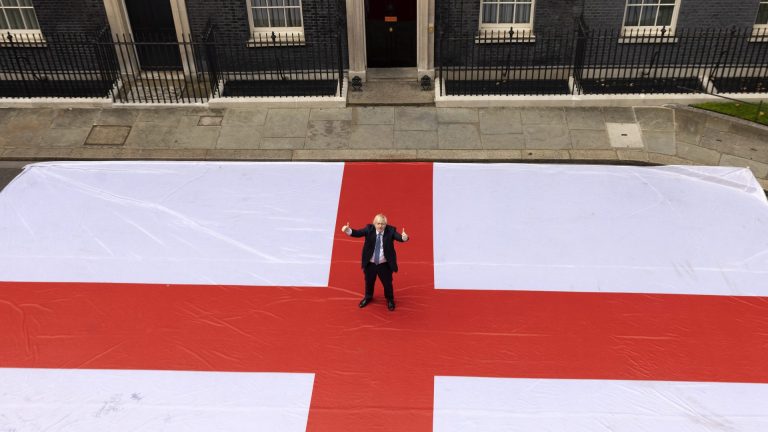
Can the St George’s flag ever be reclaimed?

0

I only really know the date of St George’s Day because it’s two days before my sister’s birthday. Beyond hazy primary school memories of dragons and knights, the day had passed me by for nineteen years now with little significance. 

The flag has had a greater prominence. Despite lacking the legal backing that most national flags possess, the St George’s Flag has been adopted as England’s emblem. Red crosses have been used by English soldiers since the thirteenth century. Likely snaffled from the Genoese, the English have done a good job in convincing everyone that they have the primary claim to it. Nearly 300 years ago, the monarchy stopped paying a fee for the use of the cross, and since then we’ve exercised relatively consistent usage of the symbol. 

Proudly hung up every World Cup and bashfully drawn in before the final; in my sleepy rural neighbourhood it nearly exclusively belongs to sports fans. Being English is a relatively sports related phenomenon, and even then, we’re British when Andy Murray’s playing. If you asked for ‘the nation’s flag’, you’d be pointed to the Union Jack. That’s the flag hung by residents intent of displaying their patriotism or filling a space in a summer fayre flyer. 

To hang the St George’s flag spontaneously would be odd. It wouldn’t be deemed racist or bigoted, just quite intense. We know we’re in England. The action comes across as needlessly political, and only a few feel the need to emblazon their driveway with party signs every election. We live in a nation where the majority of the population engages in politics within their homes and at the polls, if that. There simply isn’t much reason to display it. So nobody does. 

The flag is, therefore, mentally relegated to its main users, the far right. When the English Defence League parade it around beside signs reading “never submit it Islam” and “England: love it or leave it”, it’s hard to form a positive view. I’m not alone in this, a recent YouGov poll concluded over a quarter of adults have a negative view of those who fly the St George’s flag, this figure jumps to 37% for under 25 year olds. 

The use of the St George’s flag is inherently political. English nationalism, rightly or wrongly, occupies a different space to its Scottish and Welsh counterparts. In the public consciousness, left-wing beliefs and nationalist ideals seem somewhat incompatible, despite their concurrence over the borders. 

This is not to say there haven’t been attempts. Labour campaigned on the issue of English devolution in 2015. Nationalism has deep roots within the working class, who have historically voted for more liberal candidates than their upper and middle class counterparts. The shift towards a right-wing working class was no doubt influenced by the left-wing departure from nationalism.

There is also, as often seems to be the case in England, a class angle to all of this. It is the upper classes who are immune to politics, who are truly apolitical. The working classes rely more deeply on the decisions of those in power. Middle class aspirations cannot truly part with these worries, but they can separate themselves from the parts of governance less critical to them, namely, nationalism. 

It becomes quite simple then. The middle class don’t want nationalism, and the parties want their vote. As a result mainstream parties, particularly Labour have left nationalism be. It becomes relegated to the fringes, nationalism is made more extreme. As such, the return to nationalism by Labour can be explained. The party can claim a sizeable portion of the middle class, but they need the working class to win, and hence the St George’s flag appears. 

The St George’s flag is the flying banner of nationalism, despite Keir Starmer decrying the need for symbols. It is inherently linked with the kind of glaring nationalism that the middle classes shy away from. The argument can be made that the Conservative vote, in part, is being lost by the treatment of migrants. Reminding people of their privilege of being born English is uncomfortable. Flying the St George’s flag, bellowing that we should be proud to be English, just seems brash, ignorant and boastful.

To reclaim the flag would be to embrace the idea that England has its merits. England is a comparatively brilliant place to live, very few would deny it, but very few would openly pronounce it all the same. Showing the St George’s flag is garish, a flashback to a time when all that most English people had to be proud of was the flag. It has developed since then. The nation has the capacity for great schools, free healthcare and innovation. We have so much more to be proud of than a flag commemorating ‘Georgios of Lydda’, a man who never even stepped foot here. It is for that reason, then, that I do not believe the St George’s flag will be successfully reclaimed, at least any time soon.

Byte-sized buzz: The craze for short-form media 

0

It feels essential to state that ‘short-form’ media, in its clips and images, is inevitably never a short-term experience. We’ve all opened our phones searching for some momentary respite, only to look up after what feels like seconds to see the hours have flown by, a deadline has been missed, your window plant has died, and the seasons have changed. Our phones provide an immediate escapism, an instant detachment from an intellectual hole we have dug for ourselves in some dark corner of our degrees. We used to read books; now we just close the eleven SOLO tabs and open Instagram Reels. 

Oh Reels! Where would I be without you? Probably more in control of my life. I was never one for the Tik Tok craze, since the Gen Z energy smothering it reminded me too much of a Musical.ly childhood (and that’s trauma I’m yet to unpack, trauma that can be left behind in the world of Reels). Snuggly tucked into my Instagram homepage, countless worlds zoom past at my fingertips; the best National Trust spots in Somerset that you must visit this summer, three mistakes you’re making with bacon, and an absurdist collage of mournful racoons staring out of windows to Olivia Rodrigo’s Driver’s Licence. As you can see I’ve kept these examples intentionally vague – allowing someone to scroll through your Reels feels as violating as finding out your parents have been through your browser history. 

I used to spend hours staying up chatting to friends on my first phone, an Alcatel Pixel that didn’t have the capacity to download apps. Now my friend and I exchange Reels about bowel movements and tarot card readings without a word passing between us. Liking it suffices. Sharing with someone something they’ll relate to, find enjoyment in, or take offence to – well, that takes a personal understanding of who they are. Is sharing Reels simply a new form of communication, or should we decry this new way of expressing friendship? Humanity survived the transition from stamping letters to instant, direct messaging. So why not this? 

Perhaps because its speed and pace makes us prone to overload and overstimulation. In no time, we’ll all be downloading compressed Reel compendiums into our brains at 1000 TB a second. In my degree we (my tutors) ask whether there is a limit to growth we should not exceed. Never mind all that economic bullsh*t, is there a limit to the amount of content we can consume? I can just about cram a few hundred references into my mind palace before feeling like an academic aneurysm is approaching. Yet, how come I can watch a few hundred Reels (is that a shocking amount? It’s certainly an honest one) and feel nothing but glee, before the Reels come-down hits hard. My essays remain unwritten and emails unanswered. The reason is dopamine, and he’s a mean guy. I give it agency only to abandon all responsibility for my own lack of self-control. 

Over the past 20 years, young people have been spending more and more time on our phones, and yet we face the same challenges and daily to-do lists. While the scrollaholic may struggle to complete these tasks, more often students are getting less sleep as a sacrifice to time spent on social media. Flicking through BeReals, losing ourselves in a Youtube Shorts rabbit-hole, or in a Vinted shopping basket – it’s often the last thing we do before going to bed and the first thing we wake up to in the morning. Perhaps this reveals more about my own behaviours than I’d care to admit, but I am not the only one. Chronically sleep deprived, and yet doing nothing to change it.. I’m that guy face-down in the library or precariously swaying in the back of a lecture. Far from ground-breaking, but if I put the Reels aside and took  a break from that infamous ‘blue light’ (did you just roll your eyes?), then perhaps I’d have more energy to talk to my friends with words, not just Reels. 

Sunak’s Samba with the fashion industry

In Rishi Sunak’s recent Downing Street Interview, his words and promises were certainly not the star of the show. Showing off his Adidas Sambas, the Prime Minister took British media by storm. News outlets broadcasted a sudden decline in sales of the once popular shoe and young members of the public expressed outrage at the wealthy leader’s attempt to be a ‘regular every man’. The fashion community was genuinely disgusted by Sunak’s choice of footwear, suggesting that he had simply ruined the trend for everyone. However, the Samba has a much longer track record than Rishi’s short time in office, which illustrates the deeper connection between the PM’s choice to wear them and the social connotations this gave. Was he successful in his stylistic decision, or cause a crash faster than Truss did?

The fashion origin of the famous 3-stripe Sambas lies in the football stands of the 1970s. Although it was created in 1949, intended to be a football shoe equipped to survive icy conditions, it became a statement of class culture only 2 decades later. Famously a working class shoe, alongside the Reebok classics, the Samba has strong roots in the British community as a durable and affordable option for playing sports that could also be worn more casually. 20 years later, their functions expanded and they became a staple of the skater community. This was a strong marker of their transition from sportswear to streetwear as they were a clear indicator of this aesthetic. Meanwhile they were famously shown off by artists like Oasis, which gave them a strong platform in English culture throughout the 1990s and maintained their roots in the working man’s style. They maintained some popularity by the 2010s, but were overtaken by Converse in sales due to their pedestal in the fashion community. Nowadays, however, the Samba has returned in an american resurgence. Supermodel Bella Hadid and pop icon Rihanna have both expressed a devotion to the trainers, often papped sporting them in their casual looks. By early 2024, Sambas were selling out at every release in a rapid comeback instigated by the ‘it-girls’ of the 21st century.

By April, even the Prime Minister was swept up by the trend, flaunting a pale pair with navy chinos and a white shirt. Immediately, fans of the Samba took to social media to express their outrage at Sunak’s fashion statement. Footwear stores quickly expressed their concern that the politician’s love for the retro trainers had massacred their resurgence. Defending himself, Rishi claimed to have always loved the look of the Adidas Samba, reminiscing on receiving them as a gift from his brother one Christmas. Although he issued an apology for his fashion choices that day, the PM’s decision to wear Sambas may have been more complex than a Christmas present. In a desperate attempt to be perceived as a regular civilian, he may have switched out his Oxfords for Adidas. Rishi is well aware of how his image has been damaged by Tory sleaze and elitism, so his Sambas may have been a political move to appear less isolated from the general public. However, all he did was tarnish the image of the Adidas Samba.

Since the interview, Adidas have released a statement expressing their huge profits in the first quarter of 2024, which has put young minds at ease about the sudden death of a trend they may have just bought into. Despite this, Sunak has certainly left a mark on the iconic appearance of the Samba. Whether that is for better or for worse is not completely clear, but it is evident that the Sunak-Samba controversy is an unforgettable moment where politics and fashion aligned.

The Human Body review: ‘A Socialist exploration of healthcare and romance’

I recently attended my first production at the Donmar (https://cherwell.org/2024/01/24/review-of-tennant-as-macbeth-an-auditory-experience/ – shameless self plug!) and fell in love with the energy of the space and the risks the writers and directors were taking within it. So I was excited to see that they were doing a production of one of my favourite modern playwrights, Lucy Kirkwood’s, plays: The Human Body. A British playwright who has received acclaim for many of her plays, including (my personal favourite) The Children, shows here that she is not done in her brilliance yet. Published only a few months ago (29 February 2024), The Human Body is new to the drama scene yet it definitely holds its own on the Donmar stage. 

A Socialist exploration of healthcare and romance is perhaps an unexpected way of defining a play, but this is essentially what it was. We follow Iris Elcock (played by Keeley Hawes), a practising GP, Socialist, Labour party councillor and aspiring MP, in her efforts to implement Nye Bevan’s National Health Service Act; a revolutionary change in healthcare, making it free for all. She is the exemplary post-war woman, working hard in a day job whilst maintaining a happy home with her daughter and ex-Navy husband turned GP Julian (Tom Goodman-Hill). But everything starts to change when she meets apolitical and apathetic George Blythe (Jack Davenport), a local boy who has now made it to Hollywood but is home visiting his sick mother, turning her world inside out as she is given the glimpse of “more”. 

Keeley Hawes takes on the role of Iris and embodies her completely. I was captivated by her from the beginning. I could have spent the whole play just watching her face, subtle in everything she did but emotive, powerful and strong. We see her marriage be tested, questioning whether love can survive against politics, when partners have different views. Love vs Politics being central to everything in this play. And I felt for her at many points, her down moments felt particularly poignant to me. Kirkwood keeps the story blurry but we can only assume she attempts to take her own life near the end of the play, as she cannot deal with the demands put on her both professionally and emotionally. I could have cried when she woke up in the hospital bed, or even more so ten minutes earlier when she turned away from her future with George, lying and telling him she would have never left her husband, despite just doing so in the scene prior. The dramatic irony Kirkwood employs here can only be described as heart wrenching. 

The play was undoubtedly brilliantly acted but I also have to commend Michael Longhurst (​​Artistic Director of the Donmar Warehouse from 2019 – 2024) for his execution of such a well written script. The set was dynamic with a circular revolve base that sped up and down throughout the production in moments of tension and calm. There were crew members holding cameras with a live feed of the action on stage projected across the back screen, fog machines, sound effects – succinctly timed to perfection – and a striking all NHS-blue set from the furniture, to the cigarettes the characters smoked, all the way down to the small blue canapes they ate at the dinner parties. This reminded me of the Old Vic production of Caryl Churchill’s A number that I saw a few years ago, with an all red set; perhaps a modern theatrical choice these female, British, playwrights have chosen to share. Thanks to Longhurst’s direction all of the scenes happened seamlessly and the actors moved around, on and off stage with ease and a certain unmistakeable elegance. I enjoyed how the live stream effect created a very cinematic feel to all of the moments between Iris and George, a fitting style to their dramatic and forbidden romance, as well as serving to emphasise how the play is about how the left tells stories, or sometimes fails to.

As concerns rise in the news now surrounding the future of the NHS, The Human Body reminds us exactly what we could be losing by putting it directly in front of our eyes on the stage. Does Iris win in the end? In some ways yes, in others no. The bill gets passed, but she turns away from her political pursuits, she gets divorced from her husband but doesn’t end up with George, and she remains a GP but with the implied new and overbearing demands a free healthcare system will present. The play is about how difficult it is to have a revolution both politically and in our personal lives, and this is emphasised by Iris at the end. The play ends with Iris centre stage, doors opened to the general public, and she projects ‘Who’s next?’ to the crowd as we cut to a final blackout. We end with both loss and a way of looking forward for Iris, and for our societal system in general. It was a play well suited to showcasing the benefits our free healthcare system offers without being overly showing-it-down-your-throat political. I look forward to what grand idea Kirkwood has in store for us next. 

The Human Body is running at the Donmar Warehouse 17 February 2024 – 13 April 2024

Sushi Bowl: A sensational start

0

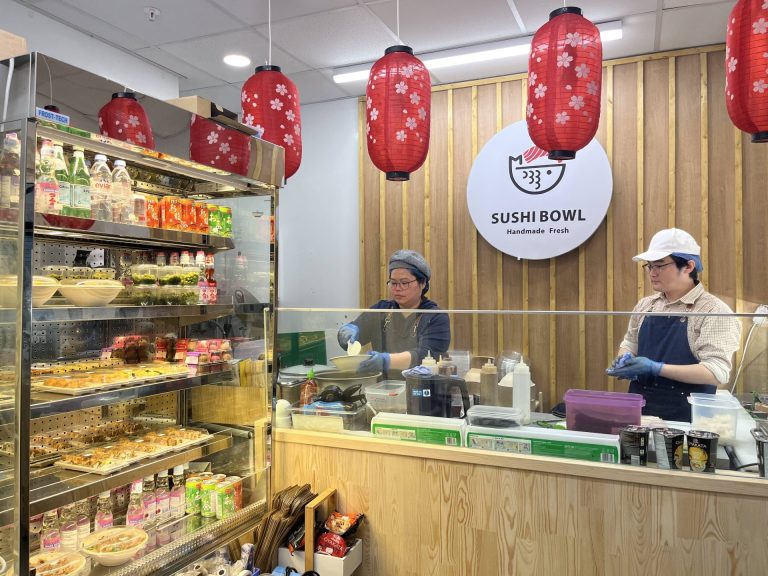
There is a new sushi restaurant in town! More than just another Wasabi and Itsu, Sushi Bowl in the Covered Market is a well-located new spot for a roll or poke bowl on the go. On the corner of the Covered Market, next to the fruit stand and Sartorelli’s, the restaurant opened fairly recently yet has already been getting busier and busier. I stopped by on a Saturday afternoon in search of a little treat to celebrate finishing my collections.

Sushi Bowl had only been open for a few hours by the time I arrived on their opening day. The fish looked fresh and bowls were flying out the door. I was most intrigued by the salmon poke bowl displayed on the counter – pieces of salmon and avocado arranged into a flower-like swirl on top of warm sushi rice. They had other bowls with more ingredients, but I thought the salmon-avocado bowl best fit my cravings. Sushi Bowl also has a refrigerated shelf offering other Japanese foods: steamed and fried gyoza, mochi with ice cream, and even fried chicken. All the food was made fresh and some even fresh to order, with veggie options in both sushi and sides. 

Sushi Bowl is a grab-and-go restaurant, with the fridge and counter taking up most of the space on the corner. Compared to most of the other restaurants’ large seating areas within, it certainly was cramped, with the only seating being some small tables outside of the restaurant. The indoor space was still cozy, well-lit, and it was certainly entertaining to watch people come and go outside. Unlike Wasabi and Itsu, which make their food in the morning and set it out until the night, Sushi Bowl consistently cooked throughout the day and was willing to make food on the spot, which alleviated my worries of having unfresh fish. 

The owner, Yaning Xiao, was just setting out samples of her chicken gyoza. The tantalizing savory scent had me take a bite; immediately I was hooked. The gyoza had umami and a bit of broth, with a crunchy outside – just what a gyoza should be. I ordered a full order of six  immediately and Xiao quickly made a batch of gyoza for me. They were hot out of the fryer and stayed warm on a chilly day all the way to Christ Church Meadows. Despite being a rush job, the gyoza were just as good as the sample. The sushi bowl’s rice was not too sticky, and the fish was cold and fresh, with the perfect texture. Paired with the avocado and a bit of soy sauce, it was delicious and not too heavy on sauce like many other sushi bowls. The fact that the bowl didn’t have mayonnaise made me feel like it was more authentic. The overall experience of ordering and eating good sushi in less than ten minutes was phenomenal, and I was so happy to catch the restaurant on its first day.

Xiao and her husband run Sushi Bowl as a family business. Their daughter attends university here; the restaurant is connected to the community. You can see the love they have for both their business and their craft in every dish. The owners source Scottish salmon and pacific tuna, pairing high-quality ingredients with great techniques learned from years in the restaurant business. Their bowls and dishes are more than just your standard Itsu, and for not too expensive of a price tag (£10 for a bowl is only a few pounds more than Wasabi for a higher quality, quick meal). The gyoza was a bit expensive, but the taste made up for it. If you’re in the Covered Market, why not stop by just to try one of their side dishes, or make a quick meal of it – you can’t go wrong!

The ten best iced lattes in Oxford

0

Summer has arrived! Well, not quite, but as the weather picks up, more and more of us will be needing icy cold beverages for fuel and refreshment. Fortunately, my iced coffee addiction is non-seasonal, and I’ve been generous enough to try a plethora of iced lattes and rank them so you don’t have to.

Some disclaimers before we get into the list: firstly, this list is entirely based on my opinion. Secondly, I am yet to try every café in Oxford, so if your favourite is missing, that’s probably why. Finally, prices may vary depending on how you like your lattes; I have judged the list based on the price for a medium drink with no additions.

10. Pret A Manger

Price: £3.85 (or £30/month subscription) Taste: 5/10 Experience: 5/10 Overall: 5/10

Perhaps it’s because I drank way too many of these when I had a subscription, but I really don’t like the taste of Pret’s coffee anymore. However, if you do have a subscription and buy a lot of drinks, this is the most economical option.

9. Starbucks

Price: £3.95 Taste: 6/10 Experience: 4/10 Overall: 5/10

The Starbucks on Cornmarket Street not having seats is a shame. That being said, I consider Starbucks’ speciality to be their extremely sweet and customisable Frappuccinos, not their basic coffee, which is nothing special and generally regarded as overpriced. 

8. Taylors

Price: £3.80 Taste: 7/10 Experience: 6/10 Overall: 7/10

This is where the list gets good! Taylors’ coffee is nice and their cafés can be found all over Oxford, which is great for an independent shop, but I have nothing too special to say about the iced lattes in particular.

7. Vaults & Garden

Price: £3.80 Taste: 7/10 Experience: 8/10 Overall: 7/10

The iconic Vaults & Garden café right next to the Rad Cam is a must-visit for its delicious food and beautiful interior, but their iced lattes are great too. I would probably not go here just to get a coffee, but if you wanted some food or a pretty space to sit along with it, then this is your best bet.

6. Black Sheep Coffee

Price: £4.09 (£2 on Mondays with UNiDAYS) Taste: 7/10 Experience: 7/10 Overall: 7/10

Personally, I only ever go here on Mondays to take advantage of the student discount, because I think the drinks are otherwise overpriced. I really like their digital kiosks and the fact that you can choose which beans you want your drink to be made with.

5. Joe & the Juice

Price: £4.30 Taste: 9/10 Experience: 7/10 Overall: 7/10

The iced lattes from here are creamy and tasty, but unjustifiably expensive. It is also relatively far from the city centre, located at the back of Westgate. However, if you are willing to go the distance and to pay more for your coffee, then I do recommend it.

4. Ole & Steen

Price: £3.85 Taste: 8/10 Experience: 8/10 Overall: 8/10

Ole & Steen makes a really tasty iced latte, as well as great sweet treats. I also never have trouble finding a seat there. It is quite pricey, but if you download their app you can earn free drinks.

3. Society Café

Price: £3.70 Taste: 9/10 Experience: 9/10 Overall: 9/10

Definitely one of my favourite coffee shops to sit in, Society Café has a wide choice of beans if you like to customise your drink. Although it does get busy inside, they do have outdoor seats too, which are great now that the weather is improving. 

2. Colombia Coffee Roasters

Price: £4.50 Taste: 10/10 Experience: 8/10 Overall: 9/10

You can really tell that they care about their coffee here, and this is reflected in the incredible taste of their drinks. Unfortunately, they don’t have that many seats and their iced latte is quite pricey, but for a takeaway while you shop around the Covered Market, there is nowhere better.

1. Caffè Nero

Price: £3.75 (or £3.19 with student discount) Taste: 9/10 Experience: 9/10 Overall: 9/10

I always find myself coming back here because the iced lattes are just that delicious, refreshing and creamy. All of the Caffè Neros in Oxford are nice spaces to work in, but the one inside Blackwells is a particular favourite. They also have a loyalty system: if you get the app and link it to your uni email, you get 15% off, and every 5th drink is free if you use a reusable cup.

Oxford Union believes the EU has a bright future

0

On Thursday night, the Oxford Union voted in support of the motion ‘This House Believes the EU has a Bright Future.’ The final count had 105 members voting for the motion and 71 members voting against. 

Speakers in favour of the motion included Ambassadors Ferenc Kumin and Karel Van Oosterom: the Hungarian and Dutch ambassadors to the UK respectively. They were joined by Union Librarian Isabelle Horrocks-Taylor (Balliol). 

Speaking last for the opposition was MP Mark Francois; former Shadow Minister for Europe and the current Chair of the eurosceptic European Research Group (ERG). Francois was a part of the Vote Leave campaign in 2016 and during the following years, he called for the UK to leave the EU’s single market and customs union. He was joined by Union Treasurer Robert McGlone (St John’s) and Director of Strategy Santiago Bedoya-Pardo (Regent’s Park). 

Speaking first for the proposition, Horrocks-Taylor considered how the EU has evolved with time, beginning “I am here to take you on a journey.” She explained that the EU was formed in response to times of crisis and argued that the EU has continually brought “stability” and “security” during these times. She cited the financial crisis by developing financial security; the refugee crisis with improved border security; and the COVID-19 pandemic with a combined vaccine development as examples. 

Horrocks-Taylor concluded her speech by looking more directly at the future and arguing that similar resolve would result in effective responses to issues such as the climate crisis, ageing continental populations and the digital revolution.

She argued that likely expansion of the EU would integrate more perspectives to help mould its future, sustainable growth and economic collaboration would continue, and a potential labour government could strengthen ties between the UK and the EU. She wrapped up by concluding that the EU has a “future that is full of potential,” considering that “to be an optimist is not to be naive.”

Opening the case for the opposition, McGlone argued that “the EU has become a time-capsule for a bygone age.” He said that the EU had gradually become an outdated institution since its conception, citing how the share of global GDP made up by EU member states had dropped from 30% in 1995 to just 17% in 2020. He also pointed out how the EU currently contains under 6% of the world’s population, an ever decreasing figure. 

McGlone continued with an affront on the “structural deficiencies” of the EU. He underlined how an opaque governance structure led to a lack of accountability for citizens of the EU, and pointed out that “a quarter of MEPs are currently implicated in judicial issues or scandals”, citing this as a consequence of this apparent lack of accountability. 

McGlone then disputed the notion that the EU had successfully combated issues such as the migrant crisis, Brexit or the eurozone crisis, citing these as further reasons to lack confidence in the future of the EU. Drawing these points together, McGlone reasoned that “such a project cannot have its most prosperous times ahead of it.” 

Furthering the case for the proposition, Van Oosterom underlined how the EU is the “biggest consumer market in the world [with] 450 million people and growing.” He argued that the size of this market led to plenty of opportunities for further economic growth. 

Here, he stressed the importance that the EU fundamentally reconnects with the UK. This stemmed from his belief that one of the key strengths of the EU is that it “offers safety in numbers”, citing the response to the Ukraine war as an example of successful collaboration. 

He also argued that the EU provides ease of access for young people to travel across the continent because of the lack of borders within the EU. After considering how freedom of movement within the EU has led to improved youth mobility, he concluded by declaring that the “EU is a catalyst for opportunities for today’s youth.” 

Speaking next for the opposition, Bedoya-Pardo centred on the idea that the EU is plagued by internal bureaucracy. He argued that so-called EU elites in Brussels – home to the European parliament – have ignored the common man, leading to policy failures and protests across the continent. 

EU agricultural policy, for example, had a detrimental impact on European farmers and jeopardised food security. “Europe herself is sick,” he said, “And her ailment is terminal” to underline his bleak prognosis regarding the future of the EU. 

He further said that the EU runs in authoritarian manner. He referenced Article 7 as an enforcer of this apparently authoritarian governance, saying that nation states face “political exclusion unless they align ideologically with [central EU] values.” 

He said that leaders of the EU “blackmail” democratically elected governments into obeying the demands of the commission. He concluded by blaming EU leaders for the institution’s failure, repeating the phrase “the rot comes from within.”

Speaking last for the proposition, Kumin pored over the semantics of the motion, noting that it considers the future instead of the current state of the EU. He argued that future enlargement of the EU would bring increased stability to the continent and told the house “it is our duty to believe in the bright future of the EU.” He also considered the democratic foundations of the EU and argued that voters have a voice: “member states have internal democracies” he said, which can be used to express discontentment with the EU. 

He also argued that the EU was likely to have a prosperous future, provided greater control of illegal migration, a crack down on criminal gangs and “competition between the nation states.” Summarising three key concepts that the EU was founded on: peace, democracy, and prosperity, Kumin concluded saying “if we stay true to these ideals … then the EU has a bright future.”  

Speaking last in opposition, Francois expressed concern with three areas where the EU had failed: economically, socially, and military. Economically, he believed that the EU is not competing successfully with the Asian market, highlighting how its “share of world trade is shrinking, not growing.” Socially, he emphasised the problem of ageing populations and falling birth rates in most European countries. Militarily, he argued that NATO has kept the peace, not the EU and how key EU member states such as France and Germany invest only a tiny proportion of their GDP into defence spending. 

Francois also refused the idea that the EU is democratic. He expressed a concern with an over-centralisation of power, arguing that the EU had become a “supranational state” that lacked “affinity” from the “demos” of its member states. 

He cited a second referendum on the Lisbon Treaty as an example of the undemocratic decision-making nature of the EU, emphasising that although the “EU could have a bright future”, this will not be the case “if it keeps going the way it’s going.” He finished his speech by declaring “vote for freedom, vote for prosperity … oppose the motion.” 

Eat the rich! (Unless it’s Taylor Swift?)

0

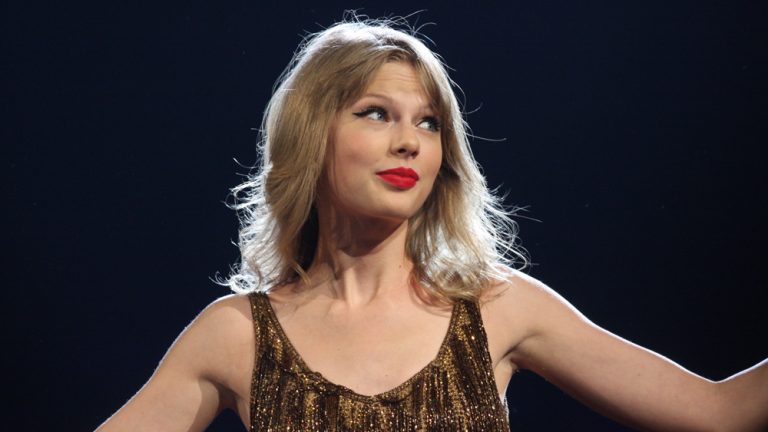
Taylor Swift’s impact as a singer-songwriter is astonishing, but so too is her impact on the planet. Despite quietly downsizing to one private jet in January 2024, her carbon footprint cuts deep: generating in two weeks 14 times more than the average American household emits in a year. Her response? To send a cease and desist to the university student who publicized flight data on the basis of “stalking and harassing behavior”. This did not help her case. In classic billionaire style she used the legal system to dispel criticism, a move camouflaged by a feminist smokescreen. Which begs the question – does being a female billionaire make you a ‘feminist icon’, or does it protect the idea of the billionaire under the veil of the ‘girlboss’? 

In her 2020 documentary, Miss Americana, Taylor Swift describes her ‘choice’ to endorse Democratic candidates. But politics is not an opt-in opt-out situation, especially at her level of fame, wealth, and influence. Politics, and political oppression is all around us. Complicity is found in silence, and we expect more of public figures whose voices carry further. So they trip over themselves to be seen as one of the ‘good ones’. The question of what they communicate to their millions of fans is essential, and telling. In the case of Taylor Swift, the way she behaves and the way she thinks matters. For instance, in ‘The Man’ she sings:

 “I’m so sick of running as fast as I can, wondering if I’d get there quicker if I was a man” / “I’m so sick of them coming at me again, ‘cause if I was a man, then I’d be the man” 

The lyrics do little to challenge hegemonic masculinity, or the legitimation of traditional masculine ideals and their dominant place in society, rather they lean into it. Though the speaker suffers under the patriarchy, she doesn’t challenge its hierarchical nature. She is jealous of ‘the man’, more specifically an ‘alpha type’ who would assert masculine dominance over other men as well as women. As she cannot achieve this, she increases her power through amassing personal wealth. Once she has ran as fast as she can, won the rat race, and broken the glass ceiling she takes her place at the top: she is a billionaire. Taylor Swift’s journey may have been different, but her destination is the same. In this neoliberal form of feminism social hierarchies are untouched. While one ‘girlboss’ is empowered, she leaves her peers in her wake. No one is truly liberated. 

For Swifties, I imagine, this must be difficult to hear. I understand, to some extent, the knee-jerk urge to protect her. To be a woman in the public eye is to be a victim of sexist virtriol – or bitterly harsh criticism on a misogynistic basis. Particularly with Kanye West’s ‘Famous’ lyric controversy, there were swathes of people who insisted Swift must have agreed to being presented as “that bitch” who “owes” Kanye West sex for “making her famous”. For the Swifties who actually made her famous, whose support put her in the public eye (and the line of fire), the guilt must be substantial. 

Though guilt does not justify the endorsement of superficial “girlboss” feminism, the authenticity of Swift’s music calls for us to connect with her on a personal level. A level that, for some, supercedes political allegiances. Taylor Swift makes it clear: whatever you are going through, you are not alone. Or, are you? With her ‘easter eggs’ and relatable lyrics she may feel like a built-in best friend, but, to put it bluntly, Taylor Swift has no idea who you are. This sense of adoration is parasocial, entirely unidirectional. Though this is certainly not a new idea, nor one unique to Taylor Swift, the impact of parasocial relationships has been enhanced by social media and pandemic loneliness. This has transformed some of Swift’s fans into a force to be reckoned with – an army entirely convinced ‘Blondie’ is their bestie, who are eternally prepared to mobilise in her defence, even when they shouldn’t. 

Taylor Swift’s billionaire status, endorsed by neoliberal feminism, is built on the one-way adoration of her fans who consume everything she creates – and she knows it. Her latest album, The Tortured Poet’s Department, has four different vinyl versions. Each one has a different bonus track and each one is priced at $34.99 – meaning that, if a fan wants to listen to all four tracks, their total will be just short of $200. Similarly, her ‘Eras Tour’ tickets are notoriously extortionate (averaging at $1,088.65), and the fans who couldn’t make it were asked to pay $19.89 to rent the Eras Tour movie for just 48 hours. At the end of the day, we are free to do what we want with our own money. But there is no denying Taylor Swift’s business strategy exploits the leagues of fans who would do anything for her. 

To Swift’s fans, I must ask – is her behavior that of someone who cares more about you, or your money? Is it right that Taylor Swift is a billionaire who is almost entirely immune to criticism?

Ultimately, if someone does something damaging, we should be able to criticize their actions. Even if that person is a woman, even if that woman is Taylor Swift.