

Sleepovers at my grandmother’s always had a common thread: Mam Betws would make me a hot chocolate to take to bed as I listened to stories about our family. Wrapped in the cotton-wool duvet of childhood, we would explore the branches of our family tree; from tales of relatives hiding money in their gardens to vampires and flour-covered dogs, I developed a quiet fascination with the past. As I questioned and probed, layers unfurled, and my understanding of our identities expanded. More complex themes crept in: hunger, strikes, and lost ambitions – our bottomless seam of history that we would excavate before bed. Years later, these stories still play on my mind, especially as I settle in at Oxford, a world I could scarcely imagine from my hometown in rural Wales.
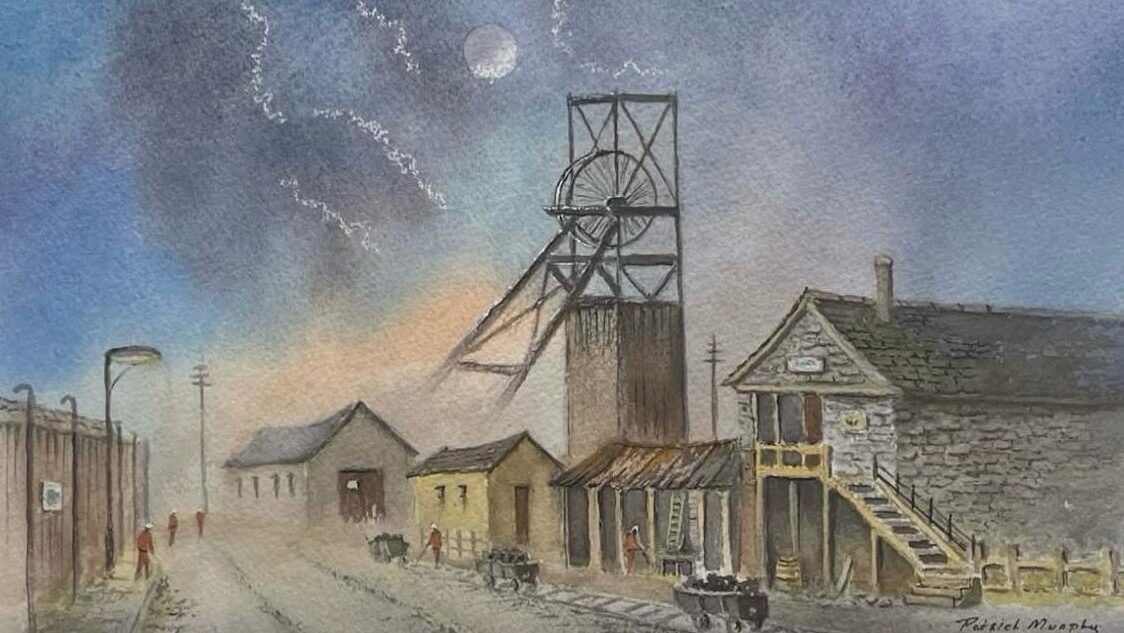
A palimpsest is a surface written upon repeatedly, each new inscription obscuring but never quite erasing what came before. My home, to me, is something of a palimpsest. Beneath its rugged landscape and seemingly unambitious exterior lie extraordinary lives. In Betws, my village, the 1984-85 Miners’ Strike remains one of those inscriptions. Its legacy was not simply one of solidarity and strength, but of division. Families were fractured, and picket lines became both political and personal battlefields as communities confronted competing loyalties. My own family was deeply affected. My grandfather, the captain of four coal faces at Betws Colliery, travelled to London to campaign for the miners and, according to family accounts, became one of the most frequently arrested miners in the region for refusing to leave picket lines. My grandmother was a steadfast supporter, going without meals so my dad could eat, saving up any and every penny. Through their stories, history became something more immediate: neither something to romanticise nor ignore, but something that embeds itself in the contours of our everyday lives.
Perhaps the most important part of this palimpsest was the woman who taught me to read it. My grandmother wrote her way through life in a small Welsh town, tracing our family history back to Cornish pirates. However, in the most ordinary family anecdotes, she found the remnants of something much larger. Her work made me realise that family history is not simply tracing names and dates backwards. It is an attempt to understand the people behind the names, and to discover how their lives have quietly found their way into those that have come after them. I realise now that my values, my aspirations, and even my traits are not entirely my own, but rather are infused with the experiences of my ancestors.
Coming to Oxford has made me more conscious of the many ways history can be understood. Here, the past refuses to remain in the past. It clings to the stonework, stares back at us from portraits lining college walls, and gathers in the dust of rooms that have witnessed centuries of conversations. It lives on in the names above doorways and the ceremonies carried forward, unbroken, unchanged and unyielding. On my second night here, I sat in an Elizabethan hall as Latin was read before our meal, and past and present seemed to collapse into one another. Yet sitting there, I found myself thinking about the histories that rarely have buildings or portraits to preserve them. They survive in family photographs, stories, old letters, and conversations repeated at family gatherings. These are not competing versions of history, just different ways of understanding it.
Family history offers a perspective that broader historical narratives cannot always provide. We might know the dates of a war, the outcome of an election, or the significance of an industrial dispute, but family stories tell us how these events found their way into people’s homes and their outlooks on life. They remind us that history is experienced by countless people whose contributions may never be formally recognised. There is something reassuring in discovering that the lives we consider ordinary are often anything but. It encourages a curiosity that extends beyond our immediate relatives, making us more attentive to the experiences of people whose circumstances, beliefs, and opportunities differ from our own. It can also challenge the temptation to judge simplistically. The Miners’ Strike, for example, is not merely a story of one side against another, but of people making impossible choices under extraordinary pressure. However, in a place like Oxford you can feel a disconnect between the way you have been shaped and the grand historical narrative of academia.
Although Mam Betws’ stories were, in the beginning, little more than a means of appeasing a child who could never quite bring herself to sleep, they gave me something far less fleeting: an understanding that none of us arrives in the present unaccompanied. In our village, to tell someone they are “gwerth y byd a’r Betws” is to tell them they are worth the world and Betws alike – a reminder that there is as much worth discovering in where we come from as in where we are going. We inherit more than names and stories. We inherit the consequences of lives lived before our own, the circumstances they left behind, and the histories that continue to make themselves felt in ways we do not always recognise.
To learn those histories is not to dress the past in nostalgia, nor to mistake the stories of our own inheritance for something more deserving of attention than anyone else’s. It is to look more carefully at the world we have been given, and to read, feel, and unearth the inscriptions beneath its surface. Perhaps that begins with something as ordinary as asking a grandparent another question, or taking the time to write down a story before it is lost. It is telling others about the stories that made us. It is to take what might otherwise remain a private inheritance and integrate it into a wider story. In a world so preoccupied with making history, there is something equally consequential in taking the time to remember it.