Another week and yet more drama at Oxford United. At the end of it, the men’s side have two more great results in the bag and are sitting pretty in fifth, just five points off MK Dons in third. On Sunday, the women faced a historic cup clash.
Tuesday night saw the men travel to the DW to take on one of the league’s big favourites for automatic promotion. A brilliant start saw the U’s take the lead through Matt Taylor inside 25 minutes but Callum Lang responded with an equalizer just thirteen minutes later for the side currently sitting second. The sides battled hard throughout the first half but in the end either could have stolen the three points and both were probably left happy with a draw.
Going into Saturday, the Yellows faced a different challenge against Portsmouth. Oxford were favourites before kick-off and took the lead after just six minutes through Luke McNally. They would only lead for four minutes before being pegged back by Michael Jacobs and more early drama followed five minutes later when the visitors went down to ten men. Pompey held on until the break and then took a shock lead six minutes into the second half. Oxford stayed calm though and the deserved equalizer came through a Cameron Brannagan rocket with the clock running down before Nathan Holland scored another late winner to steal the three points back from the jaws of defeat.
The women had no such luck though as they fell just short against the Crawley Wasps. The 1-0 defeat saw them bow out of the National League Cup at the quarter-final stage, success they will rightly be proud of after so much fixture congestion this season. The only goal of the game came through a Stephens header just after the half and despite their best efforts, the Yellows couldn’t fight their way back into it.
Next week will see the women return to league action against the London Bees as they continue their promotion push. The men travel to Accrington Stanley under the lights on Tuesday before returning home to host 10th placed Bolton on Saturday in another packed week.
Match Report: Oxford United 3-2 Portsmouth
It was another crazy game at the Kassam for Oxford as another late Nathan Holland strike saw the Yellows secure a massive three points after being behind with eight minutes left to play.
Six minutes into the affair, Billy Bodin swung in a trademark corner delivery and Luke McNally nodded the Us in front. The elation of the home fans was ended just a few moments later though when the visitors equalized: a defensive mix-up saw Kieron Freeman offer up a chance that Jacobs couldn’t miss.
Joe Morrell was somewhat controversially sent off after just sixteen minutes when referee Samuel Barrott adjudged him to have gone in far too high on Cameron Brannagan.
The visitors stayed resolute though in spite of total Oxford dominance. Bazunu was sensational in the Portsmouth goal to deny several big chances for the home side but going into the break it seemed like it would be just a matter of time before Oxford retook the lead.
However, Ronan Curtis hadn’t read the script and did superbly well to work an opening down the right-hand side and slot past Stevens in goal to make it 2-1.
Oxford needed inspiration and brought on Nathan Holland in an attempt to find some. Find some they did: Cameron Brannagan capped what is surely the standout week of his career with a rocket from 25 yards out to bring United level on 82 minutes.
Then the chances just kept on coming and Nathan Holland ran straight at the heart of the Pompey defence deep into injury time. He somehow managed to dance his way through, stayed on his feet, and slotted past a distraught Bazunu to score off the post and wrap up the three points in front of a euphoric home crowd of well over 10, 000.The promotion chase is very much still on then and next week will see United travel to Accrington Stanley before playing host to 10th placed Bolton. Both games are highly winnable and favourable results elsewhere could see Oxford up into third before the week is out.
The more disputatious sort of those opposing circuit breaker lockdowns and vaccine mandates, two of the “statutory” (mark the inverted commas) bellwethers of western nations’ scramble to curb the spread of Omicron, would likely agree with the famous lines from Percy Bysshe Shelley’s 1819 lyrical drama Prometheus Unbound:
. . . but man
Equal, unclassed, tribeless, and nationless,
Exempt from awe, worship, degree, the king
Over himself . . .
Linking a work supposed to have been recited to Eleanor Marx by Edward Aveling, her partner and a founding member of the Independent Labour Party at the turn of the 19th century, to a neoliberal (most people would agree) sensibility may raise eyebrows. Not to mention that approaching a matter where the lives and deaths of countless human beings are at stake through a literary prism may provoke familiar quibbles about the actual value of distilling concrete experience into airy abstractions for the sake of self-administered intellectual back-patting. Such criticisms would be far from mere pettifogging, but working through the rich (and unintended?) ambiguity of Shelley’s lines should urge us to puzzle over the all-too-neat conflict between collectivism and libertarian individualism through which most of us are likely to have been interpreting state responses to the pandemic.
There is, of course, a defense to be made of making sense of our times as a series of successive jolts undergone by the vaunted cornerstone of Western culture: individualism. We’d better be aware, though, of the nuances intrinsic to the perennial quandary between individual rights and collective security that is now manifesting itself in our day-to-day experience; nuances that highlight the folly of restrictively affixing, in cookie-cutter fashion, politically identifying labels to the diverse implemented (or proposed strategies) to tackle Covid we see all around us.
Individual freedom, the West’s cherished doctrinal brainchild, is of course no abstract ideological self-profiling. It is enshrined in declarations that may not per se be enforceable, legally binding, but have over time been codified into international law. Article 3 of the Universal Declaration of Human Rights guarantees every individual’s prerogative “to life, liberty and security of person,” while article 7 of the European Charter of Fundamental Rights declares, in a similar vein, everyone’s right “to respect for his or her private and family life.” Needless to point out that in their core, these prerogatives are woven into the fabric of neoliberal or libertarian and welfarist credos alike. And despite their glaring socialist and communist implications, the lines by Shelley that I just quoted suggestively blur any boundaries between mutually antagonistic positions. Notice the way in which his exalted “man” morphs from a protocommunist archetype of a particularly extreme form into a paradigm of self-ownership at which any libertarian would beam approvingly: a “king/Over himself.” We may do well to beware of Twitter platitudes like that of Arizona’s current state treasurer, who back in September furiously branded Biden’s federal mandate – requiring vaccination or weekly testing of companies with more than 100 employees – as “socialism in action.” It is not only that (inventively) uncovering abstract spectres behind a single policy attests to the looming absolutes and dramatic oppositions studding a partisan mentality (i.e., obliging all employees in a company to comply with certain illness prevention standards is socialist, making whether employees in a company get vaccinated or tested discretionary is pro-choice and hence libertarian). It is also simply that such labelling risks coming across as genuinely oblivious as to what a truly socialist anti-Covid strategy should entail, which should in turn spawn a whole other series of questions: is there such a thing as a “truly” socialist policy? What would a “wholly” socialist policy against Covid consist of? Would any left-wing policy worth its salt ever possibly exclude elements commonly labelled as neoliberal, centrist, libertarian, individualist, etc?
This is, of course, not to contest the fact that there are gulfing discrepancies between neoliberal and welfarist approaches to tackling ever-new surges of the virus that stem from an ethical rift between individual and societal well-being. Diametrically divergent outlooks are decidedly real rather than a collective superstition. Australia’s libertarian firebrand Harrison Mclean, a self-christened “Freedom Activist” on Twitter, was arrested back in September for inciting a week-long mayhem against vaccines and lockdowns in Melbourne. It’s equally no shock that Olaf Scholz, Germany’s new chancellor and a member of the country’s Social Democratic Party, has vocally endorsed compulsory vaccination for the general population. The rationale underpinning such a decision, so commonsensical political wisdom would have it, being that each citizen is neither no less nor no more than any other entitled to the right to remain alive insofar as a vaccine is the closest route to safeguarding this right at present. Given the equal value of each human life, the imperative to secure the collective survival of a unit of individuals trumps ethically the duty to see to the security of a particular individual’s right over their body. Isn’t this as thorough, as ideal a fulfillment of article 7 of the Universal Declaration as one should wish for? Come to think of it, doesn’t a slew of individuals shielded unexceptionally against a life threat bring the right to life and security into tenfold as great a fruition as respecting a single individual’s volition to bar foreign matter from entering their organism does? Not an outlandish take on the Declaration, surely. Taking this logic further should show that relying on a binary political terminology to neatly define statutory actions may be untenable if seeking to ensure a collective whole’s survival equates to defending a myriad of constitutive parts. Theoretically, at least, to the extent that a democratic socialist (or social democratic) policy is in no danger of devolving into a version of the communist authoritarianism to which the 20th century has born horrid witness, it shuns an inhumanly abstract “whole” in favour of a diversitarian collectivist vision. A vision firmly anchored in actual social experience – experience that is manifold, messy, and ever-liable to disparities.
Numerous instances at our tense sociopolitical juncture debunk the rigid political labeling that has gone rampant. Widely displayed anti-vaccination slogans may chiefly be the shamelessly prideful creations of neoliberal right-wingers, but it is worth noticing that it is Austria’s liberal conservative government, led by the Austrian People’s Party, that has been outlining a stringent policy of mandatory vaccination. Given the party’s Catholic affiliations, it may as well be that it is its basis in Christian humanism that is motivating its decision, given its explicit self-labelling as anti-socialist. Things are no less opaque in the leftist camp. It’s no surprise that far-leftists should denounce draconian measures against Covid such as those implemented in China at the dawn of the pandemic as egregiously authoritarian. And many left-wingers’ credulity toward paranoid conspiracy scenarios points to an all-too-familiar moral outrage over the mileage to be gotten insidiously out of a societal crisis by elite contingents: the current state of affairs being a godsend for governments with an autocratic streak by legitimising a crackdown on citizen autonomy, pharmaceutical giants fishing for swayable guinea pigs to churn out absurd loads of cash. No wonder then that while a left-leaning figure like Scholz in Germany advocates mass immunisation, the leader of France’s democratic socialist party La France Insoumise and 2022 presidential candidate Jean-Luc Mélenchon has criticised the French parliament’s approval of vaccine passports required for accessing bars and restaurants, cultural venues, and domestic travel.
It is by no means politically naïve to see the vast majority of lockdown and vaccine mandate refuseniks as neoliberal avatars and those supporting collective immunisation against any “pro-choice” argument as compatible with a welfarist ethic. Yet it is at the same time useful to take stock of what Shelley’s lines from two centuries ago imply, even in spite of themselves. Political doctrines are constructed categories that often seep into one another in theory as much as in praxis. Genuine political savviness should complicate our outlook on the inveterate clash between universalism and particularism that the Covid era has brought into fresh attention.
The issues facing many of us as we begin 2022 revolve around distance and separation from loved ones. Stories abound of families separated as a grandparent falls ill, unable to say their goodbyes to those they love. Online funerals, numbers limited, prevent, yet again, those very important and very final goodbyes. And of course, this is happening all the while those ‘business meetings’ at Downing Street rage on. And Omicron’s now a big deal by the way. Certainly, it would appear, at first glance, that the situation is all rather gloomy.
The pandemic has, for all of us, manifestly altered our lives. Isolation has caused calls to mental health helplines to skyrocket, nearly doubling over the past two years. It is unbelievable to think that we are approaching the two-year anniversary of the beginning of the March lockdowns in 2020. There is a certain difference in colour when I think of the memory of the January prior, receiving my Oxford offer, and dreaming of a summer travelling around Europe with my friends; instead, I was confined to my room, anxiously prepping for a Biology exam that I was told I might have to sit, never getting the closure from a school I so loved, and never passing through a rite of passage that all before me had gone through.
Thus, on entering university in the autumn of 2021, there was a great deal of unease amongst the matriculating class of 2020. School, it seemed, had not finished. Certainly, I felt as if one day I would be back in my Politics A-Level class sitting next to the resident flat-earther reading Mr Farmery’s classical PowerPoints. One of my best friends told me that, mid-way through our first Michaelmas term at Oxford, she felt the same too, but also as if ‘no one knew the real her’. I too was feeling rather out of sorts, a shadow of my former self.
A central agent of this change has been the transition to much activity online. Though I’m not the massive clubbing-type to the great disappointment of my friends, my freshers was stuck behind a desk, alone in my room. Naturally, I say this with a great deal of hindsight, but perhaps I would actually have rather enjoyed my friends pulling me out of bed at 10pm to go out in my pyjamas … an event which did, I must shamefully admit, happen come the end of the year.
It is a revealing point: that come Trinity term, restaurants, bars, and social areas were re-opening, and crucially, that people were drawn in this direction. As England challenged for its first ever European Championships in June and July, it was as if COVID had become an urban myth, thousands lining the streets. Certainly, come the beginning of our second Michaelmas term, there was a sense of optimism about the new academic year. The pandemic was a thing of the past; and even when we realised it wasn’t, it was the social interaction that we craved, the personal connections formed that couldn’t be fostered behind a screen. And I finally went clubbing, but only the once.
As I speak to this years’ freshers as Hilary term begins, I’m glad to hear not only that they had a good Michaelmas but that they’re all back for their second term of the year. I personally did not fare so well alone in the winter months in lockdown, absent from Oxford in Hilary; the photos of my beautifully shaved head resembling a certain Wallace of Wallace & Gromit, as my friends chose to see it, will certainly testify to this.
What the pandemic has revealed is our fundamental need for personal connection and interaction. Although it may have altered the practice of interaction, it has not led to a manifest change in people’s hearts. People crave interaction, and people need it to function at a very chemical and biological level. I imagine that in years to come the records we leave behind will be fiercely studied by anthropologists and sociologists alike, looking to understand what drives people, and what connects them. The pandemic has revealed the fundamental inter-connectedness of people, and that the world in which we live is one in which we are all a part, one in which we are all valued, and one in which we all have a responsibility to look after each other. Indeed, a great by-product of isolation has been friends increasingly ‘checking-up’ on each other, particularly amongst men, when perhaps it would have been a sign of weakness to do so. The pandemic has been a very uniform, blanket-level experience that has shed light on the real ties that exist between people.
This has been corroborated when talking to many of my teammates in the various sports teams I’m a part of. The way they have opened up to me about their troubles, but also of the support they have received, is indicative of this awareness of the value of our friends and of our relationships. I’m far from predicting the end of the materialist and commercialist climate in which we’ve seen grow in the last 75 years; I’m just trying to say that the world really ain’t that bad after all, and that people do, fundamentally, care about each other.
Therefore, I write this piece looking back on both my own experiences of the pandemic years through an oddly romantic hue. We have witnessed an immense period of change that has revealed not only so much about our society but also so much about ourselves. It is easy to imagine that the pandemic will force a changing way of life, but this presupposes a lack of human agency that certainly hasn’t been corroborated as the pandemic has begun to ease. Over lockdown, Netflix was perhaps the nation’s most popular pastime, and I began another binge of Friends for perhaps the 6th time in my short nineteen years (certainly not the nation’s most popular pastime). But did you see how many people turned out to watch Spider-Man: No Way Home? If there’s one thing for sure, it’s that people love the cinema, or perhaps it’s Andrew Garfield’s rugged handsomeness; but even more so, that people coming out of a time of isolation and fragmentation, have realised how much they loved the world in which they used to live. The return of fans to the cinema – and also to the football I might add – has highlighted what we truly love by their absence; and as a by-product shown that perhaps the pandemic won’t be as devastating in the longue durée. Despite the sorrow and the agony we have all experienced in the last two years, a silver lining can nonetheless be found. The pandemic will pass, and life will return to normal; but this, I hope, will be a normality in which we appreciate those around us, and look for the good in society and in others which the pandemic has so evidently revealed.
Oxford University’s first professorship in LGBTQ+ History will be created at Mansfield College following an endowment of £4.9m.
The Jonathan Cooper Professor of the History of Sexualities will “lead and expand the study and teaching of LGBTQ+ History at Oxford”. The Professorship is the first fully endowed post of its kind in the UK.
It is named after Jonathan Cooper, a gay barrister who died suddenly in September 2021. He was involved in a number of landmark campaigns promoting LGBTQ+ equality across the world. He helped found the Human Dignity Trust in 2011, which challenged laws which persecuted individuals on the basis of their sexual orientation and gender identity. The Trust supported activists and fought cases in Jamaica, Northern Cyprus, and Belize, among many other countries.
Cooper’s husband, Dr Kevin Childs, said: “Jonathan Cooper was many things – an enormously respected human rights lawyer, an activist for LGBTQ rights, the rights of indigenous peoples and the right to self-determination, as well as a believer in the rights to dignity and to living an authentic life, and a tireless advocate for people living with HIV/AIDS. But his first love was history and if there’d been space in his life for him to be anything else he would have been an historian. So, it is particularly fitting that this first Chair in the History of Sexualities is named after him, for it acknowledges his passion and love as much as his reputation.”
The gift was made by the philanthropists Dr Lisbet Rausing and Prof Peter Baldwin, historians and co-founders of the Arcadia Fund. Mansfield is in the process of securing further funding to establish a research cluster around the Professorship which will “push research boundaries, spark debate and nurture new scholars in this burgeoning area.”
Processor Lyndal Roper, the co-director at the Centre for Gender, Identity, and Subjectivity at Oxford, said: “LGBTQ+ History is where some of the most vibrant historical research and writing is now happening and the creation of the Jonathan Cooper Chair of the History of Sexualities is an important milestone for the field. The coming generation is questioning what gender means, and now is the time to establish this exciting new scholarship.”
The Marvel Cinematic Universe (MCU) has a reputation for fun films for casual people. While this doesn’t necessarily detract from the enjoyment, as Martin Scorsese puts it, they are largely seen as the cinematic equivalent of a theme park attraction. Kevin Feige, producer of the MCU, clearly disagrees, going so far as to try and get Spider-Man: No Way Home nominated for a Best Picture Oscar. While Best Picture seems to me a step too far, we should recognise No Way Home for what it is: a film that honours the legacy of Spider-Man while at the same time striking at the heart of Peter Parker’s character.
Jon Watts, the film’s director, had to do a lot with this movie: it had to make a profit; it had to exist within the MCU, and respect the mould of the money-making machines; it had to close the trilogy he began with Spider-Man: Homecoming; and it had to honour twenty years of cinematic legacy. On all of these accounts, he succeeded. The first two are fairly obvious to see: just before the new year, the film made $1.37bn worldwide; and the film is peppered throughout with jokes and gags in line with the rest of the extended universe. It is a fun film packed with high-quality CGI and well-choreographed action sequences, all typical of a Kevin Feige production.
Within this framework, the film pays close attention to the story it has been telling since Homecoming. In the first film, we see Spider-Man (Tom Holland) learn that being a hero is not simply a fun game; in Far From Home, he learns that he cannot simply give up being a hero; here, he learns that he must do the right thing no matter what. The film presses his character to his limit. Just before his Aunt May (Marisa Tomei) dies, she gives him a final, familiar lesson: “with great power, there must also come great responsibility”. Twice, he is given the chance to ignore it, first when he is given the box that can send all his villains away to be killed, and again at the climax of the film when he tries to kill the Goblin. However, the lessons he has learned prevailed: he is persuaded the first time by the other Spider-Men (Andrew Garfield and Tobey Maguire), and the second, he cures the Goblin, and sends him home to (hopefully) a better world. At the close of this film, Peter’s journey is complete: he has learned just what it takes to become a hero. Retrospectively, the conclusion of the trilogy enhances the first two films, and brings the story, and the development of his character, to a satisfying close.
It was clear that at the beginning of the trilogy, the filmmakers were trying to set the film completely apart from the previous films, such as with the decisions to exclude Uncle Ben and to avoid using Peter’s catchphrase about power and responsibility. However, by having Tobey Maguire and Andrew Garfield reprise their roles from past iterations of Peter Parker, Watts is setting his trilogy directly next to those that came before. Their inclusion risked being mere fan service and disrupting the integrity of the story. Instead, they point to the fundamental truths of Spider-Man: he goes through pain, loss, and tragedy, but he always comes out the other side, as highlighted when the other Spider-Men first speak to Tom Holland’s character. In this film, they act as a foil to the MCU’s version of the character, hammering home the lesson he has to learn. And as such, they enhance the story, rather than distract from it. And similarly, they pay tribute to the legacy of the previous films (especially to Andrew Garfield’s performance), and the impact they have had on the current iteration of the character.
It is worth pointing out the somewhat lacklustre pacing of the first act: despite the aesthetically pleasing and well-choreographed fight scene between Dr Strange and Spider-Man, it feels as though it drags. Likewise, the epilogue feels rushed: Peter’s grief over his aunt does not feel truly reconciled, and one wonders if it would have been necessary to extend Peter’s address to his aunt’s grave.
However, everything in between the first act and the epilogue flows smoothly. A particular highlight is the apartment fight scene at the close of the second act: Willem Dafoe’s turn as the Green Goblin is terrifying, as he delivers some of the best lines in the film and then brutally beats down the hero.
This fight, combined with his other appearance towards the end of the film, in which he praises Peter for trying to kill him, works well in the context of the film. His role is to be unhinged, and cause chaos; his motivation appears to be to corrupt Peter’s morals. This sort of dynamic could have fallen flat in a movie where the central conflict lies between the hero and villain. But here, it works perfectly: it highlights even further the internal struggle for Peter. At its core, the story is about Peter Parker learning to do the right thing. As such, the villain does not need to do more than to voice and feed the hero’s inner demons. The story is all the more satisfying when Peter does not win through some big fight, but by accepting his final lesson: he must always do the right thing.
This excuses Dr Strange’s incredible irresponsibility. He neither counsels a clearly distraught 18-year-old who asks him to brainwash the entire world nor talks him through the spell, but it becomes clear that we are focussing on Peter. Even if we lay the blame with Dr Strange, we watch Peter choose to help the villains rather than simply take the easy solutions.
That is why the reliance on interconnected cinematic universes is passable here. No Way Home does leave casual fans a bit more in the dark about their villains’ motivations, such as Electro’s desire not to be ignored, or Doctor Octavius’ science experiment gone wrong. However, this is because the film does not want to distract from Peter Parker. No Way Home concludes the trilogy excellently. Much more could be said about other aspects of the film, including the score, the choreography, and the acting, particularly Tom Holland’s performance. But let it be sufficient to say that, for the first time in a while, the MCU has produced a story that stands on its own two feet, without simply relying on their audiences’ love for their interconnected universe. This is certainly, to my mind, the MCU’s best cinematic outing.
Image Credit: Spider-Man: No Way Home / Sony Pictures / Facebook
Don’t have time to comb through multiple manifestos or six different op-eds? The Cherwell News team spoke to all the candidates for the Presidency of the Oxford University Student Union so you can compare them all in one go and make an informed decision.
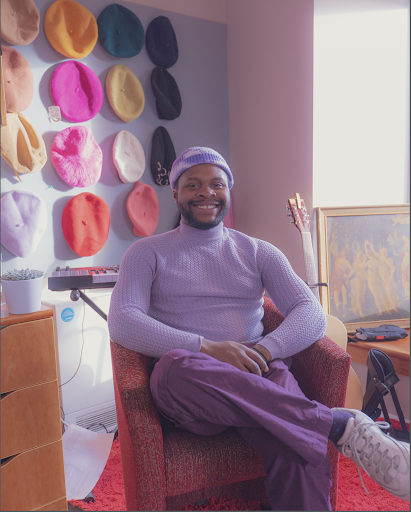
Michael-Akolade Ayodeji
Image Credit: Cyril Malik
Combining the Union and Student Union presidencies is an ambitious endeavour.
Michael-Akolade Ayodeji clearly is no ordinary student. An adolescence characterised by irregular access to formal education and encounters with the care system, his path to Oxford was an unlikely one. The same drive that allowed him to work ten-to-four night shifts while undertaking his A-levels, he tells Cherwell, is the drive that he thinks makes him the candidate suited to represent Oxford students.
‘I live for being busy. That’s why I do photography, American football, the SU, the Union. I have to do things’
Of course, this ambition comes at a price. Having rusticated during second year while caring for his stepfather during the pandemic and planning another rustication this year for the Union presidency, the SU presidency would probably entail an exceptional third rustication. Even as Michael-Akolade is open about the hurdles he has faced, he emphasizes the change he has managed to achieve. From introducing Ask for Angela at the Union to working to increase access, Michael-Akolade wants to make clear that he isn’t just a status quo manager; he wants to improve it.
In conversation, he is the first to admit that this campaign has been, by his standards, low profile. Personal difficulties complicated the launch, and his manifesto lacks some of the attention-grabbing policies of his competition. But, there is never any doubt as to whether he should be running:
“For me personally, not going to lie to you, it is my experience, my struggles with Oxford that have left me passionate…about changing things”
Otto Barrow
Image Credit: Otto Barrow
Otto Barrow is no stranger to student governance. From serving as the Oxford NUS delegate in 2021 to acting as Chair of Council, he has experienced a range of roles and responsibilities. Through these, he has seen the good, the bad, and the ugly of Oxford administration, and he believes that he is ready to face down the SU rodeo.
In his manifesto, Otto vows to ‘protecc’, ‘attacc’, and even ‘fight bacc’ as SU president. His primary aim is to ‘protecc’ students from sexual harassment, but he also wants to defend Oxford’s environment by halting University investments into polluting companies and encouraging colleges to create net-zero schemes. He wants to ‘attacc’ the lack of awareness about exam arrangements by spreading information about concessions, and to end the ban on trashing.
However, Otto’s quest to ‘fight bacc’ against the “frankly stupid” ban on clapping has been met with frustration by the current SU. DisCam said they were “saddened to see the so-called ‘clapping ban’ once again being misrepresented, this time by a candidate for President in the SU Election”. In response, Otto told Cherwell: “The wider issue here is that meetings and other events don’t meaningfully cater to people who have anxieties or are non-hearing, so having such a policy is dangerous as it allows the SU to pretend to be inclusive when it doesn’t do anything substantial to include these groups within its decision-making processes. I respect all the work that the Disability Campaign does.”
Otto Barrow believes that he has the experience, competence, and the policies students need, as well as the passion to make them happen.
Richard Mifsud
Image Credit: Richard Mifsud
Why do we need a Student Union president at all? This is the question Richard Mifsud, a medicine student at Worcester, asks in his manifesto. For two years, he has run the ‘empty chair’ campaign with his team of stuffed animals: Thespy Bear, Dr Chicken, and Depressed Moose. The campaign aims to highlight the ineffectuality of the SU and seeks to reinvest the £21,000 spent on the president’s salary elsewhere. Last year, he won 500 votes, coming only 400 behind the eventual winner.
Richard is very familiar with the inner workings of universities; he completed his undergraduate degree, masters, and DPhil at Cambridge before coming to Oxford to take graduate-entry medicine, which he will complete this year. Outside of his SU campaign, he hosts CamFolk, a weekly folk music show on Cambridge’s student-run radio station, after having his application for Oxide (the Oxford equivalent) rejected three times.
He believes that “All of the roles that SUs have which make them very popular and useful are currently done by JCRs and MCRs very well; all that’s left in Oxford SU is people that are career politicians or have particular axes to grind. This is why the Oxford and Cambridge SUs always have the same problems with low turnout and low interest.
“The role of the SU should then be supporting the JCRs and the MCRs, and catching that very small number of students that fall through the gaps of the college and university support systems.”
Enrico Pelganta
Image Credit: Enrico Pelganta
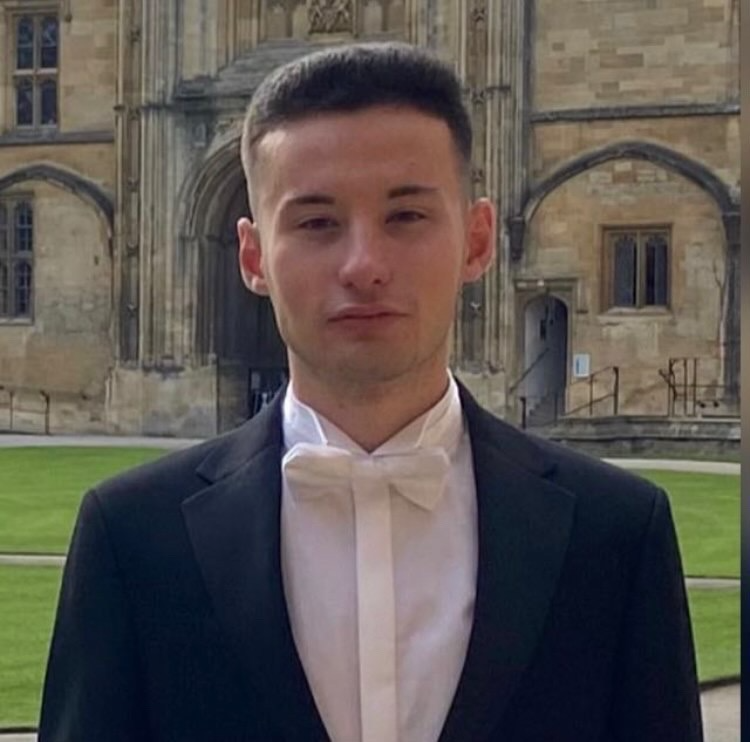
With his perfectly parted hair, reserved manner and penchant for smart outfits, you would be forgiven for thinking Enrico was already a politician. However, his melodic Italian accent and dry wit add colour to this ambitious man otherwise clad in shades of navy or grey. After all, lack of vision is not something Enrico can be accused of. His campaign is based on fundamentally redefining the Student Union’s culture in order to reconnect with the student body.
Taking aim at what he describes as politically divisive “virtue signalling” and waste, Enrico wants to adopt a cost-benefit approach towards SU policy in order to restore trust in the organisation, as well as increase its relevance to current students. He highlights the Class Act Campaign and the SU’s ban on clapping as well-meaning policies adopted due to political fashions rather than practicality.
Speaking on the Class Act Campaign, he stated, “I was left wondering how a term card including a pub trip and a Gregg’s picnic (two lovely activities in their right, obviously) would do much to improve the long-term prospects of disadvantaged students.”
This organisational shake up would be extended across the SU to tackle the sense of superiority over JCR’s and MCR’s which Enrico believes pervades its bureaucracy.
He believes that stronger ties with both is key to increasing student engagement, providing the SU with a greater connection to everyday concerns. Further reform of the SU’s decision-making process is also required in Enrico’s eyes, in order to end the waste of time and resources on a “needless Bureaucratic machine”.
Marcin Pisanski
Image Credit: Marcin Pisanski
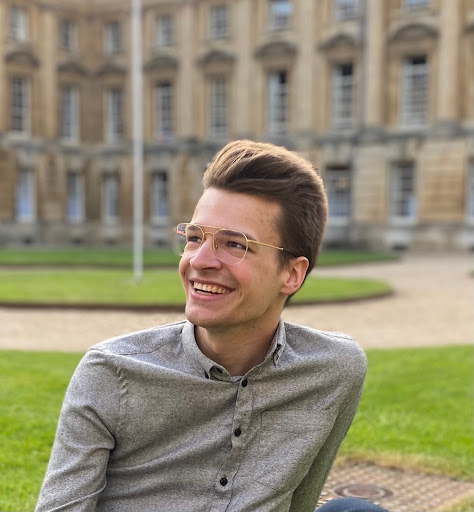
Marcin Pisanski is a finalist studying law at St Annes and came to Oxford from a state school in Poland. In his manifesto, Marcin describes himself as having two years of experience with the SU, being committed to student representation, and ready to lead the change. During his time at Oxford Marcin has served as Chair of the Student Council, EiC of The Tab Oxford, and President of the Bar and French Societies. When Marcin sat down with Cherwell, two of his priorities became clear throughout the interview: involving students, specifically JCRs and MCRs, in SU matters, and freeing up funds by replacing highly paid full-time positions at the SU with student volunteers or part-time employees.
As for the latter proposition, when asked about the potential risk of over-working this may present, Marcin assured Cherwell that he would never consider paying anyone below the Oxford living wage, and likened the roles to those currently occupied by students in other student organisations and societies. Some positions would still be retained by non-student staff members, but maybe not salaried at the current rate of £100k: “paying someone less than £100k is not paying them that much lower in terms of what the role entails and what kinds of responsibilities they have. I think just paying people normally at the market level is just enough.” If Marcin is elected, a referendum on the issue of disassociation with the NUS is also on the cards.
Kelsey Trevett
Image Credit: Kelsey Trevett
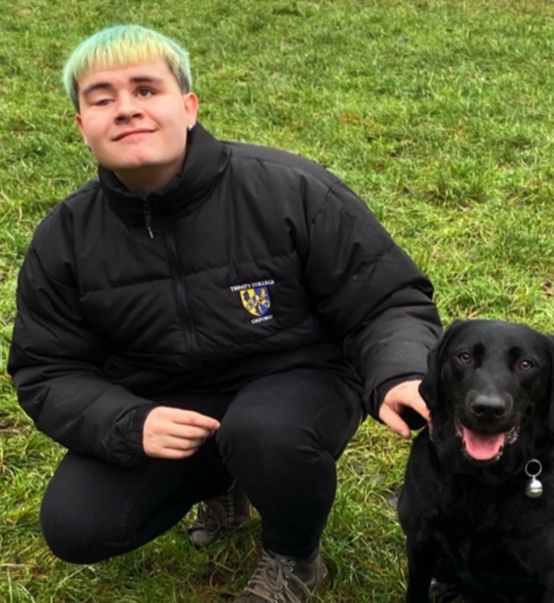
The University has long come under fire from critics, with activists alleging that the university fails to look after the welfare of its marginalized communities and eschews its duties to society and the environment. Kelsey Trevett (they/them) has spent their college years at the forefront of these debates, organizing rent strikes and LGBTQ+ representation movements in and around the university. Now, Kelsey Trevett wants to trade the picket line for the SU presidency.
The co-chair of the Young Greens of England Wales, Trevett is eager to turn critique into action, and advocate for the communities they feel the university leaves behind. “It is important that working class students, disabled students, and LGBTQ+ students are listened to, and there are tangible steps I believe we can take to let that happen,” they told Cherwell.
Trevett recognizes that the SU is inherently constrained by the university’s bureaucracy, but they believe that there is a role for the SU president to be a platform for change, especially for marginalized groups. “We can let the SU be a space where groups can bring about proposals, and create the organizing pressure to ensure those proposals are acted upon,” said Trevett.
“On issues such as sexual harassment or discrimination, it is important that we bring college policies in line and let the voices of those most effected be heard at the SU,” they added.
Trevett hopes to use their experience organizing protests and building coalitions to make the SU a more open and inclusive space. “The next step is to bring Sabbatical officers into the JCR or MCR meetings, to make sure there is really active engagement, and to take proactive steps to help students feel they are being heard,” said Trevett.
Who are you in one sentence?
Michael-Akolade Ayodeji: “I’m an “artivist” – I use poetry, art, visual performance to tell real stories from underappreciated perspectives with the hope to help inspire change.”
Otto Barrow: “Competent: I know what it takes to get through the university bureaucracy, and I can deliver with a light touch.”
Richard Mifsud: “I am an empty chair!”
Enrico Pelganta: “An overworked student who should probably revise its(sic) coursework instead of writing this.”
Marcin Pisanski: “I’m Marcin, I am a lawyer at St Anne’s, and I’m running to be SU President.”
Kelsey Trevett: “An activist committed to fighting for the rights of students, in a university that does not care about us, who is prepared to stand up for each and every student.”
Why, according to you, should students care about the SU?
Michael-Akolade Ayodeji: “Students should care about the SU because major issues that affect our day to day student experience require coordinated and systematic university-wide change. The SU, through access to key decision-makers and stakeholders, is in a strong position to help facilitate this.”
Otto Barrow: “There are some issues that are bigger than individual colleges, such as sexual harassment, decarbonising Oxford, and how the university runs exams. You need a student union to coordinate all of these different things. My vision of the SU is for it to be a bottom-up institution: rather than saying ‘this is what we want to implement’, I want to have an SU that listens to JCRs and MCRs and focuses on the issues that they want us to focus on.”
Richard Mifsud: “Well, that’s a great question. They should care because they’re spending a huge amount of money. Just imagine what we could use that money for other things. I’ve been running this empty chair campaign for three years, and I still don’t have a clue what any of the previous three years’ presidents have done.”
Enrico Pelganta: “They shouldn’t. That’s what SU officers have gotten wrong repeatedly for years. The Collegiate JCR/MCR system means that apart from a legal requirement, the SU has little scope of existence by natural right. There is, however, I believe, scope to make possible for students to care about the SU.”
Marcin Pisanski: “The SU has more power than most students realise. There are some issues where the colleges are simply not enough. For example, if you think about night safety or if you think about returning to Oxford after the pandemic, those are not issues where individual JCRs or individual MCRs could have an impact, so there’s a lot more going on behind the closed doors than people realise.”
Kelsey Trevett: “The SU is a place where people can really be involved, put forward important proposals, and let their voice be heard. The SU can stand up for students who are left behind by the university and remind the university of who it is failing.”
If you were elected president, what is the first thing that you’d change?
Michael-Akolade Ayodeji: The first thing I’d change is the lack of proactiveness in engaging with and supporting JCR and MCR communities and leadership. An SU that students feel apathy towards has no mandate and thus limited ability actually influence the university, regaining student trust and engagement is #1 on my agenda.
Otto Barrow: My first priority would be to ensure that anti-sexual harassment policy is harmonised across colleges, in consultation with It Happens Here and the OSARCC (Oxfordshire Sexual abuse and rape crisis centre). This would involve, among other things, ensuring that all college bar staff are trained in “Ask for Angela” and that anti-spiking cups are made available at bops and other events, along with producing material to help victims navigate the bureaucracies.
Enrico Pelganta: “I would order the commission of a general review report of the decision-making process behind the organisational and bureaucratic machine of the SU. I believe that the way the SU has been run for years is the principal reason behind of its demise: it is impossible to restore trust in the institution if the SU cannot handle change.”
Marcin Pisanski: “The first thing I would change is to make sure that the SU is actually communicating with the student body. I would attend as many JCR and MCR meetings as I physically could fit into my calendar. I would make sure to not just communicate with students from all backgrounds, colleges, courses, and departments, but also to make sure that I am representing them at a University level.”
Kelsey Trevett: “So much! I think the first thing I would like to change, and work on, is to make our internal bodies more trans-inclusive and less queerphobic generally. We have an issue where in many institutions, trans and nonbinary students and LGBTQ+ students do not feel included, do not feel comfortable, and do not feel safe. It’s important as an SU we stand up for those students, and make the SU a place that is safe for them.”
How do you plan to work with the University administration to advocate for student interests?
Michael-Akolade Ayodeji: I have vast experience in a number of approaches which I’ll employ when appropriate. From advocating on behalf of vulnerable groups as I have done with Mind to negotiating win-win outcomes as I have done with my college to providing and if need be, taking it to the street with activism as I have done protesting against discrimination and immigration-related issues
Otto Barrow: “The big challenge that a lot of people find when they’re trying to enact change is that they don’t understand how the university works – it’s a very arcane, bureaucratic structure. I am aware of how these University structures work. I would try to make as many petitions as possible to demonstrate to the university which issues students really care about, for example with my policy about trashing.”
Enrico Pelganta: “To maximise the impact of the SU, I plan to draft with the aid of fellow elected officers a memorandum of understanding with the University for a new course of partnership which will better consider the needs and interests of the whole student community. This is especially significant in relation to the way there is a need to advocate for more uniform treatment of students across different faculties, especially in terms of examinations.”
Marcin Pisanski: “The important thing is experience. It takes a new president up to a few months to get up to speed with everything that’s going on with the way the University operates. I’ve already served on one committee with the Pro-Vice Chancellor of education. I’ve already been the chair of the student council and a student trustee, so I understand how those relationships work.”
Kelsey Trevett: “There are real tangible steps we can take in terms of representation. Part of my manifesto includes the return of lecture capture and accommodation policies, so that working-class students or disabled students are listened to. We will help communities have a direct voice in our work, and let them be the ones that decide what their needs are. I’ll use the presidency to communicate those needs and promote representation in a way that is tangible and meaningful, not just tokenistic.”
Students at different colleges can have vastly different experiences when asking for support such as hardship funds or action against sexual harassment. What can the SU do to make these outcomes more equitable?
Michael-Akolade Ayodeji: “Firstly by empowering and providing more support to campaigns such as Class Act and IHH as they’re composed of students who understand and are incredibly committed to tackling these issues. Secondly, we need a universal approach to solving these issues which requires cutting bureaucracy and dealing with the disparity in support and process between colleges.”
Otto Barrow: “Obviously there are some colleges with more effective systems than others. I want to provide the basis for colleges to learn from one another in terms of their approaches. The fundamental principle of my campaign is to take these ideas from the bottom up and share them in a decentralised way.”
Richard Mifsud: “We have a wonderful collegiate university with every college having fantastic ideas of their own. There’s not enough money to support these ideas and most are done by people in their spare time, leading to an uneven experience. I think that the £21000 from the budget could go towards supporting colleges that are less well off. The SU could also promote communication between separate JCRs and MCRs – it would be nice for Oxford SU to realise they are the servant to the JCRs and MCRs and not the leading master.”
Enrico Pelganta: “Centralisation is not necessarily the solution to this, as the college system exists for a reason. I do believe, however, that it is necessary for whoever wins the SU presidency to work with the University administration to push for a system demanding uniform standards for access and quality of service across colleges.”
Marcin Pisanski: “If we manage to not continue spending 500k pounds on non-student staff salaries, then the SU would have much more money to either launch some kind of a central hardship fund run by the SU as many universities in the UK are already doing, or we would be able to spend that money on supporting students, for example, suing their colleges in terms of cases of abuse.”
Kelsey Trevett: “With hardship funds, we can try our best to create a central point for advertising how colleges make those funds available, and work to close disparities for those who are applying. We should also ensure that every college provides as much as it can.
“It is difficult to get colleges to work together on issues like sexual harassment. The policies are so inconsistent. We should ensure that our goal is to make sure student welfare comes first, bring college policies in line, and protect victims.”
How would you get students engaged and interested in the SU?
Michael-Akolade Ayodeji: “ By being accessible, better at communicating achievements and project progress, engaging with and listening to common room reps so we’re aware of unique issues facing different students and by building trust through maintaining a track record of reliability.”
Otto Barrow: “I aim to move events away from the Student Union building and try to run events in as many different colleges as possible. Most colleges are some distance from the SU building, and many don’t know where it is, so I think that creating events across the university will help to serve the students and represent them more effectively. I also want to get rid of policies that make the SU appear completely inaccessible and which don’t actually have any effect on the issues they’re trying to address – like the ‘ban on clapping’.”
Enrico Pelganta: “I am a strong believer in stronger partnerships and coordination with JCRs/MCRs to increase engagement and interest across different demographics. It is also necessary to build stronger ties with Universities Societies of all kind, so that we can have a comprehensive picture of the student community and its needs.”
Richard Mifsud: “I am hosting the SU empty chair photo competition! If you send a photo of one to [email protected], a picture of an empty chair will win a £2 box of Celebrations.”
Marcin Pisanski: “It’s a two-way communication. We can’t have students being engaged with the student union without the student union being engaged with students. As I mentioned before I would make sure to go to all the JCR and MCR meetings, I would invite society leaders and JCR leaders and MCR leaders from different backgrounds to different SU committees.”
Kelsey Trevett: “I understand that there is a lot of apathy. I think that this needs to be approached so students feel involved, feel engaged, and feel they have a voice in the SU. Every year, candidates say they want to engage more students, and be more proactive about engaging students, but it is important to go to JCRs, go to MCRs, really engage them, and tell them what the SU is doing. It should be about making students feel like they can really feed into the work of the SU. We should hear the voices of all students, and let people feel able to shape and be involved in processes.”
Which song can you not get enough of right now?
Michael-Akolade Ayodeji:” ‘For Troubled Boys’ by KOTA the Friend”
Otto Barrow: “I recently watched Hot Fuzz, so it’s “The Village Green Preservation Society” by the Kinks”
Richard Mifsud: “Do I know any songs about chairs? There’s ‘The Empty Chair’ by Sting, but I’ve never heard of it, there’s ‘Empty Chairs and Empty Tables’ from Les Miserables. I suppose you could do Live Aid, because it’s a chairity.”
Richard Mifsud: “Do I know any songs about chairs? There’s ‘The Empty Chair’ by Sting, but I’ve never heard of it, there’s ‘Empty Chairs and Empty Tables’ from Les Miserables. I suppose you could do Live Aid, because it’s a chairity.”
Enrico Pelganta: “Live Wire by the AC/DC.”
Marcin Pisanski: “Hopefully by Thursday it’s going to be we are the champions, but we’ll see about that.”
Kelsey Trevett: “Just because I listened to it this morning, it’s 22 by Taylor Swift.”
Plush or Bridge?
Michael-Akolade Ayodeji: “I’m not a clubbing guy really”
Otto Barrow: “It depends on the day of the week, so I will have to pass on that one.”
Richard Mifsud: “Neither – I am going to be wandering around aimlessly looking at all the empty benches, going ‘WOW, there’s another!’. I will be very depressed if I see a drunk person sitting in one.”
Enrico Pelganta: “Bridge Thursdays has a special significance for me.”
Marcin Pisanski: “I love the old plush, I’m not the greatest fan of the new one, but I think still Plush.”
Kelsey Trevett: “Definitely Plush.”
Port & Policy or Beer & Bickering?
Michael-Akolade Ayodeji: Laughs. “This will get me in trouble…Don’t really go to either ….. Beer and Bickering”
Otto Barrow: “Port and Policy is more fun as a performance, but Beer and Bickering is more towards where I lean in my actual views on things. I think it’s like the Cavaliers/Roundheads debate.”
Richard Mifsud: “What the hell is Beer and Bickering? [I explain that it is a tamer and less ‘controversial’ P&P]. Thespy Bear likes the dramatic, so he will go to Port and Policy. Depressed Moose, my treasurer, is going to go to Beer and Bickering because he feels like all he can do is bicker.”
Enrico Pelganta: “Would you prefer to be hanged or shot? I am joking, although I have been starting to appreciate the latter more in recent times after being an assiduous frequenter of the former.”
Marcin Pisanski: “If elected I’m probably going to be going to both to make sure that I’m listening to students from different backgrounds, so I’m just going to say both.”
Kelsey Trevett: “Neither, but if I had to pick one, probably Beer & Bickering.”
Najar’s or Hassan’s?
Michael-Akolade Ayodeji: “Ahmed’s all the way”
Otto Barrow: “Najar’s”
Richard Mifsud: You think I have time to eat in my pursuit of empty chairs?”
Enrico Pelganta: “As I used to be vegetarian in the past, so I would probably go for Najar’s.”
Marcin Pisanski: “Hassan’s! (without hesitation).”
Kelsey Trevett: “Hassan’s, because I live right by it!”
Voting for the 2021 SU Elections is now open! Follow this link to cast your vote.
Microsoft have declared a few motivations for their acquisition in a press release announcing the deal. At the beginning of 2021, Microsoft had 18 million subscribers for their Game Pass subscription service. Activision can give them access to their 400 million monthly active players across the globe. Acquiring Activision may also grant them access to their 21.22% share of the mobile gaming market. The same press release briefly stated that this acquisition will provide the “building blocks” for the metaverse.
Activision themselves approached Microsoft for this acquisition. But even before then, producing blockbuster games has become increasingly expensive and competitive. Meanwhile, Activision seems to be struggling to retain and attract talent, potentially due to reports and lawsuits over a toxic work culture. Activision’s share price, meanwhile, has declined steadily since June 2021 from a zenith of $99.18 a share (14 June 2021) to a nadir of $57.28 (1 December 2021) a share.
This deal could have major ramifications for an eventual series of mergers and acquisitions in the gaming industry. On one hand, Microsoft may look at acquiring more gaming companies to consolidate its position, while its competitors may try to do the same. Signs of this are already happening as Sony, less than two weeks later, announced that they are in the process of acquiring Bungie.
Satya Nadella, the CEO of Microsoft, noted that the acquisition “will play a key role in the development of metaverse platforms”. The metaverse is an all-encompassing term for a whole universe of virtual reality (VR) spaces and communities linked together. In it, people can work and play, and metaverse marketplaces rely heavily on cryptocurrencies. The technology industry is currently gearing up to move into the world of VR and one of the key challenges facing this shift is consumer uptake. In 2021, the VR market was worth approximately $4.8 billion and the gaming market constituted almost 30% of that. Gaming is seen as the original manifestation of the metaverse as many games have their own virtual marketplaces and communities. By acquiring Activision, Microsoft may seek to become a significant player in the metaverse by increasing the number of online communities they currently have with Activision’s customer base.
One potential roadblock for this acquisition is antitrust and competition regulation. Governments and regulatory bodies often look to block large deals such as these from going through if it looks as though these deals will lead to monopolies and the stifling of healthy market competition. Microsoft already controls the gaming pipeline from studio development to the distribution of titles. This acquisition may enable them to deliver more variety in the popular games offered through their Game Pass subscription service. This can enhance the scope of their gaming ecosystem, which already encompasses consumers’ content, consoles, computers, and mobile devices. On the flipside, because Microsoft would own the distribution rights to Activision’s game titles, they can potentially restrict access of their games to other devices, as they have done with Starfield, and could potentially do with Elder Scrolls VI. It is not yet guaranteed that they will do this with the games acquired in this deal, like Call of Duty, and currently, they have pledged not to restrict access to that franchise. However, antitrust regulators are concerned about the potential for these kinds of activities which can hurt the value of other competing platforms. To assuage regulators’ fears, Microsoft will need to prove that “the deal is neither anticompetitive nor harmful to new firms or consumers”.
The face of the gaming industry is set to evolve. Through this deal, for better or for worse, Microsoft will have more control over the user experience. They can control the development, production, and distribution of their games, and over a wider range of platforms. And if this deal does indeed spark a merger and acquisition war over game publishers, as the Sony-Bungie deal might foreshadow, we can expect a larger degree of consolidation within the gaming market. Just as the Disney-Fox merger affected the nature of streaming, we could see gaming become an industry with fewer players. Individual companies may have further control over pricing, while player networks may become more interconnected. Further down the road, we can see how these huge companies can use their leverage over content to establish a foothold in the metaverse. So why should we care? Because this deal could be one of many that shapes the future of entertainment.
While discussing the upcoming sequel to the Oscar-winning Spiderman: Into the Spider Verse, a friend explained her love of the first film: “I just didn’t know that animation could look like that.”
She was referring to the comic-influenced animation style employed by directors Peter Ramsey, Rodney Rothman and Bob Persichetti, an innovative approach which employed a newly created digital language for which Sony filed patents),. Into the Spider Verse famously bucked the pervasive animation style of the last two decades, established by Pixar and employed by other major Hollywood animation studios including Dreamworks, Walt Disney Animation and Illumination. Established by Pixar technology, CGI creates a sense of photorealism with slight aesthetic changes to give each film a unique character and avoid the uncanny valley. Spiderman: Into The Spider Verse, and its upcoming sequel, Spiderman Across the Spider Verse,whichcentered on the character Miles Morales, combined CGI with 2-D animation, creating an innovative artistic style. Notably, Morales was the first Black Spiderman, the son of an African-American father and a Puerto-Rican mother, and as groundbreaking as the character was, the evolution in animation style, partially spearheaded by a Black American artist, Ramsey, reinforced the film’s importance. Other television and film adaptations have utilized the comic book aesthetic but rarely have they taken full advantage of the comic book medium: the ability to invert the sky, infuse bright color into paths of motion, and to create multiverses through crystalline reflection and fast-paced action illuminated with neon colors.
Ramsey, who also directed the cult favorite animated film The Rise of the Guardians, has discussed the artistry we’ve lost in Western culture by foregrounding one artistic form. A 2015 piece in The Telegraphexplored the similarities, for example in Pixar and Disney’s women’s faces, showing that they were constantly round, snub-nosed, and largely featured disproportionately giant eyes (the similarities aligning with Western beauty standards). An interview with Coco director Lee Unkrich pointed out that Pixar had to grapple with the film’s riskiness, as “a brand-new, original story, rather than a sequel, steeped in Mexican traditions that might not have interested a global audience, especially without a built-in audience or fan base.” Across Hollywood, films that do not repeat previously successful strategies in both form and content continue to be seen as precarious investments, particularly at a time when the only box office guarantee is a Marvel movie. The representation that Black Panther and Captain Marvel showed could be successful were allegedly long seen as liabilities by Marvel’s own long-time executive Ike Perlmutter, due to his belief that they would not be financially successful. Former Disney CEO Bob Iger replaced Perlmutter with Kevin Feige, who considered both stories central to the Marvel Cinematic Universe and were some of the highest grossing films of all time, with Black Panther being particularly critically acclaimed and the first Marvel movie to be nominated for Best Picture at the Oscars.
However, though ethnic diversity has increased in Disney and Pixar animation over the past decade – with Pixar’s Coco (2017) grossing upwards of $800 million and Disney’s Moana (2016) grossing $645 million – most films continue to use the previously successful CGI film aesthetic. In Discussing Film, Spiderman’s Ramsey noted: “It’s great and it’s so obvious when you see it, you just go, “It just makes you see how absolutely silly it is that things are just so limited and so “status quo” when all of these stories are just reflecting the world as it is a little more. You see people like this every day when we walk out the door, it’s just pushing the camera a little over to the left and you have a whole other world that you can see and relate to.” According to the American careers website Zippia, white animators are upwards of 73% of the workforce, while Black animators are just under 4%. It’s unsurprising, then, that there is one pervasive artistic style.
Pixar and Disney Animation are perhaps the best-known, and certainly the most financially successful, studios in the English speaking world. Both companies have faced backlash, most recently for the 2020 film Soul, for not including Black animators and writers in creating stories about Black characters, and for often turning characters of color into animals (including The Princess and the Frog’s Tianaand The Emperor’s New Groove’s Kuzco). Notably, Rashida Jones left Toy Story 4 after claiming that Pixar was “a culture where women and people of color do not have an equal creative voice.”Pixar’s Sparkshorts program, however, has been a hotbed for diverse talent, giving younger less-well known animators a chance to make a short film on a topic of their choosing. Aphton Corbin’s 2021 work, “TwentySomething,” which tells the story of a newly twenty-one year old woman trying to come to terms with growing up and dealing with imposter syndrome. Corbin was a storyboard artist for the film Soul where she came up with the minimalist-influenced style for the counselors who work in the afterlife. “Twenty-Something,” though, was entirely her story.
Unrestrained by the content or artistic regulations that regularly determine the look and story of a group project at Pixar, Corbin’s animating style utilizes a collage of patterns and colors against the backdrop of a night club. The characters’ volume is underlined with light and shadow rather than mass. It depicts a story often not shown on screen, that of a young Black woman succeeding and facing the everyday neuroses of young people, and her new aesthetic style proclaiming an evolution in representation. In all of Pixar’s history, only two feature-films have been directed by women: 2012’s Brave, directed by Brenda Chapman and 2022’s Turning Red by “Bao”-director Domee Shi (the only woman of color to direct a feature-length Pixar film). Given gender and racial homogeneity of Pixar’s directors, it is unsurprising that there has been one particular style of the studio. Corbin’s style, therefore, is both a groundbreaking stylistic change and an inflection point for representation at one of the most powerful animation studios in the Western world.
Both films then function both as vehicles for reflection of under-represented audience groups and an indication of as-yet-unseen masterworks of artistry. Nerdistwriter Javier Reyes, in describing his own moment of feeling “seen” by Spiderman, sets it against the power of the film as an art piece: “Spider-Man is my favorite character ever, but I never expected the movie to be a genuine masterpiece, and universally beloved. (I’m fairly certain it’d be harder to find a dissenting opinion of Spider-Verse than the literal holy grail.) Among myriad other reasons, what made the movie so powerful was just how well it understood diversity.”
Both Spiderman and “Twenty-Something” are artistic masterpieces; they both show the power of representation, as Reyes demonstrates, and the weaknesses of our current system, which allows one aesthetic style to dominate. Lovers of animation – children, the young at heart, and admirers of great art – are lucky to be living contemporaneously to two great artists and we can only hope that the future will see greater diversity in Hollywood.
Researchers from Oxford University’s Department of Experimental Psychology and Nuffield Department of Clinical Neurosciences have revealed that people who have had mild symptoms of COVID-19 can show ‘degraded attention and memory for up to 6-9 months’.
Whilst it had been understood from previous studies conducted that people have suffered from cognitive symptoms including difficulties in concentrating, forgetfulness and fatigue, from an acute infection of COVID-19, these findings had not been proven amongst milder symptoms of COVID-19. Now researchers have found that this memory loss is consistent amongst people who have shown no other symptoms of long covid and have had asymptomatic to moderate symptoms.
155 participants were recruited for this study of which 136 were included in further analysis. 64 had contracted COVID-19 whilst 91 reported that they have not. Whilst none of the participants had received treatment in intensive care, three participants had been hospitalised and seven had displayed severe COVID-19 symptoms that had affected their ability to carry out day-to-day activities.
Stephen Burgess of the MRC Biostatistics Unit at the University of Cambridge highlighted the small number of people included in the study, also adding that it was not randomised. Despite this he said, “differences between the COVID and non-COVID groups in terms of several specific measures of cognitive ability looked at in this study were striking” and “despite the limitations of non-randomised research, it seems unlikely that these results can be explained by systematic differences between the groups unrelated to COVID infection”.
The study asked participants to complete a number of exercises which would test their memory and cognitive ability. The exercises had a particular focus on cognitive functions considered critical for daily life, such as sustaining attention, memory, planning and semantic reasoning.
A control group on factors including fatigue, forgetfulness, sleep patterns and anxiety were tested against all of the participants who had previously been infected with COVID-19, but they were not significantly different.
The study found that the participants performed well in most of the exercises. Their abilities including working memory and planning showed good results. However, participants performed significantly worse in their episodic memory abilities (up to six months post-COVID infection) and a greater decline in their ability to sustain attention over time (for up to nine months) against those who had not been infected.
Dr Sijia Zhao of the Department of Experimental Psychology said: “What is surprising is that although our COVID-19 survivors did not feel any more symptomatic at the time of testing, they showed degraded attention and memory. Our findings reveal that people can experience some chronic cognitive consequences for months”.
Overall, the results prove that specific cognitive abilities are affected by COVID-19 infection but that after 6-9 months these abilities are not significantly different than normal which demonstrates evidence of recovery over time.
However, it seems that these symptoms do wear off as Professor Masud Hussain has stated, “we still do not understand the mechanisms that cause these cognitive deficits, but it is very encouraging to see that these attention and memory impairments return largely to normal in most people we tested by 6-9 months after infection, who demonstrated good recovery over time”.
For over a century, the evolution of the sweet potato has been a huge mystery. New research from Oxford’s Plant Sciences department has revealed a key missing link that completely changes the prevailing understanding of not only this crop, but also migratory history of early humans.
Oxford Professor Robert Scotland, the leader of the team says, ‘How the sweet potato evolved has always been a mystery. Now, we have found this new species in Ecuador that is the closest wild relative of sweet potato known to date and is a fundamental piece of the puzzle to understand the origin and evolution of this top-ten global food crop.’
Sweet potatoes are ‘hexaploid’ with 6 copies of the chromosomes. Understanding when their genetic duplication event took place helps researchers to reveal when the sweet potato first evolved and became available to early human farmers.
Yet, researchers have long been plagued by a perplexing dilemma. The closest known ancestor of the hexaploidic sweet potato was only a diploid, with only 2 copies of the chromosomes. A new study by the Oxford team and collaborators, the United States Department of Agriculture, and the International Potato might have cracked the code: a tetraploid called Ipomoea aequatoriensis.
Genetics are a complicated subject that require very difficult research to make sense of. The numbers of genetics vary widely between organisms, with human beings having 46 chromosomes, resulting from a pair of twenty-three chromosomes, and ferns having 1,440 chromosomes.
Unlike mutations of single DNA letters, polyploidy is ‘obvious’ looking so it can be a great way for researchers to trace the evolutionary history of organisms and compare when the duplication events occurred. Especially for crops – it is estimated that up to 80% of plant species has undergone it at some point.
A quirky jump from two to more chromosomal pairs is not unprecedented. Multiple times throughout genetic history, organisms have jumped from two to four or more chromosomal copies. The sugar cane, for example, has experienced this phenomenon many times over, resulting in up to 12 copies.