The solutions for the week 3 issue of Cherwell in HT23.
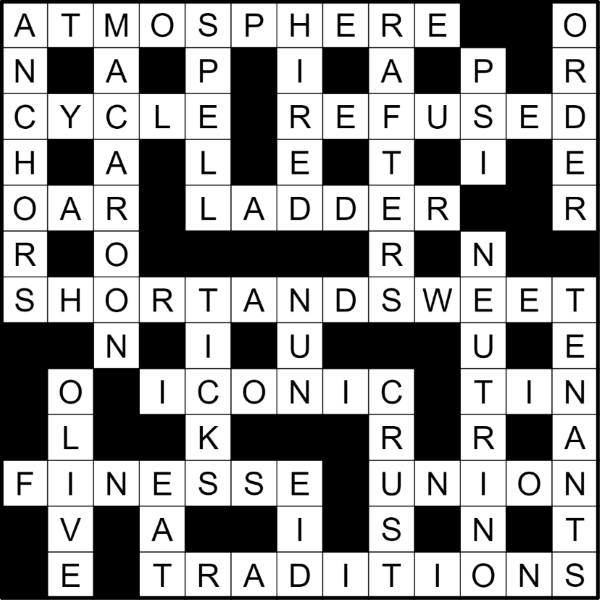
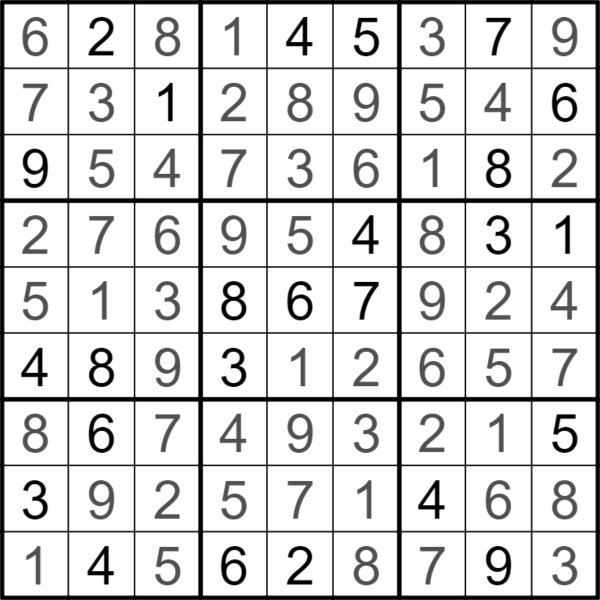
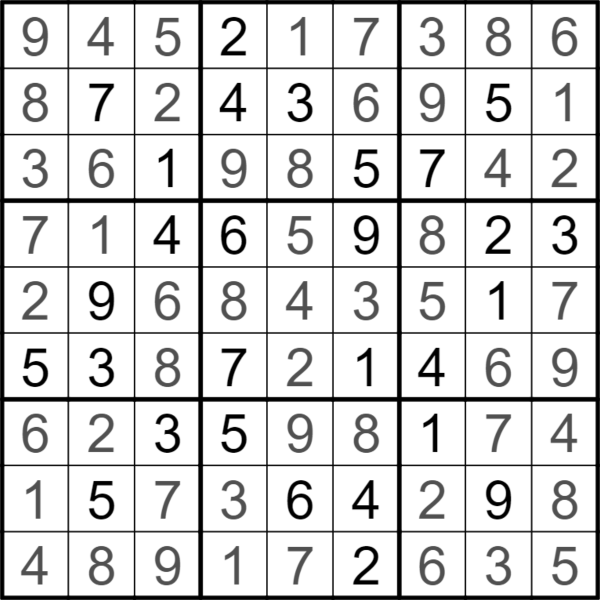
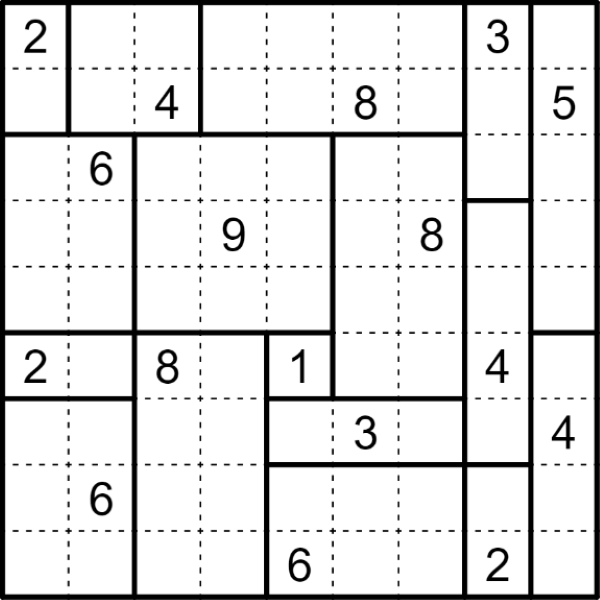


The solutions for the week 3 issue of Cherwell in HT23.
The education secretary, Gillian Keegan, is openly resisting the Home Office’s plans to restrict the number of international students that attend UK universities.
In an interview with the Financial Times, the education secretary described the economic contribution of international students as “hugely valuable”. She also said that the UK’s university sector is “something that we should be very proud of”. She wants to increase the higher education sector’s export revenue from £26bn to £35bn through the establishment of further international campuses and partnerships with overseas institutions, clashing with the Home Office’s plans to reduce immigration numbers by targeting international students. In a conversation with The Sun, Suella Braverman suggested that overseas students were exploiting student visas in order to bring dependants who are “not contributing to growing our economy.”
At Oxford, just over a third of students are from overseas. The university has the 13th highest proportion of international students in the Russell Group. Oxford considers international students to be an invaluable part of life at the university. One student told Cherwell that the opportunity to be part of a global community “must really broaden our perception of the world and different cultures, and I think that university is fundamentally a place where that should happen.”
Financial Times reported that Braverman and Keegan met this week, and discussion topics included Braverman’s proposed reduction of the time period over which an overseas student can stay in the UK after their degree. The current graduate visa allows international students to stay for 2 years, or for 3 years following the completion of a doctoral or equivalent qualification. It was suggested that this could be reduced to 6 months. The ministers also discussed the current possibility for students on “low-value” courses, or those with lower graduate salaries, to bring dependants to the UK.
Three years ago, the government aimed to increase the number of international students enrolled at UK universities to 600,000 by 2021/22. According to the Higher Education Student Statistics for 2021/22, the figure reached was 680,000, which amounts to just under a quarter of all students at UK universities. But, currently, the number of international students is falling. Part of the reason is the rise in tensions between the UK and China, whose student applications at UK universities have fallen for the first time in a decade.
Moreover, the Higher Education sector relies on the higher fees paid by international students to provide a better experience for all students. To many, including Gillian Keegan, the Home Office’s proposition is ludicrous both financially and culturally.
The St Anne’s College JCR has declared war on St Hugh’s College. However, not even twenty-fours after the motion for war voted on by both JCRs, St Hugh’s had already reached a key objective: to steal St Anne’s College’s symbolic beaver.
Responding to a leaked war motion from the St Hugh’s JCR, the St Anne’s motion proclaimed that St Hugh’s, which they referred to as ‘Who’s’ College, was “the most irrelevant, ugly, pointless and far out college,” and that “the best thing to come out of the college is Theresa May and that says enough.”
Approximately six hours after the St Anne’s motion, the St Hugh’s JCR released its own formal declaration of war. Blaming “the black hand of St Anne’s Entz” for the “assassination of the [St Hugh’s] ball,” the motion proposed a series of economic and intersocial sanctions that included a ban on inter-college intimate relations and pizza sharing, as well as the construction of a large scale nuclear program. St Hugh’s JCR went on to say that St Anne’s is “an architectural, aesthetic, political, and spiritual affront to all five senses.”
What brought about wartime in OX2? In an interview with Cherwell, St Anne’s JCR domestic affairs rep Alfie explained that St Anne’s was planning to hold a bop on the same day as the proposed St Hugh’s ball. This led to the St Hugh’s ball not selling enough tickets, leading to its cancellation. According to the St Anne’s motion, the St Hugh’s Ball “would have been a failure anyway as their entz team is incapable of running a successful event, unlike the extremely popular, loved and successful St Anne’s entz.”
Alfie went on to explain exactly why St Hugh’s deserved to lose: “[St Hugh’s] is ugly. It’s disgusting. We all want it razed to the ground,” Alfie said. “And I don’t think anyone else in Oxford would really disagree.”
The war began in earnest the day after motions were released. In the morning hours of February 20th, the furniture in the Anne’s Danson Room was rearranged to represent phallic symbols, with the whiteboard smothered with mocking statements. And during the interview with Alfie, he received a message that a statue of the St Anne’s mascot, a beaver, had been stolen from the library. But it was clear that the war was only just beginning.
“We broke into [St Hugh’s] and rearranged the furniture and hung a banner,” claimed Alfie. “The plan is that we are going to take their cat.”
The war has had ripple effects in other colleges as well, as both St Hugh’s and St Anne’s have anointed themselves the ruler of the OX2 postcode, which is also shared by many other colleges. “I spoke to LMH as well and obviously they’re not happy,” Alfie said. Regarding the other colleges in OX2, such as Somerville and St Antony’s, Alfie deemed them irrelevant, saying that “no-one really cares [about them].”
St Hugh’s appears to have the upper hand right now, with one Entz rep and leader of the war effort quoting Coldplay’s ‘Yellow’, a victory song of the college: “Look at the stars, look how they shine for you.”
ChatGPT. If you haven’t heard of it from some source yet, then I can only congratulate you. It is described as an ‘AI Advanced Chatbot’ by its creators, OpenAI, and it has taken the world by storm ever since its launch some three months ago. Universities have sounded General Quarters over the death of independently researched and written essays, corporates have started using it to automate their writing needs, and other tech giants like Google and Baidu have pushed their own development teams into overdrive in order to launch their own chatbots.
So why is this new creation so legendary, you ask, and what effect might it have on me, when I’m sat in my warm, cozy corner of the library, trying to do that next essay or problem sheet? The base idea is that the chatbot can produce text based on a prompt, from its deep reading of everything (or, at least, a lot) on the internet. Whatever the topic might be, chances are ChatGPT knows most of the basics, and might know some advanced details too! (This is probably the right moment to assure you that I have not used ChatGPT to write this article, though I did use it for lots of research prior to doing so.) That doesn’t mean it can produce absolutely everything, of course – creators have recently cracked down on a lot of immoral and unethical topics in their latest updates.
Text, or language, in technospeak, isn’t the half of it. ChatGPT can also answer technical questions, write code, and solve maths and science problems, like a more conventional computer, perhaps. If you haven’t seen the TikTok videos yet of ChatGPT producing perfect Python, C#, and C++ codes, then you’re not missing out on much. Even experienced developers are taking longer than the computer to belt out that much code. In our time, lots of STEM (and non-STEM) graduates join the tech workforce, working in the various echelons of the digital world, but their jobs are as much at risk of being replaced by AI as the copywriter or the paralegal.
So, what has been the effect on OpenAI? The San Francisco, CA-based company now projects a billion US dollars in revenue for the next year and has just received an infusion of ten billion dollars from Microsoft. Microsoft, which supported the company in the years prior to the launch of ChatGPT, has now announced its desire to integrate the Chatbot into its Bing Search Engine, Edge Browser, and Outlook email client, creating a space for ChatGPT within the Microsoft ecosystem. This might mean, for example, that soon, within Outlook, you would provide a prompt and the client would write the email for you, or you’d run a search, but the AI could find sources that don’t exactly match your search terms but that it believes are relevant. It could also make content up, as it is trained to do.
This is perhaps the best time to move onto more juicy material. However, before I do that, an overview of the essay-writing ecosystem before the launch of ChatGPT might be in order. It is worth mentioning that as of May last year, it is illegal to advertise or provide essay-writing services for any University or College assignments in England. Nevertheless, essay-writing services have been undeterred. A quick Google Search offers numerous options, and I only found one that identified my English IP address and thus informed me that I unfortunately could not use the services of that website. The others all compete with one another, under different categories: Oxbridge essays, Exam Essays, Dissertations, Theses. Do you want to pay per page of content, or per hour spent working on your assignment? Do you want discounts on bulk purchases? They have you covered for those as well. Whether your deadline is tomorrow or in two weeks; Though, the longer you give them, the cheaper it is for you. All-in-all, these essay-writing services make up an entire market, giving you all the options you might need to cater for differing tastes. And they waste no effort in marketing their services. A poll run by Cherwell noted that 86% of respondents had seen ads for essay-writing services. The ads for these services dwell in the depths of all those freshers’ group chats that we join after offer day. They promise “100% refunds in case of dissatisfaction” for assignments completed by the “Assignment King”. Some offer a “free plagiarism report”, because there’s no way that they picked up the words in your assignment from somewhere else. There are Instagram accounts with professionally produced reels advertising the various kinds of essays, problem sheets, and assignments you might be able to commission. You want something done? They will complete it for you.
These are all under threat from ChatGPT and the other AI platforms that will follow it. Why would I, or you, pay £100 for an essay from the essay-writing company, when ChatGPT could analyse my writing, and then produce an essay on that topic which I might have to make minor edits to, all for free? (It might start charging later, because OpenAI is still running a beta version for personal use.) Do you need a prompt on how to approach that problem sheet or that coding question? Just ask ChatGPT. Do you need to write 1000 personalised emails? Why make a human do it when ChatGPT could draft them all, and then you only make edits? With some amount of human editing, it is impossible to differentiate between human-produced content and computer-produced content now. It might even be difficult to differentiate between unedited ChatGPT content and Human-produced content, as a New York Times investigation discovered.
Now, I’ve probably given you enough background on the impact of ChatGPT on the world outside us and what one might expect it to do. The rest of this piece focuses on my personal experiences with it, both inside and outside Oxford. We start with my family. My father works in what I call a standard “finance-bro” job in the City, acquiring and operating tech companies. This basically involves a lot of emails, sometimes cold emails, introducing his business pitch and the activities of his employer. He has now invested in the paid version of the Chatbot (ChatGPT Plus), and it drafts his emails based on prompts from an excel sheet, for $20 a month. He still has to edit them, of course, because the computer still hasn’t figured out the exigencies of City corporate conduct. Once it does that, it might mean the end of easily available jobs in finance. Or perhaps not. The Chatbot decided that a certain maker of restaurant software was nearing collapse, because, logically, “restaurants produce perishable goods that don’t last long”. It was reported to OpenAI. If you ask me, it is a computer so it won’t make that mistake again.
Now, after extensively having a look at everything outside of Oxford, it’s time to delve into how Chat GPT exists in our hometown. I have seen a friend open their economics problem sheet in one tab, and ask ChatGPT for methods to solve it in another. Another Economics and Management-reading friend of mine said to Cherwell, “It’s more than a tool, it’s a friend. But it lets me down most nights.” Make of that what you will. This same friend also noted that their parents used the Chatbot to write a dramatic letter to their MP requesting support on their delayed application for citizenship. The letter that was produced was apparently a bit too dramatic (their life was under threat, pending approval of British citizenship), but their parents still sent it in. No response was received from the MP, however.
Perhaps you’re itching to know, perhaps you aren’t. I haven’t used it yet for any of my (humanities!) work. I did try essay prompts on it, just to compare with my own work. The earlier version (in December) still could not cite sources but did produce content on a given essay prompt, about 500 words of very general information. The new and updated version, probably produced after OpenAI caught wind of their model’s widespread usage in higher education now includes a disclaimer: “as a language model, it is not possible for me to conduct original research or cite primary sources. However, I can provide you with a general overview of the current academic consensus on the topic, as well as some key theories and points of discussion.” That’s that, then. All our hopes for having the computer write our essays gone, you would think. The correct answer is Yes and No. When I asked it to write a piece and not an essay, it still belted out a considerable amount of words, roughly equivalent to an A-Level essay, and did note two sources at the end. So, it won’t write my essays for me, but will still provide an overview of the topic to ease me into the books, somewhat like a human-produced overview article. I should mention here that another poll run by Cherwell resulted in 15% of respondents admitting to using ChatGPT in their essay-writing, at some stage. The days of AI writing all our essays are definitely not upon us yet.
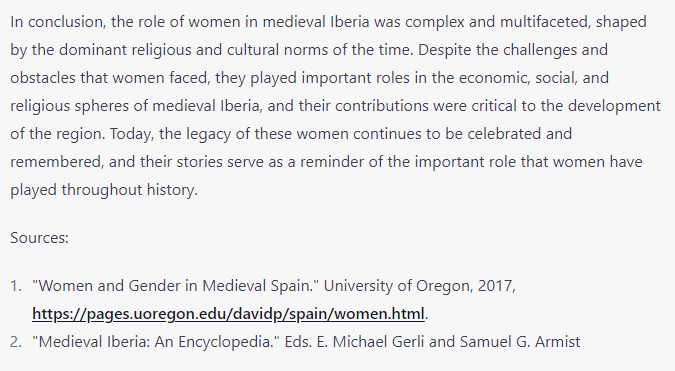
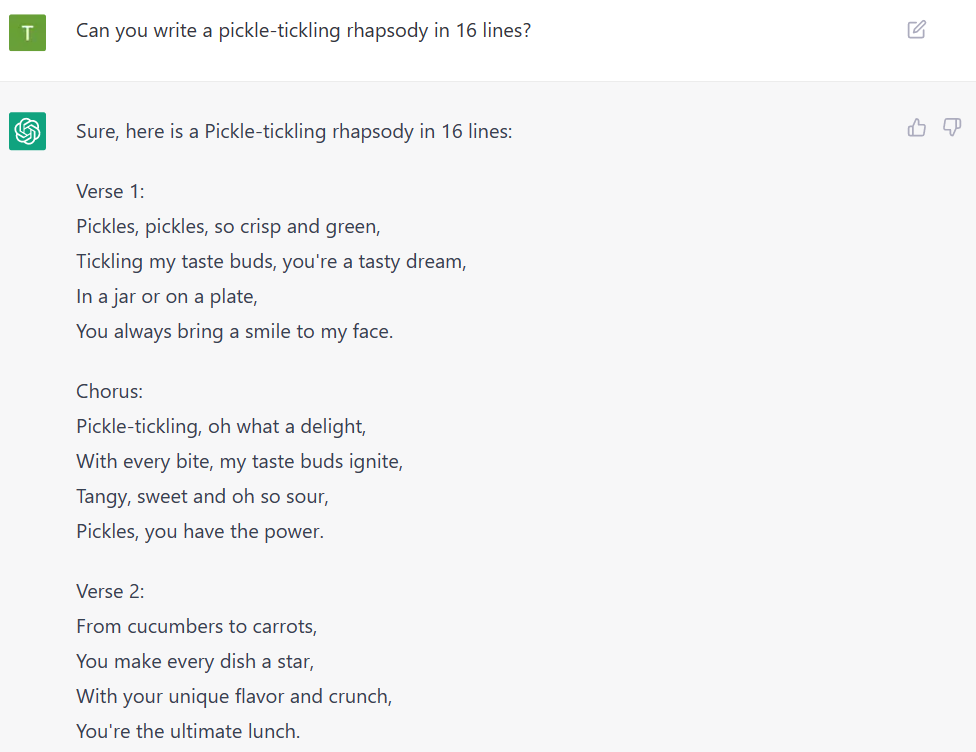
The fun part starts here! Yes, the AI model is useful for academic purposes, and for business purposes, but you can also use it for entertainment. One evening, we decided to stress-test it. This underscores, of course, the need for human ingenuity and sentience to provide prompts to the computer. I don’t believe it could have come up with ideas without any human support. The first question was on the termination of a stick insect. Hard luck. ChatGPT does not produce any content on harming a living organism, insect though it may be. What about nefarious activities at the Driver and Vehicle Licensing Agency (DVLA)? ChatGPT has a story ready to go (of course, it does provide a disclaimer that the DVLA is a reputable organisation and there are institutional processes to deal with any corruption within it, as there should be.) Maybe a pickle-tickling rhapsody in sixteen lines? Pickles, they do certainly have power.
Our last prompt before our time ran out (ChatGPT stops responding if you send it too many prompts within an hour) was asking it to produce a psychedelic prose poem about table legs. Those screenshots are not reproduced here, but they did include a disclaimer that the term “psychedelic” was used in a metaphoric way and the AI does not support or condone”‘the use of illegal substances”. My recommendation: Try ChatGPT, or any of the other AI Chatbots, for yourself, and they might just surprise you. “You” are still a very important part of the picture here.
Where does all that content (both mine, and ChatGPT’s) leave us? If you ask me, the AI age is probably around the corner, if not already here. ChatGPT can produce some quite respectable text, code, and solutions to problems, but it is not without its pitfalls. It can be used for academic work on some level, but it is not going to complete our assignments for us. Sea change might be coming, though, both in academia and in the glass towers of corporate officialdom, so it does not hurt to prepare and acclimatise ourselves to AI picking up some of the slack that we might have done earlier. Lastly, using AI can be fun too! The next generation of children might play with an AI server, instead of a programmed game, just as we are playing with a proto-AI platform today.
Note: The above piece is produced from a given prompt and it is important to note that my impacts may be different in a real-world situation. As a language model, I don’t have the power to predict events in the real world, as they often happen with no warning. Please be mindful of accepting the above text as factual.
Walking around Oxford’s Gloucester Green market, plastic is everywhere to be found. It’s littered across the ground, and nearly all of the twenty or so food vendors visibly distribute plastic of some form. Following a recent decision by the Oxford City Council, however, all single-use plastic will have to go by April.
After a year-long campaign by Green and Liberal Democrat Councillors, the licensing committee voted to ban street traders from using single-use plastics in Oxford. The city will rely on monitoring officers, public reporting, and fines to enforce the new rule. At the end of 2022, a public consultation found that 79% of respondents were in favour of the ban.
At The Catchy Greek, a stall at Gloucester Green market, all packaging is made of paper but the forks are still plastic. The stall owner told Cherwell that they “don’t mind” the new policy, as they have almost completely abandoned single-use plastics already, and they usually have wooden cutlery available.
According to Nick from The Java Laksa Co., an Indonesian & Malaysian joint at the market, this is a welcome but difficult change. The stall currently uses containers made of hard plastic, which he says are easier and cheaper to source than quality biodegradable products. Nick told Cherwell that supply shocks have caused a reduction in the available options from wholesalers while also increasing the prices of eco-friendly packaging by multiple times, as most of it is shipped from China. The switch would also be extra costly for Java Laksa because paper packaging for offerings such as soup would need to be thick and high quality. He does not want to be forced to pass on these increased costs to customers.
Nick says that he is “strongly against” the cheap and low quality polystyrene popular with kebab vans and many of his competitors. However, he believes that the hard plastic used by Java Laksa is easy to re-use and recycle, so it shouldn’t be considered single-use. Java Laksa has a sign encouraging customers to “please return plastic containers back to us for recycling … or re-use them yourself.” Nick told Cherwell that he would also appreciate it if the government helped ease the transition by subsidising the cost of biodegradable packaging for street traders.
Hassan from Hassan’s kebab van on Turl Street told Cherwell, “It’s a good idea but it’s bad for me.” He currently uses orange styrofoam containers; he previously used eco-friendly ones but they were just too expensive. An eco-friendly container costs around 90p, so a hundred containers is equivalent to as much as a night’s salary. The extra cost will need to be somehow compensated. Hassan is also wary about the environmental benefits of the switch, as he believes most containers will still end up in the trash anyway rather than be properly composted or recycled.
After the decision, Green Councillor Lois Muddiman said, “We know that single-use plastics have a massive environmental impact – both in their production and their contribution to problems of littering.” According to the other Green Councillor, Rosie Rawle, “Independent, small traders are the beating heart of Oxford’s economy” and accordingly “have an important role to play in addressing our city’s environmental impact.”
Last week, both houses of Parliament agreed on an amendment to the Higher Education (Freedom of Speech) Bill which will ban the use of non-disclosure agreements (NDAs) by universities and their constituent colleges in cases of assault, harassment or misconduct.
This comes after Oxford colleges came under particular pressure to sign onto a pledge promising not to deploy NDAs in cases involving misconduct after it was revealed in April 2022 by The Times that Lady Margaret Hall (LMH) had told a student they risked expulsion if they discussed their alleged sexual assault with the media. LMH signed the anti-NDA pledge in May 2022, followed by Keble and Linacre. It Happens Here Oxford, a student-led campaign group opposing sexual violence, played a key role in lobbying the three colleges and continues to call for more colleges to join the pledge.
It Happens Here Oxford told Cherwell: “We are overjoyed [by Parliament passing the anti-NDA amendment]. Progress like this is hard-fought and hard-won. This has been the culmination of over a year of hard work by Can’t Buy My Silence, It Happens Here and incredible MPs and student organisations across the nation.
“[We continue] to urge every college to sign Can’t Buy My Silence’s anti-NDA pledge, to show their dedication to supporting students and protecting the rights of survivors. We also encourage every remaining [JCR and MCR] to pass our anti-NDA motion, unifying the voices of students across the university in a powerful act of solidarity.”
The anti-NDA pledge campaign was jointly launched in Janurary 2022 by Michelle Donelan, at the time Minister for Higher Education, and the group Can’t Buy My Silence. While 80 universities have already signed the pledge, only three Oxford colleges are among them – a point that was mentioned in the Commons debate before the anti-NDA amendment was accepted.
The House of Commons passed the anti-NDA amendment on 7th February after it was proposed in December by the House of Lords. However, other amendments to the Higher Education (Freedom of Speech) Bill are still being negotiated, with the bill moving between the two houses in a back-and-forth process known as ‘ping pong’. It is unclear when this will end.
Hangover anecdotes tend to interest their teller more than their audience. So, I’ll let you read some triumphant exceptions to the rule written by P. G. Wodehouse and Tom Wolfe while I go get a Coca Cola and wait for my fingers to stop jittering all over the keys.
This comes from The Mating Season and is brilliant for Wodehouse’s unwillingness to divulge exactly what he means when he identifies his six types of hangover: “the Broken Compass, the Sewing Machine, the Comet, the Atomic, the Cement Mixer and the Gremlin Boogie”. I can’t tell you what “the Sewing Machine” explicitly refers to, but I understood it immediately as the way I felt on New Year’s Day.
And here’s Tom Wolfe’s washed-out journalist Peter Fallow in The Bonfire of the Vanities waking up after a big one: “The telephone blasted Peter Fallow awake inside an egg with the shell peeled away and only the membranous sac holding intact. Ah! The membranous sac was his head, and the right side of his head was on the pillow, and the yolk was as heavy as mercury, and it rolled like mercury, and it was pressing down on his right temple… If he tried to get up to answer the telephone, the yolk, the mercury, the poisoned mass, would shift and roll and rupture the sac, and his brains would fall out”. Substitute the telephone for an 8:30 alarm and Wolfe has dissected a good proportion of our Friday mornings with yucky accuracy.
I have never discussed hangxiety, occult pick-me-ups and hungover horror-stories more often than since I got to Oxford. Luminous signature cocktails and cheap college wine might be to blame but every morning this town is suffering. The tell-tale sunglasses on overcast days, that odd rum-pickled-garlic-pork odour you secrete and the shaky handshakes with wild-eyed panic upon introductions in the AM say more than your stuttering description of the night does.
So, I thought it worth trialling Myrkl, a Swedish “hangover pill” at Cherwell’s expense. It is classed as a supplement and not a medicated product and so cannot (obeying MHRA regulations) explicitly describe itself as a hangover stopper. Their suggestive ads playing on a hammy stereotyping of the Swedish: nonsensically umlauting consonants and authenticating wobbly science with recourse to a perception that the Scandinavians are in some way just more sensible than the British. It launched in the UK and Ireland in the summer of 2022 and differentiates itself from its competition: British brand Upswing which launched a year earlier and the American start-up No Days Wasted. But its USP is its patented bacterial cocktail, AB001™. It was apparently formulated thirty years ago when the owner of Myrkl’s parent company, De Faire Medical, Johan De Faire observed that pigs which ate bacteria-inoculated rice bran (called koji in hipster cookbooks) were rarely sick and so he isolated the strains to observe their effects on metabolic and digestive processes in non-human mammals. De Faire claims that AB001™ breaks down alcohol into water and carbon dioxide in your small intestine before it can reach your liver, where typically alcohol is broken down into acetaldehyde and acetic acid: the chemical often held responsible for the full-body, brain- eating festival of pain that is a hangover.
The two clinical trials “proving” AB001™’s ability to break booze down were funded by De Faire themselves and their authority has been slated by medical journals like the New Atlas who wrote: “if you take Myrkl every day for a week, without drinking, and then have two to three standard drinks’ worth of strong alcohol, you might only feel the effect of one to two standard drinks, and the effect may not scale up if you drink more than that”. Flying in the face of Myrkl’s suggestive advertising which hints that the physical and mental debt for a week of big Christmas parties can be written off by popping two little cream pills, I was not hopeful that Myrkl was about to remedy the particularly virulent strains of wine flu undergraduates infect themselves with by freaky speedy pint chopping and shot shotting.
My section editor sourced me the drugs and at this point I relinquished any real claim to a scientifically unimpeachable trialling of Myrkl in the wild, asking only that my guinea pigs drink as they normally would when they want to get trollied and write a report. Here is what the first guinea pig (GP1) pinged back verbatim, “Magdelen” and all.
I took the pills about two hours before I started drinking. I had volunteered quite willingly, as I would be doing a college bar crawl that night. A pint in Univ and Pembroke was all we had managed by about 9 PM and it wasn’t looking good as most of the bars were closed. This was until we infiltrated the Magdelen ‘Wild West’ bop. 4 pints in quick succession meant that I was well on the way. Indeed I quickly succumbed to the alcohol as DJ Dipper’s tunes thundered around the medieval room. At one point or another we continued our Grand Tour and ended up at the enormous haven of the St Catz bar. Having scanned the beer available, I chose a pint of Corona and proceeded to play the worst drunk Pool I have ever played in my life. It was truly embarrassing. We stumbled through the city, ending up at Balliol. From the outside, it just didn’t seem seem worth it and I can’t actually remember why we didn’t go in, but a second later I had a kebab wrap from Hassan’s in my hand. At this point we must have gone back to college, because we continued by doing a centurion in my friend’s room. About an hour later, I was apparently asleep on my friend’s sofa, though confusingly I woke up in my own room. At some point during the night I must have completed the final leg of this Odyssey and somehow made it back to my own room. Needless to say, I remember none of it. I woke up in a terrible state. I was disorientated, dizzy and struggled even to speak when greeted with a visitation from my friends at about 11 AM. About an hour later, an editor messaged me as to the results of this experiment. All I could manage was ‘I don’t have a headache but I’m definitely still drunk’. Absolutely nothing helped, and for the rest of the day I was both exhausted and violently ill. I think I probably far exceeded the amount of alcohol the this pill is designed to combat, and so in my experience it simply didn’t work.
By the time that account came in I had rid myself of any hope for an all-caps declaration of their Myrkl-ous hangover deletion in the wake of a big, massive bender. I had gone out the same night, popped Myrkls and drank with hubris. At 11AM next day I was also still drunk but unwilling to recognize the fact and so had gone around knocking on people’s doors to preach the good news that I was feeling Myrkl-ously chipper. By 2PM I was in the familiar mental and physical wasteland, so poisoned it was as if someone had hooked me up to dialysis in the night and replaced all my blood with bin water and battery acid.
But then came what the second guinea pig said.
Having decided at the very last minute to indulge myself in a Bridge Thursday, I popped two hangover pills just minutes before I started drinking at about 9pm. With the aim of getting hammered as quickly as possible – the only way to avoid a violent case of the ick within seconds of entering Bridge – this was followed by a quick succession of three double (maybe triple) gin mixers. Potentially it was a placebo effect, or maybe it was a result of my unintentionally dry January, but I felt drunk much faster than usual. By 10:30 I was skipping down Jowett Walk in the direction of the most sacred pre-Bridge venue: Four Candles. I ordered an unimaginative double vodka lemonade and set to work having many conversations that invariably merged together in my memory, and half of which seemed to occur in a single toilet cubicle. At the point when time had begun to lose any significance and the Spoons bouncers were herding students downstairs, someone made the brave decision to lead a campaign to the Bridge Spirit entrance. The queue was much too short for it to have been later than 12pm when we stepped inside, but true to form, I was wandering back down Broad Street in search of drunk munch at the unimpressive hour of 1:45. After a post-party, pre-parting DMC with my mates, it was lights out at 2:30. Whilst this was an admittedly tame night, I would still expect to get out of bed in the morning and feel the room swirl around me. When I leapt out of bed to see not a single black spot in my vision, I realised that these hangover pills had the potential to be a game-changer (disclaimer: this might have also been the result of a decent night’s sleep, since I woke up at 10am). In fact, I genuinely felt like I hadn’t drunk anything at all the night before. Pros: they were so good that I was able to have morning sex. Cons: this turned into a net negative when I forgot I had an 11am class and staggered in red-faced a whole 45minutes late.
Looking past the indulgent outro (you proud sex-haver you!!), the common amnesiac journey from club to kebab in both guinea pig accounts points to a similar if not equivalent level of inebriation. This makes their testimony of rabbit-like chipperness incredibly interesting but some details in the story perhaps tarnish its trustworthiness. Importantly, their narrative ends at 11:45am, just as GP1 and I began slipping into the icky abyss in our trials and where scientifically a hangover technically should be said to begin (when blood alcohol shrinks back down to zero again). Secondly, an ungenerous arbiter of fun might accuse an eight-shot evening replete with a responsibly timed Hasan’s and sensible afters behaviour like talking about one’s feelings as a B+ drinking effort. Compare it with GP1’s impromptu centurion on return to college and successful descent into an alcoholic oblivion where sofas resemble beds and then disturbingly become beds on contact with sunlight. It was also contradicted again by GP3’s glib precise of their experience.
It is slightly hard to judge the true effects of the hangover pills as I did not follow the packet instructions exactly when I took them. I only took the pill 5 minutes before my first drink despite the instructions recommending 2 hours. Throughout the night I had around 7/8 shots so did not drink loads. The next morning I didn’t feel hungover as such, but extreme tiredness made this slightly hard to judge. This possibly wasn’t the best test of the pills but based on this I would say they did reduce the effect of the hangover the next day. Unfortunately I had not drunk really heavily though, so am not sure what their limit is. And they certainly do nothing for exhaustion levels!
Though their decision to “not drink loads” was essentially unhelpful, GP3’s account does back up the discrediting of GP2 because they knew that eight shots isn’t really trying and says as much. One salient glob of information GP3 offers the study is that the B12 and Vitamin C (the same stuff in a plain old Berocca that can hold back a full-blown “Gremlin Boogie”) isn’t very concentrated or long-diffusing in Myrkl so that they didn’t even feel pepped from a baseline sobriety. But GP3 illuminates a key dimension of Myrkl with that choice officialese: “exhaustion levels”. I can imagine consultants writing it in big blue sharpie on a flipchart at the Myrkl office’s weekly brainstorming board meeting. Its target market is thirty-to-forty-year-old corporate hacks who must show face at work drinks three times a week and prove to colleagues in conventional fashion that they aren’t at all conventional and buttoned-up.
Although no guinea pig reported this, I had shared an experience that Nick Connellan’s reported on Myrkl when conducting a similar bit of brilliant gonzo journalism for Australian culture mag Broadsheet :
Feeling a bit impervious,” I wrote in a group chat soon after [taking the pills]. After 3.7 drinks I wasn’t even tipsy. While I never had any doubts Myrkl would do what it claimed, feeling it de-alcoholising each drink was disconcerting, then remarkable. My precise tolerance to alcohol, my body’s exact response to it – these things are as familiar to me as my own face. Myrkl is like looking in the mirror and seeing a different you.
Imagine feeling what Conellan describes but you’re in Merton’s college bar. Imagine alcohol suddenly doesn’t work and you’re trapped where fun goes to die. If I had been anywhere else, I might not have remembered my uncanny new alcohol tolerance. I had lifted the three pints of Heineken to my lips, glugged it down the oesophagus and burped proportionately. Why was I then sitting there sober as a judge in the most injudicious space for the teetotal in Oxford. From left and right came “I mean, mate, Posh Nosh really puts Hasan’s to shame to be fair” level chat. Situationally traumatizing in Merton’s dungeon-like bar where the jukebox only plays ‘Come on Eileen’, maybe Myrkl’s buffering effect has its uses for an enterprising, reptilian undergraduate like myself. They could help when we need to cosplay corporate hacks ourselves so to speak.
For example, it could keep your tongue sharp whilst you are seen to do the done thing at a society social or another thinly veiled networking event and drink the drinks. Perhaps, though, this potential style of popping myrkls is a little farfetched. Especially when a box of fifteen “doses” set Cherwell back £30.00 whilst having the spine to withstand drink-pressure costs you nothing. Lots of people are teetotal, lots of people drink low-or-no alcohol drinks and who am I kidding when I valorise a sharpened tongue? When we drink, we drink to loosen our language and soften our protective shells, opening us up to the vulnerability of real interpersonal connection.
Moreover, myrkl is just one snake oil in the modern food and drink industry’s arsenal of spurious products promoting “wellness” whatever that is to commodify non-commercial decisions. For example, if you didn’t drink alcohol you tended to drink water – the IWSR reported that “no-alcohol beer [is] projected to drive growth at more than +11% CAGR over the study’s 2021-2025 forecast period”. Granted I use terms like “snake oil” and “spurious”, I’m not cantankerous enough at my big age of 20 to lament the dwindling of a destructive binge-drinking culture the “BIG JOHN BOSHPILATION” which my algorithm spewed up this morning is the hilarious by-product of. I don’t think the allure of Bella Hadid’s “karmic collision” aka multi-million dollar drink brand deal with Kin Euphorics which promises to get you a little bit high legally with a mocktail of “adaptogens”, “nootropics” and “spirit-centering botanics”. I think the pandemic catalysed a profound change in the way that drinkers have been drinking drink. Without its pub, its landlord, its branded glass or its fellow drinks to clink against, a pint of beer no longer held any romance in all its 568.261 millilitres of sloshing suds. What had lubricated the social machinery of the Big Night Out, infecting legs with the sense that they can do anything (the splits, clearing four-foot fences in one hop, skanking etc.), was reduced to a chemical buffer against feeling too much reality for one bored, lonely evening which resembled the one before it and had no prospect of being different from the next. The decision to reach for a drink could no longer be justified with any appeal to the appropriateness of a scenario, instead the gesture had been simplified into signifying only that we wanted a numbing, dopamine-boosting chemical.
Around 150, 000 British adults officially participated in Dry January this winter according to Alcohol Change UK, a figure swollen from the 100, 000 pre-pandemic. Yet if you drink at Oxford, I doubt you could count yourself among that number. But I’m not browbeating from up on my pious little horse, I had no intention of keeping off the sauce for any longer than 48 hours at a time and I have not. I have matched every January raindrop with a lager-y sud because it has been miserable.
Plus, story-time! I pretended cocktail connoisseurship when this truth brushed a little too close to home and I could then see all its ugly bits, descending to what my cousins in County Down would term “pure chancer talk” where I could seriously convince myself that drinking five different Bloody Marys in an evening wasn’t about drinking ten shots of Russian Standard but to decide which infused vodka tasted best: jalapeno or horseradish. It’s horseradish, but did I actually have to get slaughtered to know? I believe alcohol’s mythology was ruptured for so many in the UK because of the elucidating but unwelcome simplification of our relationship with it the pandemic enforced.But that’s my belief, Cherwell offers you the verdict that Myrkl is a load of bollocks and totally unequipped to assist the standard student drinking lifestyle with a sliver more objective authority. Upswing, Myrkl’s competition I mentioned earlier, explicitly targets students with infantilizing pastel colour-schemes and dude language promising relief with the same lack of any scientific basis for its claims. Its ingredients read just the same as Myrkl’s and so until Cherwell proxies me drugs again, I’d echo Reagan rhetoric and counsel against entrusting our happiness to big pills. Stick to the powders! They work!
Image credit: Sean Hartnett
When I interviewed Nathaniel Jones and Leah Aspden about their new show Thamesis, Aspden told me she had “never seen or heard anything like it” in Oxford drama. Having now seen it for myself, I have to agree, although I sincerely hope I will in future. Jones’ performance was a joy to watch, and under Aspden’s expert direction they have a highly successful show on their hands.
The play begins with the admittedly well-worn metatheatrical trope of the performer running onto an empty stage and apologising to the audience for his lateness, although the energy with which Jones imbues his entrance ensures it does not feel like a tired usage. Jones is endearingly dressed in a style a little like a boy scout, with knee-length shorts and a rucksack flapping off his back. He immediately sets the audience at ease with his light-hearted chatter, a difficult feat whilst simultaneously setting up his own stage with a cluster of fake candles and a comically long string of fairy lights. I truly couldn’t tell you whether he was supposed to actually untangle the lights or get frustrated and leave them in a somewhat haphazard bunch as he ended up doing: either way it was charming to watch and made it impossible not to sympathise with this chaotic, bumptious presence on stage. This establishment of mild, adorable incompetence is key to ensuring we do not feel patronised as Jones starts to explain that he is here to teach us about the rituals of Midsummer and pagan belief more generally. Aspden and Jones handle this didactic element to the show with skill and precision, ensuring we leave knowing a lot more about these ancient rituals that we did upon entering whilst never feeling we are being lectured to. When using a term he thinks we won’t understand, like ‘litha’, the pagan word for the summer solstice, Jones pauses afterwards as if waiting for someone to ask what it means, before asking the question himself and proceeding to explain. While this device sometimes made for a slightly uncomfortable silence (at points it was unclear whether Jones himself was actually anticipating an audience question, highly unlikely from a small BT audience, or simply in-character), it was very effective in allowing Jones to keep the audience up to speed with his story without losing pace or breaking the atmosphere.
Aspden’s direction shone throughout, the comic touches a clear addition of the Oxford Revue co-president and a welcome light-hearted dimension to a script that, as the show goes on, begins to deal with heavier issues. As we watch Jones’ character unravel before our eyes, excellent use is made of the lights and sound, operated by Evie Norton who becomes a character in the show as Jones’ asides to her to ‘get the lights back on’ become more desperate and, ultimately, futile. The two lighting states, bright for didactic or light-hearted chatter and deep blue for pagan spirituality and secrets revealed, begin to slip out of the character’s control as we are pulled along with him into past relationships and trauma he is being forced to confront, effectively symbolised in one beautiful moment in which the only light on stage is that of Jones’ laptop lighting up his face at the corner of the stage as he reads from his teenage diaries. In another particularly shocking and effective moment towards the end of the show, the audience is left to confront an empty stage as Jones runs into the wings, unable to face what is being blasted over the sound system. While perhaps this section could be a little shorter (an audience appreciates being trusted to understand something without having it repeatedly shouted at them, although perhaps this is necessary for the character to understand), it nonetheless provides a necessary and well-constructed emotional climax to the show, and leaves us feeling we have ended up somewhere quite different from where the show started.
Overall, Jones is delightfully captivating as an actor and proves himself a skilful writer too, weaving together a story of magic and darkness that is sure to stick in the audience’s mind long after they leave the haunting blue lights behind. As well as Aspden’s comic genius, a particularly delightful aspect of the show is Jones’ beautiful singing, set to an original folk score. In what might otherwise be quite an intense hour for both performer and audience the songs provide moments of peace and reflection, and help to reinforce the mystical quality of the show’s atmosphere.m Maybe the ancient followers of paganism were onto something, or maybe Jones’ spellbinding performance was really just that good, but I left ‘Thamesis’ feeling as though my soul had been soothed, and I can’t wait to see what this talented team gets up to in the future.
“Climate change is a real threat,” a Harvard Medical School article on anxiety about climate change stated. According to a report by the World Meteorological Organisation, atmospheric levels of three major greenhouse gasses, namely carbon dioxide, methane, and nitrous oxide, reached a record high in 2021, with the parts per million concentrations of these three greenhouse gasses increasing to 149%, 262%, and 124% of pre-industrial levels, respectively.
With the remarkable increase in atmospheric greenhouse gas levels came a rapid rise in temperatures around the world. A Nature article published last month stated that modern temperatures in central-north Greenland have reached the warmest in the past millennium. A 2022 news article by the United Nations cited “no credible pathway” to the 1.5C limit, also known as the goal to keep global warming below 1.5 degrees Celsius compared to pre-industrial temperatures, set in the Paris Agreement. “We had our chance to make incremental changes, but that time is over. Only a root-and-branch transformation of our economies and societies can save us from accelerating climate disaster,” stated executive director of the UN Environment Programme Inger Andersen.
“I want the University of Oxford to take a lead in this space in terms of really solving the problem of climate change from every aspect of the science, the alternative options for our energy sources, through to the policy and the engagements and the ethics and the behavioral changes that need to come with it,” Oxford University’s Vice-Chancellor Irene Tracey told Cherwell in an earlier interview.
Approaching the climate crisis from various angles, Oxford environmental scientists have made considerable contributions in the area of research and policy. To bring society a step closer to a root-and-branch transformation, the Net Zero guidelines drafted by an international team that includes Oxford’s Net Zero policy engagement fellow Kaya Axelsson were published at the COP27 climate conference in Sharm el-Sheikh on November 11, 2022. Working with an international research team, geosystem science professor Myles Allen published a paper in Environmental Research Letters on Extended Producer Responsibility (EPR), a group of policies with profound implications for net fossil fuel emissions. In this article, Allen and Axelsson sat down with Cherwell to discuss the specifics of EPRs and Net Zero guidelines, respectively.
EPR policies
In her inaugural address, Vice-Chancellor Irene Tracey suggested that fossil fuel firms take responsibility for their own emissions, a type of policy also known as Extended Producer Responsibility (EPR). In a broader sense, according to Allen, EPR is defined as “an established mechanism in law whereby a company that produces a product can be held responsible for the waste generated by the use of that product”. Allen stated that EPR policies have already been used for household chemical recycling in countries like France but that they have never been implemented to target fossil fuel emissions. “If we can just change that and include fossil fuels, the world would rapidly become a very different place,” Allen told Cherwell.
Allen disagreed with Andersen’s statement on the time being over to make incremental changes to climate policy. “I think the fossil fuel industry, if it were required to do so, would be able to dispose of the carbon dioxide generated by the products it sells relatively easily as part of its ongoing business,” he said. “The fossil fuel industry is so big, so wealthy, and so innovative. They could do it, but they won’t do it on their own – they’ll only do it if they’re required to do it… the longer we don’t reduce emissions, it’s turning into effect.”
Allen explained that EPR entails both geologically-based and nature-based carbon capture methods, some of which he introduced in another Cherwell article. “Storage has to be permanent, which means it has to stay stored for thousands of years, because that’s the timescale on which burning fossil fuels affects the climate. So that makes your storage options limited,” he said. “The only one which has already been developed on any scale is to inject (CO2 emissions) as a liquid back underground.” Although Allen stated that many geological carbon storage options are still under development or need considerable upscaling, nature-based solutions can ideally only be used until 2050 due to their unknown storage efficiency in the long-term. In their Environmental Research Letters publication, Allen and his colleagues proposed that the fossil fuel industry should be allowed to capture their emissions with a combination of geological storage and, over the transition, nature-based solutions, but making sure that they get to 100%
geological storage by the date of Net Zero in 2050. Allen and colleagues’ publication also stated that to accommodate for fluctuations in various price levels, one type of EPR policy called Carbon Takeback Obligation (CTO) would make sure fossil fuel companies can gradually increase their carbon emissions capture until Net Zero. “The big advantage of a carbon takeback obligation is it provides a very predictable route to Net Zero, no matter what happens to the cost of fossil fuels or the availability of renewable energy,” Allen added.
The COP27 Net Zero guidelines
“Given the falling cost of renewables, I don’t really see why we wouldn’t go as hard and as fast as we can on renewables – it’s the best choice economically,” Net Zero policy engagement fellow and technical author of the COP27 Net Zero guidelines Kaya Axelsson told Cherwell. She explained that compared to fossil fuels, besides not emitting greenhouse gasses, renewable energy is more affordable and has less concerns related to its extraction or decentralization. “All of the credible science-based pathways to Net Zero show that 90% of what we need to do in the energy sector, if not much closer to 100%, is to move towards renewable alternative energy,” she added. “We have a really great paper by Ives et al. (2022) that shows that actually investing now in renewable and alternative energy, including the current energy companies doing so, could actually save us $12 trillion.”
Inspired by ambiguous standards set by organisations and accusations of greenwashing – the false claims certain companies and organisations make about taking action towards sustainability – and focused on creating unitary standards for non-state organisations and defining common policies, the Net Zero guidelines were a result of participation of the civil society, government, industry, and academia, with more than 1200 experts across 100 nations taking part in the construction of the reference text.
According to the guidelines, some policies that might be implemented by governments to ensure the quality of a Net Zero transition plan are the disclosure requirements, requirements particularly for publicly listed companies (including non-fossil fuel companies) that ask them to report certain details about their emissions. “Our analysis shows that in the next few years, close to 50% of the world in terms of both GDP and emissions will be covered by some form of mandatory disclosure requirement on environmental sustainability and governance, particularly with regards to climate, emissions, and governance in terms of risks and opportunities,” Axelsson said.
In addition to government policies, the guidelines also suggest that companies themselves need to implement policies to reach the Net Zero target. For example, companies need to annually report on their progress to Net Zero. Also, as they transition to Net Zero and switch to new business models, companies need to think about how they are protecting their workers and
various stakeholders, which might be a local community in their supply chain. Furthermore, to ensure transparency in reporting emissions is maximized, besides having to follow the greenhouse gas protocol, companies would also undergo third party verification and auditing of their emissions data.
A full list of policies for governments and companies can be found in the original document of the guidelines.
The guidelines have received large amounts of positive feedback. “These Net Zero Guidelines helpfully build on the Race to Zero voluntary criteria and can be used as a core reference text on Net Zero to bring global actors into alignment, ratchet up ambition, and address greenwashing,” said Nigel Topping, UN Climate Change high-level champion of the UK of the COP26 conference.
Addressing other aspects of climate change
“One of the things we say in the Net Zero guidelines is that your Net Zero strategy should not just be about carbon, even though carbon is the priority, but it should be about all the greenhouse gases,” Axelsson stated regarding non-carbon greenhouse gas emissions such as NOx and SOx emissions. “Ideally, emissions reduction is a priority.”
Another area that has considerable fossil fuel emissions is the livestock sector. “Methane emissions are very powerful, but they’re shorter lived in the atmosphere… and they increase,” Axelsson said. However, she also stated that livestock also cause emissions through deforestation. “The cows are eating the soy and the soy is grown in places that are reducing our forests, jungles, and natural ecosystems. And at this stage, we can’t afford for our natural ecosystems to just shrink, we need them to grow.” Axelsson added that this is a good reason for people to “stop eating beef and to go vegan if they can, or just reduce meat and dairy consumption as much as possible”.
Regarding the impacts of deforestation and habitat loss, Axelsson stated: “We should still be investing… to increase nature-based solutions to restore ecosystems past the Net Zero target date. Ideally, we want to live in a world in which we have restored our ecosystems, not lost our ecosystems.” She added that since the 1970s, there has been a loss of about 70% of natural species and ecosystems. “We need to reverse that trend, irrespective of how it interacts with climate change”.
“If we want to even have a chance of meeting Net Zero, we need to end deforestation by 2025 and keep ourselves on track to really restore nature rather than degrade it further,” she said.
An Oxford-led study found that the Norwegian Arctic ice in Svalbard is contaminated with worrisome levels of PFAS chemicals, threatening downstream wildlife.
Dr. William F Hartz, a researcher of Oxford’s Department of Earth Sciences, led the study and detected 26 PFAS in a 12.3 m remote ice core of the Norwegian archipelago of Svalbard.
The research initially targeted the measurement of 45 PFAS in total using scientific techniques focusing on identifying different molecules based on their mass. “Svalbard ice cores have been shown to provide a valuable record of long-range atmospheric transport of contaminants to the Arctic,” the study stated.
PFAS are a group of synthetic chemicals used in everyday products such as clothes and firefighting foam and industries like electronics and construction. Research has so far found links between PFAS exposure and cancer as well as immune response, fertility, and obesity issues.
Data obtained by analyzing the ice core showed the continuous presence of toxic chemicals called perfluoroalkyl carboxylic acids (PFCAs). Another substance toxic to humans and animals – perfluorooctanesulfonic acid – was also detected in 82% of the ice core samples. The study found that due to the mobility of some of the chemicals, PFAS can come into contact with ecosystems in the Arctic fjords.
Since climate warming has been found to be more rapid in Svalbard compared to the global average, Hartz noted that as climate changes and ice melts, a “doubling up effect” of PFAS on animals can be observed. He said: “There’s a washout of contaminants that occurs seasonally … and some PFAS seem to be mobile during melts, which could be important to ecosystems downstream.”
Hartz also added that “as a polar bear, you have exposure to toxic man made chemicals, and stresses from a changing habitat”. It has previously been shown that polar bears, animals crucial to Arctic ecosystems, had high blood levels of PFAS.
Contaminated meltwater containing PFAS and other toxic substances also has adverse impacts on the entire Arctic food web that, besides polar bears, includes animals such as plankton, fish, and seals.
The specific hazards of TFA are currently unknown. According to the authors of the study, the “limited knowledge about the safe levels of TFA in the environment needs addressing”.
Cherwell is Oxford’s oldest independent newspaper, established in 1920. We are entirely student-run. By supporting us, you will contribute to keeping our paper in print and online. Every donation makes a difference.

Oxford Student Publications Limited
© 2025 - All Rights Reserved
| Privacy Policy