

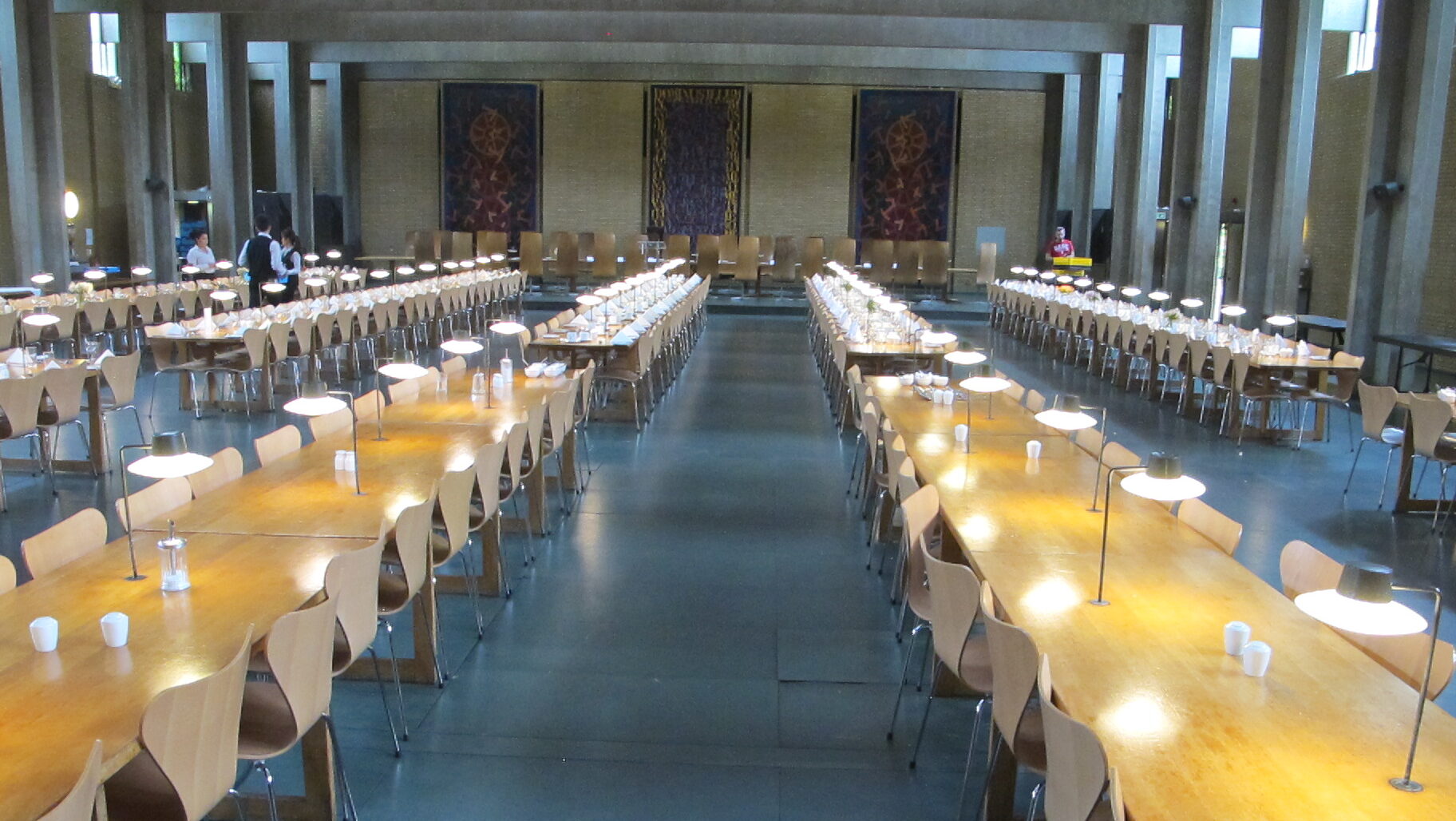
St Catherine’s College has reopened its dining hall, following more than two years of disruption caused by the discovery of reinforced autoclaved aerated concrete (RAAC) in parts of its estate.
The issue, which forms part of a wider national concern over RAAC in public buildings, led to the closure of key facilities, including the original dining hall. RAAC, a lightweight material commonly used in mid-20th century construction, has been identified as structurally vulnerable, prompting precautionary closures across schools, hospitals, and universities.
In response, St Catz introduced temporary arrangements to maintain dining provision, installing a temporary tent structure.
The reopening of the dining hall represents a major step in the College’s recovery, with St Catz describing the moment to Cherwell as “an exciting day”. In a statement, the College told Cherwell they had taken “a careful and precautionary approach throughout”, prioritising the safety and wellbeing of students, staff, and visitors while maintaining day-to-day College life. They added that its focus had been on restoring core facilities “as quickly and safely as possible”, while minimising disruption.
Alongside the dining hall, other parts of the estate, including the JCR, have now returned to use. The College confirmed that further areas are expected to reopen in the coming months as remediation work continues. St Catz told Cherwell that the reopening of key facilities represents “strong progress” in its programme of works addressing RAAC on site.
While the College continues to navigate the long-term impact of the material, the return of the dining hall restores a central hub of student life, marking a step toward normality following a prolonged period of disruption.


 in parts of its estate.)