

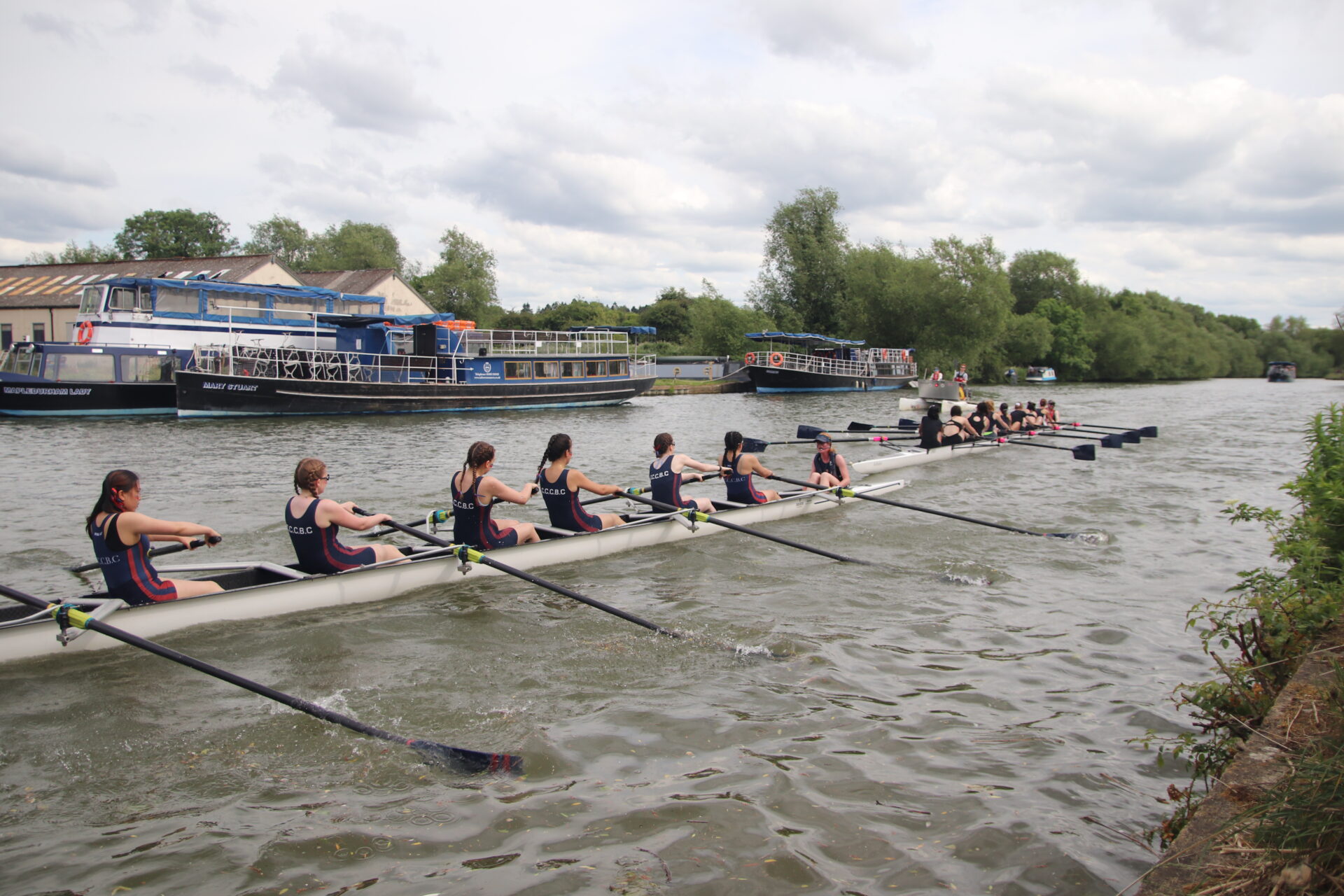
A change to Oxford University Rowing Clubs’ (OURCs) Rules of Racing means that only athletes assigned female at birth may now row in a Women’s boat. This applies to boats entered in both inter-collegiate and university-level competitions.
Several student boat club captains have condemned the new rule change, made on 26th April. OURC’s Captain’s Meeting minutes highlight that issues were raised about the process for verifying athletes’ gender identity, with students particularly raising privacy concerns: under the new rule, claims could be brought against athletes regarding gender verification. To bring a claim against an athlete, complainants would be required to submit evidence, likely involving private information about the complainee, to OURCs, where findings could be seen as ‘outing’ individuals.
Towards the close of the Captain’s Meeting, an informal vote was proposed to gauge support for the changes to the Rules of Racing. Forty-nine votes were cast against the new rules, whilst only one vote was cast in their favour. Five of those present abstained from voting. Another informal vote asked captains whether they were comfortable competing in an event under the newly imposed rules. Twenty-four votes were cast against this informal motion, with only eight votes in favour of competing under the new rules.
Multiple boat clubs have since released official statements opposing the rule change. In a statement on Instagram, Wadham College Boat Club described the changes as “disproportionate, discriminatory, and impossible to enforce”, adding that they will continue “to fight for the previous rules to be reinstated”. Somerville College Boat Club similarly wrote that they were “deeply saddened by the recent rule change… which threatens our long-standing values of inclusivity and friendship”. Multiple students also told Cherwell of plans that Somerville Boat Club has to encourage all colleges to wear LGBTQ+ wristbands at this term’s Summer VIIIs, the University’s four-day intercollegiate regatta.
The rule change has also faced strong backlash from Oxford’s broader student body. On Instagram, the President of Oxford University LGBTQ+ Society has released a statement on the topic: “I am personally investigating the matter, and it is my top priority to resolve it by whatever means necessary.” The President also told Cherwell that “no contact was made with OULGBTQ+ prior to the change” with all meetings held “after the change was decided”. The President, who also holds the part-time role of LGBTQ+ Officer at the Student Union (SU), was not contacted in their SU capacity either.
However, a University spokesperson told Cherwell: “The University has met with and engaged with the LGBTQ reps several times throughout the process to facilitate boat clubs meeting their obligations in relation to law & governing body requirements.” They did not specify that these consultations occurred prior to the change.
Ahead of Summer VIIIs, Oxford University Rowing Clubs have been required by the University to align their policy on competitive eligibility with British Rowing, after previously only being encouraged to do so: in an update to University policy in accordance with UK law, introduced on 16th March 2026, the Director of Sport informed OURCs via letter that University policy now required clubs to align with NGB policy and asked that OURCs comply as soon as was practically possible.
Whilst OURCs has been aware of its requirement to update the Rules of Racing to align with national guidance, following the letter from the Director of Sport, the Captain’s Meeting minutes state that there had been an internal understanding between OURCs and Sports Federation that, should any changes be made, they would be done at the end of the academic year, after the competitive season was over. However, on 24th March onwards, a deadline for the rule change of 31st March was communicated to OURCs by the OURCs Senior Member, on behalf of the Proctors.
Given a number of OURCs’ constitutional clauses, holding that OURCs is bound to organise inter-college rowing competitions, conduct all activities in line with University equality policies, and conduct events within the bounds of conditions that the Proctors attach to the running of the event, OURCs has been required to make the rule change to fulfil its constitutional objectives. Summer VIIIs could not proceed without compliance with the rule change, given the club’s reliance upon the insurance provided by the University for the event.
Subsequently, OURCs introduced a new power in the Constitution, authorised by the Proctors, permitting the Director of Sport to require changes to the Oxford University Rowing Clubs (OURCs) rules in compliance with the University of Oxford’s Diversity and Inclusion policy. OURCs is a student-run organisation which serves as a federation for the Oxford University Boat Club (OUBC) and all 36 Oxford college boat clubs.
Since September 2023, British Rowing policy has been that only people who are assigned female at birth will be eligible to compete in the Women’s category, whilst trans, non-binary, and all other individuals will be eligible to compete in the Open category.
Previously, OURCs’ Rules of Racing stated that, “trans people should be permitted to participate in their affirmed gender identity” at “less competitive levels”, including college-level rowing. Since January 2019, OURCs has allowed for self-identification in all divisions of Torpids and Summer VIIIs.
On 8th October 2025, the Sports Federation updated its eligibility guidance, mirroring Cambridge University’s guidance update in September 2025, to advise sports clubs to align their Trans eligibility policies with their relevant National Governing Body. At this time, OURCs chose to delay alignment as British Rowing’s policies, which were (and remain) under review. This was possible as OURCs events are not run under the auspices of British Rowing.
From this point on, Cambridge University Boat Club required oarspersons to self-declare their gender identification to their Captain before entering any Women’s Crew or Mixed Crew into a CUCBC event. If they did not meet British Rowing Women’s Category eligibility criteria from British Rowing’s “Trans and Non-Binary Competition Eligibility Policy and Procedures”, their captain must amend their entry to an event before its first heat (including the Getting on Race), removing and replacing any individuals who have declared that they are not eligible. This rule remains under review in accordance with British Rowing’s policy. According to minutes from the Oxford Captains’ Meeting, “it was made clear…that there was no choice but to comply with the request [made by the University to change the rule, in line with national guidance] and that failure to do so would result in OURCs’ deregistration as a University sports club and inability to run competitions, effective immediately”.
British Rowing’s policy claims that it is fully committed to “ensur[ing] Trans people can continue their participation in rowing whilst and after transitioning”. Their 2023 Competition Eligibility and Procedures policy, now being enforced by Oxford University Rowing Clubs, proposed two categories alongside the Women’s: an Open Category, where all individuals are eligible to compete, and a Mixed category, offered at any level of competition, providing 50% of the crew are eligible from the women’s category stated above. British Rowing encourages trans and non-binary participants to take part in “recreational activity” (non-competing) in the gender they identify as.
Above college-level rowing, decisions regarding athlete qualification for Varsity competitions have previously been handled on a case-by-case basis, with joint input from both Oxford and Cambridge Directors of Sport. Registered University sports clubs and colleges’ sport organising committees are required to align their policies with the approach and criteria used by the relevant National Governing Body, including British Rowing, when considering the eligibility of transgender athletes.
The Student Union has stressed that it is essential that the University create an environment where all individuals “regardless of their gender identity, expression or sexual orientation, feel safe, welcome, and empowered to participate in sports and physical activities”.
A spokesperson for the University told Cherwell that it “remains committed to being an inclusive university”. The spokesperson also added that regarding competitive sports, “registered sports clubs and committees are required to follow the policies and eligibility criteria set by the relevant national governing body” as “this is necessary to ensure alignment with competition frameworks as well as compliance with the law”.


 Rules of Racing means that only athletes assigned female at birth may now row in a Women’s boat.)