

For more than three decades, Greg Brennan has made a career out of being just outside the frame. As one of Britain’s longest-standing press photographers, he has captured royalty, world leaders, musicians, actors and cultural icons, from Queen Elizabeth II to Michael Jackson, Kate Moss and the Osbournes. His new book, The Big Shot, brings together over 100 photographs from that career, but it is not simply a parade of famous faces. Told in Brennan’s own words, with a narrative shaped by his son Dylan, the book reveals the patience, instinct and personal memory behind images that often lasted only a fraction of a second.
When I spoke to Brennan, it quickly became clear that The Big Shot is as much about stories as photographs: the myths that attach themselves to celebrity images, the moments that happen away from the red carpet, and the strange experience of a photographer, usually hidden behind the lens, becoming the subject himself.
For Brennan, fame itself has not changed much. After years spent photographing some of the most recognisable people in the world, he speaks about celebrity with the calmness of someone who has long since stopped being starstruck. “Fame is fame”, he says. “I think that the thing that I’ve taken most from it is that they’re just normal people, despite being famous. They’re no different from us, really”.
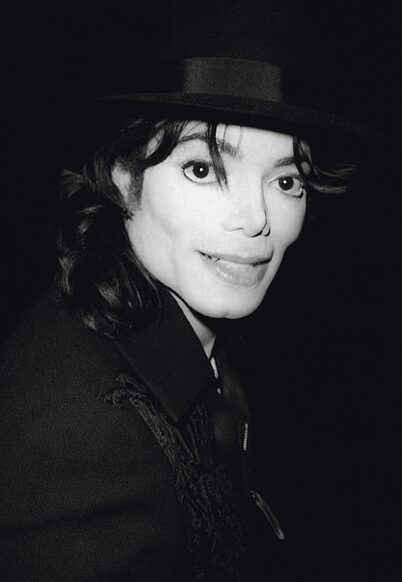
Still, there are exceptions. The most surreal moment of his career, he tells me, came at three in the morning, when a newspaper picture desk called to ask whether he could work that night. “I said, ‘depends on what it is, it’s 3am’, and they said, ‘Michael Jackson’s going shopping in Harrods, and they want somebody to accompany him’”. Ten minutes later, Brennan was sitting with Jackson in the empty department store, spending two and a half hours with him as he shopped in the middle of the night. “It was the most surreal thing ever”, he says. “I learned a lot about him that night. The picture that the media portrays of him isn’t who the man himself was. He was very, very different”.
That tension between public and private runs throughout The Big Shot. Brennan’s work often captures people at their most recognisable, but he seems more interested in what is behind the performance. Yet in a profession often criticised for its intrusiveness, he is careful about where he draws the line. “An intrusive photographer, for me, is one who takes pictures of people who are unaware, takes pictures sneakily”, he says. “I tend to not partake in that. You’ll notice throughout the book that everybody sees me; everybody knows I’m there”.
His approach, he says, is built on respect. He has photographed concerts, royal events, street scenes and premieres, but insists he has “never had a bad experience with anyone”. Celebrities, he points out, understand the economy of visibility: “We feed into them, they feed into us, and it’s a trade-off. But being respectful is always the best way”.
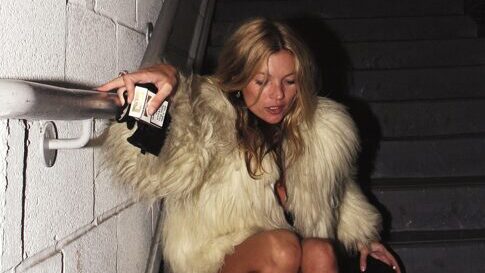
Respect, in Brennan’s case, also means context. One of the book’s purposes is to correct the stories that have grown around certain images. He shows me a photograph of Kate Moss seated on a staircase, smoking. Over the years, Brennan says, it has often been misunderstood. “I read all sorts of nonsense: that she tripped over her dress, that she fell down the stairs”, he says. “People said that she was drunk, and that it was 3am, and I scratched my head”.
The reality, he explains, was far less scandalous. The photograph was taken at 6pm, before the night had properly begun. Moss was sitting at the back exit of a theatre, smoking a cigarette, waiting for a taxi to take her to her birthday party. “I was home by 7:30”, Brennan says. “She was not drunk in this picture. So I want readers to get the truth”. The word ‘truth’ feels central to the book. Brennan understands that photographs are slippery things. They can be beautiful, iconic, even historic, while still being misread. But for him, the story behind a picture is part of the picture itself.
This becomes clearest when he shows me his portrait of Queen Elizabeth II. The image is called Stamp of Approval, and it took him twelve years. “The reason it took twelve years is because she’s not sitting with me; she’s sitting in a carriage, riding past me”, he says. “And every year we would do it, I’d get four or five frames”.
In 2015, he finally got ‘The One’. “I took four others that day, but they weren’t the same”, he says. The next morning, he printed a small copy, wrote a letter and sent it to Buckingham Palace. To his surprise, they replied. The photograph eventually entered the Royal Photographic Collection. “The Queen loved it”, he says.
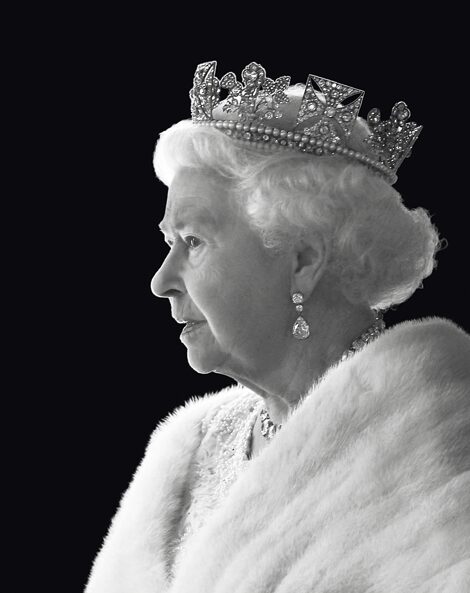
It is the kind of story that transforms the image. Without it, the photograph is still striking. With it, it becomes the result of twelve years of patience. “We can look at an image, and it can be misconstrued, it can be interpreted in many different ways”, Brennan says. “But for me, as a photographer and as a photojournalist, the story is just as important as the picture”.
On the surface, The Big Shot is a book about famous people. But by speaking to Greg Brennan, I learned that it is also about the strange intimacy of photographing people the world thinks it already knows. It reveals both a photographer’s view of celebrity, and a life spent watching closely, waiting patiently, and finding the story hidden inside the frame.
The Big Shot will be released on 26 May. Greg and Dylan Brennan will be giving a talk at Blackwell’s on 27 May.