

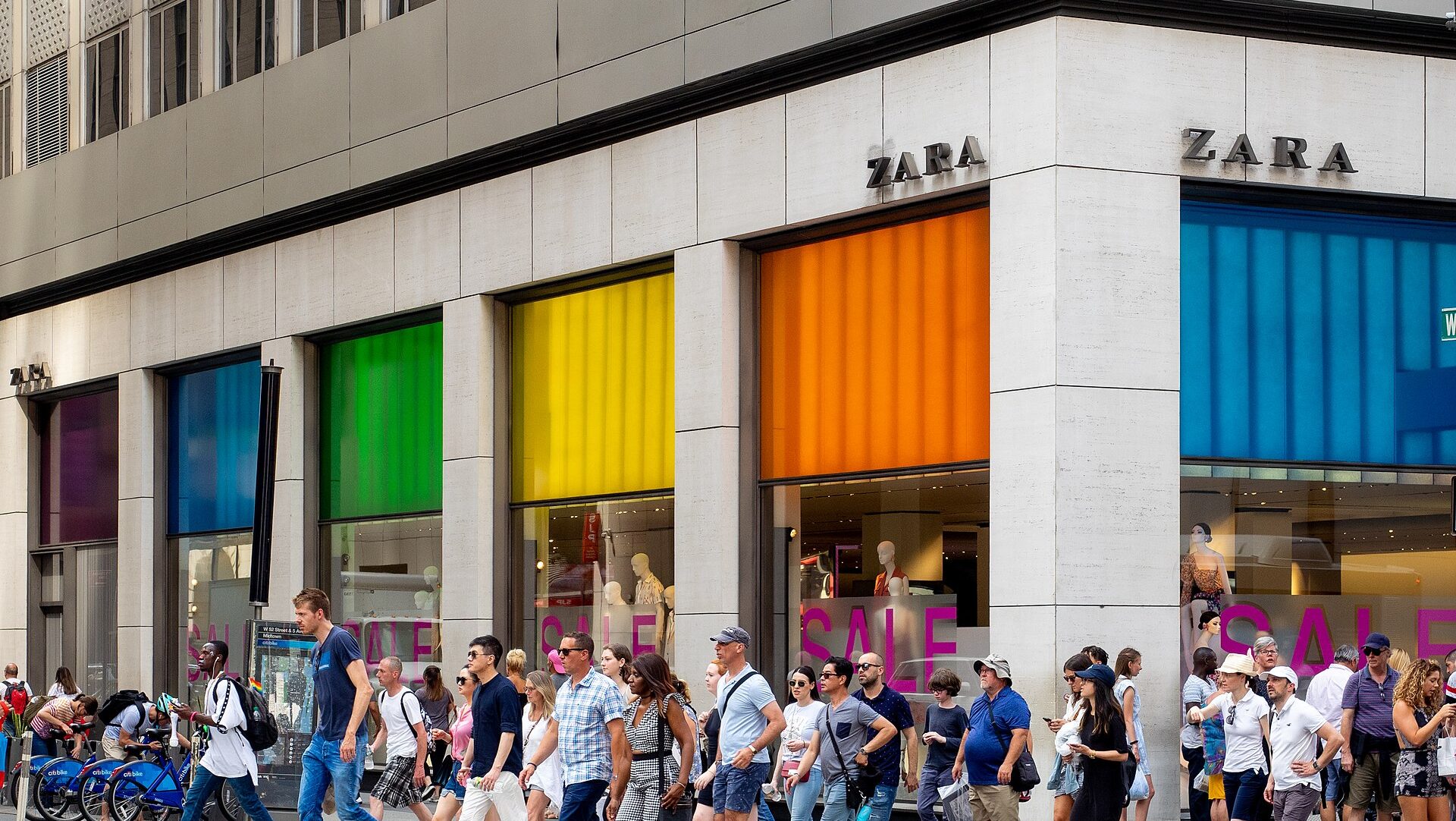
The fashion world is mourning the loss of John Galliano. Not a literal death, but something closer to a fall from grace. The designer, who defined an era at Dior, has entered into a two-year partnership with the fast fashion giant Zara. For some, this is a cause for celebration, a Robin Hood-esque democratisation of his genius, so to speak – after all, Galliano’s archival pieces remain some of the most sought after by celebrity stylists and Vinted warriors alike. However, for others, this feels like a betrayal: my initial reaction was admittedly one of shock and a sense of disappointment. God knows I have a weakness for a Zara sale, but surely, even in the current economic climate, Galliano didn’t have to end up here.
Galliano’s work has long existed within the realm of artistry rather than mere design, famously describing “the joy of dressing” as “an art”. His legendary tenure at Dior, spanning from 1997-2011, was known for its theatrical runway shows, with the catwalks being transformed into a stage upon which he paraded fantastical works oozing whimsy and fantasy. He drew inspiration from everything from Ancient Egypt and chinoiserie, to the indulgence and excess of Paris in La Belle Epoque, as can be seen in the pageantry of his Spring/Summer 1997 collection, metamorphosing the runway into a debutante ball at its most dreamy. Put simply, Galliano walked so Carrie Bradshaw and her Dior saddle bag could run. Bringing the same level of creativity to Maison Margiela as to the high street could, in theory, be seen as a kind of fashion egalitarianism. Nonetheless, I would argue that the mixed response to this partnership suggests something more complicated is at play. Galliano is far from an unproblematic figure, facing prosecution for antisemitic comments which ended his tenure at Dior in 2011. Yet I feel as though his appointment is not an isolated incident, but rather representative of a shift in the wider perception of fashion itself.
What was once an art form has become about consumption and profit – art equals transaction in this capitalist economy. The rise of fast fashion lies at the centre of this tension, a double-edged sword. On the one hand, brands like Zara were the first to replicate the trend-led styles of the runway, making them accessible to a broader socioeconomic audience than ever before. On the other hand, it comes at a significant environmental and ethical cost, one that is becoming harder to ignore in an age of climate awareness and with the increased prevalence of alternatives such as second-hand shopping and conscious consumption. The very speed that makes Zara’s model accessible also depends on overproduction and disposability, with garments designed for short-term wear as opposed to longevity. In this sense, what is initially framed as democratisation begins to look more like a dilution, offering the illusion of participation whilst simultaneously undermining the craft and permanence that once defined fashion as an art form. Perhaps most interesting is the announcement’s wording, which seems to implicitly frame Galliano’s involvement as a form of fashion egalitarianism. After all, the collection’s stated purpose is to bring high fashion and dramatic design to a broader audience through the combination of Galliano’s couture process with fast-fashion capabilities.
This isn’t the first time that Zara has dabbled in the world of high fashion, collaborating with other acclaimed designers such as Narciso Rodriguez and Stefano Pilati, even releasing a capsule collection with Kate Moss. However, this new partnership – between a designer once shunned from his creative industry and a fast fashion giant – speaks to the changing idea of luxury in fashion. These kinds of high-low collaborations have become commonplace in the fashion world since H&M launched its first designer partnership with Karl Lagerfeld in 2004, building an entire business model upon the merging of luxury appeal and mass-market accessibility. This underscores how the industry is rethinking value, access and who gets to buy into trends. Exclusivity is no longer the sole marker of value, with access and immediacy becoming equally important, fundamentally reworking the idea of who gets to participate in fashion and at what cost.
And yet, for all my reservations, I can’t entirely reject the appeal. This is the contradiction at the heart of modern fashion, a growing awareness of its ethical failings, paired with an undeniable pull towards accessibility and trends. Fast fashion no longer thrives on ignorance, but on a kind of covertly conscious complicity. Consumers understand the environmental and ethical costs and yet are still drawn in by the immediacy and affordability. Frankly, if you’re telling me I can stroll into Westgate and buy Galliano without having to forfeit the entirety of my student loan, I’d be lying if I said I wouldn’t be tempted.
By Victoria Corfield