

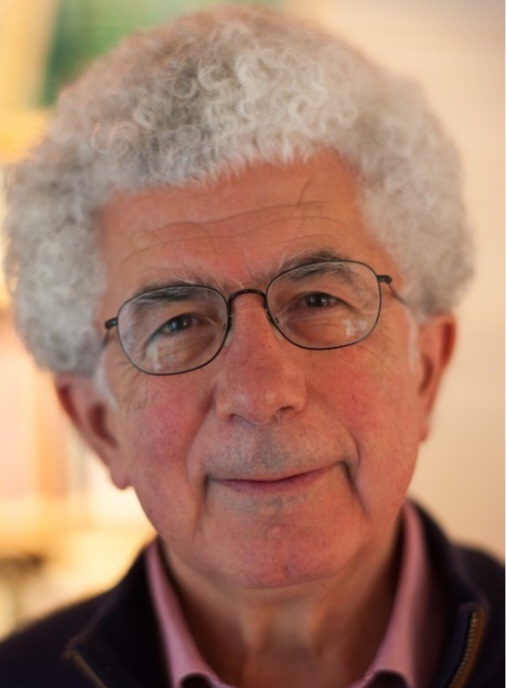
Long before he became one of Israel’s ‘new historians’, Avi Shlaim was a boy in Israel, self-conscious about the sound of his first language. Years earlier, that same boy had been growing up in Baghdad, a city that had been home to Iraqi Jews for two millennia, in a Jewish family that called Iraq home and felt, in his words, “very Iraqi”.
In Baghdad, Shlaim recalls only speaking Arabic growing up, and tells me the other main aspect of Arab culture that remained with him throughout his life was food: “very spicy” rice and chicken, a staple in his Iraqi household. Upon moving to Israel, he encountered Ashkenazi food which he said was “culturally alien” and, in comparison, tasted “incredibly bland and boring” to him.
“Religion didn’t mean very much to me then,” Shlaim says, as he describes his family as being culturally, rather than religiously, Jewish. Equally, he felt “very Iraqi”, and that in Iraq, his family “felt very much that this was our home. This was our country. We did well there. The Jews in general did very well.”
Shlaim points to the thriving Jewish communities that existed throughout the Middle East, the Levant, North Africa, Iran, and Turkey, before the creation of the state of Israel: “We were Iraqis whose religion happened to be Jewish.”
For him, a sense of belonging is the crucial difference between his experience in Iraq and that of Jews in Europe. “Iraq didn’t have a Jewish problem”, describing this as a problem that pertained instead to European Jews, in particular in Germany. In Iraq, however, “we had a sense of belonging, rather than feeling that we were a persecuted minority”. “We were not aliens, we were not intruders, we were not strangers.”
The turning point, as he sees it, was the establishment of the state of Israel on 14th May 1948. Following this, “any Arab who didn’t like Jews could say, ‘You are foreigners. You don’t belong here’”. Shlaim also singles out the Farhud, a violent pogrom against the Jewish population of Baghdad that took place on 1st and 2nd June of 1941, as a pivotal moment for Arab Jews. However, while Zionist historiography has often claimed Farhud as evidence of pervasive antisemitism in the Arab world, Shalim rejects this interpretation: “I don’t deny that there was an antisemitic element in it, but I attribute it mainly to British colonialism and the British policy of divide and rule and the British choice of the Jews as a scapegoat after the nationalist revolt of Rashid Ali al-Gaylani.”
This event was traumatic for the Jewish community. In his memoir and in his book Three Worlds, Shlaim argues that Arab Jews were caught between Zionism and nationalism.
His own family, however, firmly belonged to the mainstream, which was non-nationalist and non-Zionist. Shlaim recalls once asking his mother, who always “loved talking about the wonderful Muslim friends we had in Baghdad”, whether their family had any Zionist friends. She responded: “No, Zionism is an Ashkenazi thing. It’s nothing to do with us.”
For Shlaim, his family’s attitude was “very typical and representative of the mainstream attitude towards Zionism.” His family were “Iraqis who were happy to stay in Iraq” and “Zionism was something alien”, something which “didn’t have the slightest appeal” to his Iraqi-Jewish family or community in Baghdad.
Shlaim says the alienation went both ways: “The leaders of the Zionist movement looked down on Arabs as backward and primitive,” and they also “looked down on Arab Jews as part of a backward and unenlightened society.” Indeed, his memoir opens with a scene from his childhood in which he feels embarrassed speaking to his father in Arabic in front of his non-Arab Jewish friends.
In Three Worlds, Shlaim challenges the idea that Israel was a haven rescuing Iraqi Jews from antisemitism. “I say that the Zionist movement was a ruthless and exclusive movement that only cared about Jews and didn’t care about Arabs, and that the state of Israel, the Mossad, played a part in uprooting Arab Jews from their homes and bringing them to Israel.”
He tells me that his family’s migration from Iraq to Israel was not something they actively chose: “My parents didn’t really understand how we were catapulted, how we were uprooted from Iraq, where we were very happy, and landed in this European-style country.” His mother found the transition from Iraq to Israel “really traumatic” but later recovered. His father never did.
He makes it clear that the encouraged migration was not a humanitarian mission nor noble support for Jews in trouble. Rather, it was intended to serve the interest of the newly born Israeli state, which was “very short of manpower”. When asked what his evidence for this claim was, Shlaim spoke about his research, which found that three out of five bombs that went off on the streets of Iraq between April 1950 and June 1951, which targeted Jewish gathering places and a synagogue in Baghdad, were instigated by the Mossad through Jewish Zionist activists. This led to panic-driven urgency to leave Iraq, and helped accelerate the exodus of roughly 120,000 Iraqi Jews through Operation Ezra and Nehemiah.
He also tells me about an elderly friend of his mother’s, Yakov Kuli, who worked in the Zionist underground, and confessed to forging documents and paying bribes to encourage Aliyah, the immigration of Jewish people to the Land of Israel, and named a colleague, Yusef Basri, as a Mossad controller in Iran. Basri and another Mossad operative who planted the bombs, Shalom Salih Shalom, were convicted and executed by Iraqi authorities in 1951.
Shlaim’s Zionist critics instead argue that the main reason for the Exodus was not Operation Ezra and Nehemiah, but persecution of the Jews by the Iraqi government after the 1948 Arab-Israeli War. In response to these claims, Shlaim says: “I don’t deny that there was persecution, but the bombs on Jewish premises was another factor that has to be taken into account.” He also says that even if not one Iraqi Jew had left because of them, he would still condemn Israel: “Israel wasn’t created in order to make life for Jews in the Arab world unsafe.”
I ask Shlaim how he, as an Arab-Jew himself, explains why many Arab-Jews look down on other Arabs, or reject their Arab identity. Shlaim replies that while the Zionist narrative says that Arab Jews were hostile to Arabs because they lived with them, “because they ‘knew what they were like’, because ‘the Arabs only respect the language of force’”. He rejects the premise that it grew out of their experience of life in Arab countries, saying “the experience, certainly, of my family’s experience, was not a negative one. It was a very positive one, living with Arabs”.
The hostility, he says, was learned later, when Mizrahi Jews in Israel were “indoctrinated to see the Arabs as the enemy and to hate Arabs”. He felt it himself at school, where he was only taught the Zionist narrative of the conflict: “I never learned anything else… we were only taught the history of the Jews in Europe.” His education in Israel involved “an attempt to erase Arab roots, to erase Arab history, to systematically de-Arabise anything that was Arab, including the language”. Shlaim points to Arab and Iraqi Jewish writers such as Sami Michael but says they “never entered the canon of Israeli literature”, as well as noting that there are “endless memoirs by European Jews and American Jews,” yet by comparison, “there are very few memoirs by Arab Jews like mine”. As a result, his memoir became a way to “assert my right to write our history as I understand it”. Shlaim would like all people, young and old, to understand from his memoir that “Zionism changed the course of Middle East history”.
The rich history of the Arab-Jews is certainly absent from not only the Israeli school textbooks that Shlaim encountered, but from political and historical discourse, especially with regard to the creation of the state of Israel. When asked whether the history of this community is misunderstood, Shlaim is quick to respond: “The whole history of the Jews of Iraq prior to 1950 is not just misunderstood. It’s completely absent.”
When asked why the history of Arab Jews has received very little attention in wider discussions of the creation of Israel, Shlaim explains that European Jews were dominant in the making and identity-building of the state of Israel, “they gave it a Eurocentric identity”. “They didn’t want to be part of the Middle East, but they regarded Israel because of its values and its culture as part of the West”.
Regarding his own personal schooling experience in the newly established state of Israel, Shlaim recalls carrying “a big chip on my shoulder and an inferiority complex for being an Iraqi boy,” something that governed his relationship with Israeli society and held him back at school. He did not challenge or rebel against this social order; instead, he “accepted it as a fact that I was inferior at the bottom of the pyramid”.
The change in his internal beliefs about his Arab-Jewish roots only came when he left Israel for England at the age of 15. “I could see Israel in perspective, and I could see that I wasn’t inferior”, he says. It was also his move to London that allowed his love for history to blossom. He credits this to his secondary school history teacher, who was a “classic example of one teacher who believed in me and encouraged me,” and he says that this was why he chose to study history at Cambridge University.
I ask Professor Shlaim about his sense of identity today and whether he feels more Iraqi, Jewish, Israeli, or British. But I quickly realise that this question is itself reductive and an oversimplification of his broad and multi-faceted, multi-layered identity. “It reflects the complexity of the notion of identity”, he tells me.
“In my case, it was Israeli society that shaped my identity as a Zionist. So I grew up as a Zionist”, but this was not an identity that Shlaim would choose for himself. Through Three Worlds, he has sought to “reinvent [himself] as an Arab Jew”. When asked how he explains an Arab-Jew identity to someone who considers it a juxtaposition, he tells me: “I don’t see the contradiction.” Linguistically and culturally, he says, his parents had “much more in common with other Muslims throughout the region than they did with Jews in Eastern Europe”.
Shlaim is proud of his Arab-Jewish identity, though he acknowledges that “the genocide in Gaza has made me distance myself more and more from Israel, and drawn me closer to Jews”. For him, the core values of Judaism are “truth, justice, and peace”. “The essence of Judaism is nonviolence,” he says, describing Netanyahu’s government as the “antithesis of these core Jewish values”.
Near the end of our conversation, he tells me he is “proud of being a Jew, and equally proud of being an Arab. The hyphen in Arab-Jews doesn’t divide Jews from Arabs; it unites Jews and Arabs”.