

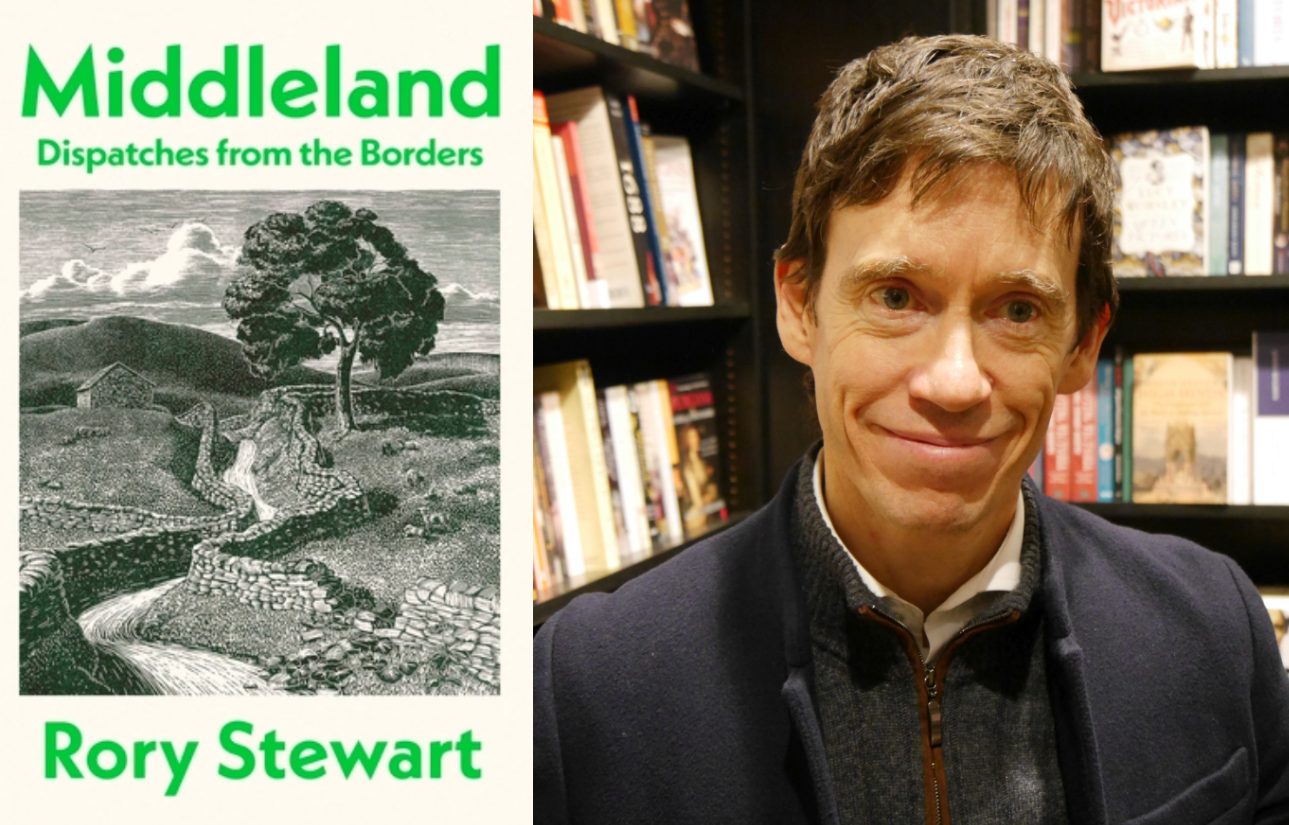
Rory Stewart is one of the only politicians of this century who is not also a thoroughly bad writer. With The Places in Between (2004), Occupational Hazards (2006), and The Marches (2016), he had already demonstrated his serious literary gifts, which reached their apex in Politics on the Edge (2023), his greatest success. The latest arrival, Middleland (2025), is not his masterpiece, but it is as much worth reading as any of his work – erudite, perceptive, and beautifully written.
The book is a collection of local newspaper articles whose unifying thread is the author’s former constituency in Cumbria, embroidered with a series of reflections on the ignorance of politicians, the importance of local democracy in preserving local traditions, and the disconnect between ordinary people and the political class.
Disconnect is the recurring theme of Stewart’s work – between Iraqis and the Coalition Provisional Authority in Occupational Hazards, between ministers and administrators in Politics on the Edge, and, here, between residents of Cumbria and Whitehall policymakers. “I often felt as though I were translating between two incompatible languages”, he writes: “The language of policy (targets, metrics, frameworks, rollouts) and the language of place (this farm, that family, next winter’s milk production).”
For example, the British government remains blithely indifferent to the persistent problems of Cumbria’s local economy. Cumbrian farms, which have an average income of £8,000 per year, struggle without government support. Officials, rather than doing anything productive, sit and make “reassuring sounds about the upland farmers’ role in creating and maintaining… ‘rural services’”. The French and Japanese governments, by contrast, recognise the intrinsic value of such farms and support them with subsidies. Why, Stewart asks, can we not do something similar? If we did, we could sustain an increasingly precious connection to a vanished rural past.
In these and similar questions, his genuine care for his former constituency shines through. His book is, if nothing else, a love letter to Cumbria. It describes the geography, its emerald-green slopes, purple moor-grass, and ribbons of industrial-era terraces. There is Cumbrian history, including accounts of the Romans and the Anglo-Scottish wars and an enthusiastic historiographical piece on the meeting of five kings at Eamont Bridge in 927AD. There are ample tributes to the people themselves, to “the eccentricity, the learning, the charm and often the bluntness of a hundred meetings on footpaths”. The fragmentary format is an advantage because we are carried on short surveys from theme to theme in a way that largely sustains the interest, although occasionally Stewart overestimates the extent of the average reader’s enrapturement at Cumbrian minutiae. 3 pages may be rich and engrossing; 30 remain quite enjoyable; 300 risk a deadly overdose. This is not a book to read in one sitting.
Fortunately, it is not all Cumbria. Interludes in Libya, Edinburgh, and London are very welcome when they arrive. Stewart includes a scintillating piece on Robert Burns and a powerful tribute to his friend, the late journalist Marie Colvin, who was killed reporting from Syria. He is a much better writer when describing a change of scenery. A hotel in North Africa is described with a cinematic economy which would be the envy of most novelists:
“Last summer, the Corinthia Hotel in Tripoli was filled with reporters and photographers. They had propped their laptops on tiny marble tables in the lobby. Waiters brought Turkish coffees, but the reporters’ eyes flicked only from their screens to their phones, checking for messages about Gaddafi’s whereabouts, a recently discovered palace or prison, or a press conference. Only Marie Colvin seemed to look around the room.”
There remains the question of why these pieces were reprinted in the first place. Some of the articles here are very slight, the kind which the literary executors of some eminent author might reissue a hundred years after they were written to a public hungry for the great man’s unseen jottings and scribblings, but which have no business being reprinted so soon. Stewart could have done better. He has mentioned his abortive attempts at a novel set in the 1940s and I, for one, would certainly like to see Rory Stewart the novelist. In any case, a sensitive, intelligent, widely travelled and experienced writer with his literary gifts has much better books in him than this one.
Middleland: Dispatches from the Borders by Rory Stewart is available now.


 is not his masterpiece, but it is as much worth reading as any of his work – erudite, perceptive, and beautifully written. )