

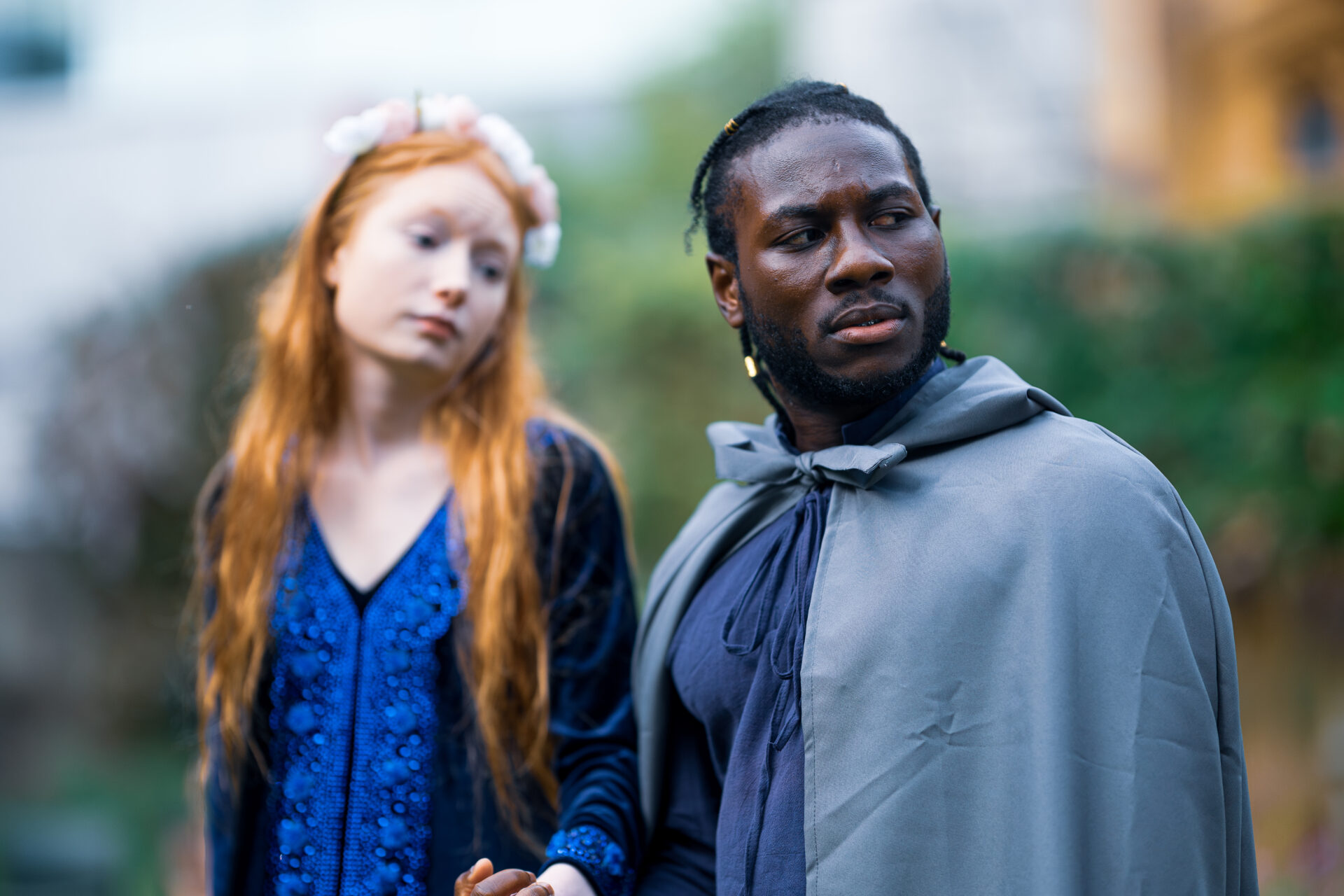
One of the finest traditions of Oxford drama is the summer garden play. Freeing the frenetic energy of the dramatic societies from the limited rehearsal spaces and platforms of Michaelmas and Hillary, Trinity sees the many green spaces of Oxford overcome by hectic preparations for garden plays, as directors experiment with the challenges of performing in an unusual space. With such a proliferation of performances, it also presents the chance for enterprising directors and productions to venture beyond their regular fare and explore less well-known, but potentially no less entertaining, stories.
This year’s Hertford-Mansfield Garden Play was a production of Shakespeare’s The Two Noble Kinsmen, co-written with John Fletcher which was the Bard’s last work before his death in 1616, though it did not appear in print until 1634. It wasreasonably well-known in its time, but has since faded into relative obscurity, only performed rarely and less well-known than its source work, The Knight’s Tale in Geoffery Chaucer’s The Canterbury Tales. For the sake of the reader, I’ll briefly explain the plot: Theseus, of minotaur slaying fame, is begged by three widowed Queens to intercede against the king of neighbouring Thebes. Theseus concedes, and goes to war, in the process capturing the King of Thebes’ nephews, Arcite and Palamon. All their brave talk of fraternal unity in the face of prison vanishes when they see Hippolyta’s sister, Emilia, and both immediately compete for her affection.
Eventually, all is resolved in a rather tragicomic fashion, but it is rather unlike most Shakespeare in that even in those plays that do tread the line between tragedy and comedy, few slip between the two as frequently as Two Noble Kinsmen. Its opening scene appears to set the play up as a tragedy, whilst its middle section better resembles a comedy; in a Lynchian fashion, after the play’s tragic ending, Morris dancers (who appear earlier in the play) return and do a merry jig. The comedy fits the Mansfield gardens, where the play was performed next to the hulking shadow of the Vere Hamsworth, well. Likewise, the challenging lighting situation, with the gentle afternoon sun of the opening fading into dark sky by the end, lent itself to the tragic development of the play, with the stark white lights used producing stark, dramatic shadows against the bare stone.
This production itself is the work of director Annabelle Higgins and producer Richard Morris, with two choral pieces composed specially for the play courtesy of Owen Robinson. The music does make the play, from its earlier Midsummer Night’s Dream-like feel of fancy to the low, ethereal and deeply unsettling humming from behind the audience as the play reaches its devastating conclusion. Select performances also deserve special mention, amidst the general success of the cast and crew; the eponymous kinsmen, Arcite and Palamon, are played with great flair and distinction. Palamon captures, as Emilia describes, a love-struck morbidity and obsession, whilst Archite’s focus on victory is clearly communicated through clipped tones and a contemplative countenance. Emilia is also exceptionally wellplayed, with several monologues that carefully balance expressing emotion whilst not forgoing the audience’s need to hear what’s being performed.
A few minor flubs occurred, actors missing a few lines and a malfunctioning light set just behind my shoulder. However, with the brevity of time afforded to garden play actors, this shouldn’t be held against them – it is a well performed play given its limited budget, space and time. Performing a lesser-known Shakespeare work was a bold directorial choice, and one that paid off. Equally impressive is the sizable, late run time, with actors performing from 7:30pm until almost 10pm for three days in a row, including a matinee performance on Saturday 9th May.