

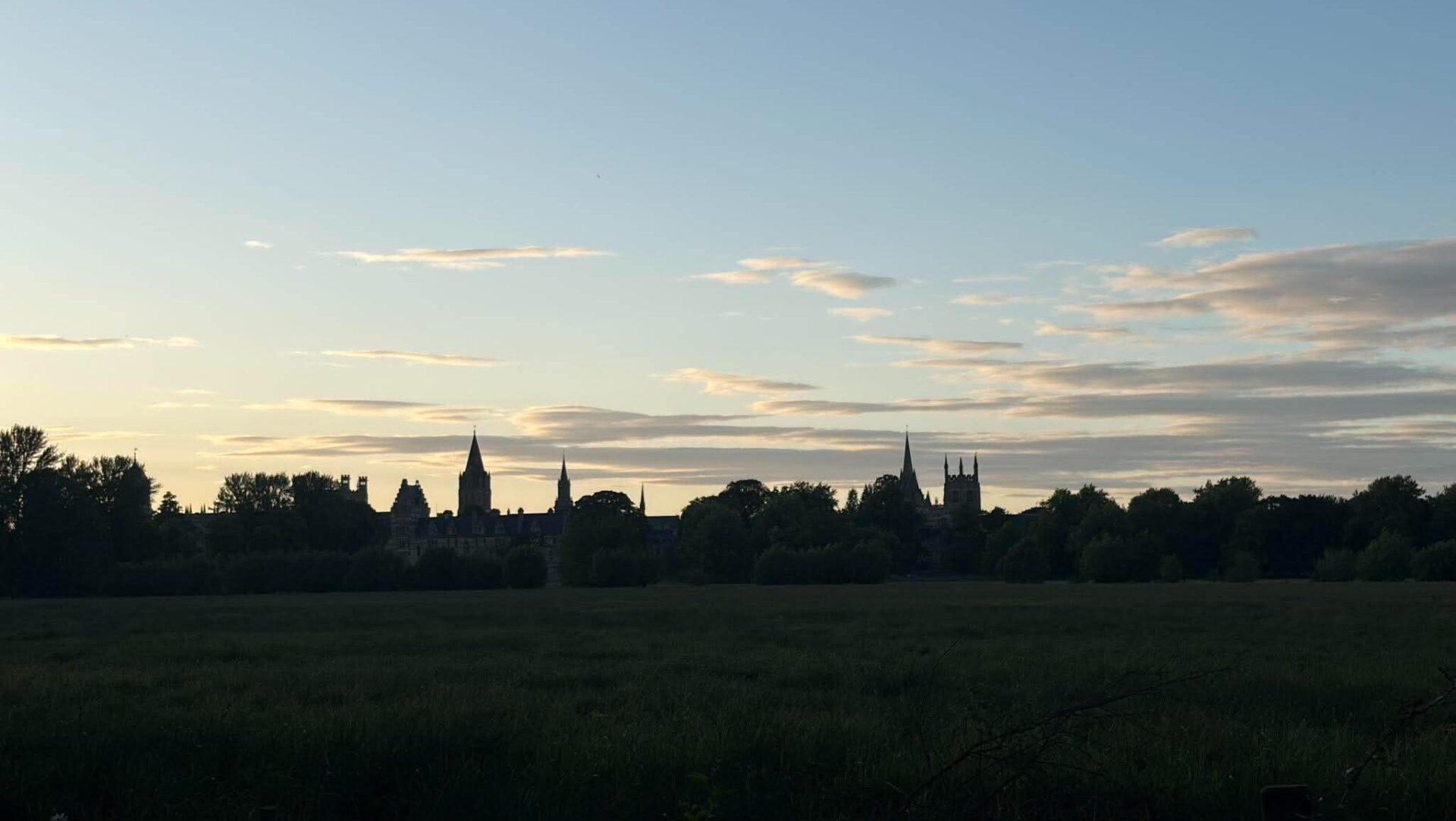
When you matriculate at Oxford University, the Vice-Chancellor asks that the attending students be accepted. Under Christopher Wren’s painted ceiling, after copious submissions, emails, and acceptances, the University still has one fleeting chance to turn around and say ‘no’.
There is a sense of just reward for the chosen in this ritual. As the Vice-Chancellor herself says in the ceremony: “It is not easy to earn a place at Oxford – we are the number one University in the world, after all.” While many students recognise the role of luck in getting to this moment, few are aware of just how lucky they are.
Over the past seven months, some of Oxford’s offer holders have been hoping for their luck to change. They met the academic requirements and demonstrated sufficient intellectual rigour. What led them to fail the test was, instead, the passports they held.
They are the victims of a visa brake introduced by the Home Office, which blocks students from Afghanistan, Myanmar, Sudan, and Cameroon from obtaining UK visas. Caught in the politics of immigration enforcement, these students felt the elation of an Oxford offer, followed by the cruelty of being told “no”.
Seven months on, some still hold out hope of making it to Oxford.
The visa brake was part of a wide-ranging immigration reform package that has driven anger at the Home Secretary in the Labour government. To justify the claims, Mahmood cited a 470% increase in those on student visas from the four countries claiming asylum.
Over the phone, Yama jests that, as a scientist, he can recognise “when evidence is selectively deployed”. He is an Afghan British researcher who has worked at the Oxford Vaccine Group since 2013, and he believes that the countries were chosen for political reasons. “They are not a priority for our politicians,” he scoffs. Their lack of representation means those in power question, “‘Is it really worth fighting for?’ Morally, absolutely. But economically or publicity-wise, ‘it’s just 10 students’”.
Earlier this year, Yama wrote to then-Prime Minister Keir Starmer, met with MPs, and has led a UK parliamentary petition against the brake signed by nearly 40,000 people. He hopes that “next time someone thinks about Sudanese or Afghans or whatever other country,” this campaign would mean that “they might spend one minute to pause and say, ‘I’m going to do this, and this is very unfair’”.
Filings from a court case challenging the policy serve Yama’s point. The Home Office’s own metric for the visa brake shows that, were all countries being treated equally, other countries, including Bangladesh, would have been included in the brake. The country was excluded, not because of its role in visa abuse, but because of deeper bilateral ties, such that “any action on Bangladesh would likely incur a far more pronounced impact upon relations”.
Ask any of the Oxford offer holders what they hoped to achieve with a British education, and they do not ask for asylum. When a coup in Myanmar turned into civil war, Eaint watched her home country fall apart from her student accommodation at King’s College London. Even knowing that, at home, conflict had “erased life as people knew it”, she never considered asylum. “For asylum to be framed as the easy way out,” she says, “is a very disingenuous justification”. She had an offer to begin a Master’s in Health Service Improvement and Evaluation in Oxford this October.
Studying abroad is not just about attending a particular university. For affected students, it is one of the few ladders out of the devastation caused by decades of civil unrest. Afghanistan has not recovered from the Soviet invasion in 1979 and, since the Taliban returned to power, women and girls have been systematically excluded from education past primary school. For them, universities abroad can represent one of the few remaining routes to continue their education.
Education is foundational to recovery, reinvigorating people and countries. Alongside her studies, Aisha has piloted an e-learning programme providing university-level education to women in six Afghan provinces. “It is a process that needs building, but we should not be waiting for the moment the Taliban are no longer in power to start working on the workforce.” She had hoped to use her time in Britain to expand the programme through the University’s networks.
Back in Oxford, Yama runs a similar programme offering education for Afghan women and girls; he’s seen the impact of education through his sister, now a doctor in Denmark. Had his father not been so desperate for her to get an education, fleeing the Taliban in the process, “we would have a woman with no knowledge. We would have one less doctor.”
Eaint’s grief is twofold: the visa brake does not just represent the loss of her own offer, but the knowledge of “what doors this was closing for people who just wanted a better future and education”. “I had already gotten a bachelor’s degree in the UK,” she says. “I was so acutely aware that studying in the UK had changed my life in every sense possible.”
Taking away the opportunity is equally life changing. One Afghan student told Yama: “What I’m going to do is this: I’m going to go into those boats. I’m going to cross the channel. I’m going to come into this country, and I am going to study. Because I already have an offer. I have done everything in the past four or five years to qualify and get a scholarship from the UK, and now I’m being stopped not because I don’t meet their standard, but because I’m Afghan.” When Yama tried to dissuade the student, he was reminded that “you are in Oxford. That’s why you are saying, and you are advising me, ‘don’t do that’. Please, before going to sleep tonight, spend ten minutes putting yourself in my place and think about what you would have done.” They have not been in contact since.
Underpinning the Home Office’s policy is a sense of why international students come to Britain. But these students saw their Oxford offers not as a way out, but as an opportunity to help their home countries. They are the students who fell through the cracks created by a blanket ban.
Ibrahim was on a rare break from his internship when we called. For the first few minutes of the call, he recounts in detail the potential changes to Sudan’s health referral system he has identified. Working in hospitals in Sudan during the ongoing war, he witnesses daily the challenges of a health system under stress – just three months into his placement, the hospital he worked at was filled with victims of a drone strike in a nearby town. “There was just so much pressure to take care of all these patients,” he says. Still, you have to be “vigilant” to survive in an active war zone. At Oxford, Ibrahim wanted to focus on how to implement his changes in a “volatile” environment as part of his Master’s in Health Service Improvement and Evaluation.
Eaint calls from the Thailand-Myanmar border, where she is working on a project helping those fleeing her native Myanmar with medical and humanitarian aid. Ironically, she laughs, the project is funded by an Oxford research institute.
For everyone, the Oxford offer symbolised that people cared. Ibrahim recalls coworkers and friends asking him why he was smiling so much after receiving his offer. To him, it validated that he had “ the potential to contribute” to the field. Having spent her interview talking about their plans to improve the health system back home, Eaint tells us her offer “felt like a validation of the fact that these issues mattered”. Safar, an Afghan student due to study an MPhil in international relations, told us that his offer “represented a possibility: the belief that, if people with the fewest resources are given an opportunity, they can become catalysts for change within societies that have endured decades of war and violence.”
What does it mean, then, that these offers are taken away? Yama describes himself as proudly Afghan British; he was a key part of the team that led the development of the Oxford-AstraZeneca COVID vaccine and is currently working on the world’s first Ebola vaccine. His expertise means he could easily move to the US, should he choose, but he wants to stay: “This country has given me another home.” The current policy, he says, “is against British values”.
For Safar, the policy has shaken his faith in what Britain and Europe stand for. Having faced discrimination growing up as a refugee in Pakistan, he always thought that “progressive” Europe was different. “One of the reasons I had always wanted to study in Europe was my belief that Europe was built on the idea of human equality. I never imagined that I would encounter discrimination embedded in government policy in a liberal, so-called first-world country.”
The Home Office itself recognised the dangers of the blanket ban – officials considered targeted interventions, including by course. Their own analysis noted that “the blanket ‘brake’ model offered speed and simplicity but raised proportionality and litigation risks”. The office intends the measure to be temporary and precede more “nuanced” interventions targeting the root of abuse.
What the Home Office failed to consider was the human cost. By implementing the brake in March, when most offers for UK universities come out, many students felt both the elation of Oxford saying “yes”, before the “numbness” of it being taken away. Having gone through the rigorous application process, Ibrahim assumed he would be exempt when he first heard of the brake.
The Home Office did not respond to Cherwell’s request for comment.
As the case has developed, Oxford has issued many statements. Each notes that the University receives “a significant number of applications from talented students affected by war and persecution” and reaffirms the University’s commitment as a University of Sanctuary. A blanket script is the only way to answer a blanket policy – this national policy effectively ties the University’s hands from abiding by its promise to students.
Students, like Ibrahim or Eaint, who had the UK as their only option for 2026-2027 study were left with no options. If they were to look abroad, as many are now doing, they would have to sit out a whole academic year.
Oxford has stated that it had “offered the same options to the same offer holders”. Whatever the University has offered, the consequences for students are scattered. For some students, holding out hope is painful and unrealistic. The blanket change resulted from the efforts of students, like Ibrahim, to fight for their offers.
Though these students are not in the Sheldonian Theatre, they are waiting one last time to see whether the answer to their place at Oxford might be “no”. This summer they launched a legal challenge to the visa brake. While the initial case failed at the High Court this summer, Cherwell can confirm that they have applied for permission to appeal.
Hope remains for those who have not withdrawn their applications. Students with unconditional offers, including Ibrahim, have been given the chance to defer to allow for the result of appeal. Even for the Afghans we spoke to who lost their offers, Yama is optimistic that the overturning of the brake would allow them to say “This student was successfully selected for last semester, but they couldn’t get a visa. Could we renegotiate their position for next year?”
Should the appeal fail, the Home Secretary also retains the power to grant entry clearance to students outside immigration rules – the circumstances in which she would do so “are likely to be rare, and will be informed by the nature and purpose of the Student Visa Brake”. To be an exception to a government immigration policy might be rare, but to get into Oxford has always involved some degree of luck and a willingness to test the odds.
Reflecting on the fact his future rests with a British judge, Ibrahim takes “satisfaction” from “deciding to persevere” till the very end. It has, he admits, been “a very long and very exhausting process”, but the thought of making it to Oxford still excites him. “I think Oxford is worth it. I think it’s really worth the wait. I hope it’s a wait.”