It is a worrying thought that what sits on your bookshelf today could be out of reach tomorrow. You might believe book banning to be a thing of the past – the stuff of Nazi Germany or Mao’s China – but restricting public access to books still happens today; you may be affected without even realising. The issue has recently resurfaced in the UK after UK markets and eBook platforms removed Sally Rooney’s books. The content of her novels was not the reason for their removal; it was her pledged support of the proscribed organisation Palestine Action. Furthermore, the decision was made with Rooney’s agreement to avoid legal risk. This self-censorship by a celebrated author has unsettled the UK media and should draw attention to the quieter instances of censorship around the world.
There is some confusion surrounding what it means for a book to be ‘banned’. The American Library Association describes book censorship (or banning) as the act of restricting access to books due to images, ideas, or information contained that is found to be objectionable. It can also involve relocating books to less accessible sections, requiring special permission to access a book, or obscuring sections of materials from readers. It is these latter, more subtle methods that usually go unnoticed. But, they are just as problematic as outright removal.
If you are a historian like me, mass book bans are all too familiar. Examples can be found as far back as 213BC, when books were burned by the Chinese Emperor to strengthen the dominance of the governing philosophy. Most famously, tens of thousands of books by Jewish, socialist, and pacifist authors were burned by the Nazis in the 1930s for being un-German.
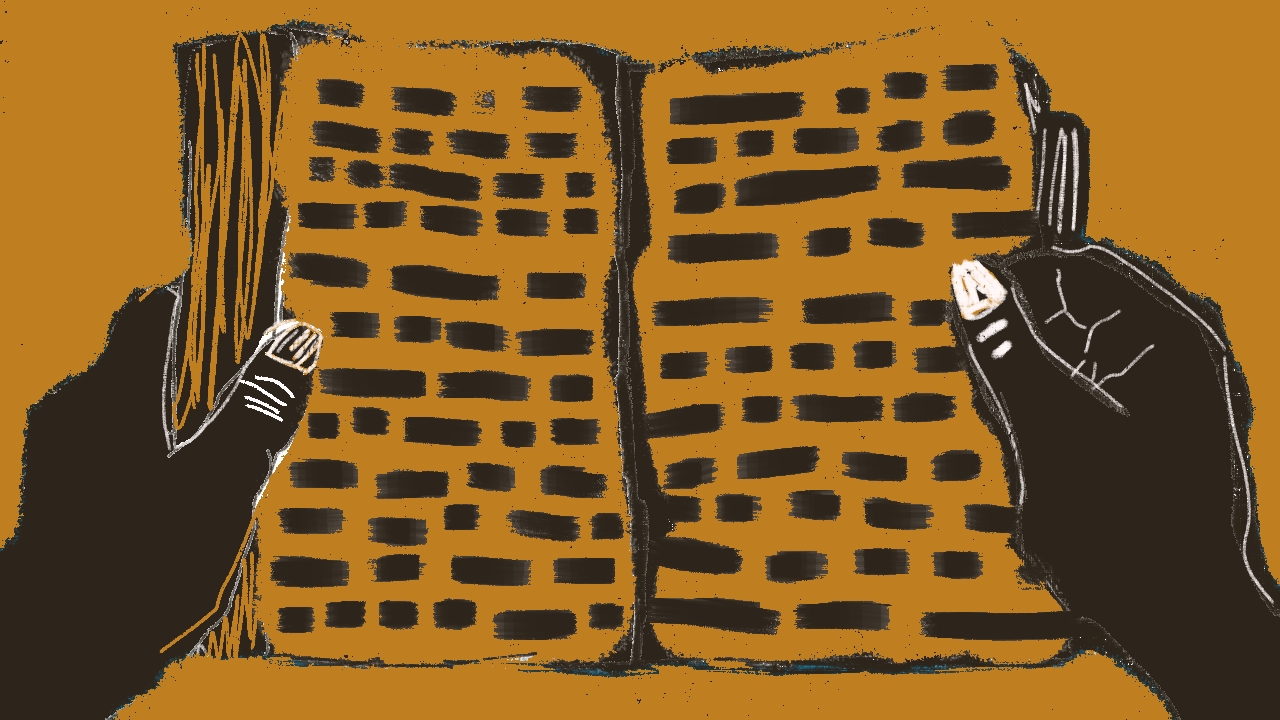
Today, Russia and China sit at the extreme end of book censorship. Russian law enforcement has raided major publishing offices and detained executives with charges of extremism, for the content of the books they publish. Often books are removed from shelves, given black-and-white wrappers, or text fragments are physically blacked out. In China, the CCP censors books through a state-mandated system. Problematic books are categorised as either black (political works that criticise the CCP or its history) or yellow (immoral, obscene, or ‘spiritual pollution’). This runs on a case-by-case basis, and authorities frequently order school and public libraries to destroy books – in 2019 books were actually burned in Gansu province. Ironically, this article itself most likely could not be published in China. These countries, however, have historically been notorious for a low tolerance for criticism and high levels of censorship. What may be more surprising is its existence in the ‘Land of the Free’.
In the US, social media has recently fixated on sensationalised stories of nationwide lists of proscribed books. The reality is not so absolute, but it’s still more alarming than you might expect. PEN America describes current censorship in the US as being the worst wave of book bans since the Red Scare of the 1950s. Its most recent report from the 2025-2026 school year found 12,000 instances of book bans in public schools and libraries nationwide – the most in a single year. The states with the most bans were Texas, with 8,100, and Florida, with 3,200, both far outranking the rest. In the majority of districts (72%), state legislation drives removals, though encouraged by politicians’ campaigns, pressure groups, and parents. Following Texas’ Senate Bill 13 in September 2025, books are removed from its public schools on the pretext of being harmful, sexually explicit, vulgar, indecent, or profane. This has made hundreds of renowned works of fiction become inaccessible in the name of safeguarding. These include Jane Eyre, A Clockwork Orange, The Handmaid’s Tale, and practically every work of Stephen King.
Across the pond, the UK has its own controversy around school libraries and their contents. An investigation by the Index on Censorship found that 53% of surveyed UK school librarians reported being asked to remove books from their shelves. Following the report, the Minister of State in the Department of Education reaffirmed that no books or genres have been banned by the government, and schools are free to make their own choices about which resources and books they hold. Anyway, the sample was small and in just a few cases were books actually removed. Thus far, the country seems safe from the Bible-belt style morality bans. However, Reform UK councils have also directed libraries to remove Pride displays, and discussions around what is ‘appropriate’ for the public are ongoing. We should be wary of what could be on our doorstep.
Having limited access to certain books on a larger scale can impact your worldview and ideology. It is a form of propaganda and control that nowadays goes unnoticed. In schools especially, book bans cut students’ access to diverse perspectives, and so hinder the individuality of their thought. Under the guise of limiting books to their age and maturity, this rhetoric has removed pivotal works of modern literature from their education. What is more, those that rely more on public libraries and schools are more susceptible to the effects of these bans. Diversity of viewpoint should not be only for those who can afford it. Independent minds will not grow from greater control; creativity does not come from gaps on the shelves.