

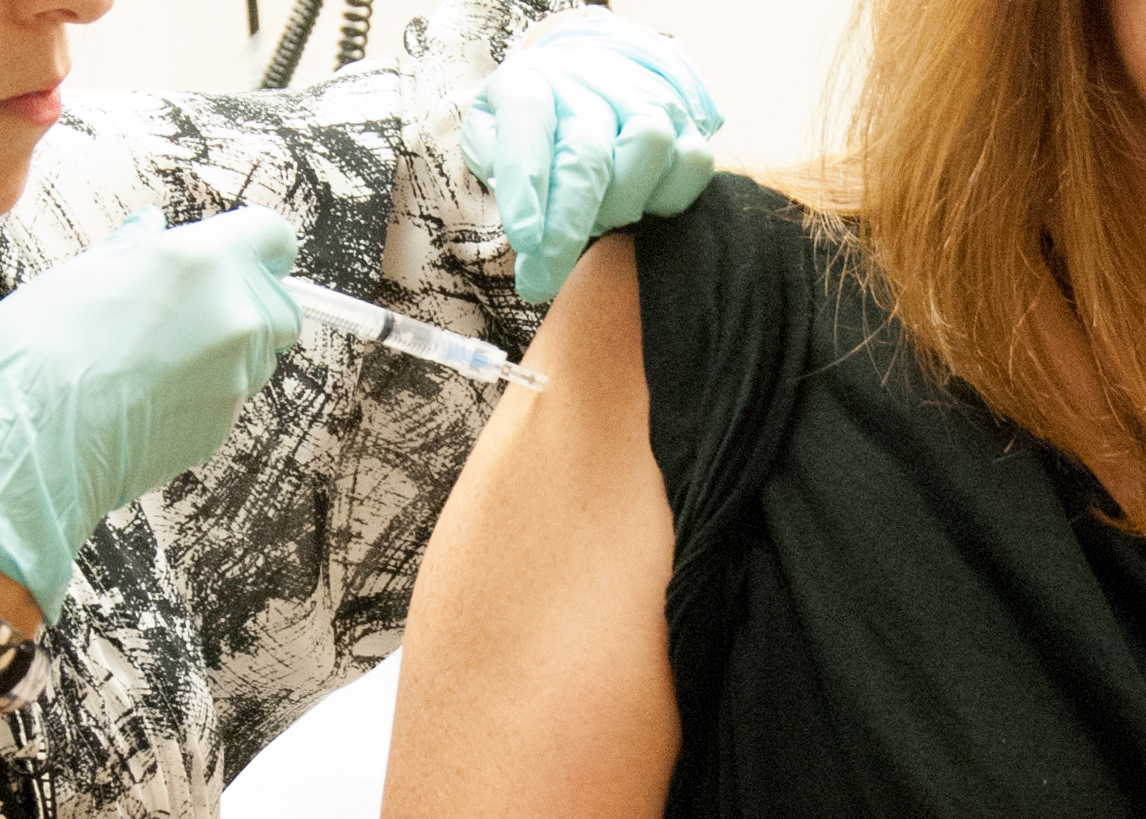
Ugandan participants in a clinical safety study received an Oxford developed Ebola vaccine this week.
Researchers vaccinated the first participants on 6th October in Masaka, Uganda. The phase follows the launch of a first-in-human Phase I trial in the UK evaluating the same vaccine candidate.
They received the vaccine as part of an evaluation of the safety and efficacy of a ChAdOx-based Bundibugyo Ebola vaccine candidate developed by the Oxford Vaccine Group (OVG) and the Pandemic Sciences Institute at the University of Oxford.
Development for this vaccine began in May this year in response to the ongoing Ebola outbreak in the Democratic Republic of the Congo (DRC). The research, led by OVG’s Professor Teresa Lambe and Professor Simon Drysdale, is funded by the Coalition for Epidemic Preparedness Innovations (CEPI). No licenced vaccine for the Bundibugyo strain of Ebola virus currently exists.
In a statement to Cherwell, OVG said its involvement includes collaborating with the Ugandan research team to support “the study’s scientific design, clinical trial coordination, safety oversight, and evaluation of vaccine safety and immunogenicity”. The Phase I clinical trial addresses a rare strain of Ebola virus affecting communities in the DRC since May. The phase is a collaboration between the Medical Research Council/ Uganda Virus Research Institute and the London School of Hygiene and Tropical Medicine (LSHTM).
Dr Nicole Lurie, CEPI’s Executive Director for Emergency Preparedness and Response, told Cherwell: “It [the Bundibugyo outbreak] remains the fastest-growing and second-largest Ebola outbreak ever recorded – and we currently remain without a licensed vaccine or treatment.” The Bundibugyo Ebola epidemic in the DRC has surpassed 8,600 cases, with almost half of infections proving fatal.
The outbreak was declared a Public Health Emergency of International Concern (PHEIC) by the World Health Organisation (WHO) in May.
OVG told Cherwell: “For more than a decade, the University of Oxford has performed many clinical trials of candidate viral-vectored vaccines. Some of the most promising vaccines used a modified chimpanzee adenovirus, a harmless version of a common cold virus. The Oxford-AstraZeneca (ChAdOx1) COVID-19 vaccine was approved for emergency use in the UK in December 2020 and was estimated to have saved six million lives during 2021 alone, and over 3 billion doses were used worldwide.” The adenovirus vector vaccine technology trialled in this study was successfully used worldwide as part of the Oxford-AstraZeneca COVID-19 vaccine.
More funding is necessary to ensure the development and approval of the Ebola vaccine. Lurie told Cherwell: “Without sufficient additional funding, we are at risk of not being able to develop these promising vaccine candidates… CEPI urgently needs US$128M now to keep our Bundibugyo emergency R&D response moving. Without it, we are putting the DRC, and the world, at tremendous risk.”