

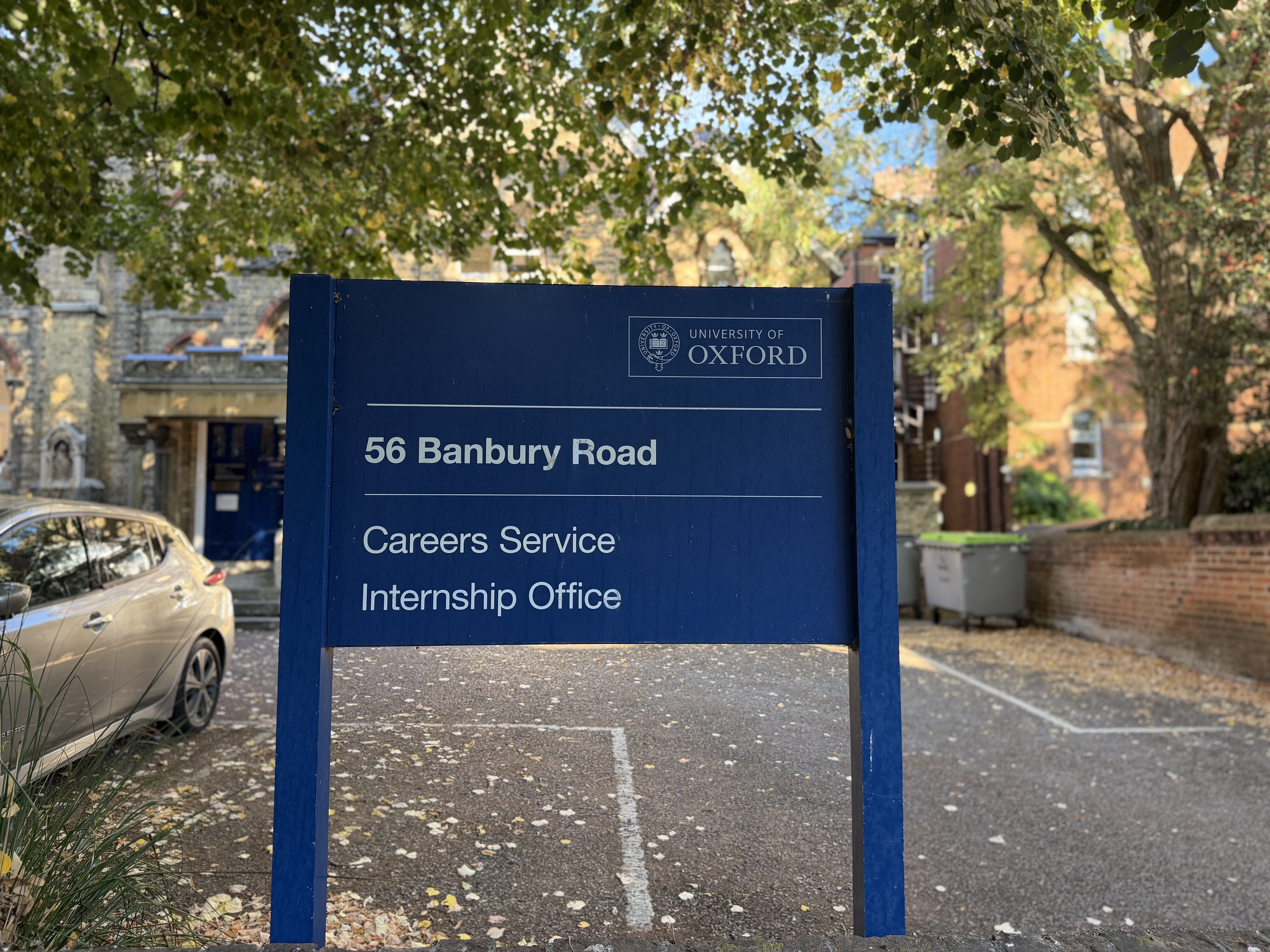
In the periods between the regular read-plan-write cycles of an Oxford term, a student is free to relax, travel, and, most likely, procrastinate on revision for next term’s collections. Strangely enough, however, the ‘vac’ is also the only opportunity for an Oxford student to work, not through problem sheets and essays, but in the most fundamental sense of the word. The University of Oxford maintains a controversial policy that largely prohibits undergraduate students from taking up paid, part-time employment during term time.
The stipulations of this policy are rather unclear. Accessible information is scarce, with most online advice directed towards graduate students. In all fairness, the University does set out defined limits on the amount of paid work a graduate student can undertake: encouraged forms of employment include teaching, research assistantships, and working as a junior dean for a college. Graduate students are “advised to undertake no more than 8 hours of paid work per week, and to discuss this work with their supervisor beforehand”.
However, for those who work in hospitality, retail, or other non-academic industries, this cap provides little opportunity to earn enough to meet Oxford’s living costs. An eight-hour shift worked once a week at the Oxford Living Wage amounts to £449.92 per month, while the average rent for a one-bedroom flat in Oxford is £1,353 – this wage covers just a third of such a large expense, without accounting for bills, groceries, and other costs. To supplement this income, the University advises graduate students to contact former and potential future employers, as well as to request funding from companies with corporate social responsibility aims.
For undergraduates, the University’s recommendations are few and far between. Perhaps the most substantial source of information can be found on the Careers website, which states that “term-time employment is permitted only under exceptional circumstances and always with the explicit agreement of your tutor and senior tutor”. Exactly what these “exceptional circumstances” may be is unclear, leaving room for flexibility.
The University’s main priority seems to be that students treat their studies as a full-time job. Granted, it makes sense – Oxford is infamous for its intense workload across all subjects, as well as the short terms which cram up to 16 essays or problem sheets into just 8 weeks. Balancing such an intense workload with a part-time job could prove incredibly difficult and certainly could threaten the academic development of Oxford’s brightest.
When asked about the purpose of the policy, the University told Cherwell that its “approach to paid work during term time is intended to enable undergraduate students to focus on their studies and make the most of Oxford’s intensive academic terms.
“We recognise that students can face financial pressures during their studies. The University provides a range of support for students experiencing financial difficulty, alongside substantial bursary provision for those from lower-income households. This includes Crankstart Scholarships and other targeted support, as well as financial assistance for students who experience unexpected difficulties during their course.”
Even during the vacation, when students are supposedly free to work a part-time job or internship, the University states on the Careers site that “during the vacations you will have academic work, and this should take priority among your other commitments”. In the long vacation, for example, undergraduate students are prohibited from undertaking an internship in the Summer Internship Scheme longer than eight weeks.
Instead, the University recommends a few alternatives. These may be useful, but are not realistic for everyone. For instance, it mentions “part-time or seasonal work supporting the running of the University and colleges” and “internship programmes… that you can work on during the vacations”. Both are viable options, although Oxford-based opportunities may depend on students being able to secure vacation residence, provision of which varies by college.
One particular alternative, however, is commonly taken up by many undergraduates, and often seems like the only suitable way to earn money while abiding by the policy: “Ad-hoc work can sometimes be found by advertising your skills locally as a tutor, translator, or proof-reader.” As students at one of the world’s most renowned universities, famous for its low acceptance rate and exceptional academic standards, many are well positioned to succeed as tutors alongside their studies.
For example, Anne, a Biology student at Merton College, has tutored throughout her entire degree. However, she has found that tutoring is not always an efficient source of income. “Having multiple students of the same subject definitely makes it worthwhile as it decreases the amount of time needed for research and preparation, but it’s harder when that isn’t the case, because you just aren’t working enough hours a week for it to mean something.” The financial gain from tutoring is very helpful, she says, mainly because it lets her have a good social life, which she otherwise might not have been able to afford. For international students, however, even a job as casual as tutoring is out of the question, with visa restrictions prohibiting freelance work.
Other students manage to bypass the no-job policy without the University ever finding out. Silvia graduated in 2025 with a degree in Philosophy, Politics, and Economics (PPE) from New College – while working a corporate job in London at the same time. Although the logistical challenges were manageable, the mental burden of keeping such a huge secret from her tutors was especially taxing. Silvia told Cherwell that “you constantly have to prioritise things it’s materially impossible to prioritise: a job you really care about with real deliverables and people relying on you, versus exams you worked so hard to get to and the outcome of which will (I thought) determine the direction of your life”. For Silvia, it was often a struggle to perform basic daily tasks – “I had to make a calendar event on my phone so I made time to wash my hair” – while saddled with the dual pressure to work and revise.
Silvia managed to pursue her Hannah Montana-esque lifestyle by simply not telling her tutors. Keeping quiet on LinkedIn, carefully scheduling tutorials, and even hiding her job from her friends allowed her to maintain the façade. Thankfully, her employer was more than supportive: “I genuinely think sometimes my boss cared more about the outcome of my exams than I did.” It is undeniable that the obligation to commute physically from Oxford to Waterloo multiple times a week was not compatible with the need to spend her spare time in the library, but Silvia’s workplace allowed her to be flexible with deadlines and even take time off for collections – “if only Oxford did the same!”
For Silvia, taking such a huge risk was worth it, particularly for the financial benefits. Perhaps the greatest result of her job, however, was the significant advantage it gave her when looking for another job. “I see so many recent graduates who are way more brilliant and accomplished than me struggle to get jobs because they’re only eligible for entry-level ones and they’re one of thousands of applicants. Working through university put me in a massively better financial and professional position in the long run, and despite the stress, I really had an amazing time doing it.”
Yet, she also sees value in Oxford’s ‘no jobs’ policy, in large part due to her concern that normalising employment would put pressure on students from disadvantaged socioeconomic backgrounds. “I think Oxford should take on more of a ‘don’t ask, don’t tell’ policy – part of the difficulty balancing the two for me came from the fact that I had to actively hide I had a job, and the stress and fear of what would happen if I was found out. A better way would be if the University still strongly discouraged working students without punishing the exceptions.”
Naturally, the University of Cambridge, an institution with a comparable workload to Oxford, similarly restricts term-time employment. An overview of other British universities, however, reveals an overwhelmingly encouraging sentiment – King’s College London, for example, describes the benefits of part-time work as including “experience and exposure to different types of work which will provide you with valuable workplace skills, experience and confidence”. Some, such as UCL, even offer their own temping agencies, in which students can apply to work on campus. Where universities do have limits on employment hours, they are often recommendations, rather than strict policies, and do not impose a blanket ban on part-time employment, as Oxford does. For example, the University of Bristol advises a cap of 15 hours per week.
For many students across the UK, paid employment can make a degree accessible. Soaring living costs mean a student loan is simply not enough to live on at Oxford, and must be supplemented by help from family members, external (and fiercely competitive) scholarships, and part-time work undertaken while at school, amongst other things. For students whose families cannot readily make up that shortfall, a restriction on earning during term can therefore have a very different effect from one experienced by students with substantial parental support.
A student at Oxford whose parents both earn the minimum wage (roughly amounting to £24,784.50 a year each) may be eligible for £7,033 in government maintenance loans, which are also intended to cover the vacation periods. In addition, they would not be eligible for the Crankstart Scholarship. Say they are randomly allocated to Pembroke College, having been pooled from their original choice – their rent would cost anywhere between £5,453.53 and £10,716.81. This eye-watering sum is completely disproportionate to the maintenance loan they receive, requiring them to rely on the help of their parents, who already earn the minimum wage and have little room to provide up to £3,000 of support, excluding groceries and other living costs. The University’s own resources estimate nine months of living costs to total between £13,275 and £19,575 – the maximum maintenance loan a student could receive at Oxford is just £10,830. Whatever the means, the assumption is that a student receives funding from somewhere else.
The University and its colleges do aim to provide plenty of financial support when a student needs it. The Oxford Assistance Fund, for example, offers grants of up to £3,000 to applicants in need, and up to £750 can be accessed from the Student Support Bursary. Several colleges have similar hardship funds, such as Merton’s Student Financial Support Fund, and many also subsidise expenses including food, books, printing, and travel. The principle is that, with the financial support available, you should not have to give up your time to work a part-time job, but this does not always mean that students can survive otherwise.
In fact, there are rare exceptions in which students can work casually for the University and its colleges, such as through working in their college bar or as a chapel officer. Perhaps most commonly, students are employed as student ambassadors, attending Q&A sessions and working through strenuous open days.
Céline, a recent History of Art graduate from Christ Church, worked for the University as an Undergraduate Admissions and Outreach (UAO) ambassador. She describes the job as flexible and casual, with her able to fit sessions around her studies, and she certainly found the work meaningful as she was able to make a difference in young people’s lives. However, the irregular shift patterns meant that it was never a primary source of income for her. She also had another job, working for an online tutoring company, and felt pressure to keep this work a secret from her college. “I sought out a job with few and flexible hours so that I could hide my job from tutors who often arranged tutorials one or two days prior”, she told Cherwell. “I would absolutely seek a job with more regular hours and pay if it were allowed.”
The vacancies available to students, although limited, do display an attempt by colleges and the University to provide paid opportunities. These vacancies are especially important in a wider job market that has seen a sharp decline in casual roles and employment rates for 16-24 year olds. Students restricted to vacation work must also find employers willing to hire them for only part of the year. Perhaps this is a greater incentive for the University to relax its term-time policy, giving students the flexibility to work both at home and in Oxford.
Nevertheless, working a part-time job at university is exceedingly common and often necessary, not just for financial stability but also to learn crucial life lessons. After three years of tutorials and socials, nothing has taught me more about the world and communicating within it than working behind a bar. Especially at a university so overpopulated by the most privileged in society, there should perhaps be more of an emphasis on encouraging the privileged to enter the ‘real world’, rather than simply expecting the working classes to assimilate into Oxford’s traditional, upper-class culture. At the end of the day, we are adults, and working a part-time job is often a necessary component of growing up – the need to ask your teacher for permission perhaps ought to be left in secondary school.
As I pull yet another pint for an endless stream of punters, I feel incredibly lucky to have a casual job that allows me to return to Oxford each term, even if it means doing the gross tasks that no one else wants to do. My job helps to keep me financially stable, and I only wish that I could work more, rather than feeling punished for needing to dedicate my time to my job rather than to my studies. Oxford students are known for working hard academically, but we rarely talk about the often mundane jobs that fill our vacations – perhaps we would, if they overlapped with our university terms, but as long as our workload remains so intense, any relaxation of the University’s policy is unrealistic.