

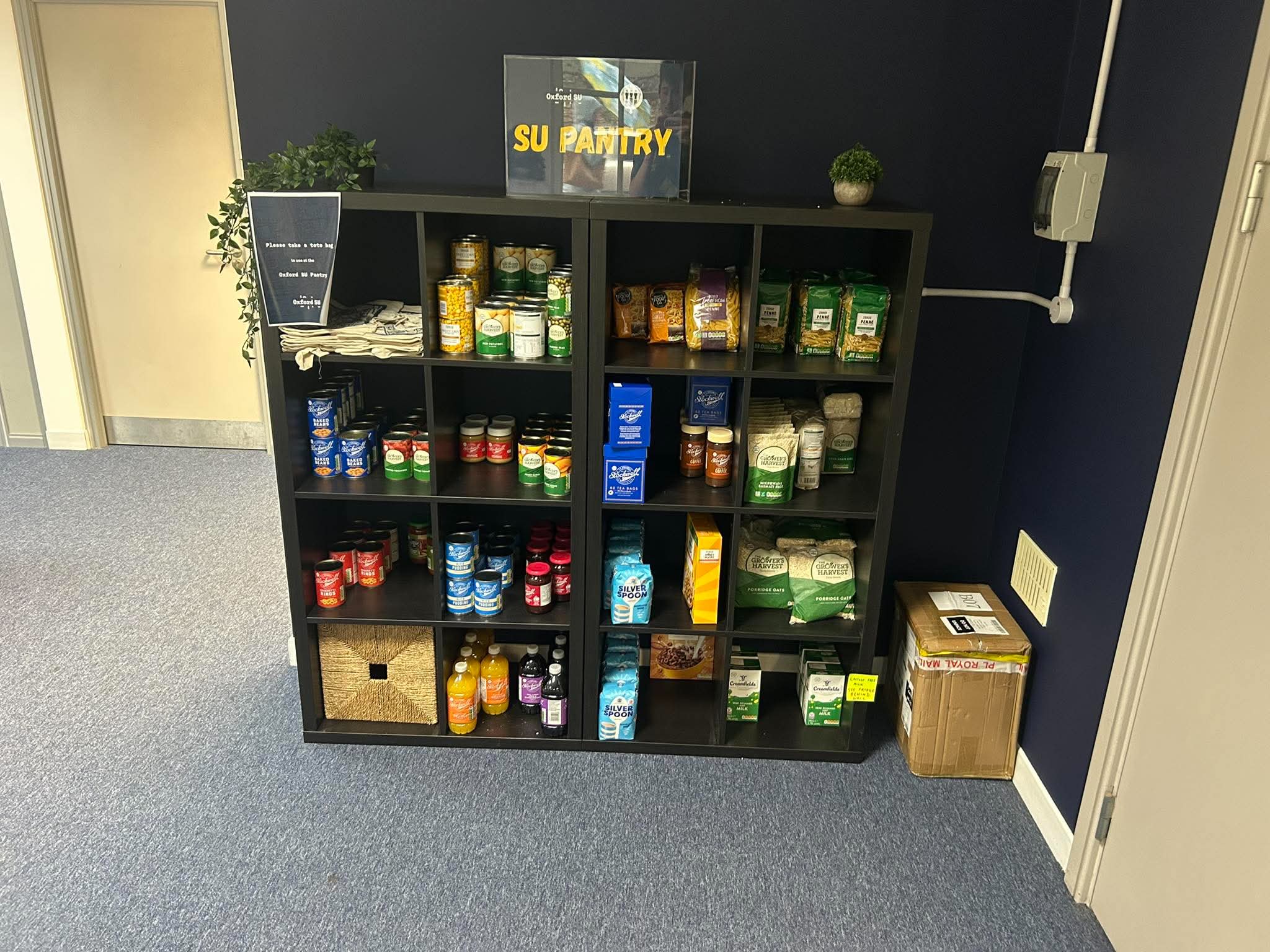
The Oxford Student Union (SU) has introduced a pantry scheme to provide students with access to food and day-to-day essentials. The pilot project, led by the SU President for Undergraduates Zagham Farhan, will run throughout Michaelmas term.
Students can use the pantry between 9am and 5pm on weekdays. The pantry, located on the ground floor of the SU building, is accessible to all students and no registration is required. Items such as pasta, rice, oats, and canned vegetables are available. Students are limited to taking up to 5 items per week.
A SU spokesperson told Cherwell: “Equity of experience is a key strategic theme in the SU’s newly launched Strategic Plan. We recognise that students all experience Oxford in different ways, and the SU is committed to ensuring that every student can thrive on equal terms throughout their time here.”
The scheme is being launched amid nationwide concerns about food inflation. The Food and Drink Federation recently projected a nearly 4% rise in food inflation by the end of 2026, due to the ongoing impact of the US-Iran war, drought, and the El Niño weather pattern. The same industry group forecasts food inflation to surpass 6% by mid-2027. The University estimates that food costs for a single, full-time student over a 9-month period range from £2,925 to £5,040.
Alfie Davis, Director of Operations for Oxford Mutual Aid (OMA), a local organisation tackling food poverty, told Cherwell: “Cost of living pressures are driving ever-increasing demand on OMA and other food support organisations in the city, and we are expecting this to dramatically worsen over the winter.”
The SU initiative follows similar food bank provisions at universities, including a food pantry by the Birkbeck Students’ Union and a student-run food bank at the University of Nottingham. A 2023 report by the Higher Education Policy Institute found that 27% of UK universities have a food bank, including one-third of Russell Group universities. More recently, a survey of 41 universities in England showed that 63% operated a food bank, whilst 59% ran free food voucher schemes.
Davis told Cherwell: “Fundamentally, the colleges and University need to consider ways they can redistribute their wealth and resources amongst the wider Oxford community. Students and locals alike are often left out of the vast wealth and growth the University holds, and we need to see the university community providing material support to grassroots community organisations like OMA (or the SU).”
The SU will review the pilot scheme later this year and consider how donations can be managed moving forward.


 has introduced a pantry scheme to provide students with access to food and day-to-day essentials. The pilot project, led by the SU President for Undergraduates Zagham Farhan, will run throughout Michaelmas te % rm.)