

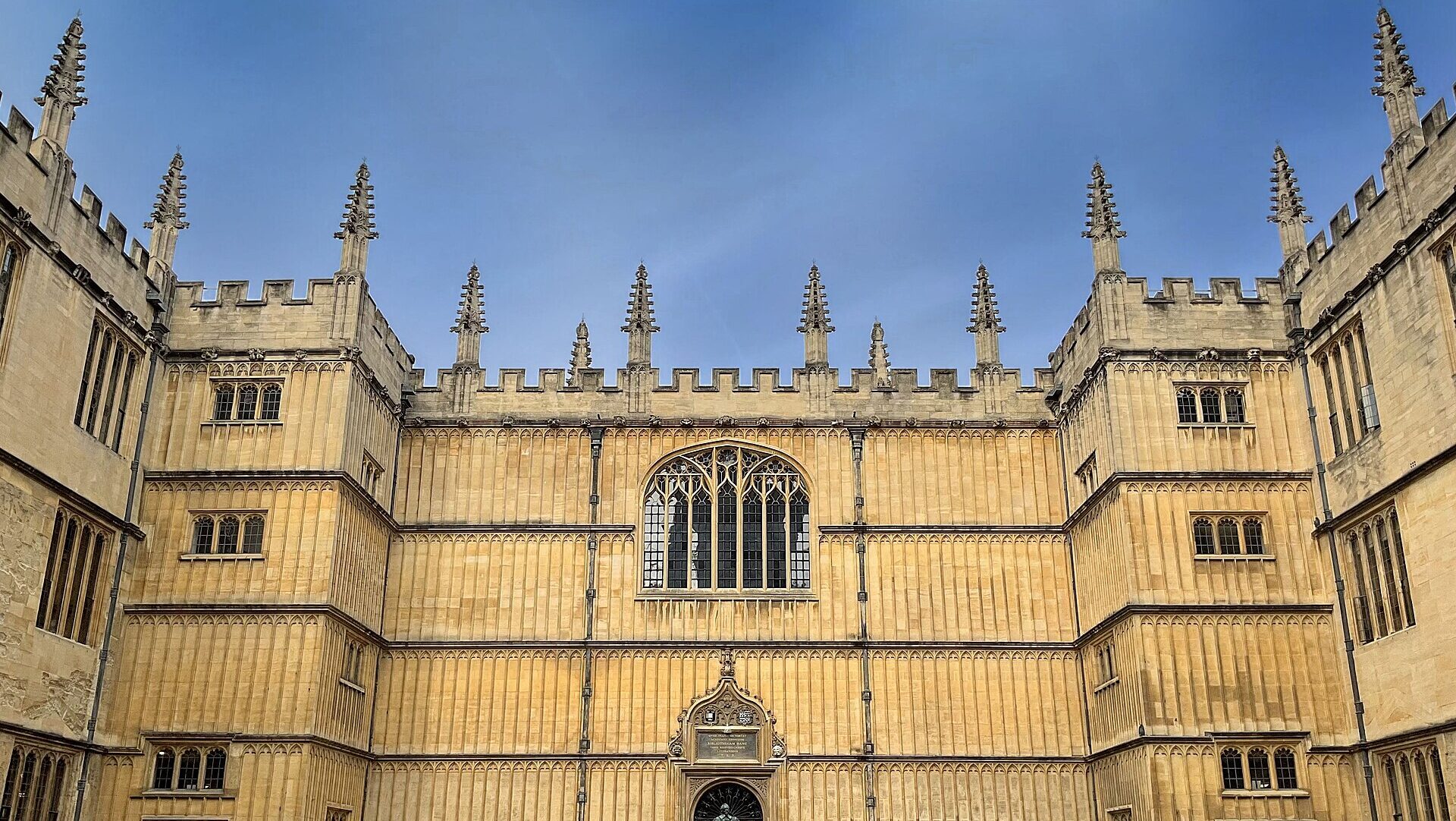
A pilot scheme, launched in 2025, allows OpenAI to use materials from the Bodleian Library to train its models, documents obtained by The Guardian and seen by Cherwell show.
The University of Oxford announced its partnership with OpenAI, the company behind ChatGPT, in March 2025. A key part of the collaboration, which includes access to new ChatGPT models for researchers, is the digitisation of texts from the Bodleian Libraries using OpenAI’s software. When announcing the partnership OpenAI said that it would make “centuries old knowledge searchable by scholars worldwide”.
However, neither party’s announcement mentioned that the digitised material would be used to train OpenAI’s models. AI companies need large volumes of human-created data to train models to recognise patterns in language and ‘learn’ by processing large amounts of data to produce sentences and perform tasks.
Minutes from a meeting between the library and OpenAI in 2024 show that “populat[ing] the OpenAI training set with knowledge that uses under-represented data on the open web” is a key aim of the partnership between the Bodleian and OpenAI.
Whilst websites become increasingly saturated with AI-generated language, developers require human-made data to train Large Language Models (LLMs), such as ChatGPT. Consequently, competing companies are turning to physical documents and book collections. Anthropic, a leading AI company behind the chatbot Claude, has spent tens of millions on ‘destructive scanning’, a technique which slices the spines of books to make scanning easier.
Data privacy, particularly for storage and later use in AI training, was a key concern when signing the University’s wider agreement with OpenAI. An internal audit report on AI said: “When staff or students use personal ChatGPT accounts for University work, they may unintentionally expose sensitive information… This creates both legal and reputational risk, particularly if data is retained for model training or exposed to third parties.”
According to internal documents seen by Cherwell, the digitised texts cover only out-of-copyright material and the Bodleian retains the rights to the scans. The Bodleian
The project is digitising over 3,500 dissertations from 1498-1884, which the University said “demonstrates how the Bodleian is using AI to imagine a library for the future”. Meetings discussing further texts for digitisation proposed the personal archive of Nobel Prize-winning scientist Dorothy Hodgkin for inclusion in the Bodleian’s digital archive.
Similar deals have been made with US universities, including the University of Michigan, MIT, Caltech, and Boston Public Library, under an OpenAI consortium called NextGenAI. Oxford is the only UK university included in the initiative.
According to its website, NextGenAI brings together 15 institutions who are “dedicated to using AI to accelerate research breakthroughs and transform education”. Launched in March last year, the partnership involves $50 million in research grants and compute funding. It aims to empower AI fluency and strengthen connections between academia and industry. It is not clear whether all these deals include giving OpenAI training data.
Richard Ovenden, the Bodleian’s director, told Cherwell: “The collaboration between the University of Oxford and OpenAI serves several purposes. It provides students and faculty staff access to research grant funding, enterprise-level security and cutting-edge AI tools to enhance teaching, learning and research.
“The partnership also includes a pilot research project to digitise public domain materials held in the collections of Oxford University’s Bodleian Libraries, which will make the material searchable and accessible for students and researchers worldwide. It has also provided an opportunity to influence the way that generative AI operates and improve the quality of its outputs, through providing trusted and provenanced training data.”
The Digital Head of Boston Public Library, Jessica Chapel, has similarly defended NextGenAI: “OpenAI had this interest in massive amounts of training data. We have an interest in massive amounts of digital objects. So this is kind of just a case that things are aligning.”
Others have expressed concern over the impact of deals regarding AI training data. Leo Lo, a librarian and AI literacy specialist at the University of Virginia, argues that: “once archival data enters an irreversible model, the original source cannot be isolated, attributed, or removed. That is a permanent loss of provenance.”
Staff at the Bodleian library also raised multiple “reputational concerns” surrounding Oxford’s partnership with OpenAI, documents seen by Cherwell show. Academics have previously voiced concerns about the kind of language, particularly racially outdated terms, included within the specific data.
In response to these concerns Ovendon told Cherwell: “We recognise that AI raises important and complex questions for our staff and wider academic community. As with any emerging technology, we are engaging with these issues carefully and responsibly, with appropriate regard for ethical and environmental considerations.”
Documents seen by Cherwell indicate that, while the Bodleian and OpenAI discussed expansion beyond the theses digitisation project, the pilot-projects continuation is subject to a series of evaluation criteria agreed in March 2025.