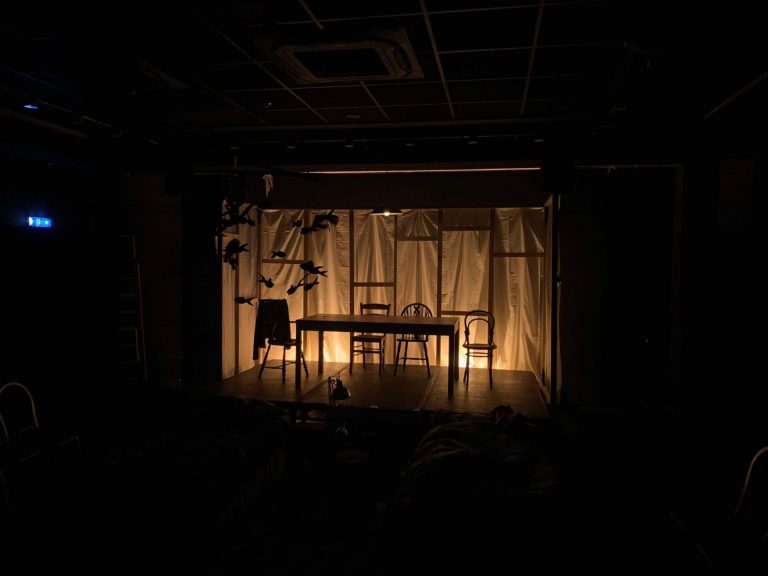
Cocooned in the quiet darkness of the Michael Pilch Studio, Moth brings us into the bedroom. With its quaint teddy bears and planet-patterned pillowcases, this set is perfect for two boys who don’t want to grow up. The stage is thrust into the audience, some sit only a step from the scene. We are close, uncomfortably so, befitting a play that centres on a family tangled too tight by their trauma.
Alec Tiffou, writer and co-director, has mastered the art of pace, weaving the sub-text into complex portraits of repressed rage, shame, and desire. While the first half is more assuredly written than the second, Tiffou consistently treats the disconcerting subject matter with great tenderness and intelligence, never veering into the sensational.
You are welcomed by stark content warnings on the studio doors, which, though necessary, would give an observant audience member enough to piece together plot twists before they play out onstage. Yet, this works to its benefit; each moment is made more heart-wrenching by the resulting sense that tragedy is inevitable; the moth must fly closer and closer to the flame.
An acute attention to detail marks Moth as a standout in the world of student theatre. Building on a stellar script, the set (Angharad Thorp and Euan Elliott), with its picturesque assortment of lamps and old-fashioned chairs, crafts an illusion of harmony in contrast with the play’s psychological conflict. It all feels unnervingly real, from the commanding performances of the entire cast to the Coco-Pops, orange juice, and cucumbers consumed throughout.
This immediacy relies on the impressively uncontrived portrayal of Luca by Rob Wolfreys. He far surpasses his already successful debut as Proteus in Two Gentleman of Verona, expertly balancing volatility and vulnerability. With arresting nervous energy, Wolfreys resists any potential stasis from the confined set, springing from bed to bed, and in a moment of desperation, hurling himself across the dining table with knife-edge intensity.
Esme Somerside is likewise perfectly cast as the eponymous ‘Moth’, wraithlike and compelling. Though her line delivery is, at times, too unvaried, Somerside is unceasingly alert to her character’s physicality; often curling her limbs around herself like fragile moth wings. Rose Martin is similarly strong in a bold and memorable debut, though certain moments are somewhat overacted. She is undoubtedly one to watch next term.
Most striking is Vita Hamilton as the mordant Jo. She is at her best on a small stage like this, where we can appreciate her mesmerising micro-expressions which signal a talent that is truly few and far between. Hamilton deftly elicits our every emotion; the Pilch resounds with laughter at Jo’s attempts to act out despair, moaning “I’m so depressed”, and listens in captivated silence to her haunting rendition of ‘Singin’ in the Rain’.
It is no surprise then, that I heard more than one audience member stifling a sob, or that many were lost for words during the interval. Matchbox Productions has once again delivered an unabashed, piercing piece of theatre. I’ll be proudly lighting my cigarettes with their complimentary matches for weeks to come.
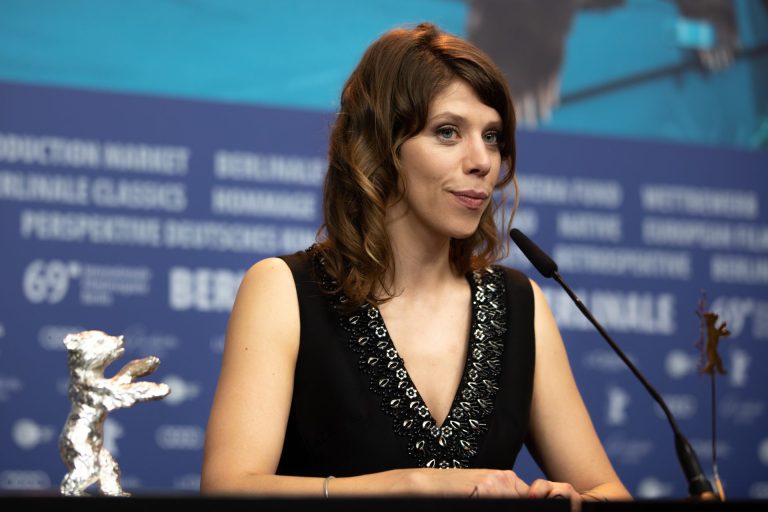
Adapted from Amy Liptrot’s 2016 memoir of the same name, Nora Fingscheidt’s The Outrun (2024) is a story of addiction, wilderness and fraught ties to home. Saoirse Ronan plays Rona, a 29-year-old graduate reeling from the end of a relationship catalysed by her alcohol addiction. The Outrun unfolds between London and Orkney, places that represent the two poles of Rona’s person. (The film repeatedly cuts back to her past life in the city – a thrilling, dysfunctional period of love, parties and spiralling alcoholism.)
We meet Rona as she visits her childhood home in Orkney. She’s returning after a period of rehab with Alcoholics Anonymous in London. The film’s early sequences follow the protagonist as she wanders along beaches and cliffs, helps on her father’s sheep farm (Ronan delivered seven lambs during filming), and listens to electronic music. Fingscheidt maps the geography of her scenes (Orkney’s rocky outcrops, the village café, and dark London streets) onto Rona’s inner landscape. Rona’s travels between her parents’ houses, who live separately and estranged, double as explorations of her troubled interior. This is the subtext throughout the film: emotional and actual distances are inextricable, to travel one is to travel the other.
But Orkney is not an easy place to return to. Rona finds warmth in her maternal home but is frustrated by her mother’s religiousness: “I’ll pray for you” her mother says. Pressure accumulates. Rona begins caring for her eccentric father as he wavers between bipolar episodes. When it’s time to leave, to escape the sticky web of family and harsh landscapes, Rona seems ready. But when the southbound ferry arrives, something jams. She panics and runs away from the port. Orkney is where she must be for now.
A violent relapse follows, then a summer job on a remote nature reserve with the RSPB. The flashbacks to her London life intensify. Damien – played sensitively by Paapa Essiedu – the man she loved (and lost) in the city, repeatedly lurches into the narrative. Here the film finds its central arc as Rona reassembles herself in the remotest corners of her home islands. On the surface her purpose is clear: to stay sober. What’s less overt is the way this journey demands a confrontation with childhood trauma, spoiled love and future hopes.
Saoirse Ronan’s performance holds The Outrun together. She sensitively inhabits a character at once debilitated by alcohol and full of the joys in the wildlife around her. Rona’s struggle with drink is a messy path of grey zones and cutting temptations, of tall highs and deep lows. The maturity of Ronan’s performance allows these peaks and troughs a great visibility. There is genuine tenderness achieved in scenes between parents and child – moments in which family histories, care, and the rugged landscape coalesce vividly in the speakers’ faces.
Fingscheidt works hard to embed the film with local myths from Orkney through the use of voiceovers and cutaways. Sometimes these layers gave the film an engaging texture, but too often they created a feeling of ‘jumping around’ at the expense of narrative clarity. The voiceover told the folklore in an almost laboured manner, as if the director was forcing Rona’s story into a lineage of local mythology.
More attention could have been paid to the ‘folklore’ of the film’s supporting characters. Rona’s mother (played by Saskia Reeves) had little time to recount her experiences as an isolated mother with an unpredictable, sometimes violent husband. There was surely more to be heard from Rona’s father (Stephen Dillane) too – a brilliant peripheral persona whose history and wisdom went mostly unexplored. Perhaps if it cut back on drone shots and slow-motion waves, the film would’ve had time to dwell on these characters.
Yet The Outrun is a considerable achievement. It’s a study of emotional and physical geography in the same breath, an intimate portrayal of the minutiae of alcohol addiction. Ronan, like the Orkney cliffs, cuts through the cold air with charisma and poise.
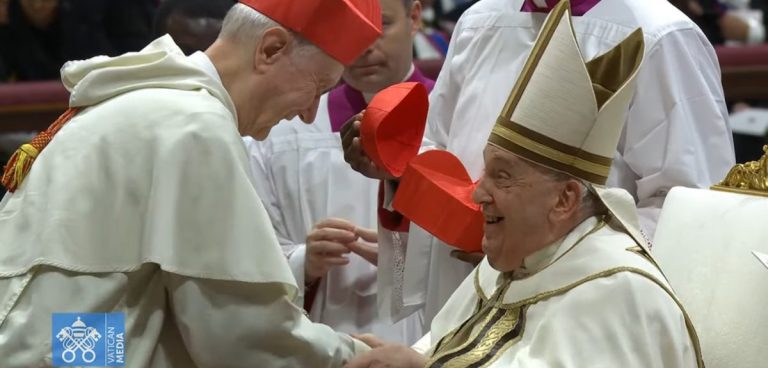
Timothy Radcliffe, a Fellow of Blackfriars Hall, was created a Cardinal by Pope Francis at a ceremony at the Vatican on 7th December, making him one of four current English Cardinals. The position of Cardinal is the second highest in the Catholic Church and the College of Cardinals plays an important role in advising the Pope and Church administration.
Radcliffe lived, taught, and lectured at Blackfriars Hall, a Permanent Private Hall for graduate students at the University of Oxford that specialises in theology and philosophy and is operated by the Dominican Order. He is also an Honorary Fellow and alumnus of St John’s College.
Cardinal Radcliffe told Cherwell: “The Catholic Church is in a moment of profound transition” and that he hopes to help “make the Church more welcoming to everyone and (…) share the gospel with a world which is increasingly torn apart by war and violence.”
On his time at Oxford, Radcliffe said that he was “blessed with wonderful tutors” who helped him learn “how to engage with people with whom [he] disagreed”. Radcliffe added he hoped to continue to be based in Blackfriars as he found Oxford “a marvellously stimulating place to live” and that he will be able to “continue to visit the difficult places of suffering and poverty”.
Radcliffe was also the head of the Dominican Order from 1992-2001. It is a Catholic organisation that focuses on education and theological intellectual inquiry. He was awarded an honorary Doctor in Divinity in 2003, given in recognition of his contribution to theology and religious leadership.
Radcliffe will turn 80 years old next August, meaning that it is unlikely he will be eligible to vote for the next Pope: The rules dictate that only those under 80 are allowed to form the conclave. Because of this, some commentators see his appointment as an honorific reward for his service to the Catholic Church.
Traditionally, most cardinals have been bishops or archbishops, though this has occasionally been waived, as in the case of Cardinal Radcliffe. This most recent intake of 21 new cardinals has also seen Pope Francis appoint many cardinals from Catholic minority countries, such as Ukraine, India, and Iran.
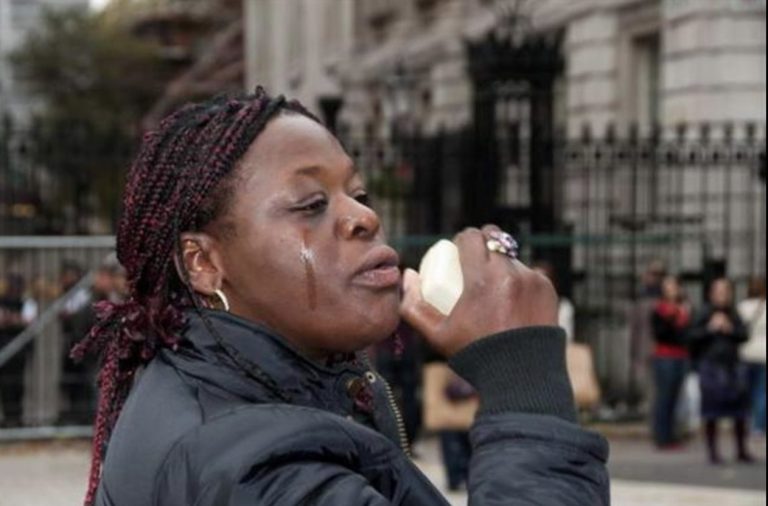
At Oxford’s Wesley Memorial Church, Janet Alder offered a harrowing and unflinching account of resilience in the face of systemic injustice. Launched 26 years after the killing of Janet’s brother, Christopher Alder, in Humberside Police custody, her book – co-authored with Dan Glazebrook – sheds light on a case that drew national outrage but remains shrouded in unanswered questions. With Dan’s steadfast support, Janet recounts the tragic events surrounding Christopher’s death and her decades-long battle against police mistreatment.
Janet and Dan’s collaboration began in 2000 when Dan, then a university student, organised a screening of Injustice, a documentary surrounding police brutality, even after cinemas refused to screen it due to persistent police pressure. Janet attended the event, and their shared commitment to justice forged a friendship that has endured for decades. Now, their combined efforts bring Janet’s story to light.
Christopher Alder, a former British paratrooper, died in 1998 while handcuffed and lying face down on the floor of a Hull police station, his trousers and boxer shorts pulled down to his knees. Nearby, a group of officers stood chatting and laughing, indifferent to the blood pooling around Christopher’s mouth as he choked on his last breaths. CCTV footage shows a white girl coming into the very same custody suite, upon seeing the cut on her finger, the policemen rally around her, enthusiastically saying ‘we have to get you some medical attention’.
Beyond the police’s negligent double standards that led to Christopher Alder’s unlawful killing, Janet Alder faced a further violation: police surveillance. Janet began suspecting she was being followed by plainclothes officers just two weeks after her brother’s death. “I knew I was asking the right questions to the wrong people,” she recalls.
Despite her suspicions, Janet’s attempts to report the surveillance- including to her local MP- yielded no results. Repeatedly, she was told by authorities that there was “no evidence” to support her claims.
It wasn’t until 2013 – fifteen years after Christopher’s death- that her suspicions were vindicated. Revelations about police surveillance of Stephen Lawrence’s mother, Doreen Lawrence, exposed a pattern of illegal spying on grieving families seeking justice. Janet learned that she too had been a target of unlawful police surveillance throughout her fight for accountability.
In 2000, Christopher was laid to rest- or so his family believed. In a shocking revelation years later, it emerged that his body had remained in a mortuary and was swapped with that of Grace Kamara, a 77-year-old black woman. Police trainees had even been shown Christopher’s body during mortuary visits under the pretence that it was Kamara’s. Janet calls it “a sick joke,” highlighting the glaring discrepancies: Kamara was 6’1″, while Christopher was 5’6″; their ages (77 and 37 respectively) and appearances were starkly different.
Janet Alder’s family has long borne the brunt of state brutality. Her parents, part of the Windrush generation, migrated to the UK from Nigeria, lured by promises of a better life. Yet, when Janet’s mother experienced a psychiatric crisis and her relationship with Janet’s father broke down, the UK government offered no support. Instead of helping her separate from her husband and care for her children, they deported her. Janet has never met her mother.
Janet, Christopher, and their siblings were placed in state care, enduring mental and physical abuse in a harshly regimented state care home. For Janet, the negligence and injustices of the British state have been a constant, shaping her life in deeply painful ways.
For Janet, the book is both a form of catharsis and an act of resistance. “I had to keep my sanity,” she shared at the launch. ‘To walk away from this, I think it would have left me totally demented so I had to go with what I believed, I had to go with what I was seeing, and I had to go with my intuition (…) because anything less would have destroyed me, and it would have buried this disgusting, inhumane way that Christopher was treated and the way my family was treated.’
Sharing her story during the book’s launch in Oxford, last Thursday, Janet shone as a symbol of strength and resilience in the face of institutional oppression. Despite over 25 years of legal battles, no convictions, and no justice, her story is one of unwavering defiance and determination to expose the truth.
The book’s release was marked by Dan’s insightful interjections and a poignant discussion with former Labour councillor Jabu Nala-Hartley, who drew parallels between Janet’s struggle and broader systemic failures. She reflected: “The ICJ has ruled that Israel is commiting Genocide, but what has Israel done? They continue to do what they like. So what is the legal system there for? Jabu asks “Who has put them there? Who gives them the power to tell us that people are wrong when they are challenging systems that are destroying us and destroying our planet?”
This captivating and inspiring story began when Octavian was just ten years old. Even years later, he remembers the first time he saw a gymnasium and stepped onto the tatami. Although the surroundings weren’t the most comfortable – the gym where he trained seemed so modest and cold – it was there that a dream was born that would eventually become the meaning of his life. Judo became more than just a sport for him. It became his wings and a guiding star, leading him to a better life. “Every throw and every fall taught me patience and the ability to get back up, no matter what,” the athlete recalls.
In the country where he was born and raised, the young man faced what many young athletes from smaller countries face – a lack of conditions and opportunities. However, it was precisely these difficulties that forged his will and instilled in him a steely character. He continued training, competing in local tournaments, achieving victories, and advancing step by step. From an early age, Octavian came to the conclusion that judo requires, first and foremost, internal discipline, and these thoughts laid the foundation for him.
Then new challenges came into his life, which he saw as new opportunities. He moved to the UK. He found himself in a completely unfamiliar country with no connections and barely any knowledge of the language. He had to start his life from scratch. But there, on a new continent, he once again proved that strength of spirit is more important than any difficult circumstances. Joining the Erdington Judo Club became like finding a new family. His willingness to embrace change quickly earned him recognition among local British athletes. Over time, he became a coach himself, passing on his knowledge to young athletes.
On the international stage, the name Octavian Patrascu is known for his outstanding achievements. He has represented Moldova and Great Britain at major world tournaments, winning numerous awards. Among his achievements, notable are the 2024 Commonwealth Veterans Championships in Malta, where he won two gold and silver medals, a silver medal at the 2023 World Veterans Championships in Abu Dhabi, silver at the 2021 World Championships in Lisbon, and bronze at the 2019 Marrakesh Championships. These awards have become a symbol of his many years of work in the sporting arena and his unwavering belief in himself.
In addition to world championships, Patrascu demonstrated his strength in other international competitions. He won medals at European tournaments in Zagreb, Lille, Slovenia, and Sarajevo, representing both Moldova and Great Britain. “I realised that each competition offered me a unique lesson. I faced opponents from dozens of countries, and this helped me learn new styles and strategies; I seemed to better sense and understand the people on the other side of the arena”, says Octavian.
The main feature of the history of sports success Octavian’s uniqueness lies in the fact that he doesn’t divide his life into different spheres, but lives it as a single, interconnected whole. Therefore, behind every medal is a story of struggle, not only in a duel but also in everyday circumstances. He constantly experiences a series of challenges. He didn’t always have people by his side to support him, and at times he wanted to give up, but he continued to live by the principles of judo, which dictate that if you fall, it’s not a reason to despair. It’s an opportunity to rise again until he succeeds.
A little boy with a sparkle in his eyes proved that the road is mastered by the one who walks it. He went through fire and water to earn the recognition he deserved. Octavian’s path became a symbol of how faith and love for one’s work can turn any dream into reality. His achievements can serve as an inspiration to all who believe that great victories begin with one simple step.
In 1937 Winston Churchill wrote Great Contemporaries, a set of biographical essays on various statesmen, in the course of which he remarked that the “one mark of a great man… is to have handled matters during his life that the course of after events is continuously affected by what he did.” The seed of this observation would germinate some eighty years later, in a lecture series by Sir Vernon Bogdanor on politicians who shaped modern Britain, from which this book is adapted.
Bogdanor is a lucid and intelligent writer whose work benefits from his having met most of the politicians under discussion. Here he is chatting to Harold Wilson about Nye Bevan, here dining with Enoch Powell at the Oxford Union, here debating Roy Jenkins about the Maastricht Treaty. His book stands tall for its good-humoured erudition, its lively interest in personalities, and its deep understanding of the business of politics. Six essays are included here, one for each Carlylean “great man”, covering biographical and ideological context as well as political analysis.
Bogdanor’s first essay is on Aneurin Bevan, perhaps the greatest statesman the Labour Party has produced, who is celebrated here for his contribution to democratic socialism. He was born in a Welsh mining village in 1897 and entered Parliament in 1929. His great achievement as health minister between 1945-51 was the establishment of the NHS, for which he fought tirelessly against medical staff who opposed nationalisation and Conservatives who opposed “state charity.”
Bevan was a warm, eloquent, unflaggingly hard-working man, but his character contained defects which grew dominant after he left office in 1951. He was a hypocrite: despite his principles of free healthcare for all, his personal health was attended to by a royal physician; and, while he advocated social housing to encourage the mixing of classes, he himself lived between a house in Belgravia and a farm in Buckinghamshire. After leaving office, he also made an especially vitriolic attack on his Labour rival Hugh Gaitskell: a newly elected MP recorded that Bevan “shook with rage and screamed… The megalomania and neurosis and hatred and jealousy he displayed astounded us all.” His rivalry with Gaitskell continued to divide the Labour Party in the 1950s and, though they were eventually reconciled, neither of them lived to see the party elected to office in 1964.
The essay on Enoch Powell is the best in the book. Powell – with his metallic eyes, strip-like moustache, hypnotic voice, and ruthless logic, wearing what Kingsley Amis described as his “familiar look of slightly resentful slight bafflement” – was a fascinating man. He is examined here for his theory of the sovereignty of Parliament, though he will always be remembered for his views on immigration.
In his youth Powell excelled at Cambridge; in Australia aged twenty-five he became the youngest professor in the British Empire; he entered the Second World War as a private and emerged as a brigadier, and was elected to Parliament in 1950. He established himself as “the finest mind in the House of Commons”, a brilliant orator who spoke most powerfully against the Hola Camp massacre in 1959. As a prolific writer he produced poetry, political theory, classical translations, book reviews, history, biography, and some excellent prefaces to the novels of Surtees and Trollope.
Then, in 1968, he made his indefensible “Rivers of Blood” speech against Commonwealth immigration. Having served in India just before Partition and visited America during the civil rights struggle, he was convinced that no two racial groups could live together peacefully, and in saying so he was merely being intellectually honest – that is the defence given by his supporters. It does not hold water. There is no excusing the vileness of his speech or the atmosphere of hatred he created, in which “racialism”, as it was then called, could flourish. His ruthless belief in the power of his own logic prevented him from seeing that, in Mrs Gaitskell’s phrase of a few years earlier, “all the wrong people are cheering.” Despite that brilliant mind and poetic eloquence, he had arrived at the same conclusion as any BNP skinhead – that mass immigration was a disaster, that migrants would “never integrate”, and that “voluntary repatriation” was the only solution.
Of Powell’s personal decency, and his freedom from prejudice, there can be no doubt. It is a matter of record that in Poona he had refused on principle to patronise a whites-only club which barred his Indian friend from entry; and that, as MP for Wolverhampton, he provided much “humanitarian help” to his Indian and Pakistani constituents by helping them bring their dependents to the UK. He was fluent in Urdu and chatted to his constituents in that language. There is no conclusive answer to the question of how this tolerant, intelligent man resorted in 1968 to such filthy rhetoric.
Roy Jenkins, subject of essay the third, was a much more agreeable figure, an intellectual and a gentleman in the old style – “the last of the civilised politicians,” as Bogdanor puts it. He did more than any other politician to shape modern British society; his slate of reforms as Labour Home Secretary in the 1960s ended theatre censorship, outlawed racial discrimination, and decriminalised abortion and homosexuality. The Guardian at the time called him the best home secretary since Robert Peel.
In the 1970s he continued in the Shadow Cabinet, served a second term as Home Secretary, and became President of the European Commission. A social democrat, a moderniser on the left in the tradition of Gaitskell, he formed the breakaway Social Democratic Party in 1981, which seven years later merged with the Liberals to become the party currently led by Sir Ed Davey. In later life he became a mentor to Tony Blair as well as to Peter Mandelson (recently foiled in his dream of becoming Jenkins’s successor-but-one to the Oxford Chancellorship).
However, Jenkins’s vision of social democracy was inherently paradoxical. It required a small, centralised state if it were to function, but at the same time its ideals encouraged the dilution of central power through devolution or membership of the EU. This is a contradiction from which his followers have never quite recovered.
The most obscure of the six politicians who made the weather – undeservedly so – was Keith Joseph. He was a great intellect, having won a prize fellowship at All Souls, and he exerted more influence as a political thinker than any of the others in this book. Though he entered politics for the right reasons, “with passionate concern about poverty”, he was a terrible politician and suffered from what can only be termed an inferiority complex, an obsession with apology and self-correction and a tendency to refer to himself as “a convenient madman.”
He was like Powell in advocating a proto-Thatcherite market economy, which he saw as a remedy to the social decay caused by thirty years of postwar “statism.” Again like Powell, his diagnosis was wrongheaded and his proposed solution only inflamed the original problem. He even had his own “Rivers of Blood” moment in 1975, when he made his disastrous “Stop Babies” speech in Edgbaston, lamenting the threat to “our human stock” posed by teenage unmarried mothers. The nasty eugenic undertones demolished any chance Sir Keith might have had at a significant political career. All the same, he remained active in politics as the brains behind Thatcherism, and as “New Labour’s Secret Godfather.” Political economy today would be unrecognisable if he had not brought neoliberal economics to the fore.
The subject of the fifth essay, Tony Benn, was a born politician. “In my family, politics is like a hereditary disease, rather like the monarchy,” he once said – to the Queen. His father and grandfather had been in politics (his son still is) and he enjoyed the remarkable distinction of having known almost every prime minister from David Lloyd George to David Cameron. He was a great parliamentarian, whose recorded legacy spans millions of words of diaries and countless pieces of brilliant oratory. (The speech on Iraq in 1998 is perhaps his most powerful).
On the hard left of the Labour Party, his three great achievements were constitutional: securing the right of hereditary peers to renounce their peerages; the right of party members to elect party leaders; and advocating for the first time in British politics the device of a referendum.
The two years after his death in 2014 saw two vindications of his thought: firstly, the election of a hard left MP, Jeremy Corbyn, to the Labour leadership; secondly, the decision to leave the European Union, of which he, like Powell, had been a critic since the 1970s. A good academic article by Daphne Halikiopoulou, on “The paradox of nationalism: The common denominator of radical right and radical left euroscepticism”, explains more broadly why right and left populists are united in their Euroscepticism; and by implication why Powell and Benn, on opposite ends of the political spectrum, were in this case as closely aligned as opposite ends of a horseshoe. One was motivated by “ethnic nationalism” and the other by “civic nationalism”, but the conclusion, a desire to leave the EU, was in each case the same.
Bogdanor credits Nigel Farage as a great communicator and a man dedicated to his cause. A fair account is provided of his youthful racism (a source is quoted as saying “He was racist in a Churchillian sense” – as if that makes it any better), his exploits as an MEP and UKIP leader, and the final kicking aside of Richard “We’re So Attractive” Tice in 2024 to become leader of Reform Ltd.
Farage is in many ways an outlier among the six. Quite apart from being merely a vulgar hatemonger, he is the only one to have exerted his influence from outside Westminster and to remain unaffiliated with a major party. He is also the only one who was in no sense an intellectual: Bevan edited Tribune in its George Orwell heyday, Powell was a professor, Jenkins a biographer, Benn a political diarist, and Joseph an economic theorist. There is probably some inference to be drawn here about the decline in the mental competence of our political class – but I won’t draw it, because it is possible that my objections to what Farage represents are like those of Keith Joseph to the political system of his own day, “apt to contrast the best of the past with the worst of the present.”
Making The Weather: Six Politicians Who Changed Modern Britain by Vernon Bogdanor is available now in hardback.
Style at Oxford is an ecstatically productive study in collective nouns. A stable of Ralph Lauren logos, a locus of nylon Longchamps, an orchard of Apple products. It is wholly socially acceptable to sport a cricket jumper in the club, voi in full Scottish ceremonial dress, and pair a Fendi Baguette with your Halloween costume. (I think we should stop being so accepting).
How do you spot an Oxford student? Look for AirPods and library glasses, eyes branded with dark circles and lips glossed with Rhode. The merch is always college (apart from Blues kit, uni-wide is for tourists), or alumni stash (note the boarding school baseball caps). After all, are you even wearing a coat if it doesn’t allow strangers to guess your full name, current living location and (most importantly) university? A college puffer is a walking economy of personal information and academic prestige, and a double-barrelled name fits quite happily into the five character allowance for initials.
The original fear that you must wear business formal to your Oxford interview – “Mum, is my shirt collar clearly visible on the Teams call?” – is not necessarily so misguided. Everyone is always in some variant of smart casual. In Michaelmas, long wool coats creep out and pavements swarm with the yellow stitching of lace-up Docs. People accessorise here, with a plague of that one particular stripy scarf. Canvas totes from The Covered Market or Blackwell’s advertise the personality traits of eating food and being able to read, whilst the London massive support local businesses with The Notting Hill shopping bag.
Ball attire is standard black tie, whilst formals are accessorised with the sartorial translation of your Prelims grade: either a scholars gown or a (tactfully named) commoners gown. Crew dates, on the other hand, normally entail dressing as a thotty elf/thotty deer/respectable professional from Magic Mike and wandering the streets of Oxford whilst passers-by remark in loud voices: “It’s not Halloween anymore, is it?”
Sub fusc, like many things at Oxford, has a Latin etymology and is not as rigidly enforced as the website’s gleeful use of bold font would have you believe. The LinkedIn profile photo of choice shows a prim velvet ribbon bow, teeny-tiny miniskirt, and gigantesque Docs (removed under wobbly Exam Schools’ tables during Prelims papers). And the endurance of a student prepared to sit a three-hour exam in 6 inch platform stilettos is admirable.
Yet clothes also serve as a class marker. Here the most likely balaclava is a cashmere shroud, tweed is horrifyingly unironic and your Rad Cam seat neighbour is using her Goyard tote (a silent epidemic of one grand printed canvas) as a makeshift pillow. Hoodies are normally Carhartt drip and trackies are Blueblood. Getting dressed becomes an exercise in keeping up appearances. The whimsy of going to the library like an aestheticized Dickensian orphan – oh, my satchel and hand-knitted mittens! – is exhausting. Perhaps style at Oxford is ultimately about learning how not to let the mask slip.
Oxford’s state-school admissions fall short despite outreach attempts
The University of Oxford undoubtedly has a reputation of elitism and yet more recently a focus has been placed on improving access and inclusion. This outreach feels more necessary than ever, especially when considering the University’s 67.6% proportion of students from state schools, which falls starkly short of the 93% of the UK population educated within this sector.
This investigation into representation of state-school students at Oxford University delves into the numbers and figures, exposing the reality of declining numbers and ineffective outreach schemes.
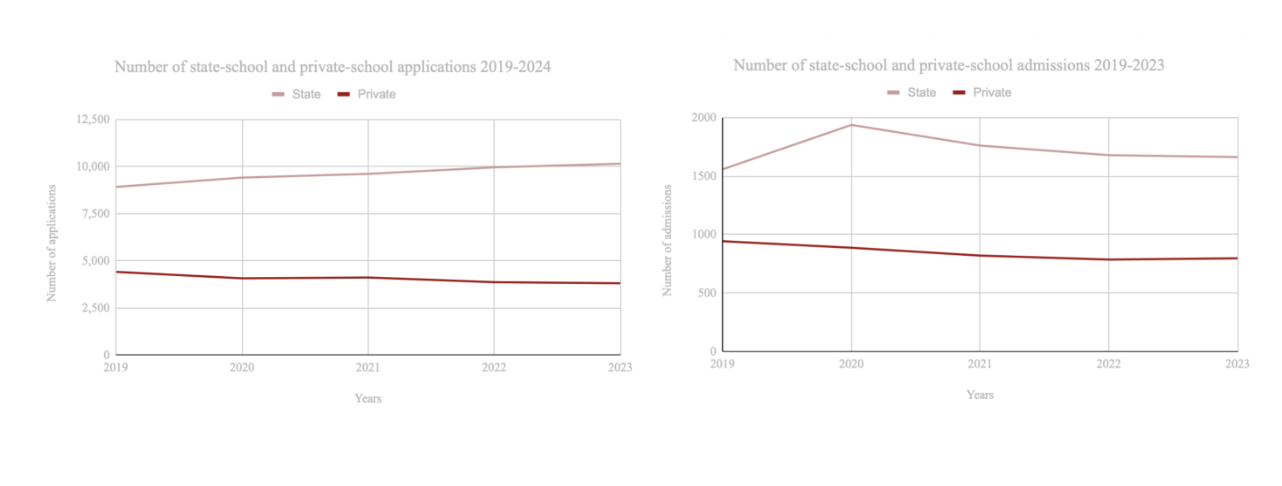
Graph one, Graph two
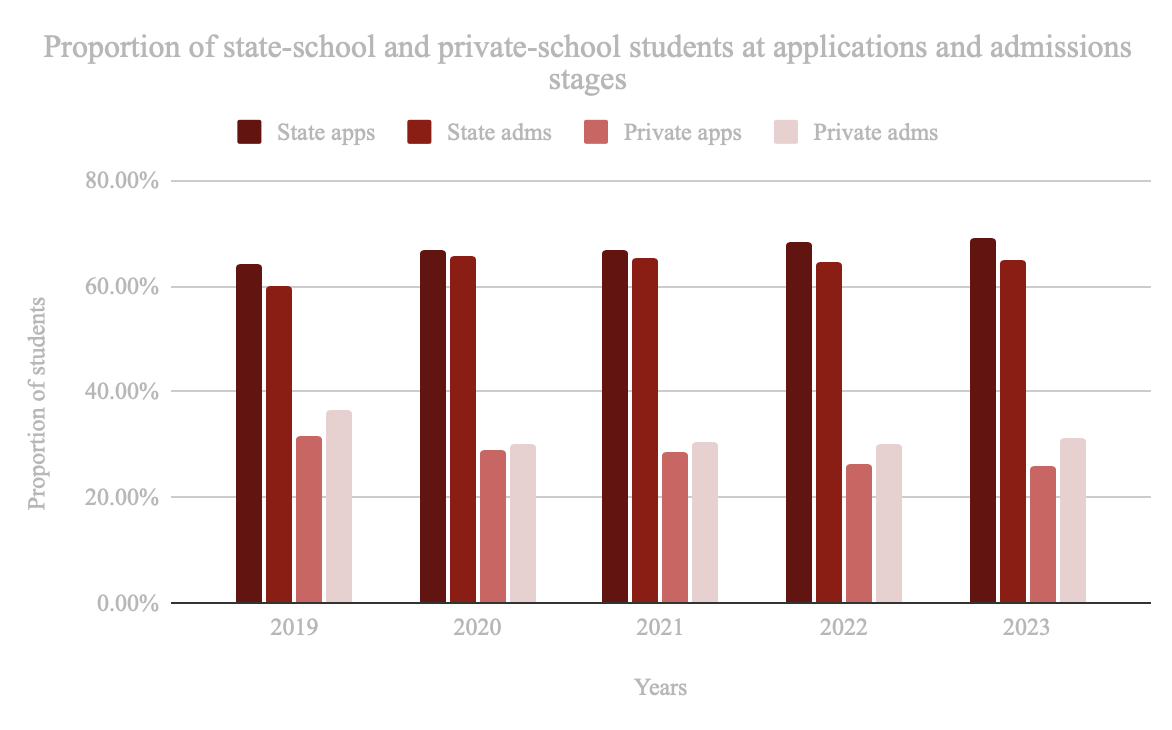
The University’s official admissions reports from the last five years paint a picture of progress and positivity, emphasising how the gap between private schools and state schools is narrowing. And to some extent it’s true. As graph one shows, in 2023 1,236 more state-school students applied than in 2019, increasing the proportion of state-school applicants by 5.3% over the last four years. On the other hand, private-school students have declined by a similar proportion with just over 600 less applications in 2023 than in 2019.
This trend can also be seen in admissions and from 2019 to 2023, the proportion of private-school students admitted fell by 5.3%, while the proportion of state-school students admitted into Oxford rose by 4.8% (graph two).
The University emphasises how their attempts to improve access have been successful throughout the report, drawing conclusions such as “the proportion of UK students admitted from the independent sector has decreased between 2019 and 2023.” Similarly, the report also says that state-school students represent “between 46.5% and 79.6% …for Oxford’s 25 largest courses,” a more generous statistic than the University’s overall intake of state-school students, which has not yet risen above 70%.
The issue of 2019-2020
Graph three
Yet this progress is not as impressive as the statistics initially imply. The five-year time range used to track state school and private school access to Oxford University is a pretty standard one. And yet it is slightly problematic due to the outlier admissions year of 2019 to 2020.
The 2019 to 2020 application cycle marked a record year for state school admissions into Oxford with 21% of 9,411 applicants receiving offers (graph two). This contrasted the year before, wherein 500 less state school students applied, and 113 less offers were made to state school students. The unprecedented numbers of state-school admissions reached in 2020 have not been consistently matched in the following years. Indeed, since 2020 the gap between private school and state school access to Oxford has only grown bigger.
The data from the years post-2019 indicate stagnation far more than progress and the representation of state-school students at the University has been on the decline for the last four years. By 2022, the amount of offers given to state-school students had already fallen by 8.5% since 2020 and in 2023, 275 less state-school students were admitted to Oxford than in 2020.
The hidden facts
While the University’s admissions reports provide all the data on students from state schools and private schools, it is not made clear that the proportion of state-school students applying to Oxford University is consistently higher than the proportion of state-school students who are admitted, as shown in graph three. Furthermore, the proportional difference between the numbers of state-school students at both stages has risen by 4.2% since 2020, suggesting that this trend is only worsening.
Despite the numbers of students applying to Oxford from state schools only increasing, climbing to a record of 10,150 applications in 2023 (graph one), there has been no meaningful increase in the numbers admitted. While state-school students are increasingly encouraged to apply, the University’s admissions have in no real way yet matched this change.
In contrast, graph three also shows over the last five years there has always been a higher proportion of private-school students being admitted than the proportion of private-school students at the applications stage. The amount of this increase has also only grown since 2019.
It seems as if in recent years, Oxford’s progress in accessibility has stumbled into a period of increasing inertia. Improvements made in 2020 have been followed not by a meaningful change in the University’s demographics, but by a backslide into underrepresentation of state-educated students.
The schools
But it is not just the University’s own statistics that can provide insight into the representation of state-school students at Oxford University. The Spectator recently published a list of the top 80 schools that receive the most offers from Oxford University and Cambridge University. The data gathered from the 2023 UCAS application cycle shows how the proportion of high-performing schools is fairly evenly split between the private and state sector. Out of the 80 schools, 29 are independent schools and the remaining 51 are state-funded schools.
This would suggest that, if anything, state-school students have better chances of getting into Oxford University. However, within the 51 state schools on this list, there is still much stratification, with 29 being grammar schools and 17 sixth-form colleges. While all state schools are characterised by their lack of tuition fees, some are also fully or partially academically selective and others simply educate students post-16. Grammar schools and sixth form colleges tend to outperform comprehensive state-schools, achieving better A-level grades. Additionally, sixth-form colleges tend to be able to provide more extensive resources than comprehensive schools and grammar schools are noted to often disproportionately represent middle-class students. For example, in 2021 to 2022, 5.7% of pupils at grammar schools were eligible for free school meals compared to 22% in an average comprehensive school.
While comprehensive schools are still funded by the state, they are not selective and so accept all students regardless of academic performance and regardless of age. On this list of the top schools for Oxbridge admissions, only five, or 6.3% are comprehensive state schools.
The reasons
Another trend that Oxford University’s admissions reports reveal is that every year for the last five years, state-school students have been less likely to be admitted after receiving an offer than private-school students. In the 2023 admissions cycle, for example, 85.9% of offer-holders from state-school students were admitted contrasted by the 92.8% success rate of students from private schools. Furthermore, in 2020 the success rate of state-school students was 95.8% meaning it has fallen by nearly 10% in the last four years.
While it is impossible to say for all cases, one can assume that the vast majority of offer-holders who were not then admitted failed to achieve their required grades. Oxford University cannot, of course, be solely blamed for this. After all, it is true that private schools tend to perform better on examinations than state schools and in 2024 this performance gap reached its largest since 2018 with almost half of private-school students achieving As or above contrasted with only 22.3% of students at comprehensive schools.
However, the reasons why more private school students end up in top-performing universities, such as Oxford University, run a lot deeper than exam results. The resource disparities between the private and state sectors cannot be understated. In the last decade alone, the gap between private school fees and state school spending per pupil has more than doubled.
Private schools also tend to be able to better support their students with university applications. At Westminster School, who received the most Oxbridge admissions in 2023 jointly with Hills Road Sixth Form College, for example, students receive mentoring and preparation classes. A former student at the school told Cherwell how this was “absolutely invaluable for giving me confidence.” Similarly, St Paul’s School, which placed fourth on The Spectator’s list, employs eleven specialist UK university advisers to help students make decisions about their A level and university choices.
The Campaign for State Education told Cherwell some reasons private schools are better equipped to send pupils to Oxford University is because “they have many, many decades of experience in preparing students to apply to these universities… (and) many of them are likely to have personal connections to Oxbridge colleges.”
Therefore the gap between private schools and state schools is a highly complex issue and while one institution, such as Oxford University, cannot be expected to solely resolve it, they certainly should take all the steps they can to increase the University’s accessibility. And this has not yet been achieved. Oxford University still lags behind the national average number of state-school students by over 20% and in 2021 was the seventh lowest proportion out of the 24 Russell Group universities.
Outreach
But what is Oxford University doing to level the playing field? Outreach is a relatively new but important tool that Oxford among many other universities employs to encourage and support students from underrepresented backgrounds.
It was only in the 2010s that Oxford introduced structured outreach programmes. The UNIQ programme, a summer residential and one of the University’s flagship access programmes, was introduced at the beginning of the decade. It is now one of many initiatives run by the University. Oxford colleges also carry out their own outreach.
Cherwell received FOI responses from seven colleges – the Queen’s College, St Hilda’s College, St Edmund Hall, New College, Exeter College, Keble College, and St John’s College. This data shows that, as expected, state schools are the main target of their outreach programmes.
Outreach is definitely becoming more and more prominent and widespread and there is no argument that this is not a positive change. Yet in the last five years, there has only been a minor increase in applications from state-school students (graph one) and virtually no difference in the number of students from state schools who are admitted (graph two).
It might just be too early to tell. Most outreach programmes were first initiated between 2010 and 2020 and while perhaps this is not enough time to truly know, there is no evidence of positive change yet. It may not be fair to say that outreach has no effect but its success is yet to be mirrored in the University’s applications and admissions.
College disparities
Oxford University’s college system also adds greater complexity and the proportion of state-school students differs greatly from college to college. Mansfield College holds the highest number of state-school students with a proportion of 93.7%, which is in line with the number of students in state schools throughout the UK. However, this amount is 37 percentage points higher than the proportion of state-school students at Pembroke College.
The Campaign for State Education identified the college system specifically as a problem. They told Cherwell: “In the short term, the best thing to do would be to stop allowing colleges to control their own admissions. In both universities (Oxford and Cambridge) the proportion of state/privately educated students varies enormously from college to college and this clearly reflects the exercise of quite different admissions.”
Location, Location, Location
However, the picture painted by admissions statistics to Oxford University is not that simple. It is not just school type alone that affects access to Oxford but so does school location and in all areas, the same few locations are consistently overrepresented while the rest are nearly always at a disadvantage.
Oxford University’s admissions reports from the last three years show that London and the South East are favoured. Making up around 14% of the total UK population, the proportion of students from the South East who apply and are admitted to Oxford is nearly double that.
Contrastingly, the 11% of the UK population in the North West is not equally represented in the 8% of Oxford applicants and admittees. Students from Yorkshire and the Humber are also underrepresented and they make up only 5% of applications and admissions, despite this region accounting for 8% of the population.
Furthermore, when looking at The Spectator’s top schools for students who go onto Oxford and Cambridge University, this bias is also present. London and the South East are again the most popular with 38 out of the top 50 schools falling in these regions and all but two of the top 20. Only one school from the North East, Greenhead College, has made the top 50.
Therefore, this clear regional preference to London and the South East must surely have an impact on Oxford’s outreach attempts. The University’s regional outreach programme, Oxford for UK, describes how they aim “to help more local students from backgrounds which are currently underrepresented to make successful applications to Oxford.” This programme assigns different Oxford colleges a region for them to specifically target with their outreach programmes.
The statistics undeniably highlight the North East as an underrepresented area with the lowest number of applicants to the University coming from this region. Oxford for UK has assigned it links to three colleges: Christ Church College, St Anne’s College, and Trinity College. This is roughly the same number of colleges linked to Yorkshire and the Humber, the East Midlands, the West Midlands, the North West, Wales, the South West, and the East of England.
The bias towards London and the South East is also shown by the latter region being designated seven colleges to expand access in this already overrepresented area. Eleven colleges have links to specific boroughs within London, a subdivision made for no other area in the UK.
Madeleine Holt, founder of the Meet the Parents project, which encourages all families to support their local comprehensives, and a trustee of the think tank Private Education Policy Forum (PEPF), described the reasons for this regional bias as “affluence and selection”, explaining how these regions “have some highly selective sixth forms that have greater contact time than the average, and focus very heavily on getting top grades.”
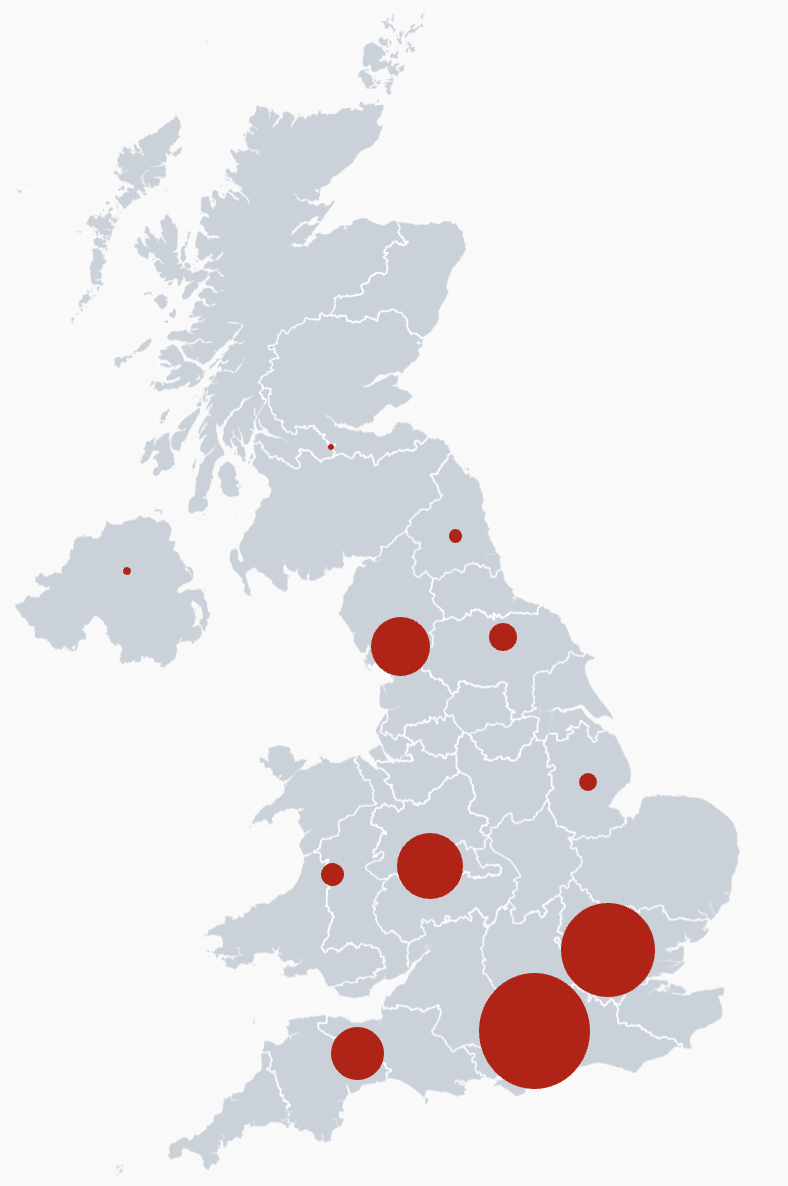
The amount specific regions are interacted with by colleges does not correlate with their applications to Oxford University. The FOI responses from the seven colleges shows that the South West is targeted by outreach programmes two times as much as their students apply to Oxford (graph four).
Holt also stressed this problem, telling Cherwell: “I am concerned that colleges may be getting the numbers up by taking a disproportionate number of state school students from grammar schools or from highly selective sixth forms where they have built up a strong relationship over the years.”
Graph four represents the number of schools targeted by the seven colleges in each region and it shows that regional bias is stronger than a college’s designated outreach area. The schools involved in outreach are predominantly from London and the South East, while the North East as well as Scotland and Northern Ireland are far less affected. Indeed, regardless of designated links to the region, almost every college interacts with schools from London as a large proportion.
While this is not true for all colleges, outreach from St Edmund Hall, whose link region is the East Midlands, reached schools from that area over 80% of the time. However, this is not always the case and New College, whose link region is Wales, only interacted with Welsh schools less than 30% of the time.
What now?
It is clear that private-school bias is undeniably still a great issue at Oxford University. State school students continue to be underrepresented in one of the UK’s top academic institutions. The work of outreach programmes and initiatives are yet to have definite consequences on progress.
The Campaign for State Education told Cherwell: “the English private school system concentrates massive resources on the education of already privileged children and effectively undermines the education of 93.5% of our children…The best thing to do with it would be to abolish it.”
The University of Oxford said in response: “Oxford remains committed to ensuring that our undergraduate student body reflects the diversity of the UK and that we continue to attract students with the highest academic potential, from all backgrounds. The past few years have been challenging, with students, particularly those from socioeconomically disadvantaged groups, continuing to feel the impact of Covid-19 and the cost-of-living crisis. We continue to build on and expand our access and outreach activities and our new Access and Participation Plan will provide a renewed focus in attracting and supporting students who are currently under-represented at Oxford.”
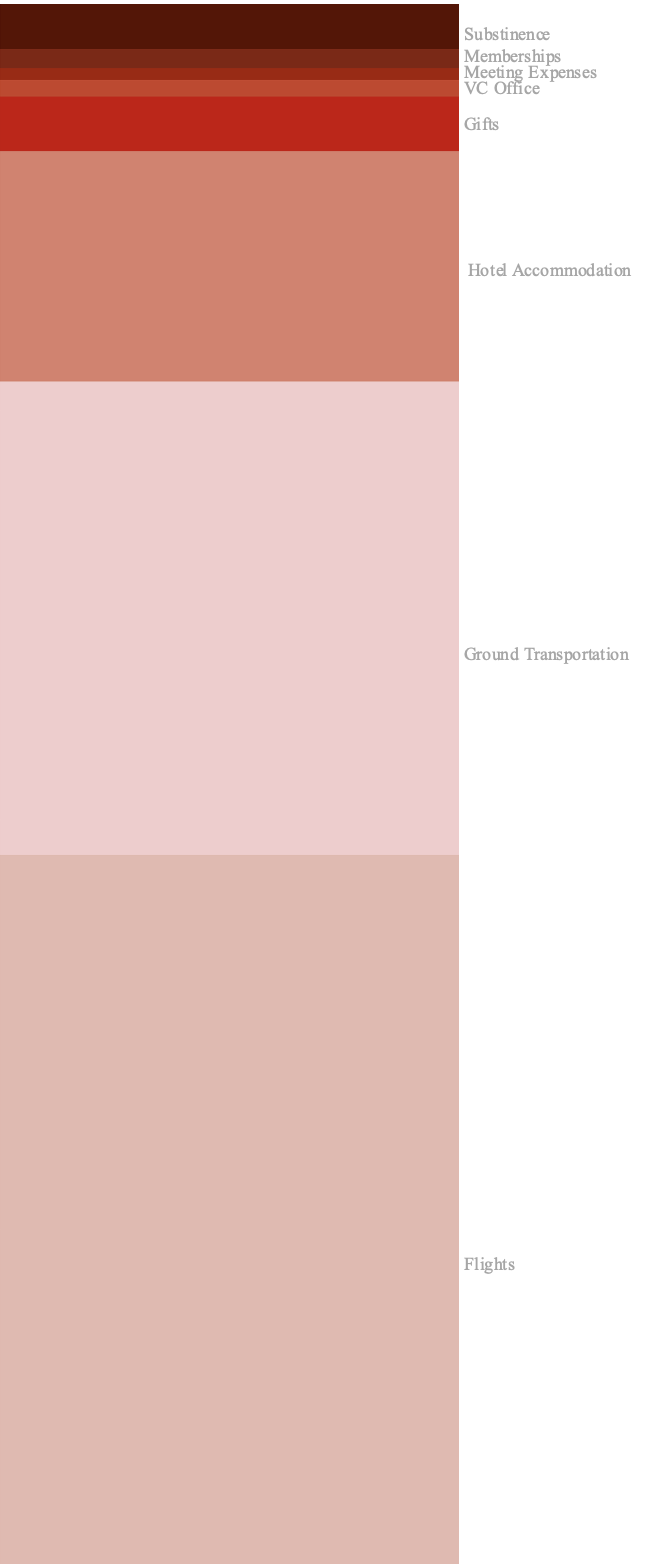
Oxford University’s Vice-Chancellor, Professor Irene Tracey, has spent a total of £47,564.97 on expenses since her appointment in January 2023, Cherwell can reveal. The majority of these expense claims cover flights in an apparent contradiction of Oxford University’s own sustainability policies.
A Freedom of Information request showed that most of these expenses pertained to travel, with claims for over £25,000 spent on flights, £12,000 on rail and car transportation, as well as over £5,000 on hotel stays. Additionally, £1,350 was spent on the purchase of “gifts”. These costs are considered part of the Vice-Chancellor’s responsibilities and in addition to her baseline salary of £423,407.
Some of the Vice-Chancellor’s air travel appears in tension with the University’s travel policy, which was implemented in August 2022 as part of its wider Environmental Sustainability Strategy to achieve net zero carbon by 2035. The travel policy requires an “additional approval process” for premium economy or business class air travel.
Tracey’s largest expense claims were made for a series of business class flights to the USA. These began in April 2023, when Tracey claimed £5,456 for flights there, and again in July of that year, when £7,210 was claimed for the same journey. The largest claim was made in June 2024 for flights between London and New York, which cost £8,817.
With specific reference to these flights, the University press office elaborated: “Long haul flights are taken in business class – not in first class. The Vice-Chancellor has declined other expenses to which she is entitled.” Yet this would still appear to contradict the case-specific “approval process” stipulated in the University’s travel policy.
Domestic flights from London to Glasgow and Edinburgh, made in May 2023 and May 2024 respectively, are also in tension with another stipulation of the University’s travel policy, which refers to the use of domestic flights within the UK for business travel as “not permitted”.
The policy specifies that “rail should be used for all domestic journeys under seven hours”, and does not include Scotland on its list of domestic exceptions. The headline data provided by the University in response to Cherwell’s FOI only referred to “ground transportation”, failing to distinguish train and private car journeys.
The Vice-Chancellor has also claimed thousands of pounds on hotel accommodation around the world, including a hotel stay in August 2023 worth over £1,600 in the USA, and accommodation in Mumbai totalling to £1,700 in December 2023.
An investigation by the i newspaper into expenses incurred by university vice-chancellors nationally reported that the London School of Economics and Political Science (LSE) clocked up the highest expense bill, with its Vice-Chancellors claiming over £80,000 over the past two years.
By comparison, Tracey’s expense claims are markedly lower than LSE’s and also those of her predecessor, former Vice-Chancellor Prof Louise Richardson. In 2023, the University paid out record compensation of over £1 million to Vice-Chancellors Tracey and Richardson, notably including a payout for Richardson equivalent to a year’s salary “in lieu of sabbatical”.
The University of Oxford said in response: “Oxford University is ranked as the world’s strongest university for its teaching, research and impact. Additionally, it generates billions annually for the UK economy.
“To support this achievement, the Vice-Chancellor builds global research and education partnerships, secures donations funds from supporters around the world and helps recruit the outstanding academics and students who are vital to Oxford’s success.
“The Vice-Chancellor’s work in keeping the University as a world leader is continual, involving large-scale engagement with current and potential academic partners, funders and donors, and extensive worldwide travel. As such, these expenses have all been incurred legitimately in the cause of keeping Oxford at the forefront of the worldwide advancement of learning and research.”
Tom Egerton has worked with Sir Anthony Seldon on The Conservative Effect 2010-24: 14 Wasted Years?, The Impossible Office? The History of the British Prime Minister and Johnson at 10: The Inside Story. He is also the founder and editor of ‘The Political Inquiry’, a Substack providing independent political analysis and promoting new voices in politics.
Cherwell: Tell us a bit about your early life; what memories stand out to you, especially in relation to how your later career developed?
Egerton: When did I know what I wanted to go into? At the GCSE level, there’s nothing really on politics. There’s very little. Your whole interaction with the study of politics, with the practice of politics is tangential to other subjects, or what’s actually happening in the real world, or maybe family or friend connections, right? The big thing for me was, through history, I discovered politics, and I think that’s quite regular for a lot of lot of people; but also that shapes how you look at politics, if you discover it through a passion for history, through looking at the past, that really shapes how you see the world, how you see politics, what type of politics you want to go into and your views fundamentally.
Cherwell:And then you took those two together, and went on to study History and Politics at Warwick. How did your experience there shape you?
Egerton: Warwick’s an interesting place, right? Because it’s a very respected uni, but it’s quite a new uni. I think it’s aged very well, and they’re innovating there quite a lot. I think you need to do that if you don’t have the rich history and tradition of other unis, you have to forge it. I think that’s what they’re doing well. The History department has got a very radical history, but it’s still a very fascinating history. I think a lot of the professors there are top of their game for a lot of research. Their economics department is obviously very famous, especially because of their business school. Their politics and philosophy is pioneering in places as well. There’s a good humanities and social sciences bracket there at Warwick. E.P. Thompson was professor there and set up the History department. So it has this lineage there, but it’s kind of in conflict with itself. I don’t want to say too much on it, but because they utilise a lot of money from the Big Five investment firms and lots of insurance companies through their business school. I mean, it’s happening at all unis, but this one specifically, the conflict of a progressive, maybe anti-capitalist humanities side versus a whole department’s spending based on it.
Cherwell: Was it while you were at Warwick that you first met Sir Anthony Seldon?
Egerton: I think I met him before, but I properly met him at Warwick when I was Academic Officer for the Politics Society. I wanted him down for a talk because he wrote a book called The Impossible Office, and I thought it was a very good book. He comes down, and I host an event with him over a few hours, and it goes down really well, hundreds of people attend. I got him doing uni media and local media there as well, which was so gracious with his time, and then from then on, we kind of hit it off over the next six, eight months, texting, calling each other; he shows me bits of work, I give comments. Our relationship kind of built from there, working wise.
Cherwell:And then from there, you moved on to work with him on Johnson at 10.
Egerton: So that was the first time I worked for him. He basically just needed a researcher that he could trust and that he thought was good enough. I was very lucky to be given that opportunity by him. I came on as chief researcher for that project, under Anthony and his co-author, Raymond Newell, who is also extremely impressive guy; he’s in his mid-20s, and has already done two masters and a degree. Very impressive. He’s now at Hanbury Strategy. Definitely one to look out for. He’d also co authored May at 10 before, so he retained that team, and us three work together on that, and it went really, really well. Ended up, I think, being one of his most successful books, numerically, as well as quality and reviews. That was a fascinating process which took about a year, both on the ground in Westminster and working from home and meeting up as a team. Great, great experience.
Cherwell:And that’s how you laid the groundwork for The Conservative Effect, which is the one that came out most recently.
Egerton: Before that, I co-authored the second edition of The Impossible Office, because that needed a lot of updating. They already had three authors, and I came on as a fourth to update most of the recent Prime Ministers, and also do a lot of editing and corrections. That came out a bit after Johnson at 10, and then off the back of that, we had The Conservative Effect sketched out for a while, because it was more ‘can we get the people, can we get the timing right’? Because you have to plan these things at least a year and a half in advance. You just have to see what the government’s doing, because there was a big question mark over Sunak for six months, not whether he could actually win an election, but at least be more successful. Then you can’t really be sure on conclusions you’re starting to write about the book.
Cherwell:If it ended up being a Conservative win, the book would look a bit incomplete.
Egerton: Exactly. Well, it helped that it was probably the easiest election to predict a long time. Even a year before, when we were really kick starting the project, I don’t think it was a given. In mid-2023, I think, everyone thought the Conservatives would probably lose. But by how much? Will it be a hung parliament? And looking at how Labour’s vote share actually was in the end, you know that actually, weirdly could have happened.
Even if they’d won, I think the conclusions in that book would have stood up. What wouldn’t have stood up is our framing around that. But I think that’s why me and Anthony took our time with it and made sure we had some firm footing on it, because also, you’ve got to make sure that you’ve got space for everyone in the book. If you’ve got top academics, you can’t be going around making silly conclusions or ones that won’t hold up.
Cherwell:You wrote a chapter in the book on external shocks; what was that experience like?
Egerton: It was an interesting chapter to write, because it was a summary chapter, rather than breaking new ground in a specific area. I was having to coalesce six shocks, which were all a bit disparate and to be honest, complex to explain in itself. It was challenging to do as a historical project. But I think it was important because not many historical books, especially contemporary history, realise the idea of shocks and how they categorise and explain the historical record, and how future revisionism relies on those shocks. For every governing period since World War Two, but even before then, external crises absolutely shape the governing record, because it’s all about the agency that a government has. There’s no point judging a prime minister or a government fairly if you’re not going to look at what wicket they’re playing on.
The chapter wasn’t designed to kind of explain away the failures of the last 14 years, but to give an insight into the external shocks. It’s important to emphasise, because I can see already that some people were taking the wrong conclusions from what I was saying, because obviously they didn’t read it properly. But the point is, is you can still be fair on what happened, but only by showing what happened can you give a more authoritative account on the failures.
Cherwell:You also founded and edit ‘The Political Inquiry’. Can you tell me a bit about that?
Egerton: ‘The Political Inquiry’ was an area to showcase some of my repertoire of early political writing and strategic thought, but it’s also a place that I’m now utilising to promote up and coming politicos, writers, strategists and historians who don’t break through into the legacy media easily, or can’t do because of connections or whatever. And it actually is a place to foster new, exciting potential, and different thoughts that don’t get the light of day, from a range of political ideologies.
Cherwell: How did you come up with the idea of it?
Egerton: I wanted a place to write. If you go to any legacy media and their commissioning editors, what you’re given can be quite constricting. If you’re early in your career, you can’t always have the space to write about what you want to write about, where your skill set is. I think giving the space for that is an absolutely vital thing if you want to develop political talent and also break through.
It’s not like I publish everything. I’m not restrictive, but I’m not going to publish any old stuff. I think some digital media that focuses on younger writers does. Not uni stuff, by the way; this is more like professional ones that don’t realise that you’ve got to have an editorial line. But if the editorial line is open enough, it can still work. But it can’t be completely open.
I think now that I’ve edited The Conservative Effect on a professional, academic level, you realise you cannot force a top-down opinion on someone unless you you’ve got a editorial line to begin with. If your very premise is that you haven’t got one, you can’t do it. So I understand where all the big legacy media newspapers come from, because they do have lines and they are mostly clear about it. But if you’re going to commit to not having one, you’ve got to be clear about it.
Cherwell:It’s probably a good sign of your editorial and academic objectivity that I haven’t been able to gauge what are your politics are.
Egerton: I’d say centre-left is probably a good wishy-washy way of describing it.
Cherwell:A Starmerite?
Egerton: No, not really Starmer. As you’ll see on ‘The Political Inquiry’ and in this chapter I just wrote, I’ve got question marks over Starmer. Less from an ideological point of view, because I think the perennial issue with the left is they focus on ideology as the be-all and end-all. Actually, sometimes if people focused on delivery and strategy a bit more, much more ideological left-wing goals would get achieved in government. But because there’s less focus on that and more focus on ideological battles from both wings of the party under the ideological spectrum, not much gets done.
Cherwell: In all the work you’ve done, who would you say is the modern writer who has influenced you the most?
Egerton: I think this is weird because I lean left, but definitely Dominic Sandbrook, of The Rest is History podcast. He wrote a five-part series on British political history ranging from the 50s to the mid 80s. They are really interesting attempts to bring political and social cultural history together, and then display it in a more accessible modern context. I say accessible; the books are 800 pages, but by accessible, I mean summarizing the academic groups and thoughts of these historical periods and presenting them in an interesting way. I don’t agree with a lot of his conclusions, but I think it is a fantastic introduction to political history, and also the history of this country. It comes from a standpoint that many people disagree with, but I think it’s good to read something you disagree with, to find ways to better it. That’s the fundamental point of history, really.
If I did a project in the future, he wouldn’t like it because there’s not enough anecdotes in it, or social history. But hopefully in the future, my writing will be more broad based in terms of history, rather than just the analytical, high politics, economic side of things, which can dominate analysis too much.
Cherwell: Speaking of next projects, what are your aspirations for the future?
Egerton: From now, just simply more writing, more reading, more research, realising that your career is never made in the first 10 years. It’s about what you do as a young person to develop and finding something you love. If you just keep developing and putting yourself out there for opportunities, you’ll get something, especially if you really like the thing you’re going for. That means you’ll have something over anyone else who’s more experienced, if you have more passion for it. People in politics see that. I think a lot of people in the industry of politics or history, they see things as daunting. They shouldn’t. Most people don’t know half as much as you probably know, and they use their positions to kind of protect what they have. It’s all about young people breaking through at the end of the day, that’s what generates new ideas and makes the industry so interesting and creative at times. And without that, it would be dead. So for anyone reading, go and do that, just go and put yourself out there for whatever, and put the effort in.
I’ve got a book in the works on Labour’s governing political strategy, loosely titled ‘Victory to Delivery’, which I might turn into a doctoral thesis. I think the biggest issue for left wing governments in this country is how you transfer what are sometimes questionable manifestos or indecipherable mandates into governing policy and governing strategy that actually works and stands the test of time. I think people like Miliband etc. have thought about that a lot, and you’ll see him trying to build policies that last a long time and build consensus. I think it’s an area of thought on that needs a lot more research, because there’s barely anything. I mean, Michael Barber is the only person I can think that has a really impactful study on it; he set up the Prime Minister’s Delivery Unit under Blair, and wrote about delivering in government. I’d like to work on something like that from a historical perspective, with a bit more of a political edge.
The Conservative Effect 2010-24: 14 Wasted Years? is published by Cambridge University Press, and is available now. Cherwell reviewed the book in July 2024.