

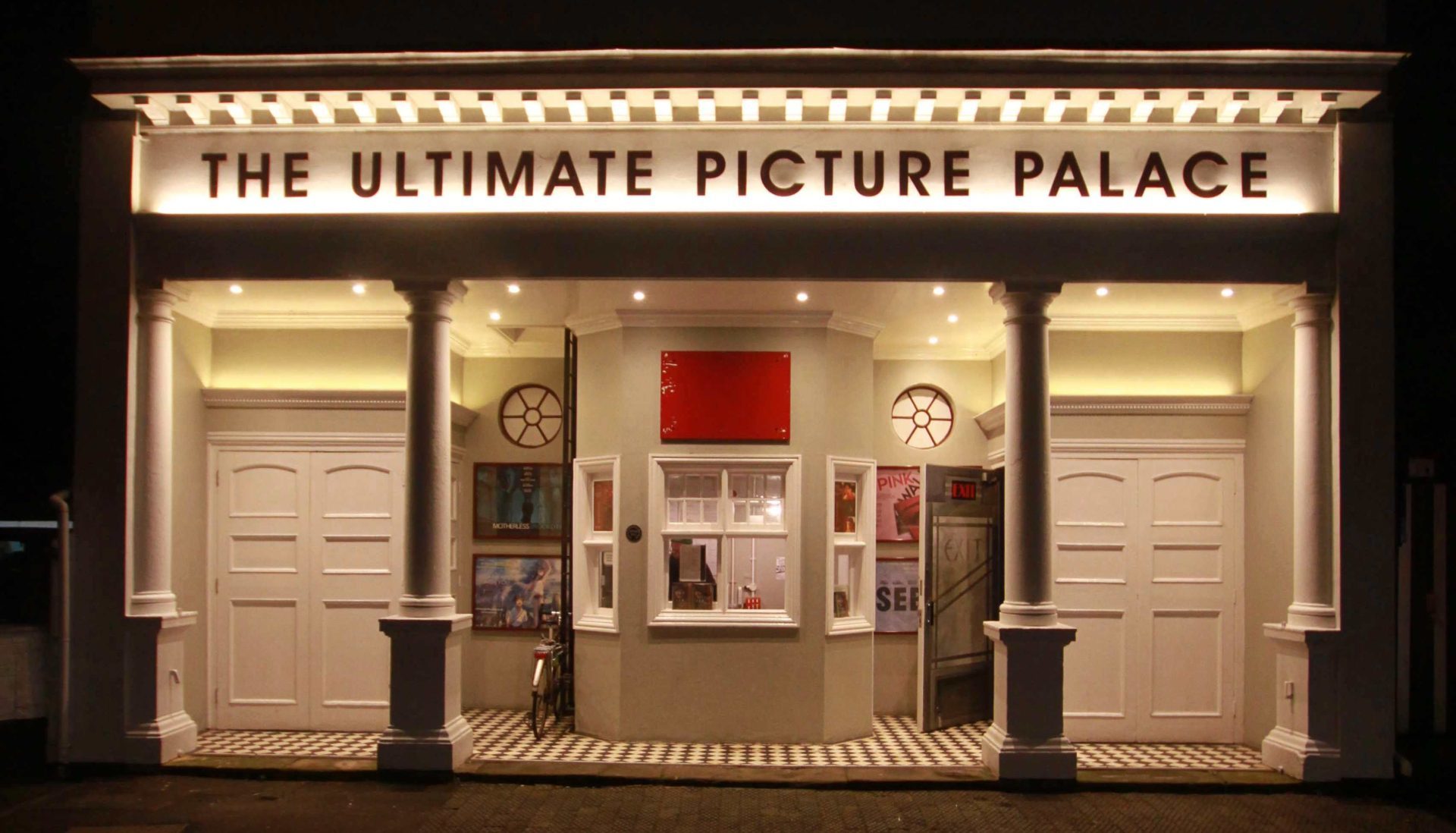
December saw the announcement of Netflix’s $72 billion deal to acquire Warner Bros. Discovery. What followed was a veritable moral panic amongst cinephiles, and I count myself as one of those who fear for the future of the theatrical release. I have therefore set out to better understand my loyalty towards the cinemas that have the nerve to charge £20 or more per ticket, and to dive deeper into the possible future complexion of the film industry.
I get the impression that the question of streaming as an existential threat to the cinema industry has become somewhat tedious. Is the movie theatre destined to keep bouncing back as a cultural pillar? And does the perpetual sink-or-swim narrative play a role in driving people to see a film on the silver screen? I for one am always convinced that my ticket purchase is going to single-handedly save cinema.
To avoid exaggerating, we ought to turn to what Netflix co-CEO Ted Sarandos has said on the matter: “My pushback has been mostly in the fact of the long exclusive windows, which we don’t really think are that consumer-friendly.” You’ll have to forgive my scepticism about the altruistic capacity of the CEO of a company worth $413 billion, but I take issue with this statement. Firstly, if cinema ticket prices continue to increase, will anyone be able to justify trips to the cinema to see films that will be available for free (or at least, it feels that way) 30 days later? This is not an exaggeration: according to film blog Dark Horizons, theatrical windows now average a length of just 32 days. Furthermore, I worry about a future in which, after having established something of a monopoly on films available to watch on streaming, Netflix continues to price-gouge the consumer. This profiteering was made even more abundantly clear by the introduction of geographic limits to Netflix accounts. Considering this is the same company that once, on Valentine’s Day, tweeted: “Love is sharing a password”, you have to acknowledge the hypocrisy.
Another defence of the cinema worth exploring is its ability to bolster our attention spans in a culture increasingly dominated by short-form content. While the opportunity to pause a film and make a cup of tea is always appreciated when watching at home, the more general possibility of distraction, far less so. I don’t think the time has yet come for a full-scale “it’s those damn phones” moral panic, but we do need to think seriously about safeguarding a hobby that forces you to focus on one thing for a couple of hours. In the spirit of exemplarity, I hereby promise to resist the temptation to start drafting my Letterboxd review before the film has finished.
It may well be that we’re obsessing over new releases when the saving grace of cinemas lies in rereleases. Perhaps inspired by the Netflix model of a constantly changing catalogue, both chain and independent cinemas are increasing the number of classic films they show. Distributor Park Circus’ CEO Doug Davis cited research from Gower Street and Comscore which shows that box office returns in the UK for classic films grew by 133% in 2023 compared to the pre-pandemic average between 2017-2019. I can personally attest to the mental health benefits of going to see It’s a Wonderful Life the week before Christmas with a glass of white wine included in the ticket price.
The adventures of the film’s protagonist George Bailey also represent something fundamental and necessary about the cinema experience: “Remember, no man is a failure who has friends.” The same can be said of going to see a movie, however terrible it turns out to be, amongst people you love. There’s joy to be found in sitting and laughing through a film rather than DNF-ing it on Netflix and choosing something else. The shared act of viewership provides something inexhaustibly exciting to the cinematic experience.
At its most extreme, this sense of communality can spark a wider cultural phenomenon of cinema-going. I think it’s possible that dressing up in a suit to watch the Minions movie reignited a love of cinema-going amongst at least a handful of teenage boys. I certainly don’t think either Barbie or Oppenheimer would have achieved such box-office returns if they had been released straight to streaming. This seems to suggest hope for the future of the movie theatre, and I certainly appreciate the whimsical and sentimental illusion of social unity that such trends create. I enjoyed crying through America Ferrara’s Barbie monologue about girlhood while sitting in a row filled with my girl friends. Sue me.
As it turns out, I’m not just rambling sentimentally. According to researchers at UCL, a shared social focus has been shown to have long-term benefits for our brain function, memory, focus, and productivity. As a true humanities student, I will point out that this benefit is artistic as well as scientific: if film, like all art, nourishes itself on its own œuvre, I don’t think we can afford to sever the association between the cinema and the film. Would Brief Encounter or La La Land achieve their desired effect if the protagonists were sat watching a film on the sofa? Would Once Upon a Time… in Hollywood look the same if Sharon Tate merely switched on the television to watch herself on screen?
You may have concluded that I am a Luddite, and you may well be right. I am certainly a hypocrite, who advocates for the necessity of multiple streaming service memberships while requesting that my dad includes me in our family plan. I can appreciate the choice and ease of streaming, and the ability to watch films that don’t make it to the Oxford Curzon, but nothing quite makes me feel as alive as when I leave the cinema and feel ever so slightly changed for the better by a good film. For the time being, the Academy shares my opinion, and only awards films that have some kind of theatrical release, but is this the last bastion of the movie theatre’s defence? Or have I merely been conditioned by the industry to respond to a non-existent perceived threat by spending my money at their cinemas? I suppose we’ll have to see (you at the movies).