

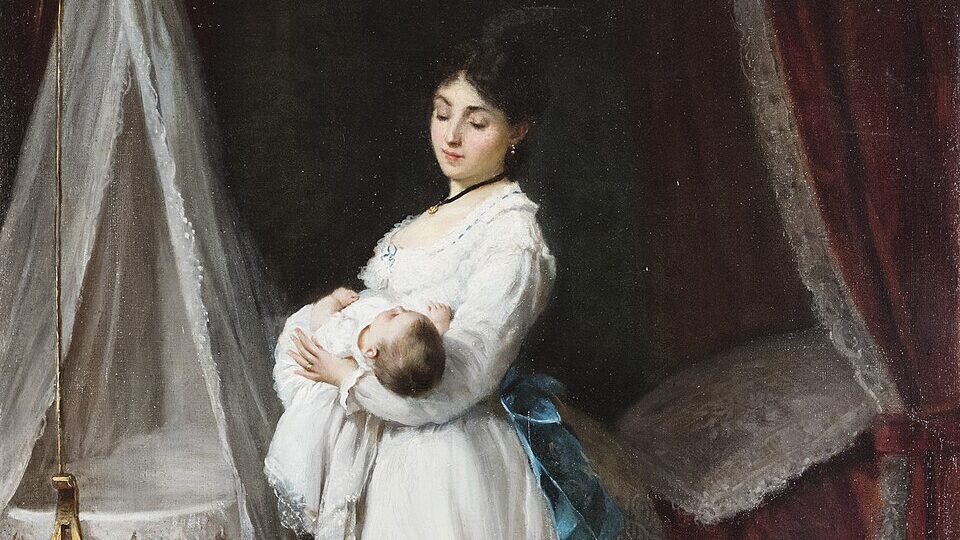
I dedicate this piece to my maternal grandmother, to her tired eyes and overworked hands.
When guests and families sit, talk, and laugh, one person is always excluded. The same person who wakes up earlier and sleeps later than everyone else. As someone who comes from a collectivist culture, cooking, breaking bread, raising each other’s children, and caring for the elderly are embedded in our way of life. In our individualistic Western society, this is rare, hence I’d distinguish this part of my identity by how generous and welcoming my hospitable Eastern culture is. But I’ve come to realise that all this hospitality does not come from culture. It comes primarily from women. In most households, from one woman.
Let’s think about every hospitable home that we’ve eaten and slept in, including our own. Who cooked for us? Who cleaned the house before we arrived? Who made sure that we were served and had everything we needed ? Who laid the table? And most disappointing of all, who was given the last seat on that table?
I’m ashamed to say that, like many others, after benefiting from the unpaid labour of the women in my household, I’d instead credit and praise my culture for our family’s hospitality.
However, it is women who are the reason why our hospitable cultures have survived. They are the reason why culture, at all, has survived. National dishes and homemade remedies can be traced back to women’s hands. Cultural attire with distinct embroidery and symbolism can be traced back to women’s hands. Songs sung to children, fables, poetry and folklore surviving generations, can be traced back to women narrating and teaching them to their offspring.
But it is much more than this; we don’t just owe the survival of our culture to women, but our very own survival. Every homemade meal, tender embrace, wiped tear, wrapped gift, handwritten card, wise word of advice, and lullaby has raised and nourished us. With regards to the hospitality that defines our collectivist cultures, it comes with a huge sacrifice of time, energy, effort, and labour, which is almost always paid by our mothers, grand and great. They continue to make this sacrifice unpaid, unappreciated, and unnoticed.
If roles were reversed, and a man were to prepare the home, welcome, cook for, and serve guests, we all know he’d be praised, called progressive, exceptional. His wife would be called “lucky”. So, when women do this daily, how often do you even say thank you? How often do they receive thanks from every single person who sat at the table she laid and ate the meal she prepared?
University was the first time I moved away from home. It was my mother with whom I was on the phone throughout the term. It was my mother who would text to see if I had eaten when I was away. It was my grandmother who always had a meal ready whenever I’d visit home. It was my mother who would drive me to and from Oxford, again and again, even though I could have taken the train. Before my year abroad, it was my grandmother who taught me how to cook (a proper) meal, knowing I could no longer rely on college dinners. When I came back from my year abroad, it was my aunty, who, despite having recently given birth, planned a party and “Welcome Home” cake.
While I could easily, and would love to, write an article about men’s role in sustaining the family, and the importance of the role fathers play in our wellbeing and development as adults, I write this first. Because while the survival of a family or society depends on both men and women working together, the part that women play is rarely acknowledged or appreciated.
Across time and place, including now, “providing” is considered a masculine role, but, on the contrary, it is not a single role nor one carried out by a single person. It has always been shared, with women providing a great deal by managing the emotional and logistical labour of the household. It is their advice and comfort that provides emotional support. It is their meals that have provided physical support and nourishment. It is their commutes to and from their children’s school, clubs, and activities that have provided educational support, and facilitated the lifelong friendships that we have formed in these spaces.
Still, women continue to provide for and look after everyone, from young babies to elderly parents and in-laws. It is their care that contributes to sustaining our families, subsequently holding wider society together. And despite all this, society continues to perpetuate the narrative that it is only men who provide, and support women.
It also seems to me that most women don’t carry all this mental and emotional strain because they want to, like to, or because they just really love guests that much. No, they do so because if they took a break from these daily tasks that keep the family home, and subsequently wider society, running and thriving, it would have consequences. The house would remain unkept, the household would remain unfed. Society has imposed this burden and an unfair sense of obligation solely upon their backs. A woman’s value has been tied to her productivity and how much she contributes to her family. God forbid these women take a break, they’d be labelled a failing mother and wife.
It is one of my deepest desires to, even if for just one day, relieve all women, specifically our mothers, from our homes. I don’t want to see them cooking, cleaning, serving, or managing. I doubt any family would survive. I doubt any hospitable home that we take pride in would last even 24 hours.
To quote the Lebanese poet Khalil Gibran: “All houses are dark until the mother wakes up.”