

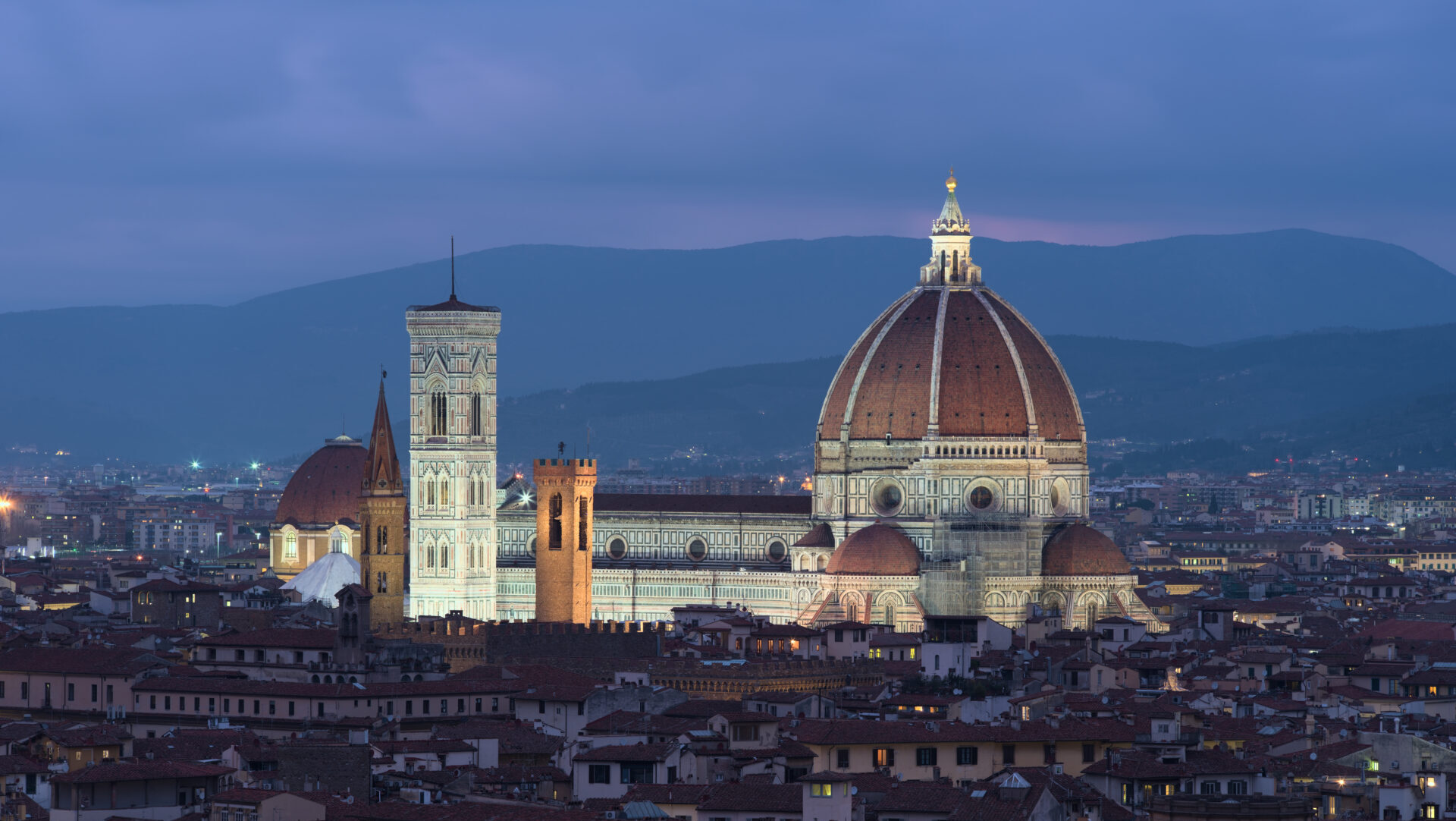
The House of Medici, an Italian banking family, donated an enormous amount of their wealth to support the arts in the 15th century, from funding the construction of Saint Peter’s Basilica and Florence Cathedral to patronising some of the most famous Renaissance painters, like Botticelli and da Vinci. Their money indelibly shaped not just their contemporaries, but the groundwork of much of Western canonical art.
This might seem a rather lofty bar with which to judge the contribution of Stephen A Schwarzman. But, with Oxford University describing his donation as their single biggest “since the Renaissance”, it’s hard not to harken back to the civilisation-defining benevolence of the Medicis. Indeed, the CEO of the private equity firm Blackstone is estimated to have a net wealth of over $42bn, making him one of the 50 richest people on the planet – not a bad place from which to start a new era of Gilded Age-inspired philanthropy.
His donations to Oxford come to £185mn and have produced a new Centre for the Humanities – a single building in which seven faculties and two institutes come together, decked out with state-of-the-art music and theatre venues, a cinema, and exhibition spaces. The two-pronged vision is bold and enticing: an upgraded student experience and a way for the cloistered University to reach out to the public. The ‘Cultural Program’, launching in April 2026, offers an enormous range of exciting shows, giving Oxford a new artistic centre and locals a pleasant benefit from the University with which they (sometimes uneasily) co-inhabit the city.
The neat concept, however, has in practice led to conflict. Rather than the student and public elements exhibiting a complementary relationship, the commercial side of the venture has dominated, sidelining students and moving the Centre uncomfortably away from the core operations of the University.
Firstly, whilst the Centre is a substantial building (much of which operates at a subterranean level), its size fails to do justice to the huge number of faculties, students, and academics that it represents. This is evident in a number of ways: the faculties themselves, which circle the RadCam-inspired and proportioned Great Hall, are fairly small in size, and homogenous in design. Whilst a coloured kitchenette is a nice touch, the move for my own department (Philosophy) from the spacious and historic Georgian building on Woodstock Road to a few rooms on the second floor is quite hard to sell as an upgrade.
Similarly, the Humanities Library, though bigger than it perhaps first appears, fails to adequately compensate for the libraries it supersedes. Books have had to be moved offsite to fit, and the number of dedicated seats in the library itself is less than the previous capacity. There are more if you count the other available seats in the building – but with no sound regulations, they are hardly a substitute when you need to hammer out an essay. Losing books and study space, whilst not quite the fire of Alexandria, is still disappointing for what promises to be an exultation of the Humanities in an age of their belittlement.
It’s not just the library that is rammed: fewer large lecture rooms means that bookings are more competitive, introducing frictions into already-bureaucratised academic schedules. Indeed, many lectures remain in their old locations, and feel all-the-less pleasant for it. Making the bottom floor open to the public, whilst a charming way to potentially break down the town-gown divide, also necessarily means fewer seats for the students paying (at least) £9.5k a year for access.
The worst issue, though, is financial. Schwarzman’s historical donation was enough to construct the largest Passivhaus university building in Europe – but as a one-time gift, not enough to keep it maintained. This has made the finances shaky, to say the least. Faculties have been squeezed as they are forced to pay higher rents; money is taken away from students and used to fund a truncated space. Far from being a boon for neglected studies, the Centre looks to be urging the cold free-market logic along.
Even students lucky enough to be in the University are losing out. Prior to the Centre’s construction, a society of which I am a committee member could use our faculty’s multiple lecture rooms for free, with very little competition. Now, the task to get a room is Kafkaesque. After over 20 emails and multiple booking form requests, I was told that the society would be charged £200 an hour for use of the cinema to do a private film screening for our members. The attempt to charge an academic student society eye-watering amounts to use a room in their own faculty building exemplifies how the commercial imperative has vitiated student experience.
In an almost paradoxical way, what should have been a desperately-needed and generous contribution to the Humanities, and the wider University, has actually reinforced the sense that Humanities students are unwanted money-suckers. Not long after the opening of the Centre, the Life and Mind Building, which hosts the Departments of Experimental Psychology and Biology, also opened its doors. If you looked at both buildings without any context, you’d be hard-pressed to tell, based on size alone, which was the home of two departments, which the home of more than three times as many. Rather than facilitating interdisciplinary study, locking all the Humanities students into a cramped part of OX2 and charging them more for it looks like another act in the long history of shunning artists and thinkers. It might be time for the music students to start busking outside.