

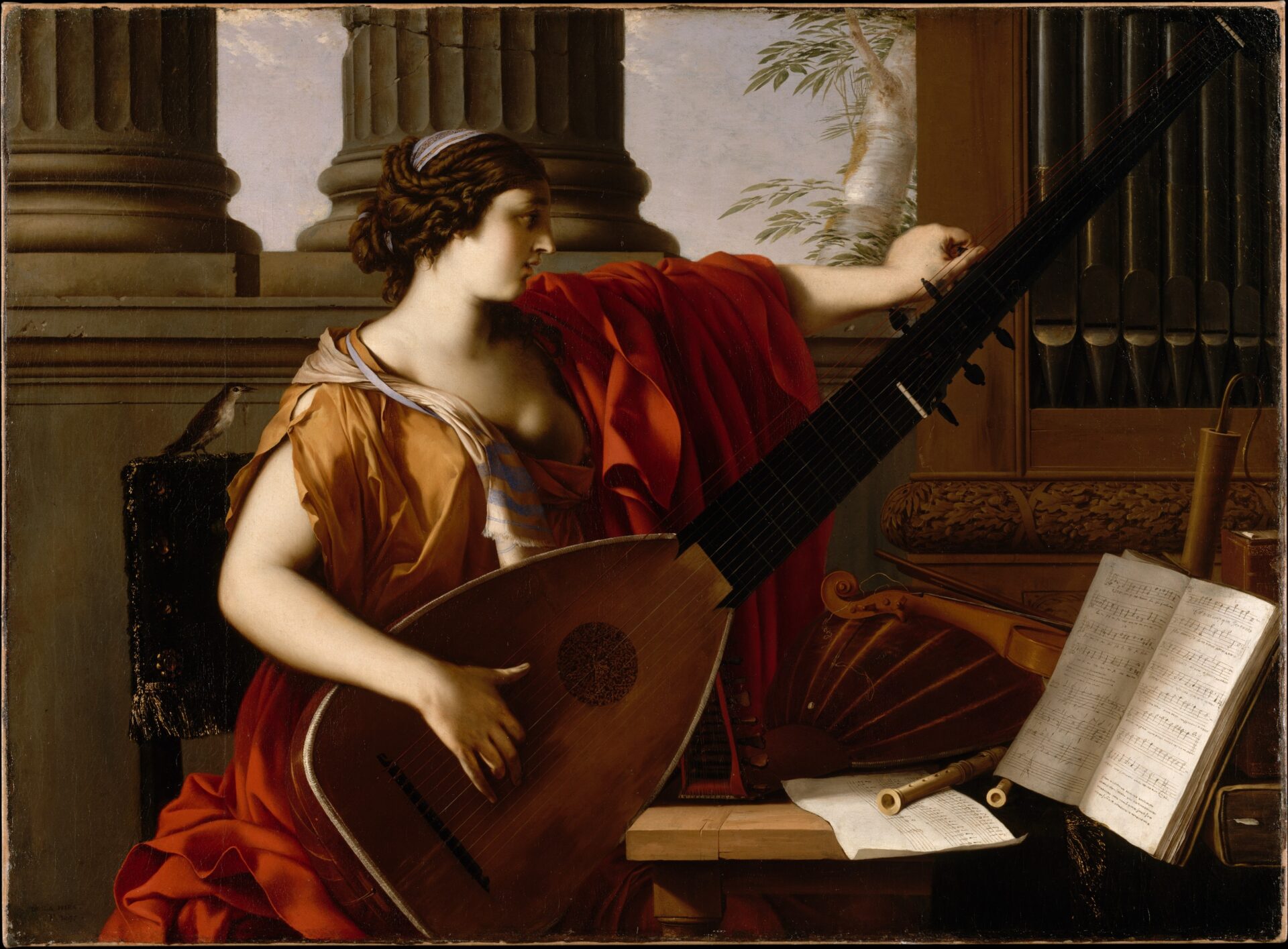
I almost did a degree in Music. I’ve been involved in music-making for as long as I can recall, drawn to its capacity to create beauty from complexity. Ultimately, I chose History for a similar reason: the satisfaction of drawing interpretation from abstract overlapping narratives. If I’d applied to Oxford Brookes, or the Universities of Kent, Wolverhampton, or Nottingham, however, studying Music wouldn’t have even been an option.
All of these institutions have closed their Music courses in the last few years. This comes alongside course culls and staff redundancies in the arts, humanities, and languages across the country. It reflects a worrying trend in government policy and public discourse, targeting ‘Mickey Mouse’ degrees but ignoring their economic, social, and intellectual impact. These decisions are an injustice to the intrinsic value of education, across all disciplines, and risk tarnishing Britain’s reputation for academic and cultural excellence.
Nottingham’s suspension of all Music and Modern Languages courses is the poster child for this trend. But it is not alone – Kingston University, for example, scrapped English, Philosophy, and International Relations last year. Financial uncertainty has driven these decisions, with universities facing deficits as high as £60 million after years of government cuts. This leaves them reliant on student and alumni funding, forcing the prioritisation of economic, rather than intrinsic, value.
Economic value is often equated with the ‘usefulness’ of certain degrees, a term that has become synonymous with successive governments’ denigration of the arts and humanities. This rhetoric reduces a subject’s utility to its earning potential, which is seriously flawed. The difference between humanities and STEM graduates is marginal – the British Academy found that STEM graduates only earned £6,000 more annually after ten years of employment. A 2023 report found that eight of the ten fastest-growing sectors in the UK employ more humanities graduates than any other discipline, demonstrating the value of the transferable skills that humanities degrees develop.
Fixating on ‘usefulness’ also ignores the cultural and economic value of arts education. It sustains a vibrant set of creative industries, which contribute £59.4 billion to the economy each year. Britain’s cultural exports – The Beatles, Harry Potter, and James Bond, to name a few, are “disproportionately large for a country of relatively small size,” according to Arts Council England CEO Darren Henley. Ironically, a government calling for the prioritisation of “useful degrees” has frequently waxed lyrical about the importance of British film, music, and literature.
Beyond this, both arts and humanities are central to shaping individuals. Many of us don’t know who we’d be today without the musical instrument we played, or the performing group we joined as a child. There is a freedom of expression and breadth of knowledge within them that produces the leaders, thinkers, and creatives of the world. To limit access to education in these areas is to close the door on the successors to these luminaries. Last year, the University of the West of England’s drama department was forced to close the undergraduate programme that produced Olivia Colman and Patrick Stewart.
The arts and humanities are not the only victims of these course culls. Recently, Brookes closed its Mathematics department, and Bournemouth and Reading no longer offer Engineering, despite such courses seemingly coming under the government’s definition of “priority courses that support Labour’s industrial strategy… to renew Britain”. If subjects framed as economically ‘valuable’ are also being cut, it is not the worth of individual subjects that is causing this crisis. Instead, it is a system that forces universities to operate for profit rather than prioritising what people used to call learning for learning’s sake.
There is a serious risk of long-term inequality. If universities continue to be pushed into course culling, education experts fear a ‘postcode lottery’ will come to limit access to a full range of university degrees by location. Students in educational ‘cold spots,’ and those to whom higher education is less affordable, are already disadvantaged amidst the cost-of-living crisis, according to the BBC.
It is becoming impossible for ever-growing numbers of students to live away from home, pricing students out of course choices. Cuts and enforced ‘specialisation’ at newer, less well-funded universities risk entrenching both this and the problem of educational elitism. In ten years time, it could be only Oxbridge and its wealthiest Russell Group contemporaries offering a full range of subjects – there are only 24 of these, and they are not renowned for their affordability.
Course culling is “unconscionable vandalism” of British university education. Such vandalism is not accidental, but the product of a marketised system that treats universities as businesses and ignores education’s inherent value. Unchecked, the combination of funding cuts and ‘usefulness’ rhetoric will harm students beyond the arts and humanities. In the long term, it will strangle Britain’s cultural and intellectual life, reduce the employability of graduates, and entrench educational inequality.
Amidst the rise of artificial intelligence and the attacks on student protest movements across the Atlantic, human creativity and critical thinking are more vital than ever. The trend of culling the courses that foster these skills is therefore a threat to us all. We must defend the benefits of arts and humanities education, support the students and teachers taking action to resist cuts, and pressure the government to solve, not encourage, this crisis.