

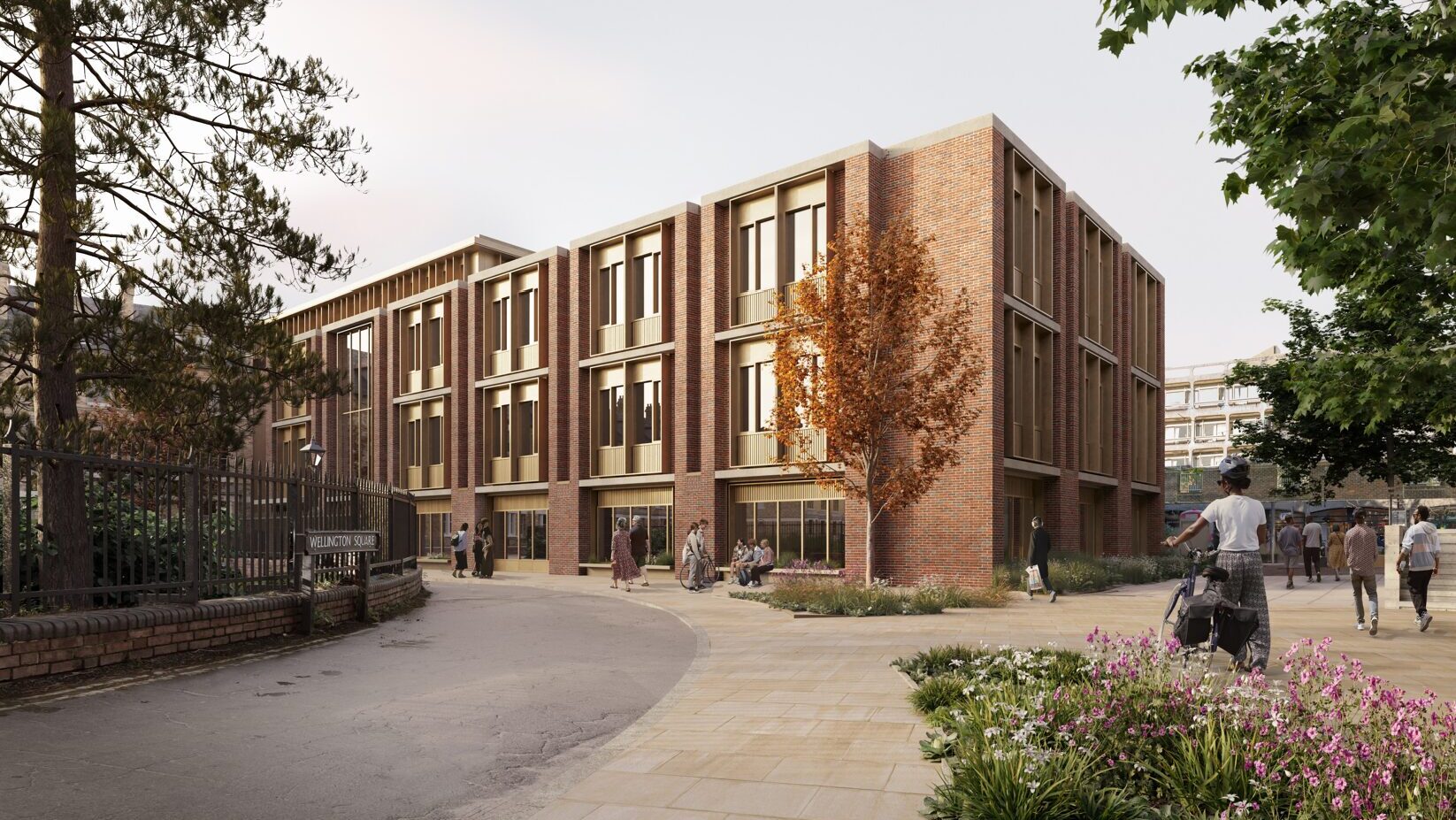
Oxford residents have voiced criticism of the proposed redevelopment of Wellington Square by Oxford University Development (OUD), a joint venture between the University of Oxford and asset management company Legal & General. Plans for the redevelopment have been submitted and are currently under consideration by Oxford City Council.
The project involves the demolition and redevelopment of 25 Wellington Square, a building which currently houses several independent businesses, to provide a new four-storey building for academic and office accommodation, alongside flexible commercial spaces on the ground floor.
Last year, OUD conducted public consultation on the project. Feedback forms collected in February and March showed that 28% of respondents felt negatively towards the development, while other views were evenly split between neutral and positive at 20% each.
Objections raised at that stage focused on the significantly increased footprint of the proposed building, arguing that the overhanging design would intrude into Wellington Square, dominate Little Clarendon Street and reduce available pavement space.
Proposed public spaces in the design were criticised as clinical and perceived as an extension of the university estate rather than an integrated part of the street. Concerns were also raised about the loss of on-street parking, particularly for residents with limited mobility and for local businesses reliant on deliveries and short-term customer parking.
Further objections related to the anticipated three or more years of construction. Respondents registered concerns around the impact of traffic, noise, and disruption on Little Clarendon Street and surrounding homes, alongside wider unease about the cumulative impact of recent university development on Oxford as a city.
Similar issues resurfaced following the submission of the redevelopment plan to the council in January. Councillor Susanna Préssel, who represents Jericho & Osney on the county council, has publicly objected to the plans. She stated: “We must have an active frontage in this important little street, with shops, social spaces and cafes.
“Oxford University has already been allowed to destroy the beauty of Wellington Square by knocking down one of its four sides (many years ago). This was an act of shocking vandalism which the city council should never have allowed.”
The planning application, published in January on the Oxford City Council website, invited public comment, prompting respondents to register general support or opposition. The application invited feedback on various features of the plan, including building height, parking and open space provision, and public transport accessibility.
This consultation opportunity was promoted on Instagram by Common Ground, a social co-working café and community arts space which currently rents space at 25 Wellington Square. Common Ground has called for temporary premises during the redevelopment period, the opportunity to occupy a unit in the completed building, and meaningful consideration of community priorities within the new development.
One individual who commented on the application raised concerns about the scale of the development and its impact on existing community facilities and local ecology. They stated: “The businesses and venues currently in the building at street level are of very high value to the Oxford community and represent some of the few popular and successful community spaces for people of all ages. To lose these, without guarantee of a new space or a place in the new development once opened, would be very tragic.”
A spokesperson for OUD told Cherwell: “The proposals will deliver significant community benefits, including new active uses and commercial space on Little Clarendon Street, which will help support local businesses and increase activity in the area. We remain committed to creating a scheme that contributes positively to the neighbourhood and provides long term benefits for residents, students and visitors.
“Public realm and streetscape improvements are a key feature of the application proposals, following the community feedback.This will include the use of a Construction and Environmental Management Plan, dust control measures, the Considerate Constructors Scheme, clear site hoarding, coordinated logistics planning and a commitment to regular communication with the neighbours.”


.)