

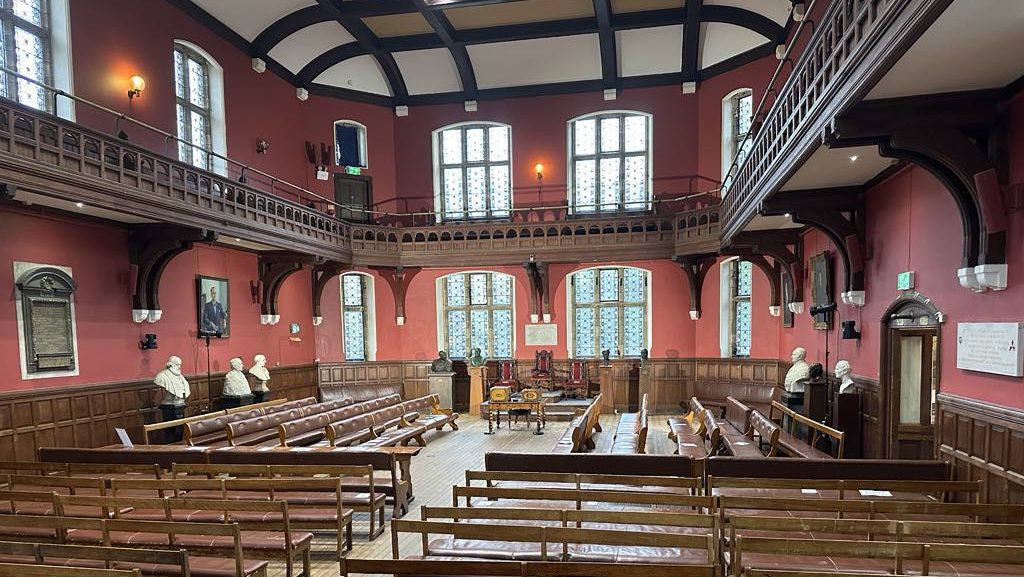
Let me take you back to when I stood in the queue on the day of the election at the Oxford Union, voting on whether George Abaronye should remain President-Elect or not. I couldn’t help but notice the sea of grey-haired, geriatric, white, men (mostly), who somehow still had the right to vote at the Oxford Union. They cling to their fond memories of university days, trying to grasp onto some feeling of youth. Not only this, but I also heard an older woman, possibly late sixties, asking for confirmation for the proxy vote she was also filling in, adding to the number of voters who are not current students.
The question I pose today is: should the Oxford Union still be allowing those who have graduated from Oxford to vote? If so, what age is the cut-off point?
I don’t mean to generalise, and whilst there are indeed many varying opinions held by older people, as with any group of people, the fact remains: it is statistically much more likely that older generations will vote more conservatively. We can see this clearly in YouGov polls, recording that the chance of someone having voted Conservative increases gradually with age, with 46% of 70-year-olds or older voting Conservative in the 2024 general election.
There is also an even higher chance that this is true when we remember which university we are taking into consideration. A university where the representation of privately educated, male, white students has historically outweighed the comparative representation of state-educated students, women, ethnic minorities, people with disabilities, and more. These figures have changed over the years, with more provisions in place to increase opportunities for more people. For example, 66% of UK students from the state sector admitted in 2024 in comparison to the 59.2% of offers to state schools in 2016. Although representation is still an issue which needs to be improved at our University, could the University politics now be reflecting a wider variety of opinions due to the increase in representation from various backgrounds? And can we see how opinions of the cohort at Oxford University are changing through the way we vote?
Currently, we cannot. And this is partly because those who possess lifetime membership to the Union are still allowed to use their membership to vote long after graduating, meaning that the votes are not completely made up of the current cohort of students. In addition to this, according to the Oxford Union’s website, other people who are eligible for life membership to the Oxford Union are the “spouses of individuals eligible for Life Membership”. The voting group should consist of the current members of the institution. Not only to make the voting and outcomes of elections fairer, but also to reflect the opinions of the current cohort at our University. If nothing else, to keep and make for a fascinating historical record.
But why should we even care about Union politics? Some think Union politics is nonsense, that the Union itself is full of its own unimportant and petty drama. But, now and then, there is an incident which is so inflammatory and so major that it is enough to make waves that ripple across the whole nation, even across the whole globe, as we have seen of late.
Because of this, we need to do a better job at remembering the prowess the Union holds, the fact that it is not only affecting the ‘bubble’ that is the University of Oxford, but actually can spread across the entire world, causing global debate, discussions, and online abuse. So, the decisions we think have no effect actually shape the opinions of the wider public, too. I am not talking about protecting the reputation of the Union or the University here, but just about ensuring the outcome of elections represents the current opinions.
Instead, there should be a cut-off point for voting of five years after graduation. They can keep their lifetime memberships for everything else, but voting should be limited to current students. There is a notable difference between newly graduated alumni of the University and those who now have children, careers, and are 20 years our senior, or even those who are now retired, spending most of their days roaming around their gardens. So those who do turn up to vote without a doubt have some of the most extreme opinions too. Those who have only just graduated most likely still reflect the current cohort of students at the University of Oxford, still understand how the University and Union function today, and still have a clear idea of current Union and University politics.
It is only right that the results reflect the current state of the Union. The results may still not be the desired one for someone like me, with socialist, left-leaning opinions, but at least they would be more accurate. It would be an actual insight into how the Union has changed, and whether it is still as conservative as it was. Or is it enough of a historical record to look at the Union in its current state, with its unfair elections?