

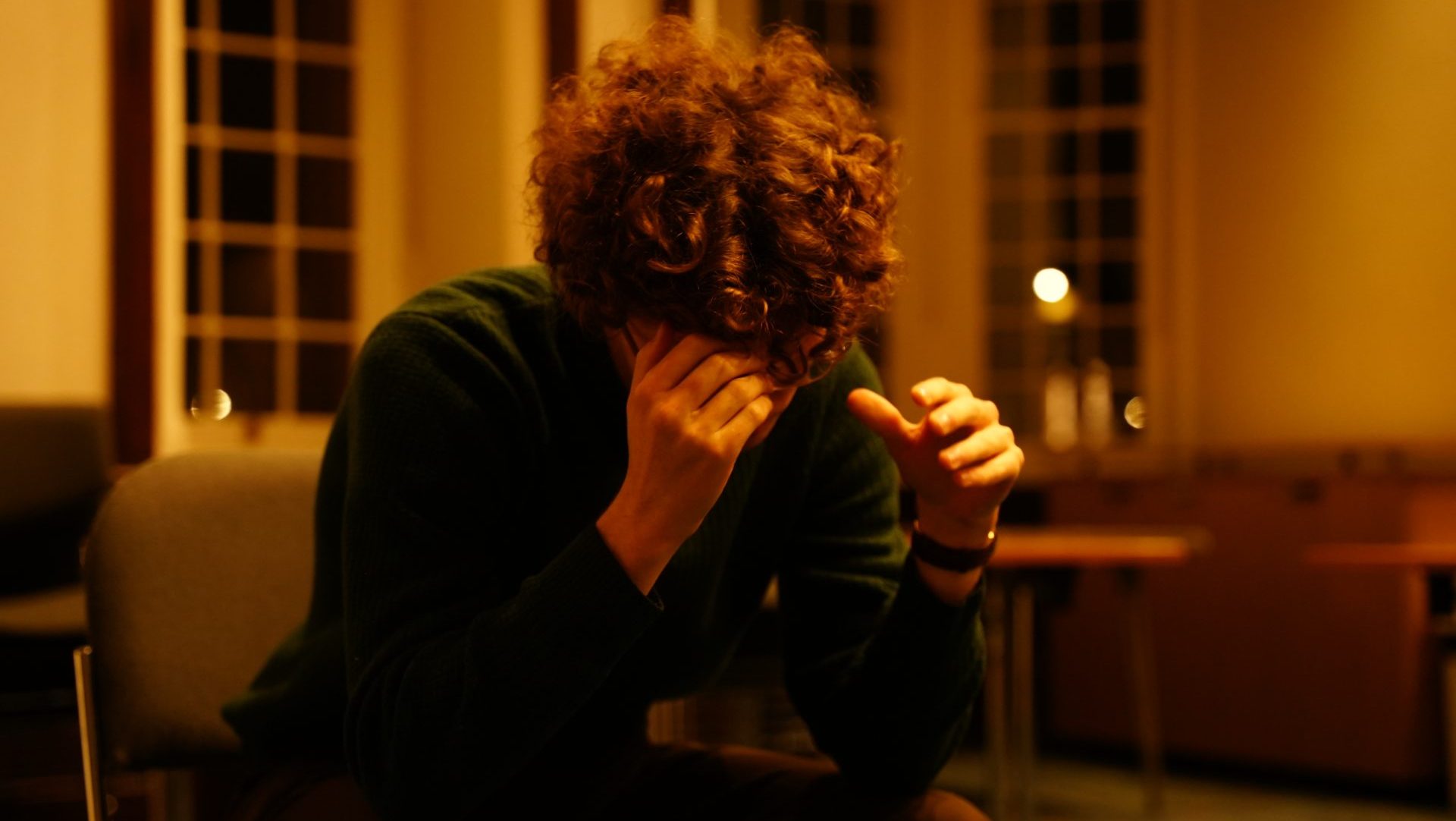
The Glass Menagerie is one of Tennessee Williams’ most famous plays which, until recently, had escaped my attention. I’m no stranger to Tennessee Williams: that name takes me back three years (oh god) to my sixth-form days, spent poring over A Streetcar Named Desire, and trying to understand what on earth ‘plastic-theatre’ meant, all while my teacher lusted over Marlon Brando’s 1951 portrayal of Stanley.
Yet The Glass Menagerie is a play with its own value, and not one to be overshadowed by the rest of Williams’ repertoire. After the success of The Creditors last Michaelmas, the Keble-based Crazy Child Productions is set to bring Williams’ breakout work to the Keble O’Reilly. This play’s narrative is told by Tom (Oli Spooner) who spends his time reflecting on the past, his mother Amanda (Lyndsey Mugford), and sister Laura (Matilda Beloou). The family are struggling to make a living in St Louis, and Amanda, an example of Williams’ typical ‘faded Southern Belle’ archetype, desperately wants to find a suitor for her daughter, whose physical disability and social anxiety made her withdraw from the world.
The memories of the play aren’t confined to the stage; for director George Robson, this is a play he has wanted to do since his sixth form days, but claims that “there just wasn’t time”. However, time certainly isn’t an issue for this particular production, which was scheduled for last term but moved back to Hilary, and out of the BT studio into the much larger space of the Keble O’Reilly. The show is being performed in the round, so the rehearsal began with rearranging the chairs. I took my place in a corner, opposite Crazy Child Productions’ two directors, Magdalena Lacey-Hughes and George Robson.
Lacey-Hughes and Robson decided on this particular circular configuration as it relates to the sense of entrapment in the play. Lacey-Hughes describes how it focuses both the audience and Tom “together on the centre of what’s happening” – in other words, Tom’s memory. The configuration poses some practical challenges: “You can’t hide anything,” Robson notes; there’s no space on stage where the actors can escape the gaze of the audience. This made the rehearsal particularly dynamic, as the directors rotated around the space to check the audience’s sightlines. Spooner contorted himself in his chair as he directed his lines to different sides of the space. The actors imbued these movements with intentionality, discussing why their characters were changing positions, to fit the considerations of the circular space with the script’s meaning.
Despite the theme of entrapment and enclosure in this play, Robson emphasises that rehearsal is a very free space, where the actors are open to making mistakes. “You can’t do it right, until you know what it looks like to do it wrong,” he told me during our conversation, demonstrating not only his capability as a director but also his potential in a career as a life coach. Perhaps it is this attitude that gave the whole rehearsal its easy feel. The two actors, Mugford and Spooner, who were present at this rehearsal slipped in and out of character with such ease that it was sometimes hard to tell what was genuine casual chatter and what was performance. The roles of the directors and actors sometimes blended into one: Lacey-Hughes stepped into the scene to demonstrate a few dance steps before Spooner, and Mugford discussed the character of Tom with Spooner as they negotiated the scene and the way they wanted to perform it. They asked questions about the script, gained clarity on the meaning through putting Williams’ words into modern terms: “He’s not too good-looking” became: “He’s not straight-up peng”, and “He’s not right-down homely?” became “So he’s chopped?”. This playful conversation demonstrated the freedom of the rehearsal space which allowed the actors to use these unconventional techniques to become more comfortable with their characters’ interactions.
The two actors demonstrated a deep understanding of the script’s versatility. “You can tweak the phrasing of something, and suddenly you feel like you’re seeing it completely differently,” Mugford explained. This versatility contributes to a certain ambiguity around the characters and the play as a whole – “it’s not necessarily always clear how you should be feeling about what’s happening, and how you should be feeling about the characters,” she continues. It’s for this reason that she describes the play as “murky”, both for the unreliability of the play’s narrative, and the uncertainty regarding each character’s morality. However, Mugford likens the murkiness of this particular play to pond water, rather than pollution. “It’s rich, it’s generative” she describes, and this is certainly evident in Crazy Child Productions’ adaptation of the show. The small snippet of this show which I observed retained all the classic elements of Tennessee Williams’ work as I know it, and yet imbued it with a naturalness which felt invigorating. I left the rehearsal entirely intrigued by the production, by all the things that ran unsaid beneath the characters’ conversation, and even in my conversation with the directors. This very uncertainty, yet richness of potential, has certainly caught my attention. I eagerly anticipate the final product.
The Glass Menagerie runs at the Keble O’Reilly Theatre from the 4th-8th February.