

Fifty years ago, a tennis match transformed perceptions of women’s sport. It was 1973 and women’s tennis was struggling to gain recognition and credibility comparable to the men’s game. Earlier that year Bobby Riggs, a self-proclaimed misogynist and retired tennis star, had unceremoniously beaten women’s world no.1 Margaret Court in an exhibition match. Enter Billie Jean King, a tennis star in her own right, to save the reputation of women’s tennis. She challenged Riggs to a ‘Battle of the Sexes’ exhibition match. King won easily in straight sets, in front of an audience of 30,000 at the Houston Aerodrome and a 90 million strong TV audience. The match reverberated far beyond sport, prompting a shift in societal attitudes toward female athletes. It came at a time when the women’s liberation movement in America was gaining traction and demanding equal rights and opportunities for women. King’s win was more than a personal triumph; it was a victory for the women’s movement.
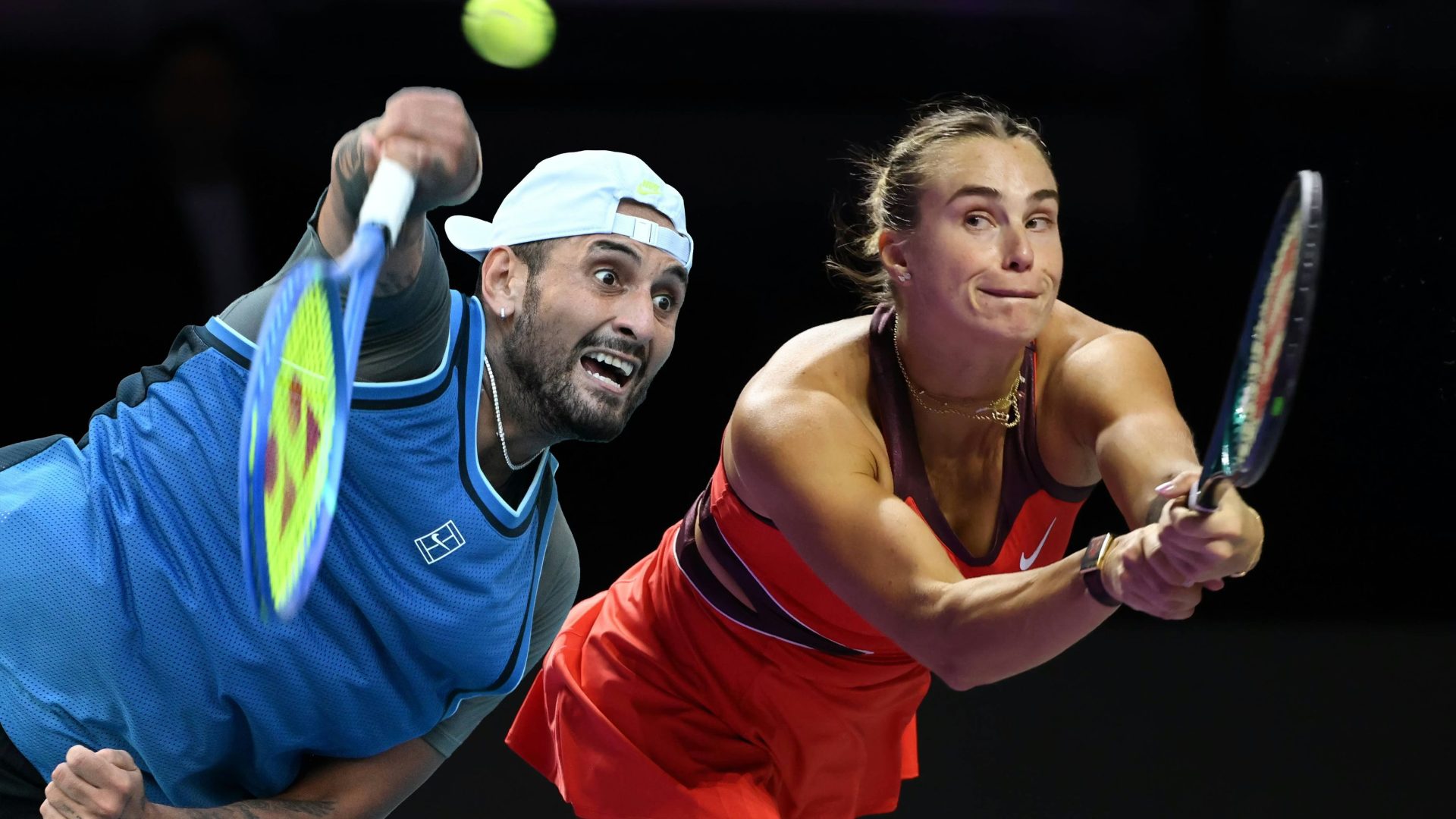
Unfortunately, in 2025 the ‘Battle of the Sexes’ took on a rather different meaning. The recent iteration pitted Aryna Sabalenka, the reigning women’s world no.1, against Nick Kyrgios, a former Wimbledon finalist in 2022 who reached a career high ranking of 13 in the world. At the time of the match, however, Kyrgios had slipped to 671 in the world, and had played just six professional matches in three years due to injury.
Beyond sharing a name, the two matches bore few comparisons. In 2025, the situation was markedly different. No longer was the match a noble endeavour to advance women’s tennis; it was a cynical money-making move engineered by an agency – Evolve – which represented both players. Gone was the sense of moral purpose that compelled King to participate fifty years earlier. In an interview with the BBC, King herself commented on the match: “Ours was about social change; culturally, where we were in 1973. This one is not… It’s just not the same.”
The match was not merely a harmless exhibition or a bit of fun. Instead of promoting the women’s game, it raised the profile of Nick Kyrgios, a man with a storied history of misogyny, in a cruel reversal of the 1973 iteration. Kyrgios has pleaded guilty to assaulting his ex-girlfriend, had to distance himself from Andrew Tate after a past endorsement, and has posted disdainful comments about female tennis players on social media. The match effectively handed a microphone to a misogynist.
The exhibition also unhelpfully reopened a conversation in sport which should have been shelved long ago: man vs woman. It is irrefutable that men are physically stronger than women. They are faster and can generate more power on their serve and groundstrokes. Yet, these differences don’t make the women’s game inferior to the men’s: the power deficit can actually make women’s tennis more intriguing to watch, as it is less serve-dominated and has a surfeit of wily, crafty players who may lack brute power but have tactical nous.
To the delight of many sceptical onlookers, the match itself was poor entertainment. The atmosphere was flat. Sabalenka’s side of the tennis court was smaller, to compensate for the fact that research by Evolve suggests women move 9% slower than men. This left the court looking, quite frankly, ridiculous. Kyrgios overpowered Sabalenka with relative ease, winning 6-3, 6-3, despite physically flagging after a mere 25 minutes.
The participants seemed unable to understand why the match had attracted so much criticism: Kyrgios described it as “a great stepping stone forward for the sport of tennis,” before adding that it was “all the world was talking about for six months.” Sabalenka struck a defensive tone as she sought to frame the exhibition as entertainment which could help to grow the audience of the sport. “I feel like we just brought more attention to our sport and I don’t see how it can be bad,” she said. Both mistook publicity for progress.
Ultimately, women’s tennis does not need exhibition matches to command attention. It is arguably more exciting at present than men’s tennis, due to the number of genuine contenders for each tournament – as opposed to the duopoly of Alcaraz and Sinner at the top of the men’s game. There’s a depth of talent and diversity of playing styles which is immediately evident once one tunes into a match. This reality only highlights the misjudgement behind reviving the ‘Battle of the Sexes’: a spectacle that helped push women’s tennis forward fifty years ago, but in 2025 served only to set it back.