

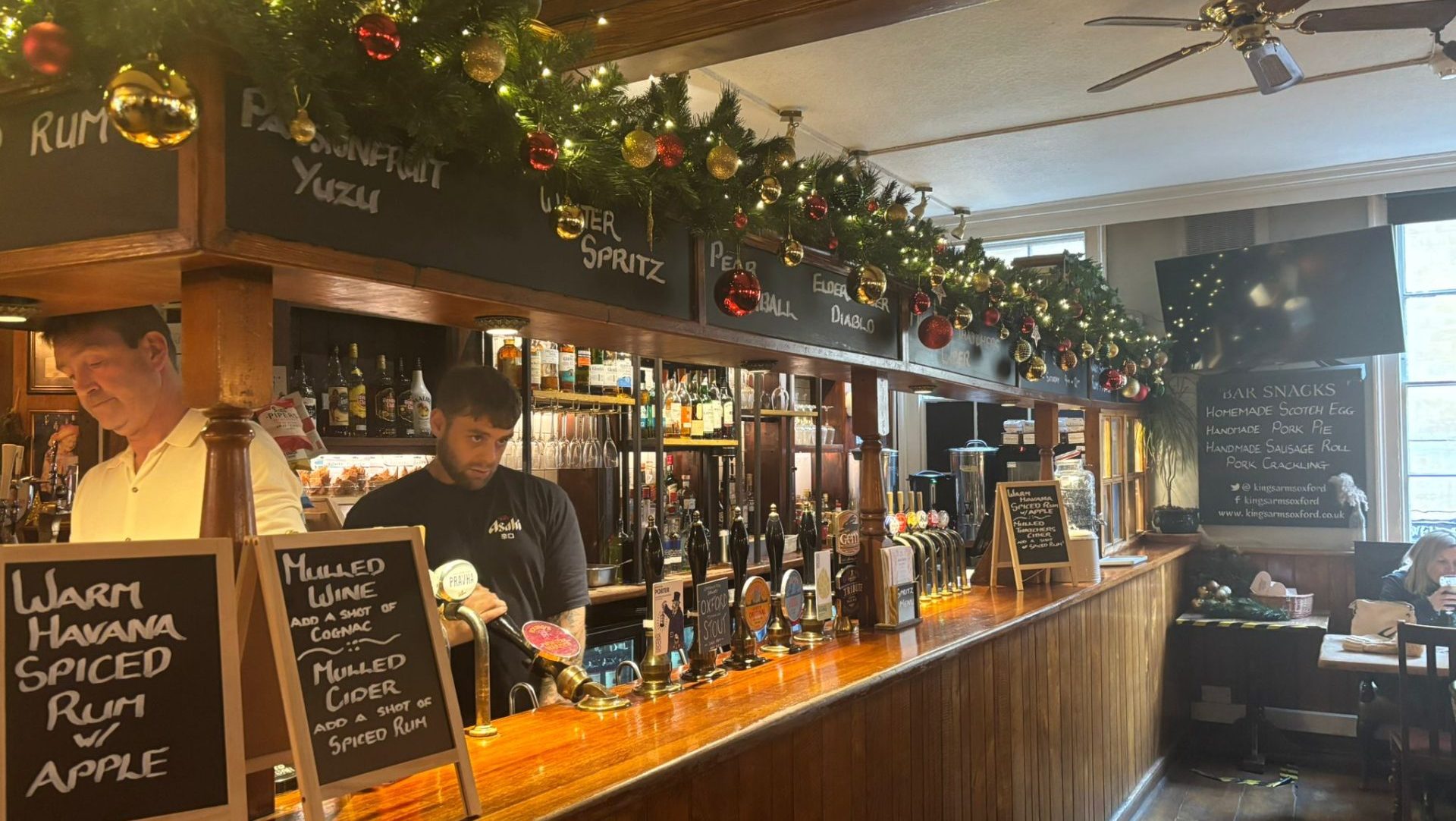
Ever felt a supernatural presence hovering over you in what claims to be Oxford’s oldest pub, the King’s Arms? And no – not the ghost of an ill-fated first date from last Michaelmas.
According to Dark Oxfordshire, the KA boasts an even more eerie reputation. There are some who claim to have heard a pair of phantom Oxford dons at the bar, heatedly bickering – in Ancient Greek, no less – over the quality of the port wine. The Haunted Hub adds that patrons have reported the spirit of a former musician playing piano at odd hours in an otherwise empty room. And if you’re still unconvinced of the pub’s spectral credentials, the Deputy Manager of the King’s Arms told Cherwell that a ghost-finder once detected an entire ethereal family loitering there. Having perished in a fire which consumed their upstairs lodgings, the noise of the youngest daughter, Amelie, running and playing can still be detected.
Today, the King’s Arms continues to beckon a motley crew of pub-goers to haunt its sticky hallways day in, day out. Standing proud on the corner of Holywell and Parks Road, the pub is a favourite of students, academics, tourists, and locals alike: a rare Oxford gem in that it belongs to no single type of person. My friend, a History and Politics student, gathers with her tutorial partners each week in the KA to spend a self-consciously highbrow hour and a half dissecting John Rawls’ political philosophy. By contrast, just a fortnight ago, I stumbled through a pub crawl that kicked off in the King’s Arms, its aim decidedly far less intellectual enlightenment and far more maximal inebriation. Variety is the spice of life, I suppose.
In short, such assorted ghosts as solitary musicians and drunken professors have been joined by the ranks of the equally sundry living, with each individual who roams the halls now contributing their own quirks, charm, and colour to the storied pub. The result: a social sphere that feels, as ever, like a refuge for wandering souls.
To be sure, more generally, Oxford’s bountiful pubs seem to offer the opportunity to shed the tired trope of the neurotic, over-worked student and slip into a more unguarded way of being. However brief, a couple of pints in The Star’s beer-garden, or sitting shoulder-to-shoulder in the Half Moon, softens one’s defences and eases the pressure of appearing perpetually profound. It is in these pockets of calm that the suspect hauntings of essays and expectations are relieved, leaving room for genuine, candid connection. The pub demands us to trade in academic armour for the company of lost spirits, living or otherwise.
Old habits tend to die hard, however. It is no small feat to ditch a meticulously crafted Oxford persona: the unflappable scholar, the sharp raconteur, or the champagne socialist – each honed under careful scrutiny. In other words, after a day spent playing the role of ‘the Oxford student’, it can be hard to know if a pub trip signals the curtain call. For many, the theatre of it all knows no boundaries, and the pub becomes a new stage upon which the performance can continue well into the night. If the costume comes off, it does so tentatively – and never all at once.
I had this theory in mind on my last trip to the King’s Arms, and was more than ready to put it to the test. Standing outside the pub, drink in hand, it is almost impossible to decipher who is still in character and who has given up the charade. Were those two trying their hand at method acting, or were they genuinely impassioned about the significance of free will in Macbeth? In any case, I left the pub with the sense that an uncertain space resided between performance and repose, between folklore and reality. I only wish the scales could tip slightly towards the latter, so that authenticity might stretch beyond the walls of this transient, in-between realm.
Charles Dickens assures us in A Christmas Carol that: “While there is infection in […] sorrow, there is nothing in the world so irresistibly contagious as laughter and good humour.” This rings true not just in Oxford’s most-fabled haunted pub, but in any of the city’s haunts. Pubs are at their most vital when they offer wayward souls a reprieve from close examination, where the crushing weight of expectation lightens, so that they may roam carefreely. They offer more than cocktails and conversation; in this uncanny overlap between the living and the departed, spirits of every kind can rejoice in the revelry.
So, next time you visit the King’s Arms, listen out for the faint clinking of piano keys and muffled scholarly debate, toast a drink to your fellow patrons, and loosen your guard, before even the resident ghosts decide they would prefer more authentic company.