

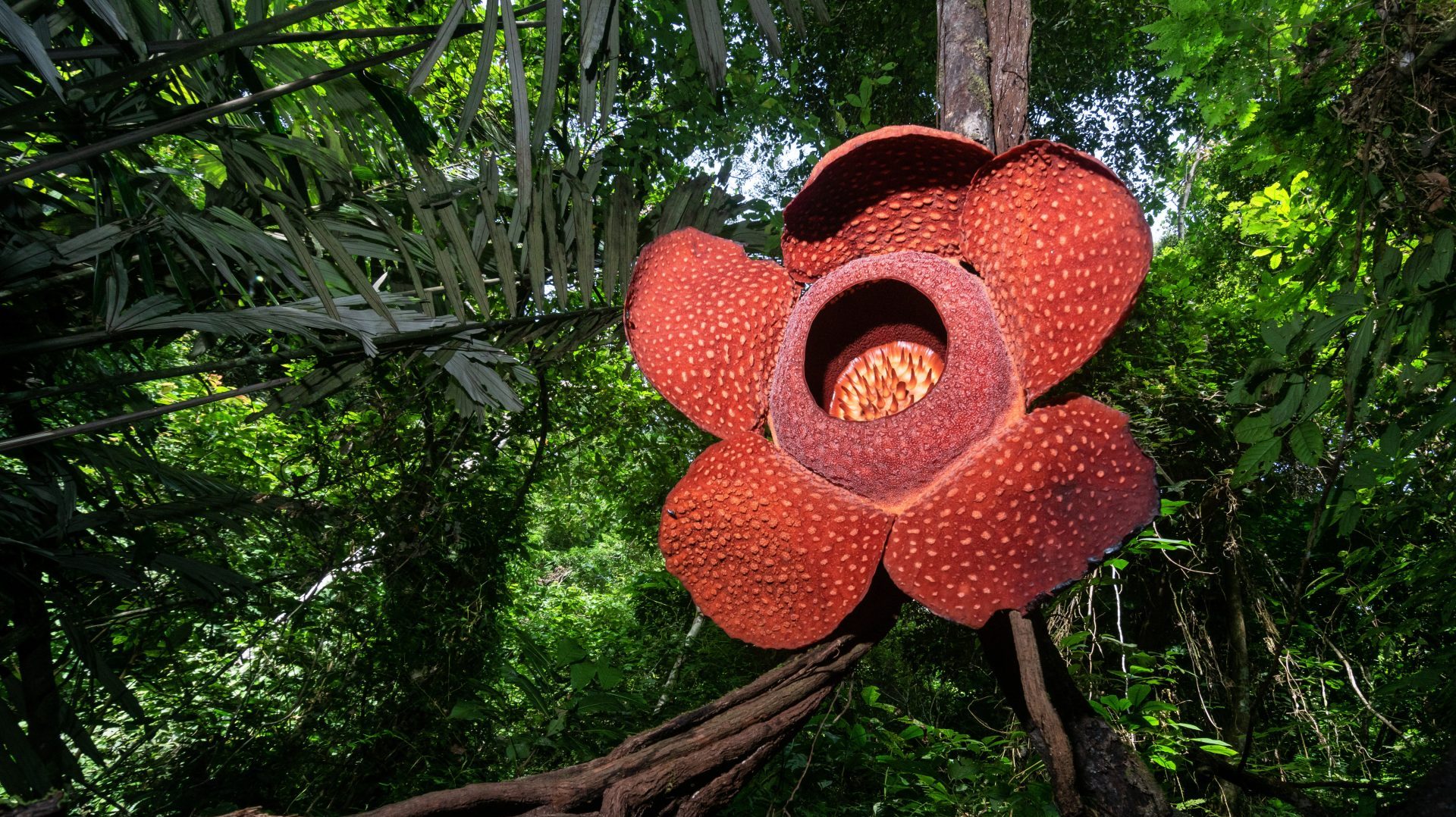
Oxford University’s recent X (formerly Twitter) post about the discovery of the Rafflesia hasseltii flower in the Sumatran jungle, Indonesia, has sparked online backlash. Critics say the post did not give adequate credit to the Indonesian researchers that Oxford’s Chris Thorogood worked alongside.
Oxford University shared a post on X on 19th November describing the discovery, which has since received 11.2 million views. They wrote: “Yesterday, Oxford Botanic Garden’s @thorogoodchris1 was part of a team that trekked day and night through tiger-patrolled Sumatran (an island in Indonesia) rainforests to find Rafflesia hasseltii.”
Thorogood, an associate professor of biology at Linacre College, Oxford, recently travelled to the Sumatran jungle, working with a team of Indonesian researchers to find rare flowers and plants. He documented his journey in a series of posts on his own X account, including several expressing his gratitude to members of the team he worked with.
Most notably, the team found the rare Rafflesia hasseltii flower, with Thorogood writing on X: “Few people have ever seen this flower, and we watched it open by night. Magic.” Botanist Septian Andriki described to the BBC how, after “13 years of waiting”, the team “had to travel 20 hours on land” and climb and descend a mountain to reach the flower.
The post received significant backlash for not adequately crediting the team of Indonesian researchers who worked alongside Thorogood. The top comment, which has received 47,000 likes, reads: “WRITE THE NAME OF THE INDONESIAN RESEARCHERS, COLONIZERS.” The controversy also prompted widespread debate online about Oxford’s broader role internationally, including an opinion piece in the Jakarta Post, Indonesia’s largest English-language newspaper, which critisised the role of Western researchers in general.
The flower, known locally as tiger-faced mushroom, or cendawan muka rimau in Malay, is only found in a few locations in Kerinci Seblat National Park in Indonesia, as well as parts of Peninsular Malaysia. Local tribes such as the Orang Asli use the flower for medicinal purposes, and a 2009 study indicated that it has shown potential in accelerating wound healing in rats.
The University told Cherwell: “The University of Oxford is delighted to be working in collaboration with colleagues from BRIN Indonesia (Badan Riset dan Inovasi Nasional), including Joko Witono (BRIN), the University of Bengkulu (Universitas Bengkulu), including Agus Susatya (Bengkulu University), as well as local community groups, to document and conserve Rafflesia in Indonesia. These partnerships have been ongoing since 2022, a key aim being capacity building, and supporting local conservation heroes. Visiting the site of Rafflesia hasseltii was carried out in this context, and we are very grateful to Septian (Deki) Andriki who joined Chris Thorogood in the field, and their local guide, Iswandi.”The University has since posted on Instagram detailing the team Thorogood worked with, thanking, among others, ‘local conservation hero’ Septian (Deki) Andriki.

 post about the discovery of the Rafflesia hasseltii flower in the Sumatran jungle, Indonesia, has sparked online backlash.)