

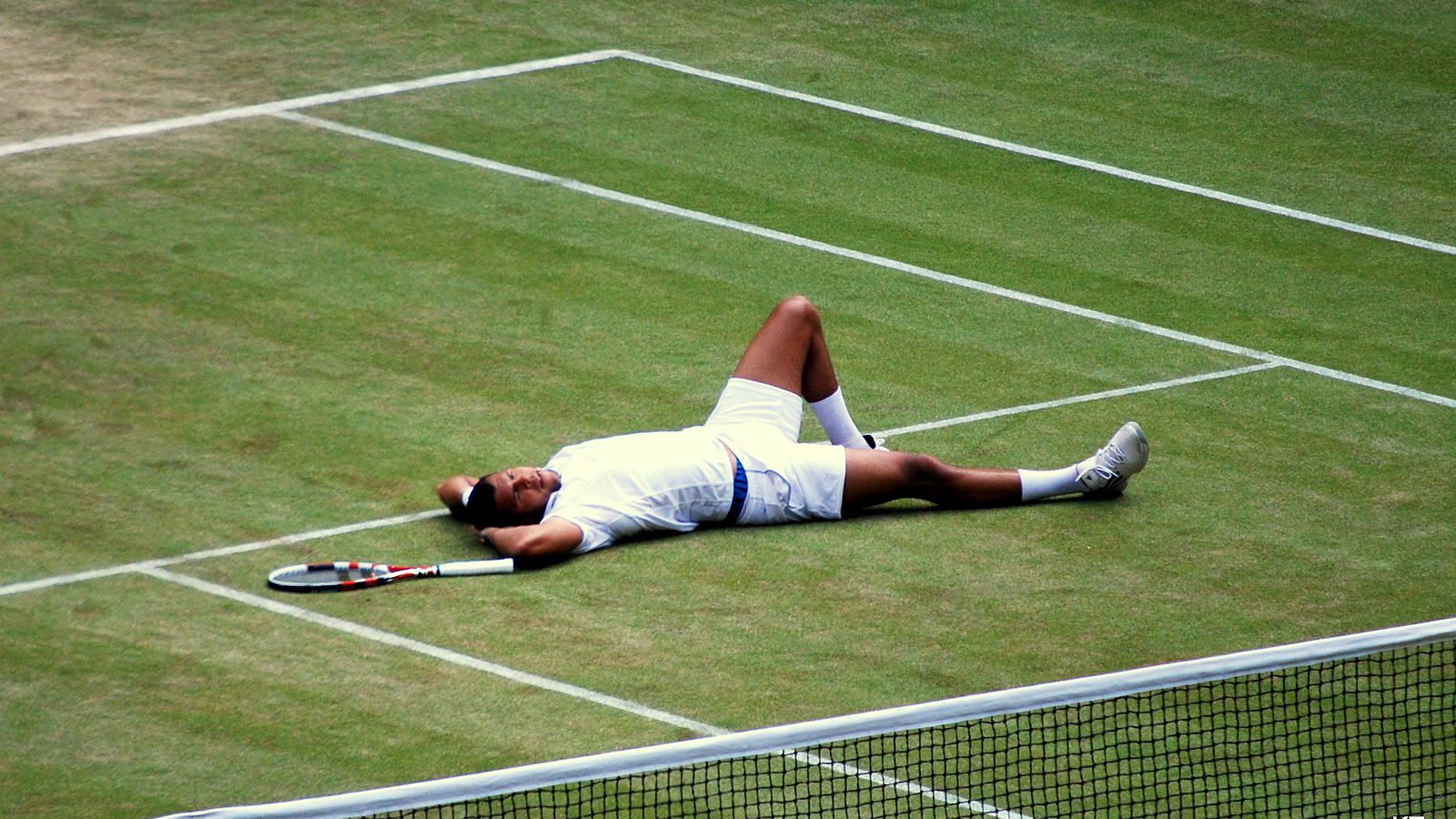
The fatigue is inescapable as the tennis season draws slowly towards a close. Players compete with their last fragments of energy, willing their weary bodies towards the finish line. Simply getting through an entire season has become an endurance sport, a physical feat to be admired. Contrast the buzzing energy and novelty displayed at the Australian Open with the muted jadedness of the US Open and one realises what is lost when tennis never stops.
Sport is not supposed to be an exhausting grind. Yet the tennis season, which lasts for eleven months and encompasses 116 tournaments, has become far too long. Last year, the 2025 season started on 27 December 2024, highlighting how one season begins just as the previous one ends.
Record numbers of players have ended their seasons early this year, despite missing out on the points and prize money offered by the year’s remaining events. Australian Daria Kasatkina, ranked 37th in the world, was surprisingly candid about the reality of life as a pro: “Truth is, I’ve hit a wall and can’t continue. I need a break. A break from the monotonous daily grind of life on the tour.” Other players have echoed her concerns about the relentlessness of life on tour. Elina Svitolina posted on Instagram in September to announce the premature end to her 2025 season. “I haven’t been feeling like myself lately”, she wrote. “I’m human and need time to rest, to feel, to breathe and to just be.”
Taking a break from tennis doesn’t just mean missing out on ranking points and prize money – it’s contrary to the official rules. Both the WTA and ATP tours set strict requirements on how many tournaments players must enter: male players must play at least seventeen, female players twenty. Ranking points are deducted for a failure to play enough tournaments, as Iga Swiatek found out in 2024 when a points deduction caused her to lose her ranking as World No. 1.
Tennis is not moving in the right direction. Not only are there too many tournaments – the events themselves are getting longer. In 2021, Masters 1000 events – the tournament tier second only to the grand slams – were extended from one week to twelve days, spearheaded by ATP Chairman Andrea Gaudenzi. This change was intended to increase ticket sales and thus prize money. This part has gone to plan. For instance, the money pot at the Italian Open enlarged by on average 60% in the four years since the changes were introduced. Yet as the 2025 season nears its end, the increased length of these events has ignited a firestorm of criticism from players, who lament the fact that they must now spend 21 extra days on tour.
The never-ending nature of tennis isn’t just a problem raised by journalists to dramatise the final weeks of the season. Many top players have spoken out about it, including British No. 1 Jack Draper, who agreed to be interviewed by the Tennis Podcast specifically to express his concerns. He said the extended Masters 1000 tournaments left players “feeling like you’re on a constant treadmill”. Speaking about the off-season, Draper added: “I’d say a month and a half would be more than enough. Just not two, three, four weeks…if I were just watching tennis, I’d want it to be a bit more scarce.” Other stars of the sport have aired their grievances, including Jannik Sinner and Iga Swiatek. Last year Carlos Alcaraz, deploring the length of the season, said: “They are going to kill us in some way.”
In his interview, Draper acknowledged that words can only do so much to address the length of the tennis calendar, saying: “I think it’s now up to the players to stop talking about it all the time and actually take some action.” He’s right: it’s easier to complain about a problem than to propose an answer. To effectively push for change, players need to speak with a united voice, rather than expressing their concerns individually in separate press conferences. Draper agreed to be interviewed so that he could use his platform to encourage other players to join him to consolidate that common position. Crucially, players must first acknowledge that if the Masters 1000 events are to return to their shortened format, prize money will decrease. Only by recognising this can their concerns be taken seriously. Other elements of their stance could include a six-week off-season and a reduction in the number of mandatory tournaments. Such steps would allow top players to focus on the most significant events, avoiding the strain and burnout that comes with the current status quo.
Ultimately, it remains to be seen whether players will be able to convert words into action and unite around a pragmatic but ambitious programme for reform.